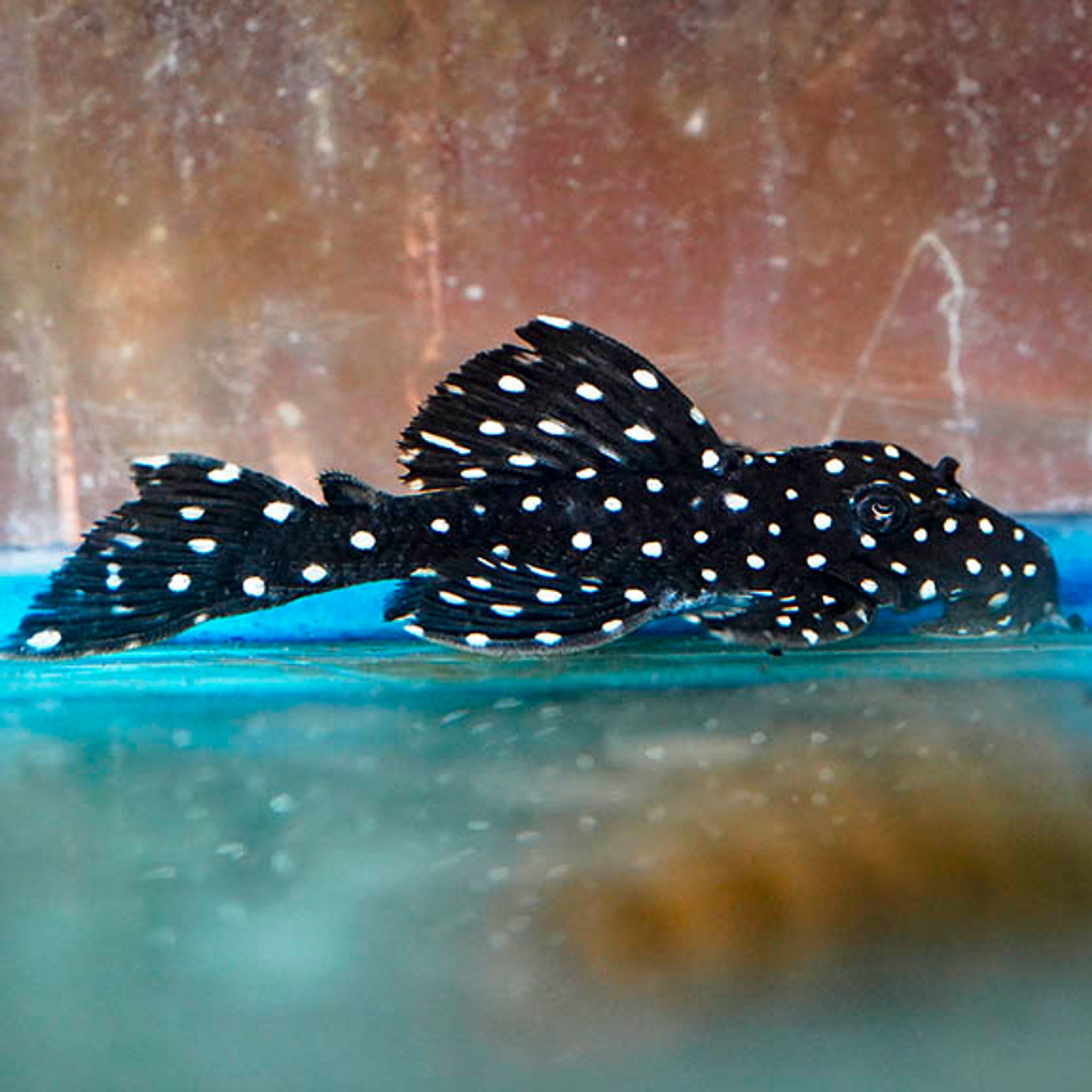

Common Pleco Care Guide: Tank Size, Diet, Water Parameters and Temperament
The common pleco sold in most US fish aisles is not a tank cleaner for a small setup — it is a foot-plus armored catfish that needs planning before purchase. This guide lays out real adult size, tank size, diet, water parameters and temperament so you can decide whether to commit to it or choose a smaller relative instead.
What Is a Common Pleco, Really?
"Common pleco" is a suckermouth armored catfish in the family Loricariidae, native to South American rivers. Confusingly, many fish sold under that name in US stores are not the true Hypostomus plecostomus at all — they are sailfin or leopard plecos (Pterygoplichthys species). The two are easy to mix up, and their day-to-day care is nearly identical, but it helps to know which one you actually have:
- True common pleco (Hypostomus plecostomus): modest dorsal fin, mottled brown-gray pattern, can grow beyond common size expectations.
- Sailfin/leopard pleco (Pterygoplichthys spp.): a tall dorsal fin with 10 or more rays and a bold leopard or net-like pattern, typically 13–18 inches at maturity.
Both belong to a much larger group. Hundreds of loricariid species and unnamed "L-number" plecos are traded in the hobby, and other fish marketed loosely as "sucker fish" — Chinese algae eaters, otocinclus, and hillstream loaches — are unrelated species with very different adult sizes and needs. Don't assume "algae eater" on a label means small.
Adult Size and Lifespan
This is the number most buyers get wrong. A common pleco sold at 2–3 inches in a store tank routinely reaches 10 inches within its first 1–2 years, and adults commonly measure 12–18 inches, with some individuals reaching 20–24 inches. A small tank does not cap this growth — it just stunts and harms the fish.
Expect a long-term commitment, too: typical lifespan is 10–15 years, and well-kept individuals can live 20 years or more.
Tank Size: Plan the Upgrade Before You Buy
Tank size recommendations for this fish vary wildly across sources, from 30 gallons all the way to 150+. The honest breakdown by life stage:
| Life Stage | Minimum Tank | Notes |
|---|---|---|
| Juvenile (3–4 in.) | 30–55 gal (114–208 L) | Temporary housing only |
| Sub-adult / young adult | 75 gal (284 L) | Bare minimum for a mid-size adult |
| Full-grown adult | 125–150+ gal (473–568+ L) | Realistic long-term home |
Footprint matters more than height, since this is a floor-dwelling fish that needs room to turn around. For an adult, aim for a tank roughly 6 feet long and 18–24 inches front to back. A tall, narrow tank of the same gallon count is a poor substitute for one with real floor space.
If you're shopping for a long-term setup, browse glass tanks sized for a full-grown adult before you bring one home, not after it outgrows a starter tank.
Water Parameters
Common plecos are adaptable, but stability beats chasing an exact number.
- Temperature: 72–86°F is tolerated; 74–80°F is the comfortable range.
- pH: workable from 6.5–7.8, with 6.8–7.6 as a practical target.
- Hardness: very adaptable, from soft to hard water (roughly 5–20+ dGH).
- Ammonia and nitrite: must stay at 0.
- Nitrate: keep under 40 ppm.
Filtration and Maintenance
This is a heavy waste producer, and undersized filtration is one of the most common mistakes owners make. Target filtration turnover of 8–10 times the tank volume per hour, using a canister filter, sump, or two combined filters rather than a single small unit. Pair that with strong aeration.
On top of filtration, change 20–30% of the water weekly while vacuuming the substrate — waste builds up fast with a fish this size, and skipping water changes leads to cloudy water and nitrate spikes.
Tank Setup
- Substrate: sand or smooth fine gravel. Sharp gravel scratches the fish's belly over time.
- Hiding spot: at least one cave or pipe sized for the adult fish, not just the juvenile.
- Driftwood: genuine driftwood for grazing, fiber, and shelter — more on why below.
- Lighting: keep it dim; this is a nocturnal species.
- Lid: secure and heavy. Plecos can jump and are strong enough to push decor around.
Plants
Adult common plecos uproot and rasp soft-leaved plants. Stick to tough species tied to wood or rock — Java fern, anubias, and large sword plants hold up much better than stem plants or delicate carpeting species.
Diet: More Than Algae
A common pleco is an omnivore that leans herbivorous — not a cleanup crew for fish waste or a permanent algae solution. Algae alone will starve it, and most adults ignore algae almost entirely once they're used to prepared food.
Build the diet around:
- Staple: sinking algae/spirulina wafers or pellets
- Vegetables: blanched zucchini, cucumber, shelled peas, spinach, sweet potato, or squash
- Occasional protein: bloodworms, brine shrimp, earthworms, or shrimp pellets
Feeding Routine
Feed at or just after lights-out, since this is a nocturnal fish. Juveniles should eat daily; adults can be fed most days, with a weighted vegetable piece left in overnight. Remove uneaten leftovers within 12–24 hours to protect water quality.
A well-fed pleco has a full, rounded belly. A sunken belly is a clear sign of underfeeding — start offering wafers and vegetables nightly if you notice this.
Temperament and Tankmates
Juveniles are peaceful and shy. As they mature, common plecos become territorial, mostly toward other plecos and bottom-dwellers — not toward unrelated fish in general, provided they're well fed and have enough space. Keep one pleco per tank unless the aquarium is very large (roughly 150+ gallons) with multiple caves to spread out territory.
Good tankmates are mid- and upper-water fish too large to be bothered:
- Larger tetras, barbs, rainbowfish, and gouramis
- Medium to large cichlids, including oscars and severums
Avoid discus, angelfish, goldfish, and other slow, flat, or slime-heavy fish. A hungry pleco may latch onto their sides at night to feed on slime coat — it isn't hunting them, but the effect on a slow tankmate can still be damaging.
Health and Acclimation
Common plecos are sensitive to copper-based medications and some dewormers — dose at half strength or treat them in a separate quarantine tank. The most frequent problems are ich, bacterial infections, and fin rot, nearly always tied back to poor water quality rather than the fish itself.
Breeding and Sexing
Despite occasional claims that breeding is "relatively easy," it almost never happens in home aquariums. In the wild, common plecos are cave or burrow spawners, with males guarding the eggs — conditions that are hard to replicate at home. Nearly all fish in the US trade come from outdoor pond operations in Florida or Asia.
Sexing is also difficult. Mature males typically show a pointed genital papilla and sometimes spikier pectoral fin rays, while females appear rounder when viewed from above.
Related Plecos Worth Knowing
Royal Plecos (L191 and Relatives)
Royal plecos (Panaque species) reach 15–17 inches and are genuine wood-eaters, needing driftwood as a real part of the diet, not just enrichment. Plan for 120+ gallons, 72–82°F, and expect territorial behavior between individuals.
Redfin Cactus Pleco (L024)
A spiny, carnivorous-leaning specialist around 10 inches, needing a large tank with high oxygen and strong current. It's a pricier, more demanding fish than a common pleco.
Zebra and Xingu Plecos (L046, L066, L333)
These small Hypancistrus species eat mostly meaty foods and need warm, highly oxygenated, flowing water (80–86°F). Zebra plecos are export-restricted, which keeps their prices high.
Do All Plecos Eat Wood?
Some genera genuinely rasp and digest wood fiber ("xylophages"), and driftwood benefits common plecos too — but for a common pleco, wood is a supplement to a balanced diet, not a meal replacement.
Common Mistakes to Avoid
- Buying one "for algae" in a 10–29 gallon tank. Choose a bristlenose or clown pleco instead — see alternatives below.
- Never feeding it on purpose, assuming it lives off algae. Watch for a sunken belly and start regular feeding.
- No driftwood or cave, which causes stress, hiding in filter intakes, and scratching against decor.
- Undersized filtration, leading to cloudy water and nitrate spikes.
- Housing two plecos together, which usually leads to chasing and torn fins.
- Scratches on tankmates' sides overnight — respond by feeding more, adding hiding spots, or separating fish.
Smaller Alternatives for Small Tanks
If your tank is under 55 gallons, a true common pleco isn't the right fit. Consider these instead:
| Species | Adult Size | Better Fit For |
|---|---|---|
| Bristlenose pleco | 4–5 in. | Tanks from 20–30 gal |
| Clown pleco | 3–4 in. | Tanks from 20 gal, driftwood-based setups |
| Rubberlip pleco | 5–7 in. | Tanks from 40–55 gal |
FishyHub's pleco category and algae eater listings are worth browsing to compare species sizes before committing to one for a specific tank.
A US Note on Invasive Populations
Common and sailfin plecos have established wild, breeding populations in Florida, Texas, Hawaii, and Puerto Rico, where they burrow into riverbanks and outcompete native fish. Releasing any pleco into US waterways is illegal in many states and environmentally damaging — never release a pleco, and never flush one.
If you can no longer keep an outgrown pleco, responsible options include contacting local fish stores, aquarium clubs, or public aquariums with large tank displays that sometimes accept surrendered fish.
Frequently Asked Questions
How big does a common pleco get, and how fast?
Most reach 12–18 inches or more as adults, and they grow fast early on — often around 10 inches within the first 1–2 years. Growth doesn't stop just because the tank is small; it stunts the fish instead.
Can it live in a 20 or 55 gallon tank?
Only temporarily, as a juvenile. An adult common pleco needs at least 75 gallons, with 125+ gallons being the realistic long-term target.
Will it clean my tank?
Not really. It eats some algae when young but adds heavy bioload as an adult, and it does not consume fish waste at all.
Can I keep two plecos together?
Usually not. Stick to one per tank unless you have a very large aquarium (roughly 150+ gallons) with multiple caves to reduce territorial conflict.
Will it eat my other fish?
It won't actively hunt them, but it may scavenge dead fish and can suck on the slime coat of slow-moving or sleeping tankmates, which can injure them over time.
What should I feed it, and when?
Offer sinking algae wafers plus vegetables like zucchini or peas at lights-out, since the fish is nocturnal, and add a small amount of protein weekly. Remove uneaten food within 12–24 hours.
Does it need driftwood?
Yes, strongly recommended. It provides fiber, encourages natural grazing, and offers daytime shelter, even though it isn't a full meal replacement.
Ready to plan a tank around the right species? Explore FishyHub's full Plecos, Corys & Bottom Dwellers category to compare sizes and find the right fit for your setup.


