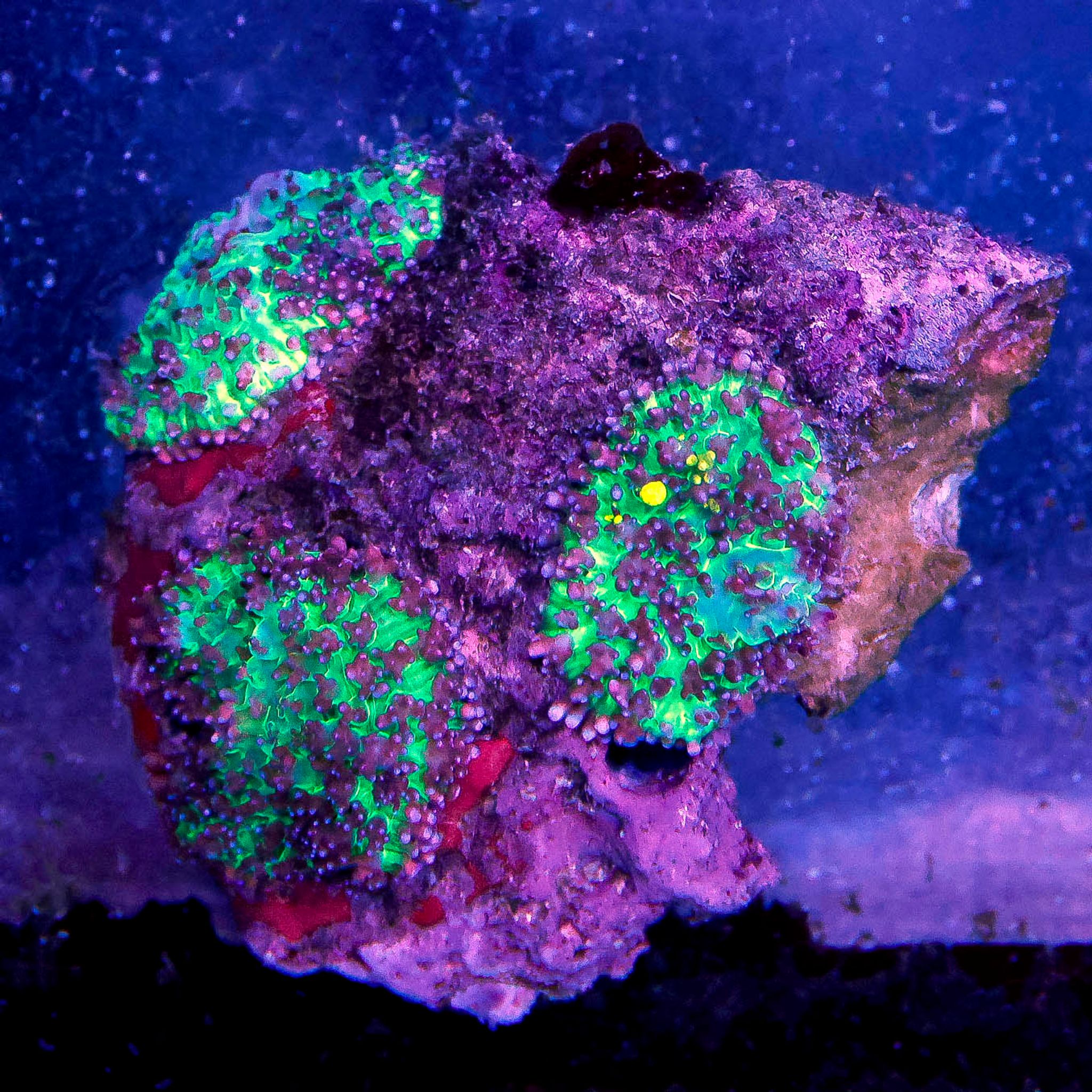

Common Mushroom Corals Problems: Tissue Loss, Fading, Pests and Recovery
A mushroom coral that's shrinking, staying closed, or losing color is unsettling, but most of these corals are among the toughest soft corals in the hobby, and most setbacks are reversible if you catch them early. This guide walks through the most common symptoms one at a time, explains the likely cause, and gives a concrete recovery plan you can start today.
Baseline Parameters Mushrooms Need to Stay Healthy
Before troubleshooting a symptom, it helps to know what "normal" looks like. Mushroom corals (Discosoma, Rhodactis, and Ricordea-type corallimorphs) tolerate a wider swing than SPS corals, but they still suffer at extremes.
| Parameter | Target range | Notes |
|---|---|---|
| Temperature | 72–83°F (22–28°C), ideal ~75–80°F (24–27°C) | Sudden swings are worse than a stable but slightly off number |
| Salinity / specific gravity | 1.024–1.026 | Test with a refractometer, not a swing-arm hydrometer if possible |
| pH | 8.1–8.4 | A slow daily dip/rise is normal; a crash is not |
| Alkalinity | 8–12 dKH (2.5–3.5 meq/L) | Keep swings under 1–2 dKH per day |
| Calcium | 380–450 ppm | Less critical for mushrooms than for SPS/LPS |
| Magnesium | 1250–1350 ppm | Supports stable alkalinity and calcium |
| Ammonia / nitrite | Near zero | Any detectable reading is a red flag |
| Nitrate | Roughly 2–20 ppm | Mushrooms tolerate more nutrient load than SPS |
| Phosphate | 0.03–0.1 ppm | Very low phosphate can dull color as much as excess can fuel algae |
Light: mushrooms generally do best under low to moderate PAR, roughly 30–100. Some species can adapt to brighter reef lighting given enough time, while others bleach or retract under it — since sources disagree on exactly how much light is safe, treat 30–100 PAR as the safe starting target, acclimate any increase gradually over 2–4 weeks, and let coloration and expansion tell you whether the coral is happy rather than chasing a single fixed number.
Flow: gentle and indirect, low-to-medium strength. A direct powerhead blast keeps a mushroom permanently closed or can tear its tissue loose from the foot over time.
Placement: flat rock or rubble in a low-flow, low-to-moderate light zone, with a few inches of buffer around neighboring corals. Many mushrooms sting or chemically out-compete anything placed too close.
Symptom-First Troubleshooting
Use the table below to jump to your symptom, then read the matching section for the full fix.
| Symptom | Most likely cause | First move |
|---|---|---|
| Shrinking, won't puff up | Flow/light too strong, or a parameter swing | Test water, check placement, wait 24–72 hrs |
| White or pale, bleached look | Excess light or a temperature spike | Reduce PAR, verify temperature stability |
| Closed for days | Normal acclimation, or ongoing water quality issue | Wait it out if under 72 hrs; investigate if longer |
| Torn or missing tissue | Pest (nudibranch, flatworm) or bristle worm scavenging | Inspect closely at night with a flashlight |
| Red-brown slime nearby | Cyanobacteria from excess nutrients | Siphon, improve flow and skimming |
| Splitting into two pieces | Normal asexual reproduction | No action needed |
Tissue Loss or "Melting"
Tissue sloughing off, or a mushroom shrinking down to a small stub or a bare, skeleton-like disc, is the most alarming symptom but also one of the more recoverable ones. Common triggers include:
- A swing in salinity, temperature, or pH
- An ammonia or nitrate spike
- Physical injury from handling, shipping, or fragging
- Chemical or physical attack from an aggressive neighbor (torch coral, zoanthids, or another mushroom)
Recovery steps:
- Test every parameter before changing anything — don't guess.
- Do a partial water change (roughly 10–25%) to dilute whatever triggered the decline.
- Move the affected piece into an isolated quarantine or hospital container with gentle flow and dim light.
- Only remove necrotic tissue that is clearly separating on its own; don't cut into healthy-looking tissue.
- Skip feeding while the coral is stressed.
- Be patient. A melted mushroom often shrinks to a small disc and slowly rebuilds tissue over several weeks.
Fading, Bleaching, or Turning White
A mushroom losing its brown, green, or red coloring and going pale or white is usually a light or heat problem, not an infection. The most frequent causes are too much light, a sudden light increase (a new fixture or a coral moved higher in the tank), or overheating. A bacterial or algae bloom that interferes with the coral's zooxanthellae can also cause fading.
Fix:
- Reduce PAR or relocate the coral lower/into more shade.
- If you're upgrading lighting, ramp intensity up over weeks, not days.
- Confirm temperature has been stable, not just currently in range.
- Check that trace elements (including iodine) haven't been depleted, since zooxanthellae health depends on more than light alone.
If the zooxanthellae aren't fully lost, color can return gradually over several weeks once conditions stabilize.
Not Opening or Staying Closed
A mushroom that closes up tight after being added, moved, or after a flow or light change is behaving normally — give it 24 to 72 hours to acclimate before worrying. This is one of the most common reasons keepers panic unnecessarily.
If closure persists beyond a week, treat it as a genuine warning sign and check for:
- Poor water quality (test ammonia, nitrate, and phosphate)
- Low flow allowing detritus to settle on the disc
- A pest irritating the tissue (see below)
- An underlying parameter or nutrient issue
Pests That Target Mushroom Corals
A few pests specifically target corallimorphs, though most mushroom problems are not pest-related:
- Nudibranchs: rare species that eat mushrooms exist and often match the coral's own color, making them hard to spot without a close inspection at night.
- Predatory flatworms: thin, often translucent pests that graze on coral tissue.
- Bristle worms: usually opportunistic scavengers picking at tissue that's already damaged, rather than the original cause of decline.
- Asexual splitting: a mushroom pinching or splitting into two separate pieces is healthy reproduction, not disease — this is one of the most commonly misdiagnosed "problems."
Aiptasia anemones are a separate nuisance rather than a mushroom-specific pest, but they can crowd or sting nearby mushrooms. Manage them with peppermint shrimp, Berghia nudibranchs, or a chemical/injectable treatment, and avoid simply tearing at them physically since disturbed Aiptasia can fragment and multiply. Reef-safe pest and coral care products can be browsed in FishyHub's treatment category if you need a targeted option.
Cyanobacteria Near Mushroom Corals
Cyanobacteria shows up as a slimy, brownish-red to red film coating rock or sand, sometimes creeping onto or around the base of a mushroom. It isn't a mushroom-specific disease, but it competes for nutrients, can block light reaching the coral's surface, and adds a secondary stress on top of whatever caused it to bloom in the first place.
Root causes are almost always some combination of:
- Excess nutrients (nitrate, phosphate)
- Weak protein skimming
- Poor flow creating dead spots
- Overfeeding
- Infrequent water changes
Recommended approach: fix the cause first. Siphon out visible cyanobacteria during routine water changes, improve flow to eliminate dead spots, and check that your skimmer is performing well. Cut back on feeding if nutrient tests are elevated. Retail-facing advice often leans toward reaching for a commercial anti-cyano treatment right away, while more experienced hobbyists tend to treat chemical products as optional and secondary. A sensible middle ground: use manual removal and husbandry fixes as your default, and reserve a chemical treatment for severe outbreaks — always paired with fixing the underlying nutrient or flow problem, or the bloom will return. Change one variable at a time and give it a week or two to show results before adding another fix.
Aggression and Allelopathy
Some mushrooms, particularly Rhodactis species, are territorially aggressive. They can release mucus or chemical compounds and physically overgrow neighboring corals. This creates a confusing diagnostic trap: a neighboring coral's decline can actually be caused by the mushroom crowding it, or conversely, a stinging neighbor (like a torch or hammer coral) can cause a mushroom to recede and look diseased when the mushroom itself is the victim. When troubleshooting any coral's decline, always check what's growing within a few inches of it before assuming disease.
Fragging and Handling Risks
Cutting mushrooms for propagation exposes fresh tissue to bacterial or protozoan infection if done with dull tools or in dirty water. Use clean blades, and expect both the frag and the mother colony to look ragged and retracted for several days afterward — this is normal recovery, not a failed cut. Any new frag brought into an established tank should go through a brief quarantine or dip step before joining the display, since this is one of the easiest ways to unknowingly import pests or infection.
General Maintenance That Prevents Most Problems
Most mushroom issues trace back to a handful of husbandry basics:
- Feeding: mushrooms get most of their energy from light via zooxanthellae, so occasional particulate feeding (such as a gel food or fine coral food) supports color and growth without being required.
- Testing: check core parameters regularly rather than only when something looks wrong.
- Water changes: roughly 10–25% every 1 to 4 weeks keeps nutrients and trace elements in a stable range.
- Stability over perfection: a single large swing in temperature, salinity, or alkalinity is the top suspect whenever multiple corals decline at the same time, not just one.
Anyone building out a new reef system can browse healthy specimens in FishyHub's mushroom corals category or explore other soft corals that pair well with similar low-to-moderate light and flow requirements.
Common Mistakes to Avoid
- Repeatedly moving or poking a temporarily closed mushroom instead of waiting out a normal acclimation window.
- Changing several things at once (light, flow, dosing, a new treatment) after a problem appears, making it impossible to know what actually helped.
- Placing a mushroom under SPS-intensity light or in SPS-strength flow, then mistaking the resulting bleach-out or shrinkage for disease.
- Mistaking natural splitting for melting or illness.
- Overfeeding the tank generally, which fuels cyanobacteria and nutrient swings that stress mushrooms indirectly.
- Fragging with dirty tools or skipping quarantine for new frags.
- Placing an aggressive mushroom species too close to other corals and blaming the neighbor's decline on something unrelated.
Frequently Asked Questions
Why is my mushroom coral shrinking or not puffing up?
Usually the light or flow at its location is too strong, or there's been a recent parameter swing or new addition to the tank. Give it a few days to acclimate and test your water before assuming the worst.
Why did my mushroom coral turn white or pale?
This is most often bleaching from too much light or a temperature spike. Reduce light intensity, verify your temperature has been stable, and color can return over several weeks if the zooxanthellae weren't fully lost.
Is it normal for a mushroom to split into two?
Yes. Pinching or splitting into two separate pieces is healthy asexual reproduction, not a sign of disease.
What's eating holes or chunks out of my mushroom?
Check closely for nudibranchs that match the coral's color, predatory flatworms, or bristle worms scavenging tissue that's already damaged. Manual removal or a coral dip is the usual fix.
How do I get rid of red slime (cyanobacteria) without harming my mushrooms?
Improve flow and skimmer performance, cut back on nutrient input, and siphon it out manually during water changes. Commercial treatments are generally reef-safe when dosed as directed, but they should be paired with fixing the underlying cause or the bloom will come back.
Can a mushroom coral sting or kill other corals?
Yes. Some species, notably hairy or Rhodactis types, are chemically and physically aggressive toward neighbors. Keep several inches of clear space around them.
How long does it take a melted or damaged mushroom to recover?
Often several weeks. A mushroom can shrink down to a small disc or stub and slowly rebuild tissue once water quality is stabilized and it's left undisturbed.
Do mushroom corals need to be fed?
Not strictly — they get significant energy from light through their zooxanthellae — but occasional particulate feeding can support better color and growth over time.
Once your water quality and placement are dialed in, mushroom corals are some of the most forgiving and rewarding soft corals to keep. Browse healthy, ready-to-ship options in FishyHub's corals category to find your next addition.


