
Common Lobophyllia Problems: Tissue Loss, Fading, Pests and Recovery
A Lobophyllia that's receding, fading, or covered in an odd brown film is not automatically a lost cause — most issues trace back to a fixable husbandry mistake rather than an incurable disease. This guide walks through what's normal, what's an emergency, and exactly how to intervene at each stage.
What Is Lobophyllia?
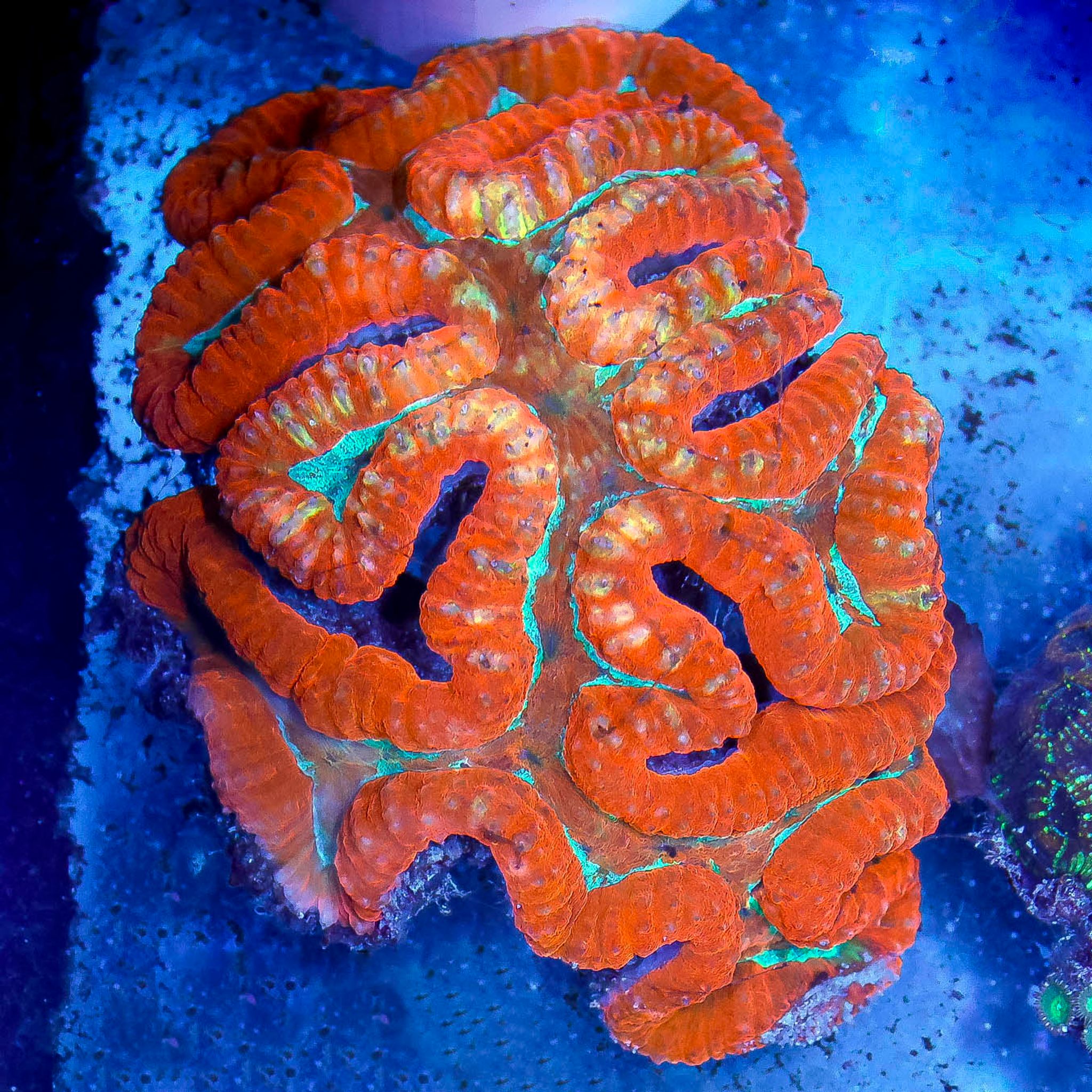
Lobophyllia — often called the lobed brain, carpet coral, or "meat" coral — is a large-polyp stony (LPS) coral with thick, fleshy, folded tissue draped over a meandering skeleton. In the wild it grows on reef slopes with sediment and moderate turbidity, which explains why it tolerates a wider nutrient range than many other stony corals and why it grows slowly compared to branching species.
That sediment-tolerant background matters for troubleshooting: Lobophyllia is generally hardy and forgiving, but it is not immune to the standard LPS problems — tissue necrosis, brown jelly infection, and pest pressure can all affect it, especially after shipping stress or physical injury. Treat it as resilient, not indestructible.
Ideal Water Parameters
Stability matters more than hitting an exact number, but this range is a solid target:
| Parameter | Target Range |
|---|---|
| Temperature | 73–84°F (23–29°C), mid-70s to low 80s ideal |
| pH | 8.1–8.4 |
| Alkalinity | 8–12 dKH |
| Salinity | 1.024–1.026 SG (~35 ppt) |
| Calcium | 380–450 ppm |
| Magnesium | 1,250–1,350 ppm |
| Nitrate | ~2–10 ppm |
| Phosphate | ~0.03–0.1 ppm |
Avoid alkalinity swings larger than about 0.5–1 dKH per day. LPS tissue is sensitive to rapid alkalinity shifts even when the coral looks fine on the surface — sudden swings are a common hidden trigger behind tissue recession that gets blamed on "bad luck."
Near-zero nitrate and phosphate can cause fading and starvation, while persistently high nutrients tend to cause dull coloration and pest outbreaks. If you run an ultra-low-nutrient system for SPS corals, expect to either supplement-feed Lobophyllia directly or accept some color fade — that trade-off is normal, not a sign of disease.
Lighting and Flow
Lobophyllia does well under low-to-moderate lighting, roughly 80–150 PAR at its placement point. Whenever you introduce a new coral or upgrade a light fixture, ramp intensity up gradually over 1–2 weeks. Skipping acclimation is one of the most common causes of bleaching that gets mistaken for disease.
Flow should be low-to-moderate and indirect or turbulent — never a direct blast from a powerhead. Enough movement to keep detritus off the tissue and support a feeding response is the goal; if polyps stay chronically retracted, flow is likely too strong.
Placement and Aggression
Place Lobophyllia in the lower third of the tank, on a sandbed or flat rock rather than directly on substrate that traps detritus against the tissue. Leave at least 2 inches of clearance from neighboring corals and rockwork — sweeper tentacles have real reach, and slow growth means a coral that starts too close is hard to relocate later without damage.
Give extra berth to aggressive LPS like torches or hammers; a sting from a neighbor is a common entry point for infection because it damages tissue and leaves an opening for opportunistic bacteria. Browsing options in LPS hard corals can help you plan tank-mate spacing before you buy.
Feeding
Lobophyllia can survive months on light and photosynthesis alone, but target feeding 2–3 times per week noticeably improves color, growth, and recovery speed. Good options include mysis, brine shrimp, chopped seafood, pellets, and phyto/zooplankton blends.
Feed with reduced flow so food doesn't blow away, delivering it near the mouth with a pipette or turkey baster. This technique matters more than the exact food used.
Quarantine and Dipping New Arrivals
Quarantine and dip every new coral before it goes into the display. This single step prevents most pest and pathogen introductions:
- Drip-acclimate slowly for salinity and pH.
- Dip the frag in an iodine-based or coral-safe dip before it touches display water.
- Hold it in a separate quarantine tank for observation before adding it to the main system.
- Ramp lighting up gradually rather than placing it under full intensity on day one.
Skipping this step is one of the most common ways pests or bacterial issues reach an otherwise healthy display.
Tissue Loss: RTN vs. STN
Tissue necrosis shows up in two speeds:
- Rapid Tissue Necrosis (RTN): flesh slides off the skeleton within hours, often starting at the base or a stressed edge.
- Slow Tissue Necrosis (STN): the same process plays out over days to weeks.
Common triggers include shipping stress, sudden parameter swings, pest bites, physical damage or frag cuts, poor flow allowing detritus to build up, and secondary bacterial infection following any of the above. Sudden, spreading loss points toward bacterial or opportunistic infection after an injury; gradual, whole-colony dulling points toward an environmental cause like light, nutrients, or parameters.
Brown Jelly Infection (BJI)
Brown jelly infection is a distinct, fast-spreading brown or tan mucus-like liquefaction of tissue. It's caused by a ciliate/bacterial bloom feeding on necrotic tissue, and it almost always follows an initial injury — a sting, a cut, pest damage, or tissue that was already dying. Left untreated, it can spread coral-to-coral if debris drifts through the tank, and it can consume an entire head within 24–48 hours.
Emergency Recovery Protocol
- Isolate the affected coral in a quarantine or frag tank immediately, if one is available.
- Identify and remove the stressor — check flow, look for pests, and review recent parameter changes.
- Siphon the jelly with a turkey baster or syringe rather than blowing or brushing it off; disturbing it without capturing it spreads spores to healthy tissue.
- If the infection is spreading fast, cut well behind the necrosis line into clearly healthy tissue to stop it from reaching the rest of the colony.
- Dip the remaining healthy piece in an iodine-based or coral-safe antiseptic dip after debridement.
- Increase flow slightly at the wound site to discourage detritus from settling.
- Keep nutrients moderate — not zero — to support tissue healing.
- Monitor daily for a week for any recurrence or spread.
Never treat a spreading infection by dosing broad-spectrum medication into the whole display; that stresses every other inhabitant and does nothing to remove the physical source of the infection. Also disinfect fragging tools between corals — an unclean blade is an easy way to carry infection from one coral to another.
Fading and Bleaching
Fading is usually chronic rather than sudden, most often driven by ultra-low nutrients (starvation-related paling, common in very clean systems), insufficient or mismatched light spectrum, or a recent light upgrade introduced without acclimation.
Full bleaching — the coral turning stark white as it expels its zooxanthellae — is a different, more serious signal pointing to a major stress event: a heat spike, an extended parameter swing, or severe light shock.
Recovery From Fading
- Raise nitrate and phosphate modestly if they're near zero.
- Resume or increase target feeding frequency.
- Check and stabilize PAR at the coral's placement.
- Verify alkalinity stability — swings suppress zooxanthellae health even when other parameters look fine.
- Be patient: color return typically takes weeks, not days.
Pests to Rule Out
| Pest | Signs | Typical Response |
|---|---|---|
| Flatworms | Small brown/tan worms on tissue, paling, irritation | Freshwater dip or targeted dip, manual removal |
| Nudibranchs / coral-eating worms | Localized flesh damage, less common on Lobophyllia than on softies | Manual removal, inspect during dipping |
| Coral mites ("red bugs") | More typical on Acropora but worth ruling out | Dip and observe |
| Bristleworms | Mostly beneficial scavengers | Only a concern in large numbers actively biting tissue |
| Predatory snails/crabs | Physical bite marks, missing tissue patches | Manual removal |
Products for dipping and pest control are available in treatment and medication, and stabilizers for parameters like alkalinity fall under water conditioners and additives.
Common Mistakes to Avoid
- Placing a Lobophyllia directly in a powerhead's path, causing chronic retraction and stress-driven tissue loss.
- Setting a new frag too close to established corals, leading to sting damage that becomes an entry point for BJI.
- Skipping quarantine and dipping on new arrivals.
- Reacting to slow tissue loss by dosing the whole display instead of isolating the individual coral.
- Ignoring a small brown jelly patch, assuming it will resolve on its own.
- Chasing near-zero nutrients tank-wide and then wondering why LPS lose color while SPS thrive.
- Skipping light acclimation after an upgrade, producing bleaching that looks like disease.
- Fragging or handling multiple corals without disinfecting tools in between.
Frequently Asked Questions
Is it normal for Lobophyllia to deflate or look "melted" during the day?
Yes. Many LPS corals retract their tissue in bright light, high flow, or between feedings, and typically extend more at night or during feeding response. True tissue loss exposes the white skeleton underneath — simple retraction does not.
How fast does brown jelly disease kill a coral?
It can spread across a head in 24–48 hours if left untreated, so treat any brown jelly patch as an emergency. Isolate the coral and physically remove the affected tissue right away rather than waiting to see if it resolves.
Can a Lobophyllia recover from partial tissue loss?
Yes, if the underlying stressor is corrected and the remaining tissue is healthy. It can slowly re-cover exposed skeleton over weeks to months, and supplemental feeding speeds that recovery.
Why is my Lobophyllia turning brown or losing its bright color?
This is usually one of two opposite causes: excess nutrients causing a dull, brownish look, or starvation in an overly clean, low-nutrient system causing paling. Check both nitrate/phosphate levels and feeding frequency before assuming disease.
What's the difference between bleaching and normal color variation?
Bleaching is a sudden, colony-wide shift toward white or pale, tied to a specific stress event like a heat spike, light shock, or parameter swing. Normal color variation is gradual and usually tracks lighting changes or growth over time.
Do I need to dip a Lobophyllia before adding it to my tank?
Yes. Dipping new corals and holding them in quarantine is standard practice to keep flatworms, other pests, and pathogens out of the display.
Can I keep Lobophyllia near aggressive corals like torches or hammers?
Give a few inches of clearance at minimum. Lobophyllia can sting with sweeper tentacles, and because it grows slowly, a colony placed too close is difficult to relocate later without causing damage.
Why did my Lobophyllia die suddenly after I bought it?
Shipping stress combined with rapid parameter changes is the most common cause of a quick post-purchase decline. Slow drip acclimation and a stable quarantine period significantly reduce this risk.
Browse available frags and colonies in LPS hard corals on FishyHub to compare options before adding one to your system.


