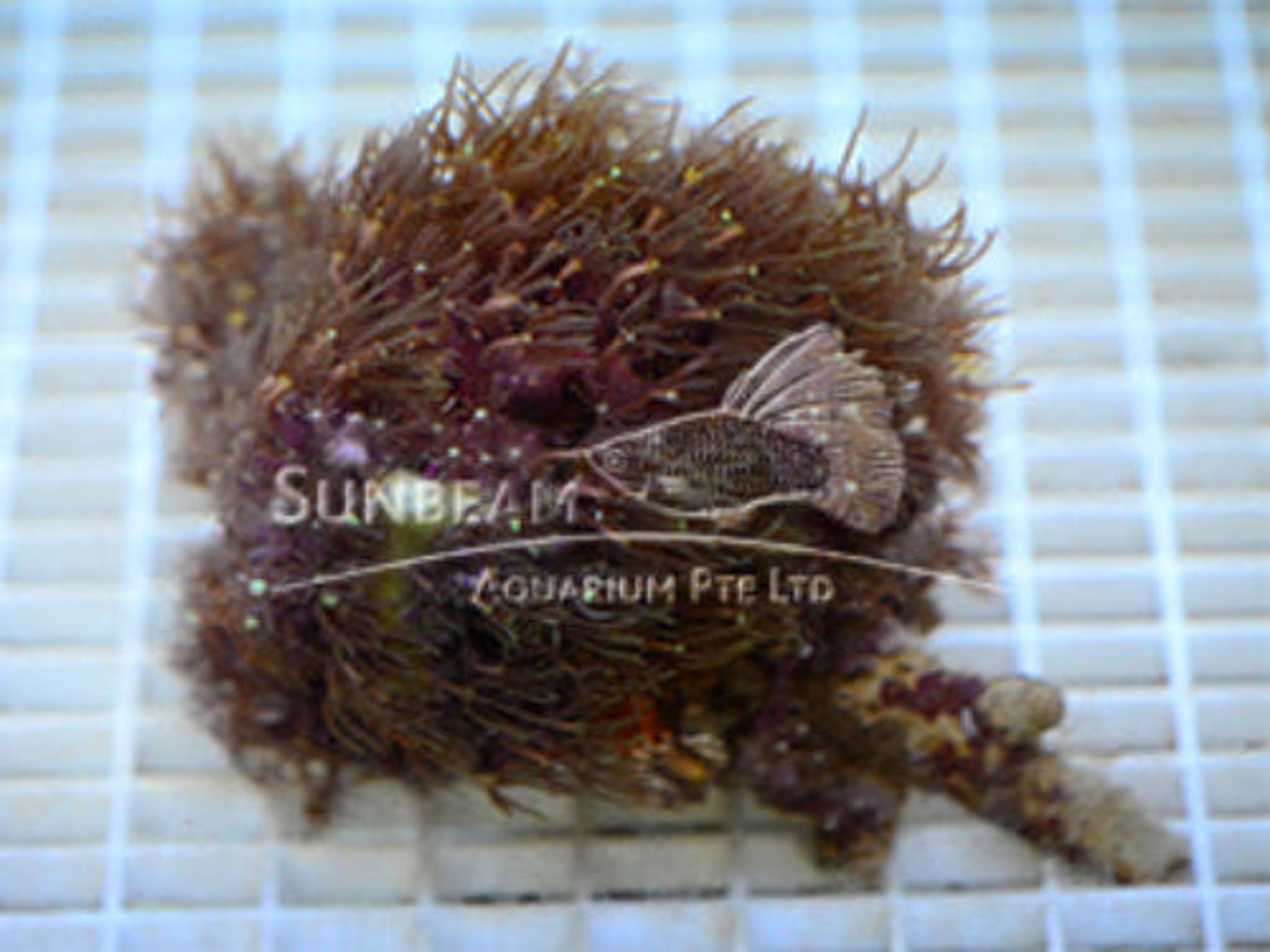
Common Green Star Polyps Problems: Tissue Loss, Fading, Pests and Recovery
Green star polyps have a reputation as nearly unkillable, so when a mat suddenly closes up, browns out, or starts receding, it's easy to assume something is seriously wrong. In most cases the cause is mechanical or environmental rather than disease, and it fits into one of a handful of predictable categories. This guide walks through each symptom, its likely cause, and a realistic path to recovery.
GSP biology basics
Green star polyps (commonly sold under the names Pachyclavularia or Briareum) are encrusting mat corals native to Indo-Pacific reef flats. A thin purple-to-tan mat spreads across rock or a frag plug, sending up bright green polyps with eight feathery tentacles. They grow fast, tolerate a wide range of conditions, and propagate readily—cutting off a piece of the mat with attached rock or plastic is usually enough to start a new colony. That same toughness and growth rate is exactly why GSP acts as a useful "canary in the coal mine": when even this coral struggles, something in the tank has genuinely shifted.
Baseline parameters GSP still cares about
GSP tolerates more drift than SPS corals, but "tolerant" doesn't mean "indifferent." Stability across days and weeks matters more than hitting an exact number.
| Parameter | Target range |
|---|---|
| Temperature | 76–82°F (24–28°C) |
| Specific gravity | 1.024–1.026 (~35 ppt salinity) |
| pH | 8.0–8.4 |
| Alkalinity | 8–12 dKH |
| Calcium | 380–450 ppm |
| Magnesium | 1250–1350 ppm |
| Nitrate | ~5–20 ppm |
| Phosphate | under ~0.10 ppm |
A sudden swing outside these ranges—especially a temperature spike or alkalinity crash—is worth ruling out before assuming a more complicated cause.
Lighting: the intensity jump is the real risk
GSP grows under everything from old T5 fluorescent tubes to metal halide and modern LEDs, at PAR levels anywhere from roughly 30 to 200-plus. There isn't one "correct" absolute PAR number. The actual danger is a sudden increase—a new fixture, a bulb swap, or moving the frag higher in the tank without acclimating it gradually. That kind of jump is a far more common trigger for fading than any specific light level.
Flow: the single most cited cause of tissue recession
Moderate to high water movement across the mat isn't optional. Without it, detritus, algae film, and cyanobacteria settle directly on the tissue and stalks, and that fouling is the most frequently reported cause of localized tissue recession. If you're troubleshooting a receding patch, check flow across that exact spot before looking anywhere else.
Tissue loss and recession
Recession usually starts as a brown or bare patch that spreads outward from one point rather than appearing all at once across the colony. The most common drivers, roughly in order of likelihood:
- Low flow over the mat, allowing detritus and algae film to smother tissue
- Chemical irritation from something in the water column (see the disagreements section below)
- Physical damage, from handling, a curious fish, or a falling piece of rock
- A rapid parameter swing, such as a temperature or alkalinity shift
The encouraging part: as long as a living patch of mat or even a few polyps remains, GSP can typically recolonize the bare area over several weeks once conditions are stable again. It rarely needs to be written off.
Fading, paling, or turning white
This is different from tissue loss—the polyps are still there, just losing color. The most common cause is a lighting mismatch, either too much intensity for the colony's acclimation state or a fast lighting upgrade. A less common but real cause is unusually low nutrients: in an extremely "clean" system, the zooxanthellae that supply GSP's color and energy can be starved out. Genuine bleaching from a heat spike happens too, but it's the least frequent explanation of the three.
Browning and stalled extension
Browning is essentially the opposite presentation from fading—polyps turn a dull, muddy brown and stop extending normally. This is usually tied to too little light or a significant drop in flow or parameters. Some colonies also go through unexplained cyclical dips, receding or dulling for a stretch and then rebounding on their own a year or so later with no identifiable trigger. If light and flow are stable and the coral otherwise looks intact, this kind of dormancy is a plausible, benign explanation.
Polyps staying closed
Closed polyps with no extension are the single most over-reacted-to symptom in GSP keeping. Before assuming disease, work through this checklist:
- Was the coral shipped, fragged, or moved in the last one to three weeks? Closure for days to a few weeks after any disturbance is completely normal.
- Is detritus or algae physically covering the polyp tubes?
- Is there a chemical-warfare neighbor stinging or dosing toxins nearby (see below)?
- Has there been a recent parameter or lighting change?
Only after ruling those out is it worth considering something more unusual.
Chemical warfare between neighbors
Soft corals, GSP included, release chemical compounds that can irritate or suppress nearby colonies—sometimes called allelopathy. If a patch of recession or persistent closure is localized to the side of the colony facing another soft coral, especially one known to be chemically aggressive, that proximity is a more likely explanation than a tank-wide parameter problem. Increasing the physical gap or improving flow to dilute and export those compounds usually helps more than dosing anything.
Placement and isolation strategy
The most common long-term "problem" GSP keepers search for isn't decline—it's the opposite: GSP overtaking everything around it. Because it spreads by encrusting outward and regrows from almost any leftover tissue, a colony left in contact with the main rockwork or sump plumbing will eventually climb onto neighbors or into equipment.
- Keep GSP on its own isolated rock or frag plug, several inches from other corals and from any surface connected to the display's rockwork.
- Check the isolation point periodically—mat can bridge small gaps over time.
- Be ready to physically cut or scrape back overgrowth; GSP tolerates aggressive trimming and regrows readily.
This isolation habit also reduces the odds of the chemical-warfare recession described above, since it keeps other corals out of close chemical range.
Feeding: helpful, not required
GSP draws most of its energy from photosynthesis through its zooxanthellae and doesn't need target feeding to survive. That said, occasional feeding with a fine particulate or zooplankton-type food, or phytoplankton, can support color and speed up recovery—particularly in a very low-nutrient system where fading has been linked to nutrient starvation. Treat feeding as an optional booster for a struggling or pale colony, not a baseline requirement.
Pests: rarer than people assume
GSP is unusually resistant to pests compared with LPS or SPS corals. Most reports of "something eating my GSP" turn out to be one of the following instead:
- Snails or hermit crabs grazing algae film off the mat—cosmetic, low risk to the coral itself
- Aiptasia or bristleworms established in the same rock, unrelated to the GSP tissue
- Acro-specific pests like red bugs or acro-eating flatworms, which do not target GSP at all
If you see visible grazing damage, look first at what's actually on the mat before treating it as an infestation.
Where hobbyists disagree
A few claims come up often enough to address directly, even though the evidence behind them is thin:
- Iodine dosing: Some hobbyists blame iodine for GSP "melting," but mainstream care guidance doesn't list iodine sensitivity as an established issue, and there's no controlled data backing the claim. Dose iodine cautiously and at trace levels per product instructions, and rule out flow, light, and detritus before assuming iodine is the cause.
- Activated carbon: A minority of reports claim carbon strips trace elements GSP needs, with granular carbon flagged as worse than pelletized carbon. This is unverified and worth only a cautious mention—not a reason to avoid carbon filtration if you're already using it for water clarity.
- Won't spread / turned brown: Some attribute a stalled colony to insufficient light; others chalk it up to a natural growth cycle. Check light and flow changes first. If parameters and lighting have been stable and the mat still stalls, cyclical dormancy is a reasonable, low-stakes explanation.
Distinguishing true tissue loss from simple retraction
Because retracted or algae-dulled polyps can look alarming, it helps to separate the two visually before reacting:
| Sign | Likely meaning |
|---|---|
| Polyps closed, mat and stalks intact and colored | Normal retraction—stress, disturbance, or low light |
| Mat dull or covered in a film, polyps closed | Algae/detritus buildup, usually a flow issue |
| Bare, receding edge with a visible dead line | True tissue necrosis—act on flow/parameters now |
| Brown, matted tissue with no clear polyp structure | Likely dead tissue, but check for any living green fringe |
The presence of a distinct dead line—bare skeleton or plug visibly separating from living purple mat—is the clearest sign of real necrosis. Simple retraction or a dull, dirty-looking mat is far more common and far less urgent.
Realistic recovery timeline
| Timeframe | What to expect |
|---|---|
| Days 1–3 after a trigger is fixed | Polyps may still be closed; mat color should not be actively worsening |
| 1–3 weeks | Visible new polyp buds at the edge of a recessed area |
| 4–8 weeks | Noticeable regrowth across a partial recession |
| ~2–3 months | Full mat recovery for moderate tissue loss, given stable conditions throughout |
These ranges assume the underlying cause—flow, light, detritus, or a parameter swing—has actually been corrected. Recovery stalls or reverses if the original trigger is still present.
Common mistakes to avoid
- Treating closed polyps or a fading patch as disease and immediately reaching for medications or a coral dip, which usually adds stress without addressing the real cause.
- Placing GSP directly against rockwork that touches other corals, leading to overgrowth or a stinging response at the contact line.
- Increasing lighting quickly after an upgrade instead of acclimating gradually, causing bleaching-like paling.
- Ignoring weak flow over the mat and letting detritus and algae film build until tissue recession starts.
- Tearing out a colony during a normal cyclical dip instead of waiting several weeks under stable conditions.
- Mistaking algae-grazing snails or unrelated hitchhikers like aiptasia and bristleworms for a GSP-specific pest.
If you're rebuilding a colony after a setback or starting a frag on its own isolated plug, browse current soft corals and other corals available on FishyHub, and consider a dedicated water conditioner or additive if you're re-stabilizing parameters after a swing.
Frequently Asked Questions
Why did my green star polyps suddenly close up and not open?
This is usually a normal stress response to being moved, fragged, or shipped, or to a recent parameter or lighting change. Give it one to three weeks before assuming there's a real problem, and avoid moving or dosing the coral again in the meantime.
Why is my GSP turning brown or losing its bright green color?
Most often this points to a lighting mismatch—either too little light or a sudden change in intensity—or to a nutrient extreme in either direction. Check your PAR readings and any recent tank changes before adjusting water parameters.
Can green star polyps recover from tissue loss or dying back?
Yes, as long as some living tissue remains and flow, light, and parameters are stabilized. Visible regrowth typically starts within a few weeks, with fuller recovery over one to a few months depending on how much tissue was lost.
Do green star polyps get pests or disease?
Rarely. GSP is one of the most pest-resistant corals available, so what looks like an attack is usually algae-grazing snails or hermit crabs, or unrelated hitchhikers like aiptasia or bristleworms sharing the same rock.
Why did my GSP stop spreading after taking over the tank?
This is often a natural growth cycle rather than a problem, though a subtle drop in light, flow, or nutrients can also cause it. It's not usually cause for alarm if the coral still looks otherwise healthy.
Do I need to feed green star polyps?
No—GSP is primarily photosynthetic and gets most of its energy from its zooxanthellae. Occasional target feeding with a fine particulate food can help boost color and speed recovery in a low-nutrient system, but it isn't required.
How do I stop GSP from overgrowing my other corals?
Keep it on its own isolated rock or frag plug, several inches away from other colonies and any surface connected to the main rockwork. Physically trim or scrape back overgrowth as needed—GSP tolerates cutting well and regrows readily from any remaining tissue.
What water parameters does GSP need to stay healthy?
A standard reef range works well: temperature around 76–82°F, alkalinity 8–12 dKH, calcium 380–450 ppm, and magnesium 1250–1350 ppm. GSP tolerates more drift than SPS corals, but consistency still matters more than hitting any single number exactly.
Ready to add or replace a colony? Explore the current selection of polyps on FishyHub for hardy frags to start or rebuild your reef tank.

