
Common Alveopora Problems: Tissue Loss, Fading, Pests and Recovery
Alveopora is one of the more punishing LPS corals to keep stable, and most of the trouble reported by reef keepers falls into four buckets: tissue recession, color fading, pests, or a full "melt" after purchase. This guide walks through how to tell these problems apart and what to actually do about each one, with realistic expectations about what recovers and what doesn't.
What Alveopora Is and How to Identify It
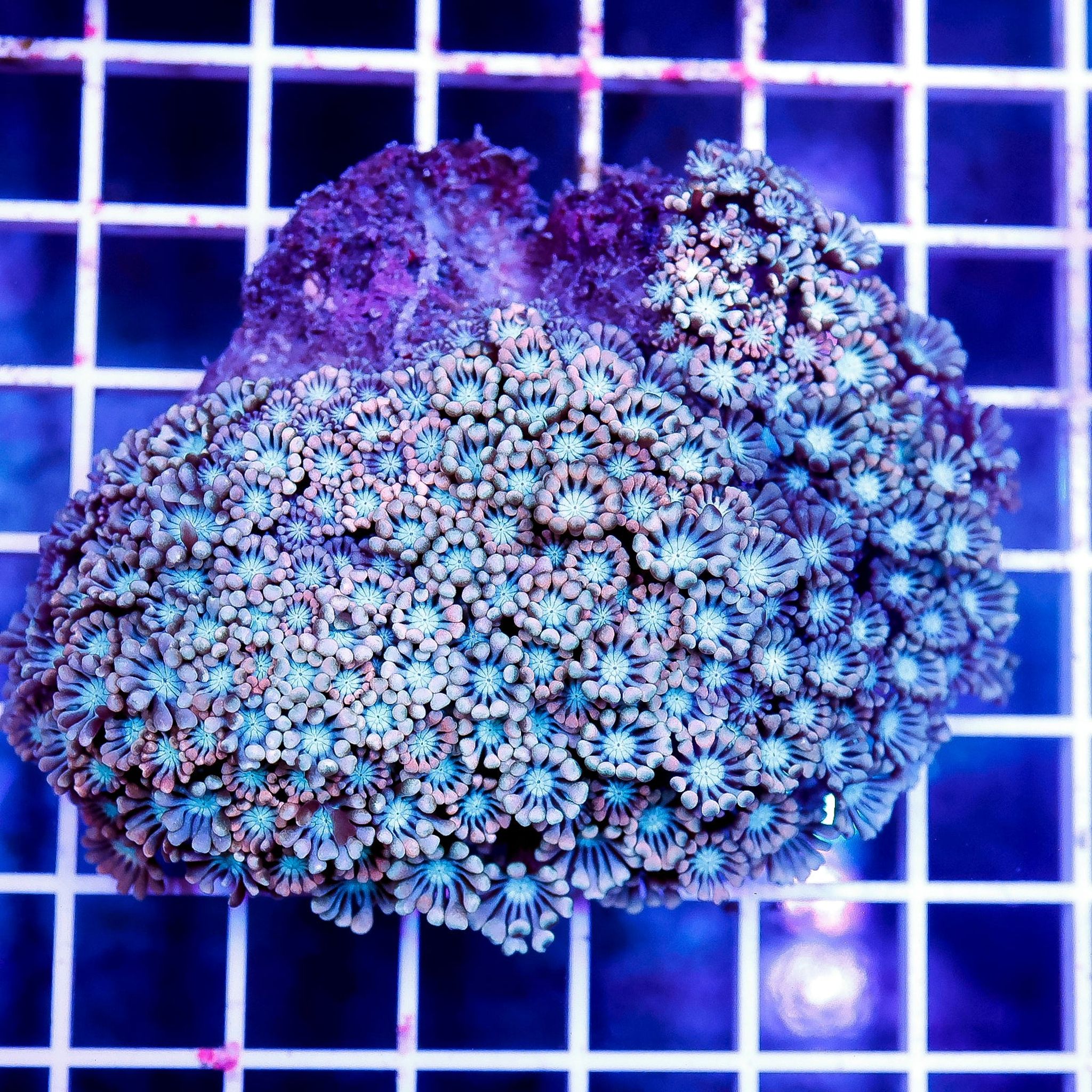
Alveopora is a stony (LPS) coral with long, grass-like sweeper tentacles that stay extended for most of the day and night, waving gently in current. Each polyp typically carries 12 tentacles, which is one of the easiest ways to tell it apart from its close cousin, Goniopora, whose polyps usually show a different tentacle count and slightly stiffer, less flowing motion. Both genera were historically grouped together in the family Merulinidae, but genetic work has shown they are distinct — they just share a similar look and, unfortunately, a similar reputation for being shipping-sensitive and prone to unexplained decline.
Don't confuse Alveopora with daisy polyps or star polyps at a glance. Those soft-coral relatives have shorter, stubbier tentacles and a fleshier stalk, while Alveopora's tentacles are longer, thinner, and constantly swaying even in still water. Full polyp extension across the whole colony, with tentacles reaching well past the skeleton, is the single best sign of a healthy specimen. A colony with retracted polyps and visible bare skeleton patches is already telling you something is wrong.
Before buying, look closely for:
- Full, even polyp extension across the entire colony, not just one side
- No dark or bare patches on the skeleton (a sign of old recession)
- Tentacles that respond to light touch or a turkey baster puff of water by retracting normally
- No obvious slime, film, or foreign egg masses on the base
A colony that already shows partial recession scars is more likely to be a chronic decliner, even if it looks fine on the day of purchase.
Ideal Tank Setup and Placement
Alveopora is a soft-sediment, lagoon-dwelling genus in the wild, which explains why it does poorly when treated like a typical high-light SPS coral. It wants a low position: on the sandbed or on low rockwork, never perched high in the display where light and flow are strongest.
Lighting: Sources disagree on exact numbers — some care sheets tolerate up to 150 PAR, while others cap it at 75 PAR and blame most fading on overlighting. The safer approach is to start low (roughly 50–80 PAR) and acclimate upward slowly over 2–4 weeks if at all, watching polyp extension and color as your real guide rather than chasing a specific PAR reading. Too much light causes tissue recession and browning/bleaching just as easily as too little light causes pale, washed-out color.
Flow: Gentle, indirect, and ideally alternating so the tentacles wave rather than get pinned flat or torn. A direct powerhead blast is one of the most common causes of tissue damage and a colony that refuses to extend its polyps.
Spacing: Alveopora is semi-aggressive. Its sweeper tentacles extend at night to sting neighboring corals, so give it a few inches of clearance from anything it could reach — and be equally cautious about placing fast-growing or aggressive corals close enough to sting it back.
| Parameter | Target range | Why it matters |
|---|---|---|
| Temperature | 76–80°F (24–27°C) | Swings stress zooxanthellae, contributing to bleaching |
| Salinity | 1.024–1.026 SG | Stability matters more than the exact number |
| pH | 8.1–8.4 | Supports stable calcification |
| Alkalinity | 8–11 dKH | Alveopora is highly intolerant of day-to-day swings |
| Calcium | 380–450 ppm | Swings here are a top cause of tissue loss |
| Magnesium | 1250–1350 ppm | Keeps calcium/alkalinity chemistry balanced |
| Light | 50–80 PAR to start | Higher only after slow, gradual acclimation |
| Flow | Gentle, indirect, alternating | Direct blast damages tissue and prevents extension |
The consistent theme across every parameter is stability over precision. A tank that holds alkalinity at 8.5 dKH every single day will generally outperform one that swings between 7 and 10, even though both average out to a similar number.
Feeding Guide
Alveopora polyps have functioning mouths, and feeding response is one of the best day-to-day health indicators you have. A colony that stops accepting food is often already under stress from something else.
What to feed: fine particulate foods — phytoplankton, rotifers, small pellets, or a liquid or powder coral food formulated for LPS corals — offered directly at the polyps a few times a week.
Signs it's accepting food: tentacles curling inward toward a food particle, polyps staying extended and slightly swollen after feeding, and no rejection (spitting the food back out) within a few minutes.
Sources disagree on how essential feeding really is. Some argue Alveopora can survive on photosynthesis and incidental feeding alone; others treat frequent target feeding as mandatory for long-term survival. In practice, treat feeding as beneficial and often necessary in nutrient-poor, heavily skimmed, or GFO-dosed systems — but understand it is not a fix for a coral that's declining because of a parameter swing or a flow/light problem. A starving Alveopora fades gradually and evenly; a stressed one recedes or bleaches regardless of how well it's fed. You can browse fine particulate and liquid coral foods suited to LPS feeding in FishyHub's coral and marine invertebrate section.
Acclimating a New Alveopora
Sudden parameter or light changes are the single most common trigger of collapse in a newly acquired Alveopora. Treat the first two weeks as a mini quarantine period:
- Drip acclimate slowly over 60–90 minutes rather than a quick float-and-dump.
- Dip the coral in a coral-safe iodine or Lugol's solution at the concentration and timing listed on the product, as a conservative first step against hitchhiking pests — this is worth doing even if you see nothing obviously wrong.
- Place it low and dim for 1–2 weeks: low flow, low light, away from aggressive neighbors, rather than straight into display conditions.
- Watch, don't test obsessively. Full polyp extension returning within a few days is the best sign the transition went well.
- Introduce light gradually afterward if you intend to move it to a brighter spot — over weeks, not days.
Skipping this process and placing a new colony directly into display lighting and flow is the most common cause of rapid or slow tissue necrosis (see below) within the first one to two weeks of ownership.
Diagnosing Tissue Loss, Fading and Stress Symptoms
Not every retracted or pale Alveopora is dying. Use this checklist to tell normal behavior apart from a real problem before you intervene.
Normal Retraction vs. STN vs. RTN
| Symptom | Likely cause | Timeframe | Action |
|---|---|---|---|
| Polyps closed at night or right after transport | Normal rest/stress response | Hours | None — recheck in daylight |
| Polyps closed, tissue intact, no odor | Recent flow/light change or minor disturbance | 1–2 days | Monitor, reduce disturbance |
| Gradual recession from the base or one edge | Slow tissue necrosis (STN) | Weeks | Identify and fix the stressor, dip, isolate |
| Rapid tissue sloughing, exposed white skeleton spreading fast | Rapid tissue necrosis (RTN) | Days | Frag away necrotic tissue immediately if a clean cut can stop the spread |
| Pale/white color, polyps still extending normally | Bleaching (light, heat, or starvation) | Days to weeks | Adjust light/temperature, resume feeding |
Rapid tissue necrosis (RTN) strips tissue from a colony in a matter of days and is often unrecoverable once it starts spreading fast — the priority is cutting away healthy fragments before the whole colony is lost. Slow tissue necrosis (STN) creeps from a base or edge over weeks, giving you more time to identify and correct the underlying cause. The biggest mistake here is ignoring a small patch of recession for too long and letting it spread across the entire colony before acting.
Fading and Bleaching
Paling of tissue color while polyps stay fully extended usually points to one of three things, rather than infection:
- Light stress (too much or too little, or a change introduced too quickly)
- Low nutrient levels / starvation, especially in an ultra-clean, heavily skimmed system
- Elevated temperature, which triggers zooxanthellae expulsion
None of these are automatically fatal if the tissue itself stays intact — a bleached-but-intact colony can often re-color once the stressor is corrected and feeding resumes.
Identifying and Treating Pests
A handful of pests and predators are reported on Alveopora and its Goniopora-type relatives:
- Nudibranchs — small mollusks that lay egg masses directly on the skeleton and camouflage their color to match the host coral, making them easy to miss.
- Predatory flatworms — small, flat, and often hiding in tissue folds; related to the flatworms known for attacking Acropora.
- Bristleworms — occasional nighttime bites on already-stressed tissue, more opportunistic than a primary cause of decline.
- Pyramid snails — less commonly reported on Alveopora than on Acropora, but worth checking the base for small conical shells.
Treatment approach:
- Manually remove any visible pests or egg masses with tweezers under close inspection, ideally with a magnifier or phone camera zoom.
- Dip the colony in a coral-safe iodine or Lugol's solution, or another LPS-appropriate coral dip, following the product's concentration and timing.
- Quarantine the coral in a separate system for 1–2 weeks before returning it to the display, watching for any pests that re-emerge.
- Quarantine every new coral going forward — most pest introductions trace back to a specimen added straight into the display without this step.
When to Frag or Remove a Colony
Deciding whether to cut your losses is one of the harder calls with this genus. A few guidelines:
- If recession has visibly stopped and a clear margin of healthy tissue remains, there's a good chance of stabilizing and eventually regrowing the colony with low light, low flow, isolation, and resumed feeding once polyps re-extend.
- If recession is actively spreading and a clean cut through healthy tissue can separate it from the dying section, fragging is a reasonable way to save part of the colony rather than losing all of it.
- If the entire colony has gone tissue-white with no living polyps left, it's dead. Remove it promptly — a decaying coral skeleton fouls water quality quickly and can affect neighboring livestock.
Common Mistakes to Avoid
- Placing it high in strong light and flow because it "looks like" a hardy LPS coral — this is the single most frequent setup mistake and a direct path to recession and bleaching.
- Skipping acclimation and adding a new specimen straight into display conditions.
- Chasing a perfect parameter number while allowing alkalinity or calcium to swing day to day — instability, not the exact set point, is what damages tissue.
- Panic-dipping a coral that's simply resting at night or recovering from transport, adding unnecessary stress.
- Letting a small recession patch go unaddressed until it consumes the whole colony.
- Skipping target feeding in an ultra-low-nutrient system, leading to slow, starvation-related fading.
- Crowding aggressive or fast-growing corals nearby, so sweeper-tentacle stings cause chronic, localized tissue damage.
Why Tank Maturity Matters More Than Any Single Trick
Across care advice for this genus, one pattern stands out more than any specific parameter or product: success correlates strongly with tank maturity and biological stability, generally systems that have been running for six months or more, rather than any single technique. A mature tank tends to hold alkalinity, calcium, and temperature steadier day to day, which is exactly the kind of stability Alveopora depends on. It's also worth setting realistic expectations — even a well-cared-for Alveopora can decline for reasons that aren't always identifiable, and partial colony loss is common enough that it shouldn't automatically be read as a keeper mistake.
Frequently Asked Questions
Why is my Alveopora losing tissue or receding from the base?
Usually parameter instability (especially alkalinity or calcium swings), new-coral shipping stress, or direct flow/light shock. Look at the trend over the past week or two rather than a single test result, since instability matters more than any one measurement.
Why did my Alveopora suddenly turn pale or white?
This is typically bleaching from light or temperature stress, or nutrient starvation causing the coral to expel its zooxanthellae. It's not necessarily fatal if the tissue itself is still intact and polyps are extending normally.
Is Alveopora hard to keep, or good for beginners?
It's generally considered an intermediate-to-advanced LPS coral because of its sensitivity to instability and shipping stress. It does best added to a mature, stable tank rather than a newly cycled one.
What's the difference between Alveopora and Goniopora?
They're closely related in appearance and care needs but are genetically distinct genera. Alveopora typically has 12 tentacles per polyp and is often reported as slightly more forgiving of higher flow and light than Goniopora.
What are the small worms or slugs on my Alveopora?
They're likely predatory flatworms or nudibranchs that have camouflaged themselves to match the coral's color. Remove them manually, follow with a coral-safe dip, and quarantine future coral purchases before adding them to the display.
Can a badly receded Alveopora recover?
Yes, if a healthy tissue margin remains and the underlying stressor is corrected. Frag away the dead sections to stop the spread, then give the remaining piece low light and low flow to recover.
How often should I feed Alveopora?
Several times a week with fine particulate or liquid coral foods is a common baseline, and more frequent feeding helps in low-nutrient, heavily skimmed systems. Feeding won't fix a coral that's struggling from unstable parameters or poor flow, though.
Why does my Alveopora sting nearby corals?
It extends long sweeper tentacles at night to compete for space with neighboring corals. Give it several inches of clearance from anything it could reach, and vice versa for aggressive or fast-growing corals near it.
If you're building out an LPS collection or replacing a colony that didn't make it, FishyHub's LPS hard coral selection is a good place to compare healthy, fully-extended specimens before you buy.


