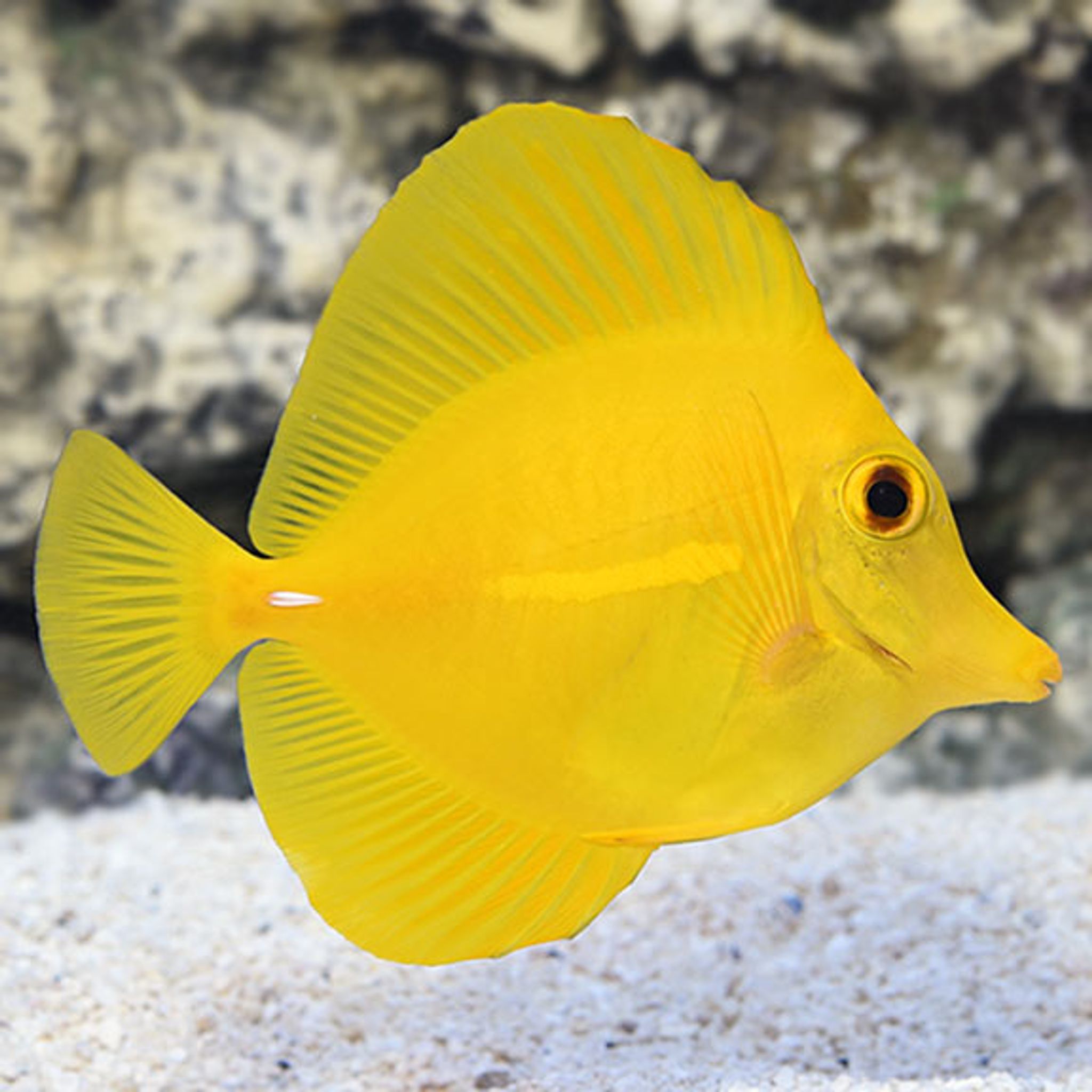
Best Tank Mates for Yellow Tang: Peaceful, Risky and Incompatible Choices
A Yellow Tang (Zebrasoma flavescens) is one of the most recognizable reef fish in the hobby, but stocking around one takes more than picking "peaceful" species off a generic list. The real driver of aggression is body-shape and diet overlap, not temperament labels, so this guide sorts tank mates into Peaceful, Risky and Incompatible tiers and explains the biology behind each call.
Yellow Tang Basics You Need Before Stocking
Yellow Tangs are native to Hawaiian and central Pacific reefs, where they spend their days grazing algae off rock and rubble. In a home aquarium, adults reach roughly 7–8 inches and are constant, active swimmers — a lifestyle that shapes almost every compatibility decision below.
Key requirements:
- Tank size: 100 gallons (380 L) minimum, with 125 gallons (473 L) or more preferred. Length matters more than raw volume — aim for a footprint of at least 4–6 feet (120–180 cm) so the fish can swim its normal patrol route.
- Diet: primarily marine algae. Offer nori or dried seaweed sheets and Spirulina-based foods daily, supplemented with a vitamin-enriched pellet.
- Reef compatibility: Yellow Tangs are considered reef-safe algae grazers that leave coral and most invertebrates alone, though a very large or underfed individual may occasionally nip at soft coral polyps or clam mantles.
- Disease sensitivity: the species is notoriously prone to Marine Ich (Cryptocaryon) and Velvet, especially under shipping or overcrowding stress.
The Real Rule Behind Tang Aggression
Tang aggression is usually mistaken for a personality trait, but it's better understood as resource competition. Two factors decide almost every fight:
- Body shape and coloration overlap — fish with a similar oval or lance-shaped silhouette, or similar yellow coloring, read as competitors even across genera.
- Diet niche overlap — other algae grazers compete directly for the same food, which raises tension especially when grazing surface is limited.
- Introduction order — an established resident defending known territory is far more aggressive than a fish entering a freshly rearranged tank.
- Swimming room and aquascape — open, featureless layouts remove the sightline breaks fish use to retreat and de-escalate.
This framework is worth memorizing because it lets you evaluate species that aren't on any list: if a candidate tank mate is a similar shape, eats the same food, or is being added into an already-claimed territory, treat it as higher risk regardless of its reputation.
Peaceful Tank Mates
These species occupy different water column zones, eat different foods, or are simply too passive to compete for a tang's territory.
| Tank mate | Why it works |
|---|---|
| Ocellaris/percula clownfish | Different niche, calm demeanor, one of the most reliable saltwater pairings |
| Firefish and dartfish | Hover near rockwork in mid-to-upper water, minimal overlap |
| Cardinalfish (Banggai, Pajama) | Passive schoolers, no grazing competition |
| Six-line and fairy wrasses | Mid-water swimmers that ignore algae |
| Clown goby, watchman goby | Bottom-dwelling, essentially zero territorial overlap |
| Green and blue-green chromis | Peaceful schooling damsels with low aggression |
| Dwarf angelfish (e.g., Coral Beauty) | Generally fine in adequately sized tanks, especially added alongside or after the tang |
| Lawnmower blenny | Mild diet overlap but usually tolerated well |
You can browse many of these directly, including a wide range of clownfish, wrasse, gobies and chromis.
Risky / Conditional Tank Mates
These pairings can work, but only with the right tank size, aquascape, and introduction strategy.
- Other tangs of a different genus or body shape (Naso tang, Purple or Blue Hippo Tang, bristletooth tangs): workable in 125 gallons or larger if all tangs are added simultaneously as juveniles. Risk climbs sharply below 100–125 gallons.
- Other Zebrasoma species (Purple Tang, Sailfin Tang, Scopas Tang): same genus, same oval body shape — the single highest tang-on-tang aggression risk. Reserve for tanks of 180 gallons or more, with staggered rockwork resets or simultaneous introduction.
- Semi-aggressive damsels: can peck at a shy or newly introduced tang. Manageable if the tang is established before the damsels arrive, or added mid-hierarchy rather than last.
- Larger, boisterous angelfish species: occasional aggression toward tangs; monitor closely after introduction.
- Dwarf lionfish and other slow-moving fish: not usually a direct threat, but a tang may compete with them for open swimming space in a tight layout.
Zebra Tang vs. Yellow Tang
The Zebra Tang (Zebrasoma zebra) is a less common relative with brown-and-white juvenile striping that dulls with age. It shares the Yellow Tang's oval body shape and territorial temperament, so pairing the two carries the same meaningful same-genus aggression risk as any other Zebrasoma combination — treat it exactly like a Purple or Sailfin Tang pairing: large tank, simultaneous introduction, careful rockwork. Zebra Tangs also tend to be pricier and less frequently available than Yellow Tangs.
Incompatible / Avoid
- Triggerfish: many species are aggressive enough to harass or injure a tang. A handful of hobbyists report success with individually peaceful trigger species, but this remains a gamble best reserved for advanced keepers, not a default recommendation. You can review current stock in the triggerfish category if you're set on the pairing.
- Large predatory fish (large groupers, mature lionfish that view small fish as prey): a straightforward size-mismatch risk.
- A second Yellow Tang, or any near-identical yellow-colored fish: almost guaranteed to fight in a typical home tank. As a general rule, keep one tang per genus/body type per tank unless the system is genuinely oversized.
- Shoals of aggressive damsels: a group can gang up on a tang far more effectively than a single individual.
Vivid Yellows and Other Gold-Colored Marine Fish
Yellow Tangs pair naturally with other vividly colored reef fish — yellow gobies, certain wrasses, and Lemonpeel Angelfish are popular choices for a bright display. The catch: stacking multiple similarly yellow, similarly shaped fish can still trigger mild aggression even across genera, because visual and niche overlap matters more than species labels. For a harmonious mixed-color reef, favor contrast — pair your tang with different body shapes and cooler or contrasting colors rather than a second gold-toned swimmer.
Introduction Order: A Practical Playbook
How you add fish matters as much as which fish you choose.
- Add the Yellow Tang first, before other tangs have a chance to claim territory — or last, using a temporary quarantine/acclimation box so it can adjust to the tank's sightlines before full release.
- Add same-genus tangs simultaneously, ideally all as juveniles, so no single fish has an established home-field advantage.
- Rearrange the rockwork right before introducing a new tang. Resetting the aquascape erases existing territory claims and forces every resident to re-establish boundaries at the same time.
- Never drop a new tang into a fully stocked, densely established tank last — this is when bullying risk is highest.
Tank Setup That Reduces Aggression
Three levers do most of the work in keeping a multi-herbivore reef peaceful:
- Swimming length: minimum 4–6 feet (120–180 cm) of open water so tangs aren't forced into constant close contact.
- Rockwork structure: multiple caves and sightline breaks let a stressed or subordinate fish retreat and de-escalate a dispute instead of being cornered.
- Algae/grazing supply: keep dried seaweed clips or gel foods available even in tanks with natural algae growth — competition and aggression spike sharply when herbivores are underfed.
Sourcing: Captive-Bred vs. Wild-Caught Yellow Tangs
Yellow Tang is one of the most heavily wild-collected Hawaiian aquarium fish, but captive-bred stock has become increasingly available since hatchery researchers cracked the species' larval-rearing process in the 2010s. Practical reasons to consider captive-bred individuals:
- They tend to acclimate faster and may be hardier or less stressed than wild-caught fish, which is a real advantage given the species' susceptibility to Ich and Velvet.
- Choosing captive-bred stock supports sustainability for a species under significant wild-collection pressure.
- Some captive-bred programs have even released juveniles back into wild reefs as a stock-enhancement measure — a practice that has drawn some debate among conservationists and collectors, but reflects the broader push toward aquaculture in this niche.
You can compare available individuals in the Tangs & Surgeons category and check listing details for sourcing information.
Common Mistakes to Avoid
- Adding a second tang, especially same-genus, into an already-established tank without enough space — near-guaranteed chasing and nipping.
- Trusting a 55–75 gallon "starter reef tank" marketed as tang-safe — undersized footprints lead to stress, stunted growth, and chronic Ich outbreaks.
- Skipping quarantine. A 2–4 week QT period is strongly recommended for every new fish; Yellow Tangs are especially prone to Marine Ich and Velvet, and shipping stress makes outbreaks worse.
- Underfeeding algae grazers. Competition and aggression rise quickly when there isn't enough grazing food to go around — supplement even a tank with visible algae growth.
- Leaving the aquascape open and featureless. Without caves or sightline breaks, disputes escalate instead of de-escalating.
- Adding the tang last into a densely stocked tank. Earlier placement, or simultaneous addition with other tangs, produces far better outcomes.
Frequently Asked Questions
Can I keep two Yellow Tangs together?
Generally no in a typical home tank. It's only realistic in very large systems (200 gallons/760 L or more) with exceptional rockwork and space, and even then it's a gamble rather than a reliable plan for most hobbyists.
What is the minimum tank size for a Yellow Tang?
100 gallons (380 L) is the modern safe minimum, with tank length of 4–6 feet mattering more than sheer volume. 125 gallons (473 L) or larger is ideal, particularly if you plan to add other tangs later.
Are Yellow Tangs reef safe?
Yes. They don't eat coral or most invertebrates and are considered reef-safe algae grazers, though very large or hungry individuals may occasionally nip at soft coral polyps or clam mantles in rare cases.
Can Yellow Tangs live with clownfish?
Yes — this is one of the most common and reliable saltwater pairings. Clownfish occupy a different niche with essentially no competition for territory or food.
Will a Yellow Tang bully smaller fish?
Typically not. A Yellow Tang isn't proactively aggressive toward unrelated species; its aggression is mostly directed at same-genus or similarly shaped tangs, or at new tankmates it perceives as invading its established territory.
How do I introduce a new tang without a fight?
Add same-genus tangs simultaneously, ideally as juveniles, and rearrange the rockwork right before introduction to reset territory claims. A temporary acclimation box or divider for a few days can also ease the transition.
Is a Yellow Tang aggressive toward triggerfish, or is it the other way around?
The risk runs the other way — some triggerfish species can be aggressive toward tangs. Treat any tang-and-trigger combination as an advanced, situational pairing rather than a default recommendation.
What do Yellow Tangs eat, and does diet affect compatibility?
Primarily marine algae, nori, and herbivore-formulated pellets. Underfeeding increases competitive aggression toward other grazers, so keep the algae supply generous whenever you're housing multiple herbivorous fish together.
Ready to plan your stocking list? Browse current availability in Marine Fish to compare Yellow Tangs and compatible tank mates side by side.

