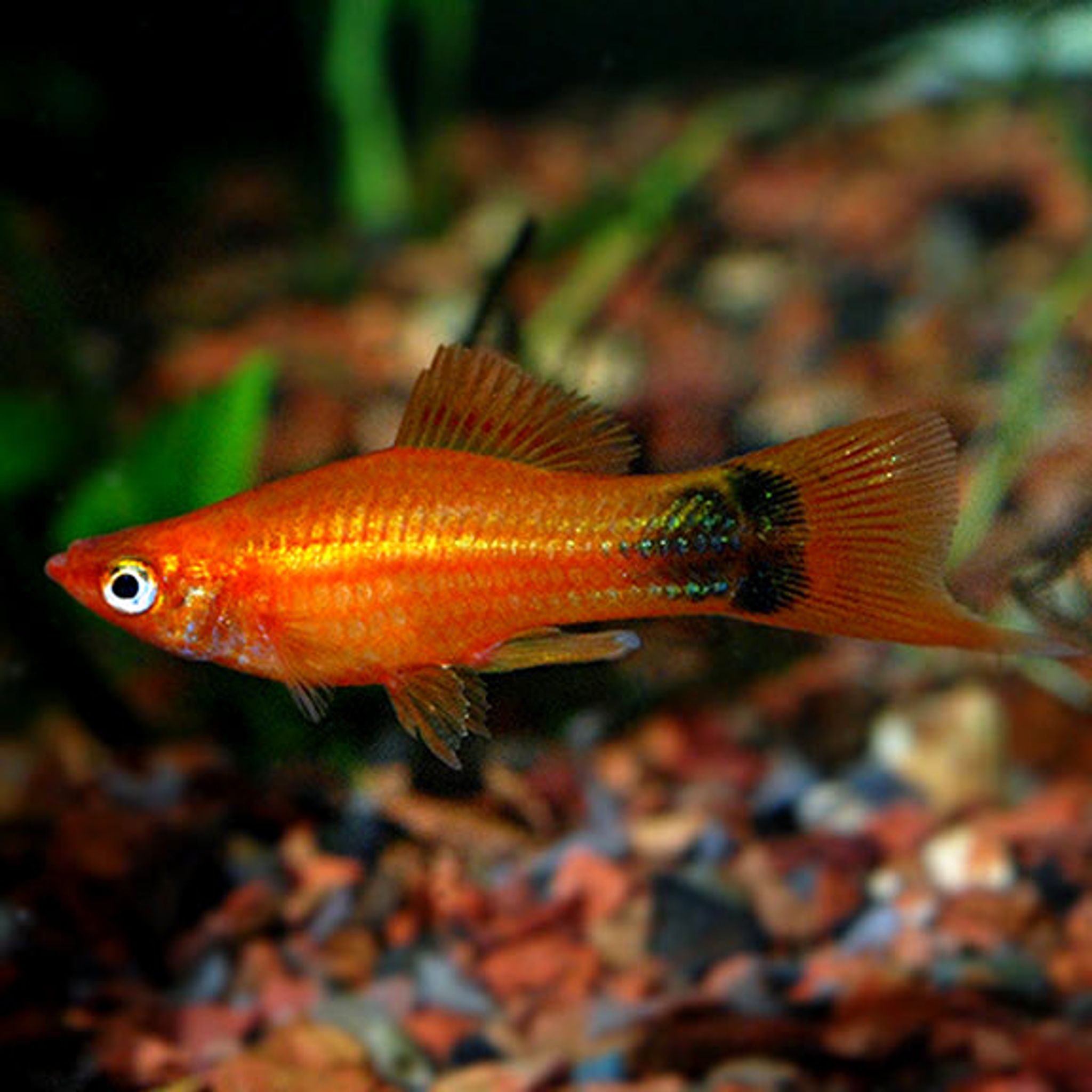

Best Tank Mates for Swordtail: Compatible Fish and Species to Avoid
The best tank mates for swordtails are other hard-water livebearers like platies, mollies and guppies, plus sturdy community fish such as zebra danios, corydoras and bristlenose plecos. Avoid large cichlids, fin-nippers, soft-water specialists, goldfish, and anything big enough to swallow a swordtail. Check water chemistry first, then size and temperament, and stock the swordtails at a sensible sex ratio, because their own males cause more trouble than most tank mates.
Swordtail Basics: What You Are Matching
The swordtail (Xiphophorus hellerii) is a Central American livebearer. It's hardy, active, and spends most of its time in the middle and upper water.
- Adult size: about 4–6 inches (10–15 cm), counting the male's sword. Females are often bulkier, and some reach around 6 inches.
- Lifespan: 3–5 years.
- Temperature: 72–78°F (22–26°C).
- pH: 7.0–8.4.
- Hardness: hard water, roughly 12–30 dGH.
- Diet: omnivore. Give it flakes, pellets, frozen or live foods, and some vegetable matter.
Store-sold swordtails are often juveniles under 2 inches. Plan for the adult size, not the size in the bag.
Tank size
Some keepers claim 10–15 gallons is enough. It isn't. Swordtails are strong swimmers, so treat 20 gallons (76 L) as the bare minimum for a trio. For a group plus community fish, go 30–40 gallons (114–151 L), ideally a long tank with a footprint of 30 inches (76 cm) or more. Leave open swimming lanes down the front and put planted cover along the back and sides.
Filter by Water Chemistry First
This is the step most compatibility lists skip. Swordtails do best in hard, alkaline water. Pairing them with soft, acidic-water fish and "splitting the difference" at pH 7.0 leaves both groups slightly stressed. Test your GH, KH and pH before you shop, then only consider fish that are comfortable in that range.
| Common community fish | Hard, alkaline water? | Verdict with swordtails |
|---|---|---|
| Platies, mollies, guppies, Endler's | Prefer it | Excellent |
| Limias (Caribbean livebearers) | Prefer it | Excellent, offbeat |
| Zebra danios | Tolerate it well | Good |
| Black skirt and lemon tetras | Tolerate harder water | Good |
| Serpae tetra | Tolerates it | Use caution (nippy) |
| Many wild-type tetras | Prefer soft, acidic | Avoid |
| Discus | Need soft, acidic, warm | Avoid |
| Angelfish | Prefer softer water | Caution, large tanks only |
| Goldfish | Cold water | Avoid |
Livebearer Profiles: Guppy, Molly, Platy and Swordtail
The four classic livebearers overlap closely, which is why they appear together so often. Ranges below are typical guidelines.
| Species | Adult size | Temperature | pH | Hardness | Tank minimum | Temperament |
|---|---|---|---|---|---|---|
| Swordtail | 4–6 in (10–15 cm) | 72–78°F (22–26°C) | 7.0–8.4 | 12–30 dGH | 20 gal (76 L) | Peaceful; males spar |
| Platy | 2–3 in (5–8 cm) | 70–78°F (21–26°C) | 7.0–8.2 | Hard | 10–20 gal (38–76 L) | Peaceful |
| Molly | 3–4.5 in (8–11 cm) | 75–80°F (24–27°C) | 7.5–8.5 | Hard | 20–30 gal (76–114 L) | Peaceful; males can chase |
| Guppy | 1.5–2.5 in (4–6 cm) | 72–80°F (22–27°C) | 7.0–8.0 | Moderate to hard | 10 gal (38 L) | Peaceful |
The Best Tank Mates for Swordtails
Ranked roughly by how easily they fit.
1. Platies
Platies share the swordtail's genus and have identical water needs, which makes them the most natural fit. You can browse platies on FishyHub if you're building a mixed livebearer tank.
The hybrid question: some keepers call platies the ideal mate, while others warn they crossbreed. Both are right. Swordtails and platies can and do hybridize. The hybrids aren't harmful, but they blur strains. Keep them together freely unless you breed pure lines or sell fry, and keep a strong female-to-male ratio within each species.
2. Mollies
Mollies like the same hard, alkaline water and grow to a similar size. They belong to a different genus, so they won't hybridize with swordtails. Mollies also don't need added salt when your water is already hard. Mollies are also available on FishyHub. Use separate birthing setups for pregnant females of each species.
3. Guppies and Endler's
Guppies work well, but adult swordtails may nip the long, flowing fins of male fancy guppies. Endler's livebearers are smaller, tougher and less tempting to nip.
4. Hardy community fish
- Zebra danios: fast, tough, and happy in hard water.
- Black skirt and lemon tetras: larger tetras that accept harder water. Serpae tetras are an option only with caution, since they can nip fins.
- Peaceful rasboras: calm, mid-water schooling fish.
- Dwarf gourami: keep the tank at the warm end of the swordtail range.
- Hatchetfish: surface dwellers that jump, so you need a tight lid.
5. Bottom dwellers and algae crews
- Corydoras: peaceful, and they clean up leftovers. Keep them in groups.
- Bristlenose pleco: stays small, unlike the common pleco.
- Otocinclus: keep them in groups of 6 or more.
- Siamese algae eater: active and useful against algae.
6. Medium Central American cichlids (large tanks only)
Firemouths and some parrot cichlids come from the same hard-water region and can live with adult swordtails. Opinions split between "avoid all cichlids" and "firemouths are fine." A sensible middle ground is small to medium Central Americans in 55 gallons (208 L) or larger, and no large species or South American predators. Expect fry losses.
7. Invertebrates
- Generally safe: nerite, mystery and assassin snails, plus adult Amano shrimp.
- Food: cherry shrimp, ghost shrimp and any shrimplets.
Offbeat Livebearer Companions
Limias
Cuban limias and other Caribbean limias grow 1–4 inches (2.5–10 cm). They prefer calcium-hard, alkaline or slightly brackish water at around 75–80°F (24–27°C). They're peaceful, they breed readily, and they graze heavily on algae, which makes them a good, less common pick for a swordtail tank. Choose the larger species if your adult swordtails are big.
Endler's, Campoma and P. obscura
These small guppy relatives are peaceful alternatives to fancy guppies. Endler's cross freely with guppies, so if purity matters, keep the lines in separate tanks.
Species to Avoid
- Large predatory or territorial cichlids: oscars, jack Dempseys, jaguar cichlids.
- Big gouramis: they get too large and too territorial.
- Most crayfish: they catch sleeping fish at night.
- Aggressive barbs and dedicated fin-nippers.
- Soft, acidic-water fish: discus and many wild-type tetras.
- Goldfish: they need cooler water than tropical swordtails.
- Common pleco: some lists call it ideal, but it grows 12–18+ inches (30–46+ cm) and needs 100+ gallons (379+ L). Choose a bristlenose instead.
- Anything big enough to swallow a swordtail. Also avoid fish under about 1 inch (2.5 cm), which big adult swordtails may eat.
The angelfish and betta debate
Some sources list both as good mates, while others steer clear. Angelfish eat fry and prefer softer water. Bettas risk having their fins nipped by swordtails or getting into flaring conflicts. Either can work in a large, calm tank with an experienced keeper, but neither is a beginner pairing.
Are Swordtails Aggressive?
Mostly no. Swordtails are peaceful toward other species. Trouble comes from:
- Too many males, which spar with each other and harass females.
- Overcrowding and small tanks.
- Pregnancy stress, since gravid females can turn snappy.
- Poor water quality.
- Strain: some fancy strains are pushier than others.
The fixes are a better sex ratio, more space, dense plants to break sightlines, and rehoming a persistent bully.
Stocking the swordtails themselves
Keep one male per 2–3 females. With several males, go bigger and plant heavily. Apply the same rule to every livebearer in the tank: each species needs its own female-heavy ratio, because a male guppy won't distract a male swordtail from its own females.
Stocking Templates
| Tank | Swordtails | Suggested companions |
|---|---|---|
| 20 gal (76 L) | 1 male, 3 females | A few otocinclus or a small cory group, plus snails; keep other fish minimal |
| 30 gal (114 L) | 1–2 males, 4–5 females | 3–5 platies (female-heavy), 6 zebra danios, 6 corydoras, nerite snails |
| 55 gal (208 L) | 2–3 males, 6–8 females | Mollies, 8 lemon or black skirt tetras, 6 corydoras, bristlenose pleco, Amano shrimp, or one pair of firemouths instead of some small fish |
Livebearers multiply, so leave headroom and rehome or sell fry early.
Fry: Plan for Them
Livebearer tanks produce fry roughly every 28–30 days. Almost every tank mate, including adult swordtails, will eat them. If you want some to survive, use dense plants, a breeder box, or a separate grow-out tank.
Female livebearers store sperm for months and can drop several broods after one mating. A "females only" group bought from a mixed tank can still produce fry. This applies to swordtails as well as guppies.
Introducing New Fish
- Quarantine every new fish for 2–4 weeks.
- Add peaceful fish first. If most of the community is smaller species, add swordtails last so they don't claim the tank.
- Feed for every level. Use flakes for the mid and upper water, plus sinking pellets or wafers so corydoras and plecos get their share. Add vegetable matter for the livebearers.
Common Mistakes and Troubleshooting
- Too many males: chasing and torn fins. Rebalance or remove extra males.
- Mixing soft-water species and averaging the pH.
- Buying a "nice" fish that outgrows the tank, like a baby oscar or common pleco.
- Adding cherry shrimp and expecting a colony.
- No lid: swordtails and hatchetfish jump.
- Overstocking as fry grow up unnoticed.
- A hiding swordtail: likely causes are a new arrival, bullying, ammonia, or a pregnant female. Test the water, check the ratio, and add cover.
Red poop in a guppy or swordtail tank
Red feces usually just reflects colored food. It can also signal constipation, parasites or infection. Fast the fish for a day, offer a blanched, shelled pea, and treat if the problem persists.
Frequently Asked Questions
Can swordtails live with guppies?
Yes. Watch for swordtails nipping the long fins of male guppies, and keep at least three females per male for each species. Endler's are a smaller, less nip-prone alternative.
Can swordtails and platies breed?
Yes, they can hybridize because they belong to the same genus. The offspring aren't harmful, but they mix strains. If you want pure lines, keep the species in separate tanks.
How many swordtails can go in a 20-gallon tank?
About one male and three females, with only a few other small fish or a snail cleanup crew. For a real community, move up to 30 gallons or more.
Will swordtails eat shrimp?
They'll eat baby shrimp and often small dwarf shrimp like cherries. Adult Amano shrimp are usually large enough to be safe.
Do swordtails need salt?
No. Hard, alkaline water matters far more than salt. The same goes for mollies kept in hard water.
Can swordtails live with goldfish, angelfish or cichlids?
Goldfish, no, because they need cooler water. Angelfish and peaceful medium Central American cichlids can work in large tanks, but expect fry losses. Avoid large predatory cichlids entirely.
Build Your Swordtail Community
Start with water chemistry, keep the males outnumbered, and choose companions that stay a similar size as adults. Once you've settled on a stocking plan, browse swordtails and other small community fishes on FishyHub to put your tank together.


