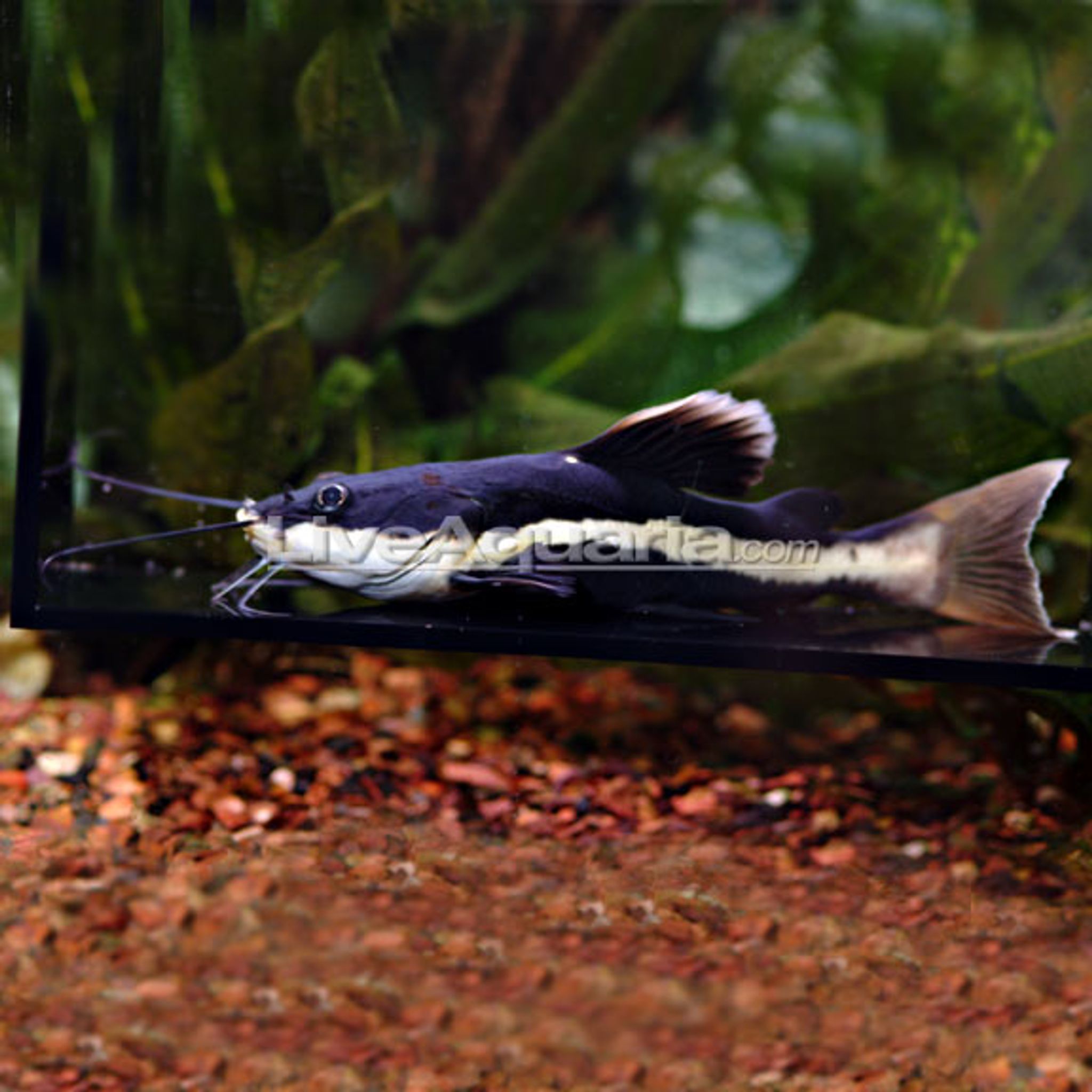

Best Tank Mates for Redtail Catfish: Compatible Fish and Species to Avoid
The best tank mates for a redtail catfish are large, armored or fast fish that are already too big to swallow, such as gars, big bichirs, datnoids, large doradids and arowanas, and all of them need a system of 1,500 gallons or more. For most home aquariums in the US, the honest answer is that a redtail should live alone. Below you'll find which companions can work, which species to avoid, and how to judge whether your setup can handle any of this.
Why Redtail Tank Mates Are a Special Case
The redtail catfish (Phractocephalus hemioliodus) is usually sold as a 3–5 inch (8–13 cm) juvenile with a striking orange tail. That small fish grows several inches a month during its first year. In aquariums adults usually reach 3–4 feet (90–120 cm), and wild fish can pass 5 feet (150 cm) and weigh more than 100 lb (45 kg).
This size is what decides compatibility. A fish that is a safe companion today may be dinner in six months, so every tank mate choice has to be made for the adult catfish, not the one in the bag.
Temperament: Calm, but a Predator
Sources disagree on whether redtails are "peaceful" or "predatory." Both are true:
- It is calm toward fish it can't eat and rarely goes looking for fights.
- It is deadly to fish it can eat. It's an opportunistic, mostly nocturnal bottom-dweller with a very wide mouth.
- It gets more territorial in cramped tanks, especially toward other large bottom catfish and its own species.
A useful rule of thumb: anything shorter than about half the redtail's body length is at risk. A 24-inch (60 cm) redtail can take a 12-inch (30 cm) fish.
Tank and Water Requirements Come First
No companion list matters until the system is right. Sources give minimums of 1,500 gallons, 1,500–2,000 gallons, or about 2,700 gallons for an adult. Treat 1,500 gallons (about 5,700 L) as the bare floor for one redtail alone, and go larger if you add tank mates.
| Parameter | Recommendation |
|---|---|
| Adult tank size | 1,500+ gallons (5,700+ L) for one fish; larger with companions |
| Footprint | Width and front-to-back depth matter more than height |
| Temperature | 70–79°F (21–26°C); some keepers allow 68–80°F (20–27°C) |
| pH | 6.0–7.5, ideally just under 7.0 |
| Hardness | Soft to moderately hard, about 3–12 dGH |
| Water changes | About 30% or more weekly |
| Filtration | A sump or several canister filters rated for 2–3x the tank volume |
| Substrate | Bare bottom or a thin layer of fine sand; no gravel (it gets swallowed) |
| Lifespan | 15–20+ years |
Juveniles need to be moved into bigger tanks repeatedly as they grow. Redtails produce huge amounts of waste, so oversized filtration is a baseline, not an upgrade.
Cost and Space Reality Check
A 1,500-gallon system is closer to a small indoor pond than an aquarium. Before buying, think about:
- Floor loading. Water weighs about 8.3 lb per gallon, so 1,500 gallons is more than 12,000 lb of water before the tank, stand, rock and equipment. Most homes need a structural assessment for that.
- Electricity. Heating that volume to the mid-70s °F runs all year in most US climates, and pumps run constantly.
- Timeline. If you can't build or buy a 1,500+ gallon system within 1–2 years, don't buy the fish. Most juveniles outgrow a 125-gallon tank within the first year.
Protecting Equipment From a Powerful Fish
Adult redtails can crack glass, smash heaters and jump. Use guarded or external heating (inline heaters in the sump plumbing are common), keep pipes and intakes secured, and fit a strong, weighted or latched lid.
Best Tank Mates for Redtail Catfish
The selection rule is simple:
- Same size or bigger than the redtail, now and at adulthood.
- Fast or armored, so they can escape or survive a test bite.
- Mid- or upper-water swimmers where possible, to reduce competition on the bottom.
- Added when already too big to eat. Don't rely on "they grew up together." Familiarity doesn't shrink a catfish's appetite.
Every species below is itself a monster fish. Adding one means you need even more room than the redtail alone.
| Tank mate | Where it lives | Why it can work | Main caveat |
|---|---|---|---|
| Florida or spotted gar | Upper/middle | Long, fast, hard to swallow | Alligator gar only in pond-scale systems |
| Large bichirs (Polypterus endlicheri, P. ornatipinnis) | Bottom | Heavy-bodied and armored with scales | Shares the bottom; needs floor space |
| Large datnoids (Datnioides) | Middle | Deep-bodied, tough predators | Must be well grown before introduction |
| Iridescent shark | Middle | Gets very large, fast | Skittish; grows huge itself |
| Large freshwater stingrays | Bottom | Too wide to swallow at size | Direct bottom competition; lots of floor area |
| Large doradids (Oxydoras, Pterodoras) | Bottom | Heavy armor deters predators | Bottom space and feeding competition |
| Pacu | Middle | Large, robust South American characin | Another giant that needs its own space |
| Large Leporinus | Middle | Active and sturdy | Only at full size |
| Silver or tinfoil barbs | Middle | Deep-bodied, fast schooling fish | Only at full adult size |
| Arowana | Upper | Stays at the surface, same continent | Also gets very large |
If you want to see what large species look like as juveniles, the Monster Fishes section on FishyHub is a good place to compare, but plan for adult size before buying any of them. Heavy-bodied bottom species such as bichirs also need to be at the large end of their range to live with a redtail.
A Size-Based Timeline for Adding Companions
Because the redtail keeps growing, check every tank mate against the half-length rule over time:
- Redtail 4–8 in (10–20 cm): Best kept alone while you build the next tank. Any temporary companion should be sturdy and at least its own size.
- Redtail 12–18 in (30–45 cm): Companions need to be well over 9 in (23 cm) and deep-bodied or armored.
- Redtail 24 in (60 cm) and up: Only fish of 12 in (30 cm) or more, and ideally close to the catfish's own length, should share the system.
Re-check at every tank upgrade. A fish that was safe last season may not be now.
Species to Avoid With a Redtail Catfish
- Anything small enough to swallow: tetras, most cichlids under a foot, gouramis, and plecos under a foot.
- Invertebrates: shrimp, crabs, crayfish and snails become food.
- Other redtails or similar predatory catfish such as tiger shovelnose and other Pseudoplatystoma. Territorial fights between big bottom catfish can be serious.
- Fin-nippers, which harass a slow bottom fish.
- Slow, delicate fish, which can't escape and struggle with the heavy waste load.
Synodontis as Companions: Why It Usually Fails
Synodontis catfish, often called squeakers, are hardy, armored African catfish that grow 4–12 in (10–30 cm) depending on species. They get suggested as "catfish buddies," but most are prey for a redtail. Worse, their locking dorsal and pectoral spines can lodge in the predator's throat, which can kill both fish.
Only the largest species, such as S. eupterus or S. schoutedeni, and only while the redtail is still a juvenile, would be a short-term pairing. Squeakers are much better kept in their own medium-sized tank. The same throat-lodging risk applies to other small spiny catfish.
Synodontis angelicus: A Better Choice Than a Redtail
If you want a striking catfish without a room-sized tank, the polka-dot or angel squeaker (Synodontis angelicus) is worth a look. It comes from the Congo basin and grows to about 8 in (20 cm).
- Temperature: 72–79°F (22–26°C)
- pH: 6.5–7.5
- Tank: 75–125 gallons (about 285–475 L)
- Behavior: Nocturnal and peaceful toward other species, but quarrelsome with its own kind. Provide caves.
It's too small to live safely with a redtail, but it makes a great centerpiece in a tank you can realistically maintain.
Feeding a Redtail Alongside Tank Mates
A well-fed community is a safer community. A hungry redtail hunts more.
- Juveniles: feed every 1–2 days.
- Adults: about once a week.
- Good foods: sinking pellets, whole fish and shrimp, and frozen seafood.
- Avoid: mammal or poultry meat, which is poorly digested, and feeder goldfish, which bring disease risk and contain thiaminase.
Make sure faster tank mates don't steal everything at the surface while the catfish goes without, and vice versa. Feed the bottom and the upper water at the same time if needed.
Common Mistakes and Troubleshooting
- Buying a 4-inch juvenile for a 55–125 gallon tank. It won't stay small. Stunting causes organ damage; it doesn't produce a smaller healthy fish.
- Choosing tank mates that fit today. Plan around where the redtail will be in six months.
- Keeping two redtails together. Expect territorial fights, and you'd need roughly double the volume.
- Weak lids and exposed heaters. Adults break heaters and jump. Guard or externalize all heating.
- Overfeeding. It leads to bloated fish, ammonia spikes and fatty liver disease.
- Tank mates vanishing overnight. That's predation, not a mystery illness. Move any remaining small fish right away.
- Planning to "donate it later." Most public aquariums refuse surrendered redtails. Contact monster-fish clubs or experienced large-fish keepers instead.
- Releasing it. Never release an aquarium fish into US waterways. It's illegal and harms native ecosystems.
Alternatives If a Redtail Isn't Realistic
- Redtail-tiger shovelnose hybrids are not a smaller option. They're also very large and predatory.
- Synodontis species, including S. angelicus, for a patterned, nocturnal catfish in a mid-size tank.
- Large plecos for a big, bottom-dwelling character fish.
- Pimelodus pictus or Pimelodus blochii, which have a similar long-whiskered pimelodid look at a manageable size.
Frequently Asked Questions
Can a redtail catfish live with an arowana or an oscar?
An arowana can work in a very large system because it stays near the surface and grows big itself. An oscar is only safe while it's larger than the catfish's mouth, and that usually doesn't last long as the redtail grows.
Can I keep two redtail catfish together?
No. Redtails are territorial toward their own kind, especially when space is tight. Even if they tolerated each other, you'd need roughly double the 1,500-gallon minimum.
Will a redtail catfish eat plecos?
Small plecos, yes. A full-grown common pleco sometimes survives, but it's often injured, so it isn't a dependable tank mate.
How fast does a redtail outgrow a 125-gallon tank?
Usually within the first year. With growth of several inches a month, a 4-inch juvenile can outgrow a 125-gallon tank well before its first birthday.
Can a redtail catfish live in a pond?
Only a heated indoor pond. Outdoor ponds in most of the US get too cold for a fish that needs 70–79°F (21–26°C) water year-round.
What are the best tank mates for a juvenile redtail?
Temporarily, robust fish at least its own size. The better plan is to keep the juvenile alone and put your effort into upgrading the tank before it outgrows the current one.
Choosing Companions You Can Keep Long Term
A redtail catfish is a 15–20+ year commitment, and its best tank mate is often none at all. If you have or can build a pond-scale system, choose big, armored or fast species that are already too large to swallow. If not, a smaller catfish is the better buy. Browse the catfish selection on FishyHub to find species that fit the tank you actually have.


