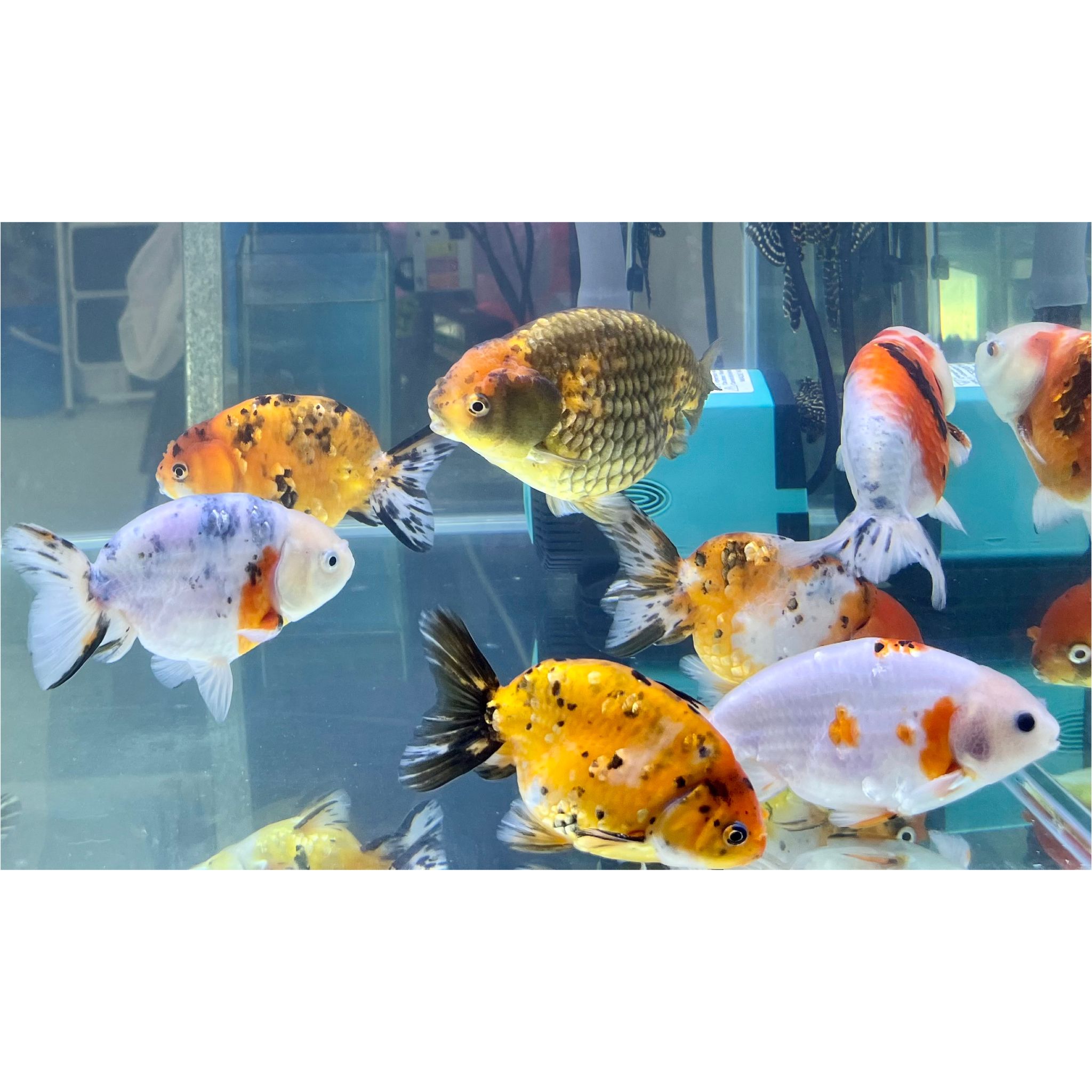

Best Tank Mates for Ranchu Goldfish: Compatible Fish and Species to Avoid
The best tank mates for ranchu goldfish are other slow, round fancy goldfish, especially lionheads and more ranchu, with a few careful extras like a bristlenose pleco and large snails. Skip single-tail goldfish, fin-nippers, anything small enough to swallow, and tropicals that need warm water. Below you'll find the reasoning, a compatibility table, and a stocking plan you can copy.
Why Ranchu Need Special Tank Mates
A ranchu has no dorsal fin, an egg-shaped body and a heavy head growth (wen). Together these make it the slowest, clumsiest goldfish in the hobby. It wobbles more than an oranda, turns slowly and struggles in current. That's also why many "fancy-safe" lists overstate who can live with it: a fish that is fine alongside an oranda can still outswim and outeat a ranchu.
Every good tank mate passes five tests:
- Just as slow at swimming and at feeding time
- Too big to swallow (goldfish eat whatever fits in their mouth)
- Peaceful, and not a fin-nipper
- Comfortable in cool water, about 65-72°F (18-22°C)
- Free of sharp spines that could lodge in a goldfish's throat
Goldfish are also social. A single ranchu does poorly on its own, so plan for at least two.
The Best Tank Mates for Ranchu
Other Slow Fancy Goldfish (Top Choice)
- Lionhead is the closest match: also dorsal-less, round and wen-headed.
- Other ranchu are an obvious fit.
- Oranda, ryukin and pearlscale work well, though orandas and ryukins are a bit quicker, so watch feeding.
- Veiltail and fantail are fine if the individuals aren't noticeably faster.
- Bubble eye, celestial and telescope are slow enough, but their eyes injure easily. Keep them only in a tank with nothing sharp in it.
Non-Goldfish Options (With Caveats)
- Bristlenose pleco. This is the only pleco worth trying. Feed it its own wafers or vegetables so it doesn't latch onto goldfish slime coats, and keep the tank at the warm end, 70-72°F (21-22°C). Rubbernose plecos are sometimes suggested, but they carry the same slime-coat risk and prefer warmer water. You can browse plecos on FishyHub.
- Dojo (weather) loach. It's peaceful and likes cool water, but it reaches 6-10 in. (15-25 cm), needs plenty of oxygen, tries to escape, and is restricted or banned in some US states. Only consider it in 55 gal (208 L) or larger with a tight lid, after checking your state's rules. Loaches come in many types, so confirm the species before you buy.
- Hillstream loaches. These are cool-water grazers that stay on surfaces, but they're used to fast, highly oxygenated water, which a gentle ranchu tank doesn't provide.
- Larger catfish such as hoplo or Brochis are big enough not to be eaten.
- Variatus platy is the one livebearer that makes sense at 70-72°F. Zebra danios and most other quick tropicals are too fast.
- Ricefish (medaka) tolerate cool water, but small ones risk being eaten.
- White cloud minnows are only for young or small ranchu in a big, clean tank, kept in a group of 8 or more. Adult ranchu may eat them, and minnows prefer cleaner, faster water, so most keepers should skip them.
Snails
Nerite and mystery snails are generally safe. Very small snails, including babies, get eaten.
Species to Avoid
- Single-tail goldfish (comet, common, shubunkin, sarasa). They grow 10-12 in. (25-30 cm), reach food first and push ranchu around. They belong in ponds, not with fancies.
- Anything bite-sized: small tetras, fry, shrimp and baby snails.
- Fin-nippers and bullies: tiger barbs and other aggressive barbs, African and large New World cichlids, bettas and most gouramis.
- Small spiny fish: otocinclus and small corydoras. A goldfish that tries to swallow one can choke.
- Warm-water tropicals that need 76°F (24°C) or more: angelfish, discus, rams, and most plecos over the long run. Ranchu kept warm all year do badly.
- Koi. They're too large and fast and change the water chemistry of a shared system.
- Rosy barbs. People sometimes suggest them for goldfish, but they suit single-tails, not ranchu.
Ranchu Compatibility at a Glance
| Species | Verdict | Main reason |
|---|---|---|
| Lionhead / other ranchu | Best | Same shape, speed and temperature |
| Oranda, ryukin, pearlscale | Good | Similar needs; watch feeding speed |
| Bubble eye, celestial, telescope | Conditional | Slow, but fragile eyes need decor with no sharp edges |
| Bristlenose pleco | Conditional | Needs its own food; 70-72°F |
| Dojo loach | Conditional | 55+ gal, tight lid, check state law |
| Variatus platy | Conditional | Only warm-tolerant tropical that fits |
| White cloud minnow | Mostly skip | Eaten by adults; wants faster water |
| Nerite / mystery snail | Good | Too big to eat |
| Comet, common, shubunkin | Avoid | Too fast and large; outcompete for food |
| Shrimp, small tetras | Avoid | Eaten |
| Tiger barbs, bettas, cichlids | Avoid | Nipping and aggression |
| Otocinclus, small corydoras | Avoid | Choking risk from spines |
| Angelfish, discus, rams | Avoid | Need 76°F+ |
| Koi | Avoid | Size, speed and bioload |
Tank Setup for a Mixed Ranchu Tank
Tank Size
Recommendations range from 10 to 55 gal, but a practical target is 40 gal (151 L) or more for a pair. A juvenile pair can start in about 30 gal (114 L), while adults need 40-55 gal (151-208 L). Add roughly 10 gal (38 L) for each extra fancy. Surface area matters more than height, so a long, shallow tank beats a tall one.
Water Parameters
- Temperature: 65-72°F (18-22°C). Stay above about 60°F (16°C) indoors and avoid sudden swings.
- pH 7.0-8.0 (tolerates 6.5-8.2), KH at least 4 dKH
- Ammonia and nitrite: 0 ppm. Nitrate under 20-40 ppm.
Many US homes sit at 68-75°F, which suits ranchu without a heater. A heater only helps to stop dips below 60°F.
Filtration, Decor and Wen Hygiene
Ranchu produce a lot of waste but swim poorly in current, so use strong biological filtration with gentle flow: a sponge filter, or a hang-on-back or canister with a baffled output. Change 25-50% of the water weekly.
Choose smooth rock, soft or silk plants, and sand or large smooth gravel. The wen is soft tissue that scrapes easily and can trap debris, and damaged wens and eyes are prone to infection. Clean water and rounded decor are the best protection.
Feeding and the Mealtime Check
Feed sinking pellets or gel food in 2-3 small meals a day, with blanched peas or greens for variety. Floating food and overfeeding are linked to buoyancy (swim bladder) problems.
Watch every meal. If a tank mate consistently reaches food first, the ranchu slowly starves. Target-feed with tongs or a feeding dish, or rehome the faster fish.
How to Introduce New Tank Mates
- Quarantine every new fish for 2-4 weeks in a separate tank. Goldfish can carry parasites and bacteria that tropicals can't handle, and the reverse is also true.
- Release with the lights off to lower stress on the first evening.
- Watch feeding and behavior for the first week or two.
- Keep a fallback plan, such as a spare tank or tub, in case a pairing fails.
Sample Stocking Plan: 55 Gallons
- 3 ranchu or lionheads (or a mix)
- 1 bristlenose pleco, fed its own wafers
- 3 nerite snails
- Sponge filter plus a baffled canister or hang-on-back, kept at 68-72°F (20-22°C)
Ranchu Breeding and Spawning Behavior
Ranchu mature at 1-2 years old and spawn in spring, when water warms from winter-cool into the upper 60s to low 70s°F (about 19-22°C). Males develop white breeding tubercles on their gill covers and pectoral fins and chase females hard. The female scatters sticky eggs, often hundreds to over 1,000, onto plants or spawning mops. Eggs hatch in 2-7 days depending on temperature.
Parents and tank mates eat the eggs, so move mops to a hatching tank with a sponge filter. Breeders cull ranchu fry heavily for back shape.
Is My Goldfish "Pregnant"?
Goldfish don't get pregnant. A female carrying eggs is gravid. Signs include a lopsided, rounder belly, a protruding vent, sluggishness and a smaller appetite. Tell this apart from bloat or dropsy (pinecone-like raised scales, bulging eyes) and from being egg-bound, where she can't release the eggs.
Spawning Stress in a Community Tank
Spring chasing can look like bullying and may cause torn fins. Spawning chases also stress other tank mates. If a female is chased for days on end, give her a break by moving her to another tank or using a divider.
Ranchu in Outdoor Ponds
Ranchu can live outdoors year-round in warm US zones, or during summer only elsewhere. They're poor swimmers and easy prey for herons and raccoons, so use netting or cover. Don't house them with koi or comets.
Winterizing
In cold zones, bring fancies indoors for winter. If they stay out:
- Keep an opening in the ice with a de-icer or aerator.
- Maintain at least 18 in. (46 cm) of depth, or 30 in. (76 cm) or more where hard freezes occur.
- Switch to low-protein food below about 60°F (16°C) and stop feeding at 50°F (10°C) or lower.
Pumps, Liners and Spring Restart
A pump should move the full pond volume at least once an hour, so its GPH should be at least equal to the pond's gallons. Preformed liners (about 9-270 gal, or 34-1,022 L) hold only a few fancies. In spring, test ammonia (over 1 ppm is dangerous), nitrite and pH, and restart feeding slowly, since winter die-off and algae crashes can spike waste.
Common Mistakes and Fixes
- Adding a cheap comet "because it's a goldfish" leads to a starved ranchu. Move the comet to a pond.
- Running the tank warm for tropicals shortens a ranchu's lifespan.
- A torn tail or damaged wen points to a nipper or sharp decor. Remove the cause and keep the water very clean.
- Floating or sinking usually comes from diet or temperature. Fast for 1-2 days, feed peas and sinking food, and check the thermometer.
- Disappearing tank mates such as shrimp and minnows have usually been eaten.
- Spring chasing and torn fins usually mean spawning, not aggression.
- Skipping quarantine can bring in ich, flukes or columnaris.
Frequently Asked Questions
Can ranchu live with other types of goldfish?
Yes, with fancy goldfish of similar speed, such as lionheads, orandas, ryukins and pearlscales. Don't keep them with single-tails like comets, commons or shubunkins, which outswim them and take their food.
Can ranchu live with tropical fish?
Mostly no. Most tropicals need warmer water, move faster, or are small enough to be eaten. The variatus platy and a bristlenose pleco at 70-72°F (21-22°C) are the realistic exceptions.
Can ranchu live with shrimp or snails?
Shrimp usually get eaten. Large snails such as nerites and mystery snails are generally safe, but very small snails will disappear.
How many ranchu should I keep together?
Keep at least two, since goldfish are social. Plan on 40 gal (151 L) or more for a pair and about 10 gal (38 L) more for each additional fancy.
Can ranchu live with koi?
No. Koi grow far too large and fast, dominate feeding and change the water chemistry of a shared system.
Do ranchu need a heater?
Usually not indoors in the US, where homes often run 68-75°F. A heater is only useful to prevent drops below about 60°F (16°C) or sudden temperature swings.
Find the Right Companions
Build around slow, round fancies, add only cool-water extras that can't be swallowed and won't win the race to food, and quarantine everything first. When you're ready to stock, browse the goldfish collection on FishyHub for lionheads, orandas and other good matches for your ranchu.


