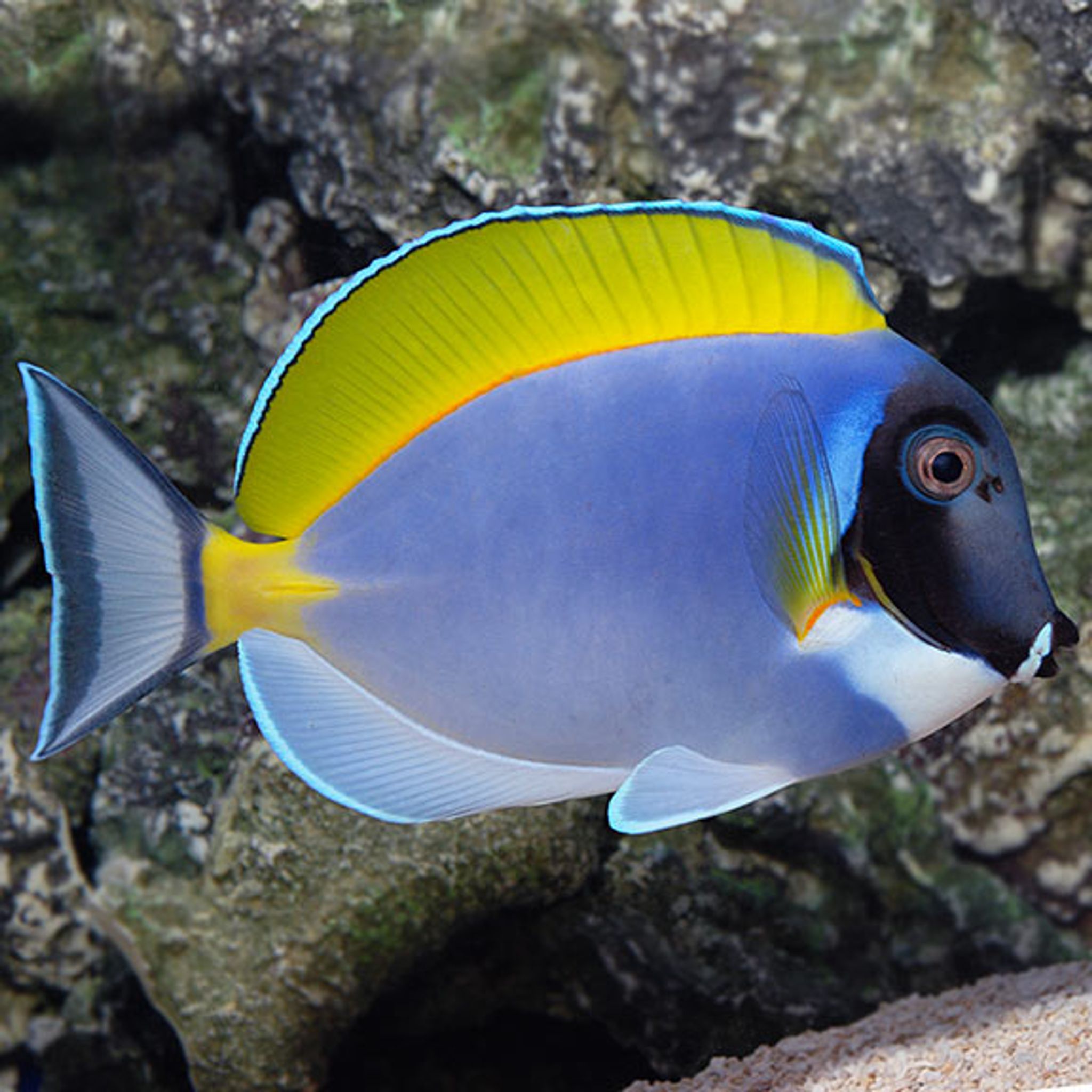
Best Tank Mates for Powder Blue Tang: Peaceful, Risky and Incompatible Choices
The Powder Blue Tang (Acanthurus leucosternon) is one of the most striking surgeonfish in the hobby and one of the most misunderstood when it comes to compatibility. Its aggression isn't random meanness — it's targeted, predictable, and largely avoidable once you understand what triggers it. This guide breaks down exactly which tank mates work, which are a gamble, and which should never share water with this species.
Species Snapshot
The Powder Blue Tang is an Indo-Pacific surgeonfish that reaches roughly 9–10 inches (23 cm) at full size and can live 5–10+ years in captivity with good care. It's a fast, active grazer that spends most of its day patrolling open water and picking at algae turf on rock, which shapes almost everything about how it behaves toward other fish.
Two traits drive its reputation:
- High activity level — it needs room to swim, not just water volume.
- Strong territorial instinct, inherited from a wild lifestyle centered on defending a patch of grazing reef.
Why Powder Blue Tangs Are Aggressive
This species isn't a generalized bully. In the wild, surgeonfish defend a feeding territory on the reef because algae turf is a limited, competed-for resource. That instinct doesn't disappear in an aquarium — it just gets redirected at whatever the tang perceives as a rival for space or food.
Aggression is targeted almost exclusively at other tangs and surgeonfish, or at fish with a similar body shape or blue-and-white coloring. A Powder Blue Tang rarely bothers a clownfish or a goby because those fish don't look like competition. It will, however, relentlessly chase another tang — especially one that resembles it — because its brain reads that fish as a threat to its turf.
Understanding this mechanism matters more than memorizing a species list, because it lets you predict how the tang will react to fish not covered here: ask whether the candidate is shaped like a tang, colored like a tang, or competing for the same algae-based food.
Quick Compatibility Chart
| Tier | Examples | Why |
|---|---|---|
| Peaceful | Clownfish, gobies, most wrasses (fairy, flasher), anthias, cardinalfish, dartfish, blennies, dwarf/reef-safe angelfish | Different body shape, different niche, no resource overlap |
| Risky | Other tangs from different genera (Zebrasoma, Ctenochaetus), large/semi-aggressive angelfish, dottybacks, other surgeonfish of different color/shape | Possible only in very large systems with careful staging; still a gamble |
| Incompatible | Other Powder Blue Tangs, Achilles Tang, Goldrim Tang, similarly-shaped surgeonfish in smaller tanks, triggerfish, large puffers, aggressive eels, seahorses/pipefish | Mirror-image aggression, physical danger, or inability to compete for food |
Peaceful Tank Mates
These fish share tank space with a Powder Blue Tang about as reliably as any marine combination gets, because they occupy a different visual and ecological niche:
- Clownfish — host-anemone dwellers that never compete for open-water territory
- Gobies (all types) — substrate-oriented, low profile, no shape overlap
- Most wrasses — fairy wrasses and flasher wrasses swim in a different pattern and rarely trigger a territorial response
- Anthias — mid-water planktivores with a completely different feeding style
- Cardinalfish — slow, shoaling, nocturnal-leaning behavior
- Dartfish — hover near rockwork rather than patrolling open water
- Blennies — rock-dwelling grazers that don't resemble a tang
- Dwarf and reef-safe angelfish — generally tolerated when introduced correctly
You can browse many of these directly, including wrasse options and clownfish, when planning a community around a Powder Blue Tang.
Risky, Case-by-Case Tank Mates
This tier requires a large tank, careful timing, and realistic expectations that things could still go wrong:
- Other tangs from different genera (e.g., Zebrasoma, Ctenochaetus) — only workable in systems 6–8 ft or longer, with all tangs added at the same time, ideally as juveniles
- Large or semi-aggressive angelfish — can spar over territory, especially in tanks under 180 gallons
- Dottybacks and other small pugnacious fish — feisty enough to provoke a response despite their size
- Other surgeonfish of different color or shape — sometimes tolerated in very large systems, but never a safe bet
On mixing multiple tangs specifically: treat this as an expert-only project, not a flat yes/no. Some keepers succeed with different-genus tangs in huge, heavily aquascaped systems added simultaneously; plenty of others end up removing a fish after weeks of chasing. If you're not prepared for that outcome, skip it. You can view current tangs and surgeonfish stock to compare species before committing to a multi-tang plan.
A distinct risk in this tier is resource competition rather than physical aggression — pairing a Powder Blue Tang with another herbivore grazer, such as a rabbitfish, can trigger squabbling over algae and prepared foods even if the two fish never seriously fight. Feed heavily and in multiple spots if you go this route.
Incompatible Tank Mates
Avoid these combinations outright:
- A second Powder Blue Tang, or any lookalike Acanthurus species — mirror-image aggression is the worst-case scenario, since the tang reads an identical fish as its most direct rival
- Achilles Tang, Goldrim Tang, and other similarly shaped or colored surgeonfish in anything smaller than a very large system
- Triggerfish, large puffers (such as a Blue Spotted Puffer), and aggressive eels (such as a Tessalata Eel) — these can injure or seriously stress a Powder Blue Tang, which is a poor physical match against them
- Seahorses, pipefish, and other very slow or passive feeders — a fast, active tang outcompetes them for food and its constant motion stresses these species
Reef Safety, With Caveats
Powder Blue Tangs are considered reef safe — they won't eat coral or sessile invertebrates, and they're generally fine with ornamental shrimp, snails, and hermit crabs. That said, this isn't a blanket guarantee:
- Some individuals graze coralline algae more aggressively than expected
- Occasional nipping at soft coral polyps or clam mantles has been reported
- "Reef safe" doesn't mean "harmless to every invert" — monitor behavior for the first few weeks after introduction
Tank Size and Setup Requirements
125 gallons is the commonly cited floor, but that number understates what this fish actually needs. Because swimming length matters more than raw volume for an active surgeonfish, the more responsible target is a 6-ft-long tank (roughly 150–180+ gallons). A tall, narrow tank with the "right" gallon count on paper still cramps a fish built for sustained horizontal cruising.
Aquascape strategy also directly affects aggression:
- Open swimming lanes give the tang room to patrol without feeling boxed in
- Broken sightlines from rockwork interrupt direct lines of sight between the tang and any tank mate it might target, reducing chasing
- Too much unbroken open water does the opposite — it increases sparring, especially if more than one tang-shaped fish is present, because nothing interrupts a chase
The goal is a layout with distinct zones rather than one open box or one solid wall of rock.
Introduction Order and Acclimation Tips
Getting the sequence right prevents most conflict before it starts:
- Quarantine the Powder Blue Tang for 4–6 weeks before it ever reaches the display tank.
- Stock peaceful, territorial-leaning community fish first — gobies, blennies, clownfish — so they've already claimed hiding spots and routines.
- Add the Powder Blue Tang last, or among the last additions. Adding it early lets it claim the entire tank as its own turf, and it will harass anything introduced afterward.
- Rearrange the rockwork whenever you add new fish later, even after the tang is established. Resetting the aquascape disrupts existing territorial boundaries and gives newcomers a fairer chance to settle in without being immediately targeted.
- If aggression flares up after the fact, rearranging rock, adding a temporary tank divider, or briefly isolating the aggressor in a separate container can reset the dynamic — these are legitimate fixes, not just prevention tools.
Diet and Feeding to Reduce Aggression
Feeding strategy is one of the most overlooked compatibility levers for this species. Powder Blue Tangs are primarily herbivorous and need:
- Daily nori or seaweed, clipped or sheet form
- Spirulina-based foods
- Occasional mysis or brine shrimp for variety
A hungry, undernourished tang is measurably more aggressive and more prone to disease. Multiple feeding stations placed around the tank, fed frequently, reduce food-guarding behavior — which is often the real trigger behind so-called "tang aggression" rather than the tank mate itself. If you're troubleshooting sudden aggression, check feeding frequency and spread before assuming a tank mate is simply incompatible.
Disease Risk as a Compatibility Factor
Powder Blue Tangs are highly susceptible to marine ich (Cryptocaryon irritans) and velvet (Amyloodinium), largely due to a thinner slime coat and the stress of shipping and adjustment. This has real implications for tank mate planning, not just fish health in isolation:
- Skipping quarantine is the single biggest mistake with this species — it commonly arrives stressed from long shipping chains and can break with ich within days, putting the entire tank at risk.
- Because a stressed or newly added Powder Blue Tang can trigger a tank-wide ich outbreak, consider whether your other tank mates and invertebrates can tolerate whatever treatment you might need to run later.
- Some invertebrates are copper-sensitive, so if you're building a display around a fish this prone to parasites, factor that into which inverts you add — you may need to treat the display at some point.
Stocking a properly medicated quarantine setup and having reliable treatment options on hand before you need them is worth doing early; you can review medication options as part of your quarantine planning.
Common Mistakes to Avoid
- Adding a second tang into a tank under 150–180 gallons and expecting peace — this reliably leads to chasing, torn fins, and stress-induced ich.
- Adding the Powder Blue Tang before other community fish — it will claim the whole tank and harass every newcomer afterward.
- Skipping quarantine because the fish "looks fine" at the store — this species is unusually prone to breaking out with parasites under shipping stress.
- Feeding vegetable matter sporadically instead of daily — underfed tangs are hungrier, more aggressive, and more susceptible to disease.
- Assuming "reef safe" means harmless to every invert — keep an eye on coralline algae, clam mantles, and soft corals after introduction.
- Pairing with slow feeders like seahorses, pipefish, or certain sedentary gobies that simply can't compete against a fast, constantly grazing fish.
Frequently Asked Questions
Can I keep two Powder Blue Tangs together?
Generally no in a typical home aquarium. It's only viable in very large systems (8 ft+) with multiple juveniles introduced simultaneously, and even then it carries real risk of ongoing aggression.
What fish should never go with a Powder Blue Tang?
Other tangs and surgeonfish — especially similarly shaped or colored ones — along with large aggressive predators like triggerfish, big puffers, and aggressive eels. Very slow or passive feeders such as seahorses and pipefish should also be avoided.
Is a Powder Blue Tang reef safe?
Yes, for corals and most invertebrates, with minor caveats. Some individuals graze coralline algae more heavily than expected or occasionally nip at soft coral polyps or clam mantles, so it's worth monitoring behavior after adding one to a reef tank.
What size tank does a Powder Blue Tang need?
125 gallons is the commonly cited minimum, but 150–180+ gallons with a 6-ft footprint is the more responsible target, since this fish needs swimming length more than raw volume.
Why is my Powder Blue Tang attacking my other fish?
Usually territorial defense against a similarly shaped fish, competition over food, or the tang having been added to an already-established tank where it feels the need to reassert territory. Check tank mate shape and feeding frequency before assuming the combination is unfixable.
Do Powder Blue Tangs get along with clownfish and wrasses?
Yes — these are among the most reliably peaceful combinations, since neither group competes with the tang for territory or food niche.
How do I introduce a Powder Blue Tang without starting fights?
Quarantine it fully for 4–6 weeks, add it last to the display after other community fish are established, rearrange the rockwork at the time of introduction to reset territorial boundaries, and feed heavily during the first several weeks.
Are Powder Blue Tangs harder to keep than other tangs?
Yes. The combination of higher targeted aggression and notably higher susceptibility to ich and velvet makes them more demanding than hardier species like Yellow Tang or Kole Tang.
Ready to plan your stocking list? Browse current marine fish on FishyHub to compare species and build a compatible community around your Powder Blue Tang.

