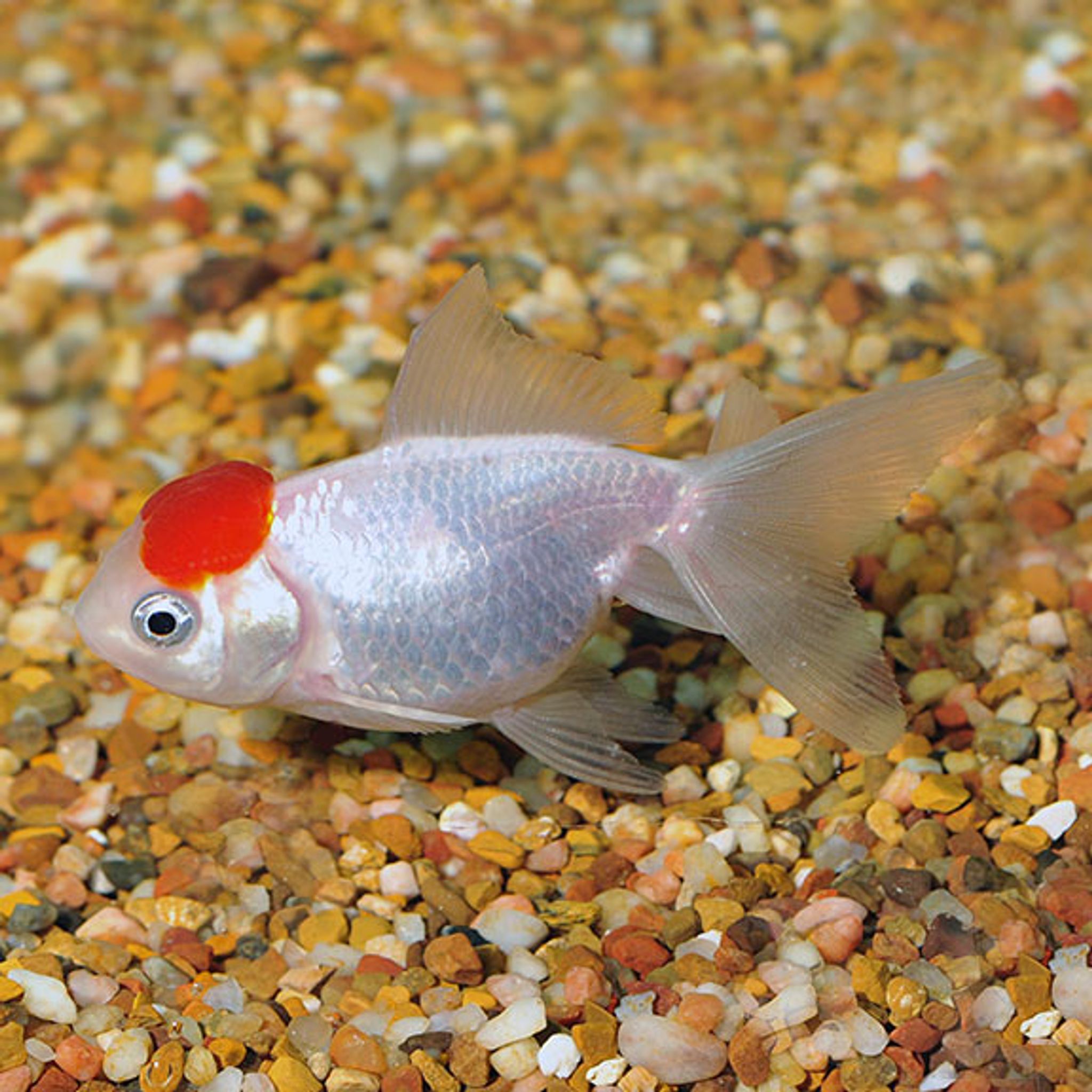

Best Tank Mates for Oranda Goldfish: Compatible Fish and Species to Avoid
The best tank mates for oranda goldfish are other slow fancy goldfish, followed by a few cool-water fish such as white cloud mountain minnows and dojo loaches. Tropical fish, fin-nippers, fast single-tail goldfish and anything small enough to swallow should stay out. For most keepers, a tank of fancy goldfish only is the best "community" of all.
Why Orandas Are Picky Roommates
The oranda is a round-bodied fancy goldfish with a fleshy head growth called the wen. Adults typically reach 6–9 inches (15–23 cm), a few grow to about 12 inches (30 cm), and a healthy fish can live 10–15 years or more.
Three traits shape every compatibility decision:
- Poor swimming. The egg-shaped body and long fins make orandas slow, so faster fish win every food race.
- Limited vision. A large wen can partly cover the eyes, which makes finding food even harder.
- Big appetite, big waste. Orandas eat anything that fits in their mouth and produce a lot of ammonia.
Water and tank baseline
| Parameter | Target for orandas |
|---|---|
| Temperature | 65–72°F (18–22°C) |
| pH | About 7.0–7.6 (tolerates 6.5–8.0) |
| Hardness | Moderate |
| Ammonia / nitrite | 0 ppm |
| Nitrate | Under 20–40 ppm |
| Tank size | 20 gal (76 L) minimum for one, 30 gal (114 L) better |
| Each extra goldfish | Add 10–20 gal (38–76 L) |
| Filtration | Rated for roughly 2x the tank volume |
| Water changes | 25–35% weekly |
You may see ranges as wide as 65–80°F quoted. Stick with 65–72°F: warmer water holds less oxygen and speeds up goldfish metabolism, which means more waste and more stress. Recommendations for extra space per oranda also vary from 10 to 20 gallons. Plan on at least 10–15 gallons each, and more is always better.
The Four-Step Compatibility Check
Run every candidate through these questions, in order:
- Temperature. Does it thrive in 65–72°F? If it needs a heater set to the upper 70s, stop here.
- Mouth size. Is it too big to swallow, about 3 inches (7.5 cm) or more as an adult? If not, is it fast enough to dodge a slow oranda?
- Temperament. Is it peaceful and free of fin-nipping habits? Long fins and a soft wen are easy targets.
- Speed and feeding. Will it steal all the food? A fast fish can pass step 3 and still starve your orandas.
A species has to pass all four. Most "community" fish fail on the first question.
Best Tank Mates, Ranked Safest to Riskier
1. Other orandas and slow fancy goldfish
The safest companions share the same body shape, speed, diet and temperature. Good choices include:
- Ryukin
- Ranchu
- Lionhead
- Pearlscale
- Black moor and telescope eye
- Fantail
- Veiltail
Orandas are social, so a pair or trio of fancies is ideal. You can browse fancy varieties in the goldfish collection.
Only with care: bubble eye and celestial eye goldfish. Their fluid-filled sacs and upturned eyes are fragile, so keep them only with equally gentle fish and no sharp decor.
2. Cool-water dither fish
These small, fast schoolers add movement in the upper water column:
- White cloud mountain minnows. The safest non-goldfish pick. They're comfortable at 57–72°F (14–22°C) and should be kept in groups of 6 or more.
- Zebra danios. Hardy and quick. Look through the danio selection if you want a lively schooling group.
- Japanese rice fish (medaka). Peaceful and cool-tolerant.
All three are fast enough to escape a slow oranda. A very large adult oranda may still catch and eat one, so add them while the fish are similar in size, or accept some risk.
3. Bottom dwellers and cleanup crew
- Dojo (weather) loach. A popular goldfish companion, but it grows 10–12 inches (25–30 cm), needs 55 gallons (208 L) or more, and wants soft sand to burrow in.
- Hoplo catfish. A sturdy armored catfish that handles cooler water and scavenges at night.
- Bristlenose pleco. Only if the tank stays at the warm end, 70–72°F (21–22°C). Feed algae wafers and vegetables so it doesn't graze on your goldfish's slime coat.
- Large mystery snails. Adults are usually too big to eat. Juveniles may get swallowed.
4. Moderate picks
- Rosy barbs. Keep 6–10 so any nipping stays within the group. Watch closely during the first weeks.
- Variatus platies. A livebearer that tolerates cooler water. Your orandas will eat any fry.
Quick compatibility table
| Species | Temperature overlap | Risk level | Key condition |
|---|---|---|---|
| Other fancy goldfish | Full | Low | Match body type and speed |
| Bubble eye / celestial | Full | Moderate | Gentle mates, smooth decor |
| White cloud minnow | Full | Low | Group of 6+ |
| Zebra danio | Good | Low–moderate | Can be too fast at feeding time |
| Medaka | Good | Low–moderate | Small adults may be eaten |
| Dojo loach | Full | Low–moderate | 55 gal+, sand substrate |
| Hoplo catfish | Good | Low–moderate | Night feeding |
| Bristlenose pleco | Narrow (70–72°F) | Moderate | Wafers, watch for latching |
| Mystery snail (adult) | Good | Low | Juveniles get eaten |
| Rosy barb | Good | Moderate | Group of 6–10 |
| Variatus platy | Good | Moderate | Fry become food |
Species to Avoid
- Warm-water tropicals needing 76–82°F (24–28°C): bettas, most tetras, gouramis, guppies, mollies and discus.
- Fin-nippers: tiger barbs, serpae barbs and many tetras.
- Aggressive fish: cichlids of any kind.
- Chinese algae eaters: they tend to latch onto goldfish as they get older.
- Pea puffers: nippy and a poor match for water and diet.
- Anything that fits in the mouth: cherry shrimp, small snails and tiny fry are food, not tank mates.
- Fast single-tail goldfish: common, comet and shubunkin goldfish outswim fancies at every meal and grow 10–12 inches (25–30 cm) or more.
- High-flow specialists: hillstream loaches need strong current that fancies can't handle.
Where opinions differ
- Corydoras. Some keepers suggest peppered or banded corys, but orandas can swallow them and most corys prefer warmer water. Skip them, or try only the largest species with fully grown goldfish.
- Shrimp and snails. Heavy cover won't reliably save cherry shrimp. Treat them as food. Only big mystery snails or large apple-type snails stand a chance.
- Plecos. Bristlenose is the only reasonable option. Larger species such as sailfin and rubberlip plecos may suck on goldfish slime coats.
- Single-species or community? Some keepers say a mixed tank is rarely worth the trouble, while others list a dozen mates. Start with fancy goldfish only, then add white clouds or a loach as an optional extra.
Stocking Examples by Tank Size
Think in gallons per fish, not inches per gallon. These examples assume a filter rated for about twice the tank volume.
| Tank | Suggested stocking |
|---|---|
| 29 gal (110 L) | 2 orandas, or 1 oranda plus a small group of white clouds |
| 40 gal (151 L) | 2–3 orandas, or 2 orandas plus 6+ white clouds |
| 55 gal (208 L) | 3–4 fancies, or 3 fancies plus a dojo loach and white clouds |
| 75 gal (284 L) | 4–5 fancies plus dither fish and a pair of bottom dwellers |
For a pair, aim for 30 gallons or more. For a small group with tank mates, 40–55 gallons is the practical starting point. A strong mechanical and biological setup matters as much as volume, and you can compare options in the filters category.
Seasonal temperature swings in US homes
A room that sits at 70°F in spring can climb past 80°F when the AC is off in summer, or drop into the 50s near a drafty winter window. Those swings narrow your list fast. A bristlenose pleco struggles in the cold, while white clouds and fancies ride out cool spells. Keep the tank away from windows and exterior doors, and check the thermometer daily during heat waves. A heater is usually unnecessary, but it can hold a steady 65–68°F in cold rooms.
Introducing New Fish Safely
Goldfish are prone to parasites and bacterial infections that arrive with new stock, and disease can cross between species. A minnow or livebearer that looks healthy may carry flukes or ich into your fancies.
- Quarantine every newcomer for 2–4 weeks in a separate tank with its own filter and nets.
- Acclimate slowly to match temperature and water chemistry.
- Add fish in small batches so the biological filter can keep up.
- Watch feeding for two weeks. Make sure the orandas are still getting their share.
Feeder or livebearer fry can also carry parasites, so don't treat them as a free live-food supply.
Feeding a Mixed Tank
- Use slow-sinking pellets or gel food for orandas so food reaches them before the faster fish take it.
- Target-feed orandas with a feeding tube or tongs near where they rest, especially fish with large wens.
- Feed the dither fish at the opposite end of the tank at the same time.
- Drop sinking wafers after lights out for loaches, hoplos and plecos.
Decor and Flow
Choose smooth rocks, rounded driftwood and soft or hardy plants. Skip sharp ornaments, because a large wen and long fins tear easily. Keep the current gentle with a spray bar or baffled outflow.
Oranda Sleep and Nighttime Behavior
Goldfish are active by day and have no eyelids. A resting oranda hovers low in the water, slightly tilted, with fins relaxed and color sometimes a little paler. Give it about 8–12 hours of darkness. A night light isn't needed, and because goldfish see poorly in the dark, switching on bright lights suddenly can startle them.
This affects tank mates too. Nocturnal loaches and hoplos do their foraging at night, so feed them wafers after lights out rather than expecting them to live on leftovers.
Sleeping or dead?
- Sleeping: upright or slightly tilted, gills moving, responds to light, a gentle tap on the glass or food.
- Dead: no gill movement, may lie on its side or float, doesn't respond, and looks faded or starts to decay.
- Swim bladder trouble: common in round-bodied orandas. The fish is alert and breathing but floats, sinks or tips over. That calls for a diet and water-quality review, not a burial.
Can Orandas Live in a Pond?
Orandas are a poor fit for outdoor ponds. Cold winters, predators and pond-mates like koi and common goldfish all put them at risk. At most, keep them in a warm-season patio tub and bring them indoors before temperatures drop. If you're planning any pond, budget for filtration and test kits first. A fish vet can perform skin scrapes, gill biopsies and water-quality reviews if problems arise.
Pond filtration stages
Water in a pond filter usually passes through:
- Mechanical settling to drop out heavy debris.
- Fine mechanical filtration to catch smaller particles.
- Biological filtration, where bacteria convert ammonia and nitrite into nitrate.
Size the filter to the fish load, not only the gallons.
Solar pond pumps
Solar pumps run only in sunlight, move relatively few gallons per hour and stop completely at night. They aren't suitable as the only pump for any goldfish system. Use them for decorative fountains and features.
Common Mistakes and Fixes
- Running a heater at 78°F for tropical community fish. Pick cool-water mates instead.
- Mixing comets or commons with orandas. The fancies end up underfed.
- Using the tank as a shrimp or neon "salad bar." Small fish and shrimp get eaten.
- Stocking by inches in a 10–20 gallon tank. This leads to ammonia spikes. Stock by gallons.
- Nipped fins or a torn wen. Remove the nipper, keep the water pristine and watch for fin rot.
- An oranda that never seems to eat. Its wen may be blocking its vision. Feed slow-sinking food where it rests. A vet can trim an overgrown wen.
- Plecos latching on at night. Increase vegetables and wafers, or rehome the pleco.
- Skipping quarantine. This is how ich and flukes arrive.
Frequently Asked Questions
Can orandas live alone?
Yes, a single oranda can do well in a properly sized tank. They are social fish, though, and a pair or trio of fancy goldfish is ideal if you have the space and filtration.
Can orandas live with comets or common goldfish?
It's not recommended. Single-tail goldfish are much faster, grow larger and eat most of the food, so orandas tend to go hungry and get stressed.
Can orandas live with bettas?
No. Bettas need tropical temperatures that are too warm for goldfish, and fin-nipping can go both ways between two long-finned fish.
Are snails or shrimp safe with orandas?
Only large mystery-type snails are a reasonable bet. Shrimp and small snails are usually eaten, even in heavily planted tanks.
What is the best algae eater for an oranda tank?
None is perfect. A bristlenose pleco can work if the tank stays at 70–72°F and it's fed wafers, and large snails help too. Avoid Chinese algae eaters, which may latch onto goldfish.
Do orandas need a heater?
Usually not. Use one only to keep a stable 65–68°F in a cold room, not to push the tank into tropical temperatures.
Build Your Oranda Tank
Start with a well-filtered tank of 30 gallons or more, choose a few slow fancies as the core group, and add cool-water companions only after quarantine. When you're ready to pick your fish, browse fancy varieties in FishyHub's goldfish category.


