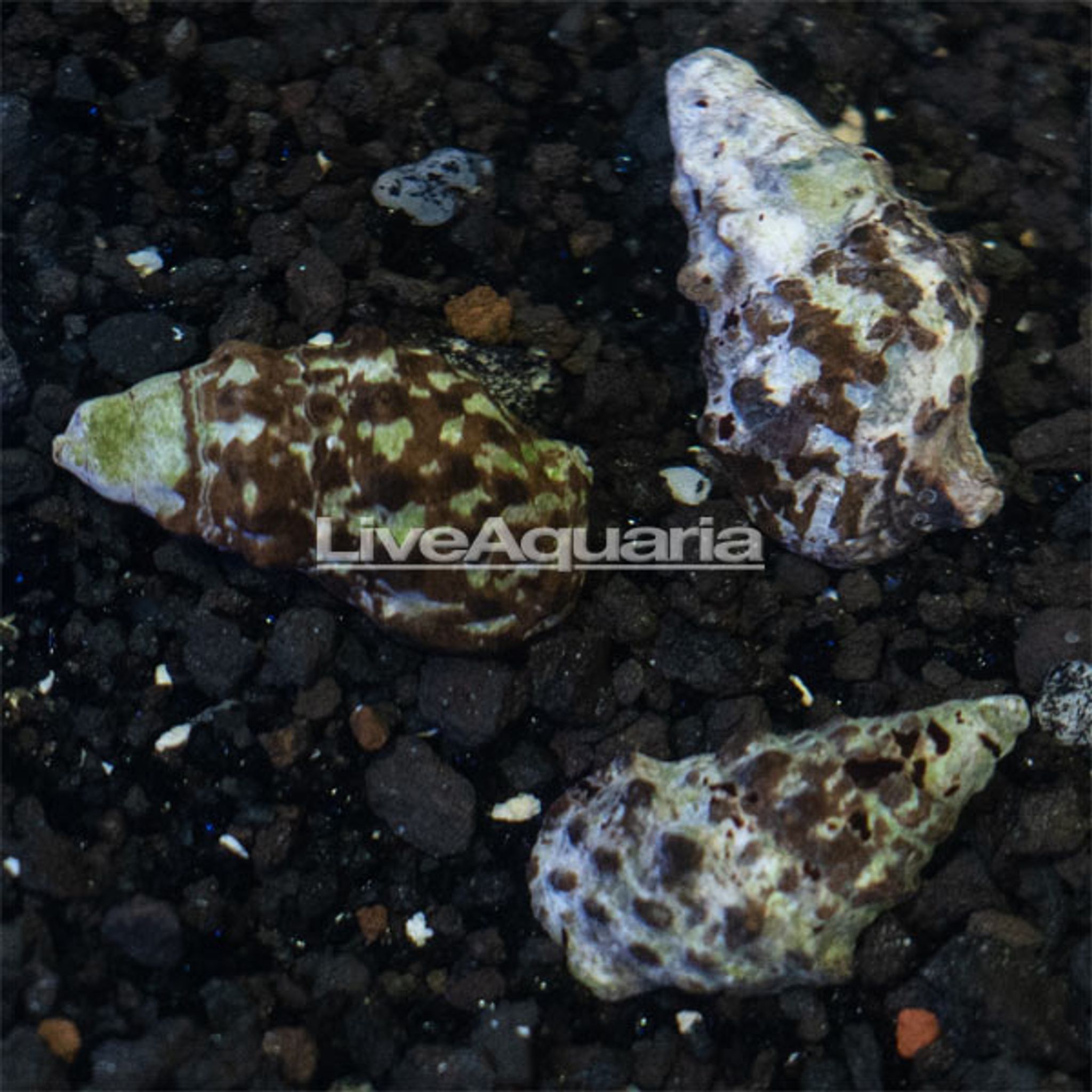

Best Tank Mates for Nassarius Snail in a Reef Aquarium
Nassarius snails are one of the easiest cleanup crew members to place in a reef tank, but a handful of common tank mates and setup mistakes can wipe out a whole batch in days. This guide covers exactly which fish, invertebrates, and corals pair safely with them, which predators to keep out, and how to stock, feed, and acclimate them correctly.
Are Nassarius Snails Reef Safe?
Yes. Nassarius snails are peaceful scavengers and detritivores, not grazers or predators of live tissue. They will not touch coral polyps, clam mantles, or other sessile invertebrates, which makes them close to universally reef-safe with LPS, SPS, and soft corals. Their entire diet is detritus, uneaten food, and dead organic matter, so they compete with nothing for space or light and add almost no aggression risk to a display tank.
Because they're inert around corals, the real compatibility question in a reef tank isn't "will the snail hurt something else" — it's "will something else hurt the snail."
Good Tank Mates for Nassarius Snails
Fish
Most peaceful reef fish coexist fine with Nassarius snails since the snails spend daylight hours buried and only surface briefly to feed. Good options include:
- Clownfish
- Gobies
- Blennies
- Firefish
- Royal gramma
- Cardinalfish
None of these species have the jaw strength or feeding behavior to crack a snail shell, and most ignore snails entirely outside of feeding time.
Invertebrates
- Cleaner shrimp and peppermint shrimp — peaceful and non-competitive with snails
- Starfish — generally compatible, though some larger species are opportunistic and should be researched individually
- Sea urchins — safe tank mates that focus on algae rather than detritus
- Other peaceful snails — turbo, cerith, and trochus snails handle algae grazing that Nassarius snails don't do, making them a natural pairing rather than competition
- Giant clams — safe, since Nassarius snails have no interest in mantle tissue
Combining Nassarius snails with turbo or cerith snails and a few brittle stars gives more complete substrate and glass coverage than any single species alone, since each one works a different part of the tank.
Tank Mates to Avoid
Some fish are strong and hungry enough to crack open a snail's shell to get at the meat inside. Keep Nassarius snails away from:
- Triggerfish
- Pufferfish
- Large or predatory wrasses
- Moray eels
These species are well documented shell-crackers and will treat snails as a snack rather than tank decoration.
Hermit Crabs: Proceed With Caution
Hermit crab compatibility is genuinely disputed among reef keepers. Some say it's flatly incompatible; others report success with small, peaceful hermit species when there's an ample supply of empty shells available. The reasoning is simple — hermit crabs need a bigger shell as they grow, and if none are lying around loose, they will evict (and often kill) a living snail to take its shell.
- Blue-leg and scarlet hermit crabs, along with larger hermit species, are the most frequent offenders.
- Arrow crabs and other predatory crabs don't wait for a shell to become available — they'll simply pluck a snail out and eat it.
The sensible approach: if you want hermit crabs in the same tank, keep the group small, drop in several empty shells of the right size, and monitor closely. Skipping hermit crabs altogether is the lower-risk choice. You can browse peaceful shrimp and other cleanup crew options in Marine Invertebrates if you'd rather round out the crew without crabs at all.
Predatory Look-Alikes
Not every predator arrives on purpose. Whelks and crown conchs are predatory snails that closely resemble Nassarius snails and are sometimes sold or hitchhike in on live rock. These will eat true Nassarius snails and other cleanup crew inverts. Before adding new "snails" to an established Nassarius population, compare shell shape and siphon behavior carefully, since a single predatory whelk can quietly work through a whole cleanup crew.
Quick Reference Compatibility Table
| Tank Mate | Compatibility | Notes |
|---|---|---|
| Clownfish, gobies, blennies, firefish, royal gramma, cardinalfish | Safe | No predation risk |
| Cleaner/peppermint shrimp | Safe | Peaceful, non-competitive |
| Turbo, cerith, trochus snails | Safe | Complementary algae grazers |
| Starfish, sea urchins | Generally safe | Confirm species individually |
| Giant clams | Safe | No interest in mantle tissue |
| LPS, SPS, soft corals | Safe | No coral tissue predation |
| Blue-leg/scarlet hermit crabs | Caution | Shell competition, may evict/kill |
| Arrow crabs | Avoid | Actively predatory on snails |
| Triggerfish, pufferfish, large wrasses, moray eels | Avoid | Known shell-crackers |
| Whelks, crown conchs | Avoid | Predatory, resemble Nassarius |
Ideal Tank Setup
Nassarius snails need a sand or mud bed at least 2-3 inches (5-7.5 cm) deep so they can burrow and rest during the day, with only a siphon visible above the surface. A bare-bottom tank or shallow sand layer isn't suitable and will stress the snails.
A mature, established tank with live rock and a working detritus supply is a better fit than a brand-new setup. In a freshly cycled tank there's typically little accumulated waste, so newly added snails may struggle to find food until the biological load builds up. If you're stocking a new reef tank, add Nassarius snails after the tank has had time to establish a baseline of detritus and microfauna, or plan to supplement feed more heavily in the first few weeks.
Water Parameters
| Parameter | Target Range |
|---|---|
| Temperature | 72-78°F (22-26°C), tolerated 70-80°F (21-27°C) |
| Specific gravity | 1.023-1.025 |
| pH | 8.1-8.4 |
| dKH (alkalinity) | 8-12 |
| Nitrate | Under 5 ppm ideal, tolerable up to ~20 ppm |
Stable calcium, alkalinity, and trace strontium are important for shell integrity — a snail's shell is its only defense, so mineral swings that weaken it make the snail more vulnerable to the predators listed above.
Copper sensitivity is critical. Nassarius snails, like most invertebrates, cannot tolerate copper-based medications. Never treat a display tank containing snails with copper, even at low doses. If a fish needs medication, move it to a separate quarantine tank rather than dosing the display, so no copper reaches the substrate where snails are buried.
Feeding Schedule
Nassarius snails are carnivorous scavengers, not algae eaters — they eat detritus, leftover food, and dead organic matter, not algae film. In an established, moderately stocked tank, they typically find enough natural food without supplementation.
In a very clean tank, a newer setup, or one with light fish stocking, supplement with:
- A small piece of thawed mysis or shrimp
- Sinking pellets designed for bottom feeders
- A gel-based food dropped near the sand
Signs of starvation include snails surfacing more often during the day (rather than staying buried), empty shells appearing on the sand, or snails attacking each other for food. If you see these signs, increase supplemental feeding or reduce the snail count.
Stocking Density
General guidance points to roughly 1 snail per 3-5 gallons (11-19 liters) as a safer long-term starting number. Some sources cite as many as 1-2 snails per gallon, but that ratio is easy to overshoot — once detritus runs out, an overstocked group will compete for food, and starving snails can turn on each other or die off, adding ammonia to the water as shells decompose.
Start conservative and only add more snails if you notice leftover food or visible detritus building up between water changes. This also matters for bioload: each snail adds a small amount of waste, and stacking too many on top of already-stretched flow or filtration compounds nutrient problems rather than solving them.
Size Matters Too
Not all Nassarius snails are the same size, and that affects both stocking math and price per snail:
| Type | Typical Size | Stocking Impact |
|---|---|---|
| Smaller sand-sifting species (e.g., vibex-type) | Under 1 inch (2.5 cm) | More individuals needed per gallon for coverage |
| Larger species (e.g., "Tongan" type) | 1.5-2 inches (4-5 cm) | Fewer needed; each covers more substrate area |
When comparing prices per snail, factor in size — a tank stocked with larger individuals may need noticeably fewer snails to achieve the same substrate turnover as one stocked with smaller ones.
Acclimation: Skip the Long Drip
This is one of the more debated points in the hobby. Some guides insist on slow drip acclimation for every new snail; other experienced keepers report losing Nassarius snails specifically because of extended drip acclimation. The practical middle ground that tends to work well:
- Float the sealed bag for 15-20 minutes to match temperature.
- Add small amounts of tank water to the bag gradually over 20-30 minutes to adjust salinity.
- Release the snail directly into the sand bed.
A multi-hour drip line exposes the snail to a long stretch of changing water chemistry and oxygen depletion inside the bag, which seems to cause more harm than a shorter, more controlled adjustment. Nassarius snails are naturally adapted to fluctuating salinity and temperature from their wild mudflat and estuary habitats, so they tolerate a brisk but attentive acclimation better than many other reef invertebrates.
Sexing and Reproduction
Nassarius snails are sexed separately as males and females, unlike many hermaphroditic snail species. In a group with both sexes present, they can lay egg capsules on glass or rock inside the aquarium. However, the larvae go through a planktonic stage and rarely survive to adulthood in a standard reef tank without a dedicated larval-rearing setup, so don't expect a self-sustaining population from a typical display.
Troubleshooting Common Mistakes
- Overstocking beyond available food — leads to starvation, shell die-offs, and ammonia spikes as dead snails decompose in the sand.
- Housing with aggressive hermit crabs or large wrasses/triggers/pufferfish — these will prey on snails even if the rest of the tank is peaceful.
- Bare-bottom or shallow sand tanks — prevents natural burrowing behavior and causes chronic stress.
- Extended, unmonitored drip acclimation — can cause more osmotic stress than a shorter float-and-adjust method.
- Assuming a flipped snail is dead — a snail on its back may still be alive. Gently prod the foot for movement and check for a foul odor before discarding; many can be manually righted and will recover within minutes.
- Treating the display tank with copper — this will kill the entire cleanup crew, not just the fish being treated.
- Mistaking a predatory whelk or crown conch for a Nassarius snail at purchase — compare shell shape carefully before adding new snails to an existing group.
If you're building out a full cleanup crew, browsing the Snails category alongside peaceful shrimp options lets you compare species and sizes before deciding on numbers.
Frequently Asked Questions
Are Nassarius snails reef safe?
Yes. They don't eat coral tissue or beneficial invertebrates — they're purely scavengers that clean up detritus and leftover food, making them compatible with LPS, SPS, and soft corals alike.
Can Nassarius snails live with hermit crabs?
It's risky. Many hermit crab species, especially blue-leg and scarlet varieties, will attack a snail to take over its shell. If you want to try it, use only small peaceful species and keep plenty of empty shells available, but pairing them is inherently more hazardous than skipping hermits entirely.
How many Nassarius snails per gallon?
Start conservative at roughly 1 snail per 3-5 gallons (11-19 liters) and only add more if leftover food or detritus is visibly accumulating between water changes. Overstocking risks starvation and die-offs once the available food source is depleted.
Do Nassarius snails eat algae?
No. They're carnivorous scavengers and detritivores, not algae grazers. For algae control, pair them with turbo, cerith, or trochus snails, which handle that role separately.
Why did my Nassarius snails die shortly after adding them?
The most common causes are acclimation stress from salinity or temperature shock, accidental copper exposure, or an insufficient food source in a newly cleaned or newly set up tank with little detritus for them to eat.
What fish will eat my Nassarius snails?
Triggerfish, pufferfish, large or predatory wrasses, and moray eels are the main fish-based threats, since all four groups are known to crack and eat snail shells.
Do Nassarius snails need a sand bed?
Yes. They need at least 2-3 inches (5-7.5 cm) of sand or mud to burrow into during the day. Bare-bottom tanks don't provide the substrate they need and will stress or kill them over time.
Can Nassarius snails reproduce in a home aquarium?
They can lay egg capsules on glass or rock when both sexes are present, but the larvae rarely survive to adulthood without a specialized rearing setup, so a display tank generally won't produce a self-sustaining population.
Ready to round out your cleanup crew? Browse compatible options in Marine Invertebrates on FishyHub to compare snails, shrimp, and other reef-safe scavengers for your tank.


