Best Tank Mates for Long-Spine Urchin in a Reef Aquarium
A long-spine urchin is one of the best natural algae grazers you can add to a reef tank, but its venomous spines and bulldozing habits make stocking choices matter more than usual. This guide breaks tank mates into safe, risky, and avoid categories, and explains the beak strength, foraging behavior, and physical contact issues behind each call.
Which Urchin Are We Talking About?
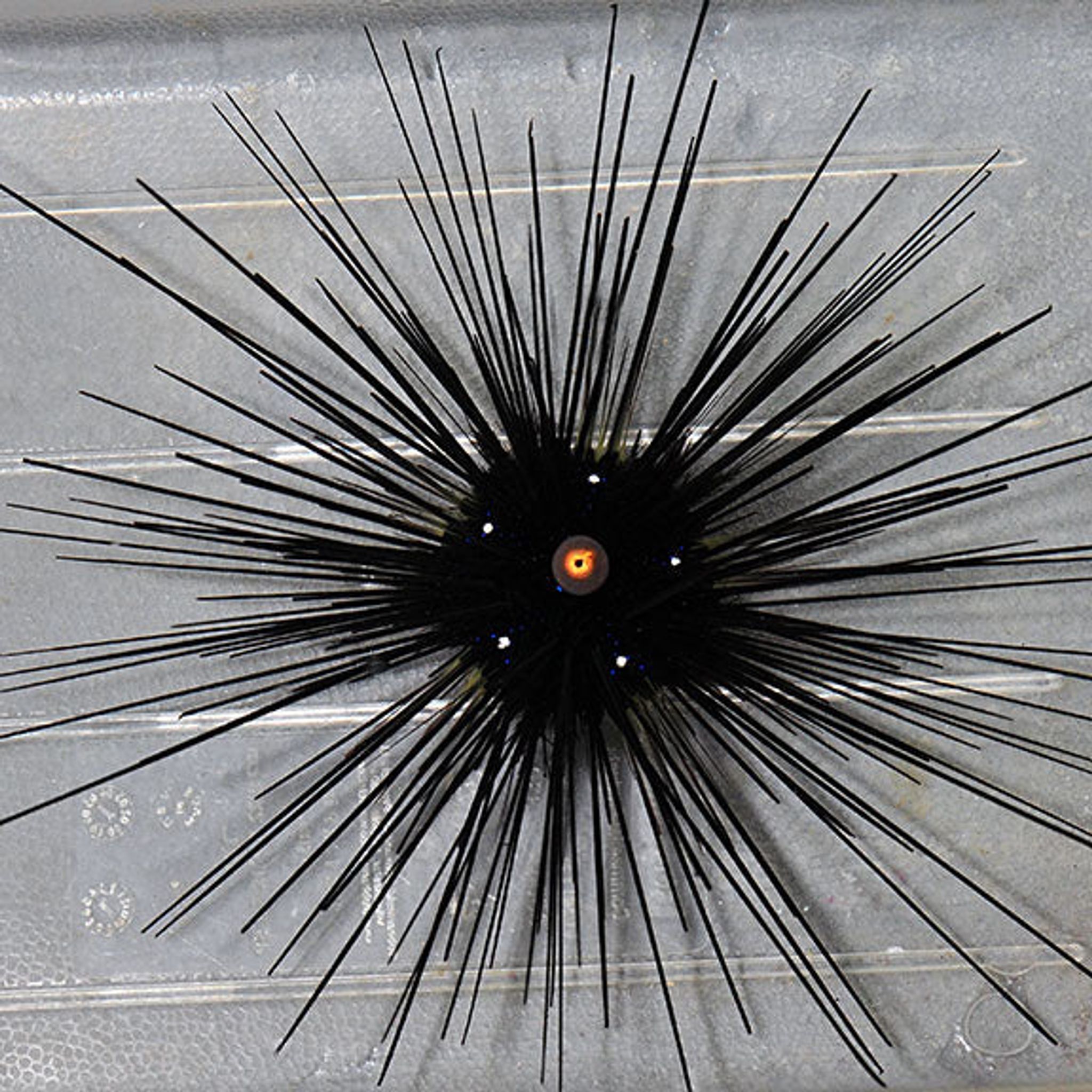
"Long-spine urchin" usually refers to a handful of closely related species sold under similar care sheets: Diadema setosum, Diadema antillarum (the classic "black longspine"), and Echinothrix diadema. All three share the same body plan — a compact test (shell) 3–4 inches across, with spines that can extend the total diameter to 8–10 inches at full size — and the same nocturnal, algae-grazing lifestyle. Because they behave almost identically in captivity, the compatibility advice below applies across the group.
One safety note before anything else: the spines are venomous. Contact feels similar to a bee sting, and a puncture can cause a painful, sometimes infected wound. Always move or handle these urchins with tongs or a container, never bare hands.
Tank Size and Water Parameters
Long-spine urchins purchased small grow quickly and are strong enough to shift rockwork as they forage. Stocking plans should be built around the adult size, not the size on the day of purchase.
| Requirement | Recommendation |
|---|---|
| Minimum tank size | 75 gallons (284 L) for one adult |
| Preferred tank size | 125+ gallons (473+ L) for long-term keeping with tank mates |
| Temperature | 75–78°F (24–26°C) |
| pH | 8.1–8.4 |
| Salinity | 1.024–1.026 SG |
| Calcium | 400–450 ppm |
| Alkalinity | 8–12 dKH |
| Nitrate/ammonia/nitrite | Near zero |
Some care sheets say 55–75 gallons is workable for a single small specimen, while others insist on 125+ gallons. The sensible middle ground: treat 75 gallons as an absolute floor and plan for 125+ gallons if you intend to keep the urchin long-term alongside fish and coral, since it needs room to bulldoze without constantly bumping tissue-covered corals or equipment.
Calcium and alkalinity matter as much for the urchin as for stony coral — its spines and test are calcium-carbonate structures with the same mineral demand. Consistent testing and 10–25% water changes every 2–4 weeks support both spine and test health.
Copper sensitivity is the single most important parameter note. Long-spine urchins, like all echinoderms, can die from copper-based medications at doses fish tolerate easily. Never treat a display tank containing an urchin with copper — remove the urchin to a separate container first, or run any medicated treatment in a dedicated quarantine tank instead.
Is a Long-Spine Urchin Actually Reef Safe?
The honest answer is "conditionally reef safe," not a flat yes or no. Long-spine urchins don't target coral as a food source, but they create two kinds of risk:
- Mechanical damage — as the urchin bulldozes across rock and sand at night, its spines can snap coral branches, topple unsecured frags, or brush soft-tissue tank mates hard enough to sting them.
- Opportunistic grazing — if algae and biofilm run out, an underfed urchin may sample coral tissue or clam mantle simply because it's there.
Neither behavior means the urchin is hunting coral. It means placement and feeding matter more than the label "reef safe" suggests.
Coral Compatibility by Type
| Coral type | Risk level | Why |
|---|---|---|
| Encrusting/mounding LPS, fully cemented | Lower risk | Low profile, hard to knock over, minimal exposed soft tissue in the urchin's path |
| Established SPS colonies, well anchored | Lower risk | Rigid skeleton resists spine contact once fully fused to rock |
| Loose or newly placed frags | Higher risk | Easily toppled by a bulldozing urchin; base isn't yet cemented |
| Soft corals with fleshy, exposed tissue | Higher risk | Spine contact or accidental sampling can damage or strip tissue |
| Anything not fully secured to the aquascape | Higher risk | The urchin doesn't need to want to eat it to destroy it |
If you're planning both an urchin and a growing coral collection, browse SPS and LPS options with an eye toward pieces that will anchor down quickly, and hold off on delicate frags until they're fully fused.
Feeding and Diet
Long-spine urchins are nocturnal grazers that rely on algae film and biofilm growing on live rock. A tank needs to be reasonably mature — with a visible, self-renewing algae film — before the urchin arrives. A rough rule of thumb: if algae on the glass or rock is visibly stripped clean within a day or two of cleaning and doesn't regrow before the next feeding cycle, that's a sign natural grazing isn't keeping up, and it's time to supplement.
Supplement with:
- Dried seaweed or nori clipped to the rockwork
- Occasional algae-based pellets
Supplementing early, before the urchin looks thin or its test becomes visibly exposed, is far easier than correcting a starved animal that has already started sampling coral.
Safe Fish Tank Mates
Most peaceful reef fish without hard, beak-like crushing mouths coexist well with long-spine urchins:
- Clownfish
- Gobies
- Blennies
- Most tangs and surgeonfish
- Dwarf angelfish
- Cardinalfish
- Damselfish
Banggai cardinalfish deserve a specific mention: juveniles in particular will shelter directly among the urchin's spines, using them as a mobile refuge from predators — a genuinely mutualistic-looking behavior rather than just tolerance. If you're building a stocking list around this pairing, browse marine fish with gobies, blennies, and cardinalfish in mind as low-risk first additions.
One overlooked consideration: sand-dwelling fish and inverts. An urchin that regularly plows through the sand bed can disturb sifting gobies and other sand-dependent species by repeatedly reworking their territory. It's not usually dangerous, but it's worth watching if you keep sand sifters and notice they seem constantly displaced.
Fish to Avoid
Several fish families have crushing or beak-like mouths specifically adapted, in the wild, to cracking open urchins and other echinoderms:
- Triggerfish (Picasso, Niger, and similar)
- Puffers and porcupinefish
- Large wrasses, including harlequin and tuskfish types
- Parrotfish
- Large groupers
- Wolf eels
Any of these can turn a long-spine urchin into a meal, spines and all. If your stocking list already includes one of these families, a long-spine urchin is not a compatible addition.
Invertebrate Tank Mates
Generally safe:
- Reef-safe snails
- Hermit crabs
- Cleaner shrimp
- Sea cucumbers and brittle stars, which share the same detritus and algae resources without competing aggressively
These groups generally coexist peacefully with an urchin as long as there's enough open space to avoid accidental spine contact during the urchin's nightly foraging. Diversifying your cleanup crew with a mix of urchins, cucumbers, and brittle stars is a reasonable way to cover more of the tank's algae and detritus without overloading any one species. You can round out this cleanup crew by browsing marine invertebrates for snails and shrimp sized appropriately for your tank.
Avoid or approach with caution:
- Large predatory crabs
- Harlequin shrimp — specialist echinoderm eaters that actively hunt urchins and starfish
- Invertebrate-eating sea star species
- Coral-banded shrimp — this one is genuinely case-by-case. Some cleanup-crew guides list them as fine with hardy inverts; others flag them as opportunistic toward smaller tank mates. Treat compatibility as size- and temperament-dependent rather than a flat yes or no, and watch a new addition closely for the first few weeks.
A Genuine Mutualist: The Zebra Urchin Crab
For advanced keepers, the zebra urchin crab (Zebrida adamsii) is worth knowing about. It lives obligately on fire urchins and Diadema-type long-spine urchins, cleaning detritus and parasites off its host in a true mutualistic relationship. Availability is limited compared to standard cleanup-crew species, but it's a legitimate specialty pairing rather than a novelty.
Housing and Aquascape Setup
- Provide sturdy, open live rock with caves and overhangs for daytime hiding — long-spine urchins are nocturnal and prefer to tuck into cover during the day.
- Use sand or fine substrate the urchin can move across without abrading tissue-covered corals nearby.
- Keep frags and other unsecured coral out of obvious travel paths across the rockwork, especially routes between the urchin's daytime hide and open grazing areas.
Introducing an Urchin to an Established Reef
- Drip acclimate slowly — echinoderms are sensitive to rapid salinity and pH shifts.
- Check treatment history. If the tank or its water source has ever been dosed with copper-based medication, confirm it has fully cleared before adding the urchin; residual copper is a common, avoidable cause of early losses.
- Rearrange vulnerable frags first. Walk the aquascape and move any loose, newly placed, or fleshy-tissue coral out of open sand channels and low travel routes before releasing the urchin.
- Quarantine echinoderms differently than fish. Because copper is lethal to them, a QT protocol built around copper-based medication is inappropriate — use copper-free quarantine methods and monitor for signs of stress or disease instead.
Common Mistakes to Avoid
- Adding the urchin to an immature, newly cycled tank without enough algae to sustain it.
- Leaving loose frags or fragile clam mantles directly in the urchin's nightly path.
- Treating the main display with copper while the urchin is present.
- Stocking for the juvenile size instead of the 8–10 inch adult spread.
- Handling the urchin bare-handed.
- Assuming "reef safe" means zero risk to unsecured coral.
Frequently Asked Questions
Will a long-spine urchin eat my coral?
Rarely as a deliberate food choice. It's more likely to knock over an unsecured frag while bulldozing across the rock, or sample coral tissue opportunistically if algae supplies run short.
What fish will eat my urchin?
Beaked or crushing-mouth predators are the main threat: triggerfish, puffers, large wrasses, parrotfish, and groupers are all adapted to cracking open echinoderms in the wild.
Can I keep a long-spine urchin with hermit crabs and snails?
Generally yes. Most peaceful cleanup-crew invertebrates coexist fine with a long-spine urchin as long as there's enough open space to prevent accidental spine contact.
How big of a tank does a long-spine urchin need?
At least 75 gallons (284 L) for one adult specimen, with 125+ gallons (473+ L) recommended for long-term keeping alongside fish and coral.
Is the sting dangerous to humans?
The spines are venomous and a puncture feels similar to a bee sting, sometimes leading to a painful or infected wound. Always use tongs or a container rather than bare hands when moving or repositioning the urchin.
What should I feed a long-spine urchin?
Naturally occurring algae and biofilm on live rock form the base diet. Supplement with dried seaweed or nori, and occasional algae pellets, if the algae film is being stripped faster than it regrows.
Can urchins live with other urchins or starfish?
Multiple urchins can share a large enough tank with adequate food and space. Avoid starfish species known to prey on invertebrates, but peaceful detritivores like sea cucumbers and brittle stars generally coexist well.
Do urchins help with algae control?
Yes. They're effective, persistent grazers, and they're especially useful in tanks stocked with more aggressive fish that would otherwise eat smaller cleanup-crew species like snails and hermit crabs.
Building a compatible stocking list starts with matching tank mates to the urchin's needs, not just checking a species off a list. Browse marine invertebrates on FishyHub to find a long-spine urchin and cleanup-crew companions sized right for your reef setup.


