

Best Tank Mates for Goldfish: Compatible Fish and Species to Avoid
The best tank mate for a goldfish is almost always another goldfish of the same body type. If you want variety, choose cool-water species that are too big to swallow, too gentle to nip, and not so fast that they steal every meal. Below you'll find a quick-reference table, sample stocking plans by tank size, and a clear list of fish to keep out.
The Four Rules Every Goldfish Tank Mate Must Pass
Before looking at any species, run it through these filters. A fish that fails even one is a poor match.
- Temperature. Goldfish are cool-water fish. Their comfort zone is roughly 65–72°F (18–22°C). Fancies do well near 68–74°F (20–23°C), while single-tails tolerate the 50s°F and outdoor ponds. Most tropical fish want 76–82°F (24–28°C), and no middle temperature suits both.
- Mouth size. Goldfish eat anything that fits in their mouth. A mate must be too big to swallow as an adult, and ideally when you buy it.
- Temperament. Skip fin-nippers and territorial fish. The long, flowing fins of fancy goldfish are easy targets.
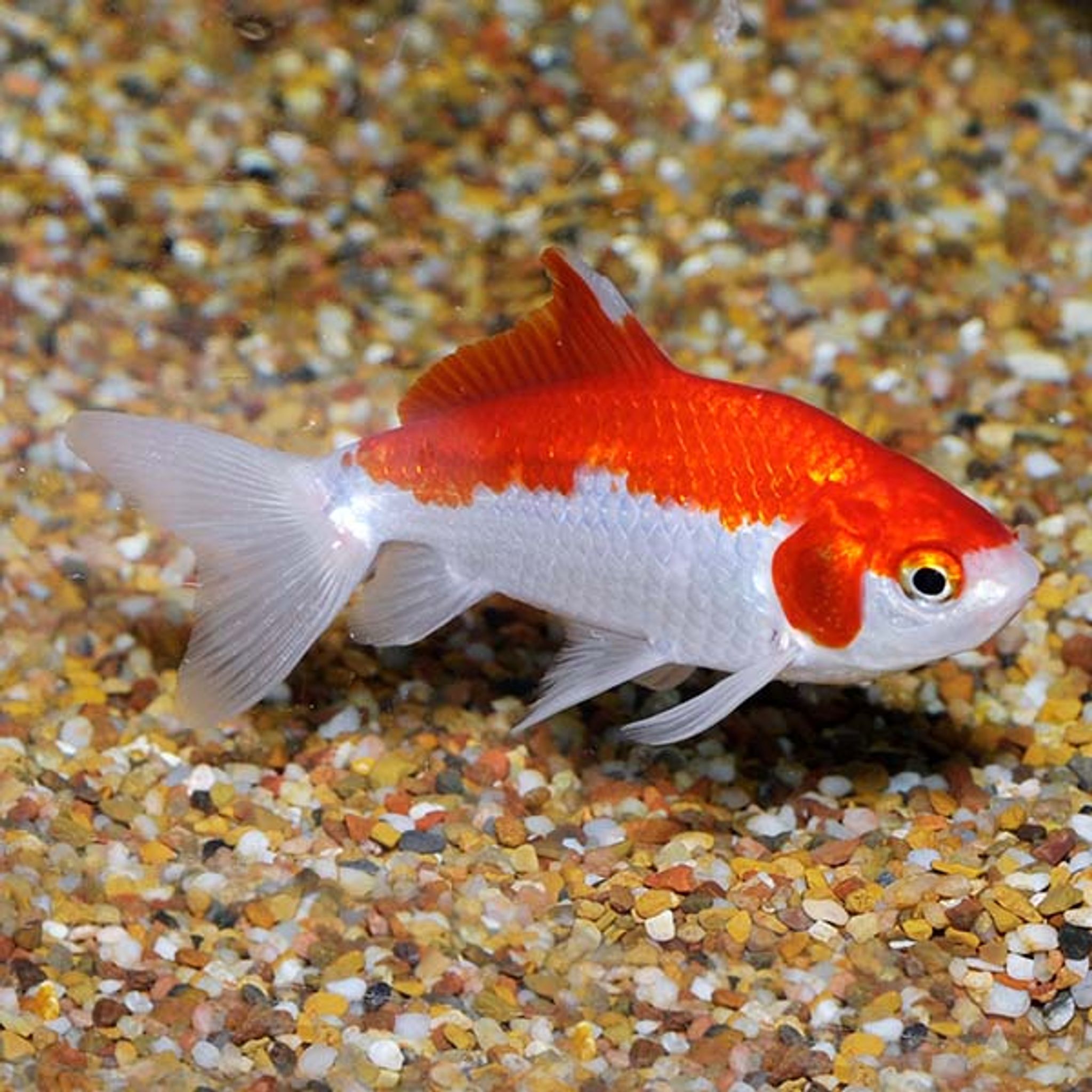
- Speed and body type. Slim single-tails (common, comet, shubunkin) outswim and outeat round fancies (oranda, ryukin, fantail). Keep fancy with fancy and single-tail with single-tail, and pick mates that won't win every feeding.
Tank Size, Filtration and Water Quality
Goldfish produce a heavy bioload, and every extra species adds more waste. Sizing by gallons per fish works better than the old "one inch per gallon" rule, which badly underestimates bulky fish.
- First goldfish: 20–30 gallons (75–115 L).
- Each additional goldfish: add 10–20 gallons (38–75 L); recommendations vary.
- Commons and comets: eventually need 55+ gallons (208+ L) or a pond.
- Filtration: choose a filter rated for about double your tank volume. Browse aquarium filters if yours is marginal.
- Maintenance: change 25–30% of the water weekly as a baseline, and test ammonia, nitrite and nitrate weekly.
- Water: pH around 7.0–8.0, moderate hardness, and gentle flow for fancies.
Quick-Reference Table: Compatible Goldfish Tank Mates
| Species | Adult size | Temp range | Min. tank | Best with |
|---|---|---|---|---|
| Other goldfish (same type) | 6–12 in (15–30 cm) | 65–72°F (18–22°C) | 20–30 gal + per fish | Matching type |
| White cloud mountain minnow | 1.5 in (4 cm) | 57–71°F (14–22°C) | 30 gal | Fancies only |
| Japanese ricefish (medaka) | 1.5 in (4 cm) | Cool water | 30 gal | Fancies only |
| Zebra danio | 2 in (5 cm) | ~64–77°F (18–25°C) | 30 gal | Fancies |
| Rosy barb (groups of 8–10) | 3 in (7.5 cm) | 61–75°F (16–24°C) | 40 gal | Single-tails (longfin form) |
| Variatus platy | 2–2.5 in (5–6 cm) | Cooler-tolerant | 30 gal | Either |
| Dojo/weather loach | 10–12 in (25–30 cm) | Cool water | 55 gal | Either, with a lid |
| Hillstream loach | 2–3 in (5–7.5 cm) | 68–75°F (20–24°C) | 30 gal | Either, needs flow |
| Hoplo catfish | 5–6 in (13–15 cm) | Wide range | 40 gal | Either |
| Hognose brochis | 4 in (10 cm) | Room temp | 40 gal | Fancies |
| Bristlenose/rubber-lip pleco | 4–7 in (10–18 cm) | 70–78°F (21–26°C) | 40 gal | Warm fancy tanks only |
| Mystery snail (adult) | 2 in (5 cm) | Room temp | Any | Either |
| Nerite snail | 1 in (2.5 cm) | Room temp | Any | Either |
Best Fish to Keep With Goldfish
Other goldfish
A tank of same-type goldfish is the most reliable community. Goldfish do fine living alone, but they are social carp and usually benefit from company of their own kind when space allows.
Small cool-water schoolers (fancy tanks only)
White cloud mountain minnows and Japanese ricefish thrive in the same temperatures as goldfish. Add only adults, keep them in a school, and provide dense plants for cover. Some keepers report losses, so treat them as a fancy-tank option; big single-tails will eventually eat them. Zebra danios are hardy and quick, but keep them in a proper group so they don't turn nippy.
Rosy barbs
At 3 in (7.5 cm), rosy barbs are too big to swallow and handle cool water well. Keep 8–10 together so they focus on each other rather than on goldfish fins. The longfin form is the better match for single-tails.
Variatus platy
The one livebearer that tolerates goldfish temperatures. Expect the fry to be eaten.
Bottom dwellers and cleaners
- Dojo (weather) loach: peaceful and fun, but reaches 10–12 in (25–30 cm), needs 55+ gallons, and is an escape artist, so use a tight lid.
- Hillstream loach: grazes algae, but needs strong flow and high oxygen, which suits single-tail tanks better than gentle fancy setups.
- Hoplo catfish: armored, very hardy, tolerant of a wide temperature range.
- Hognose brochis: essentially a "giant cory" at 4 in (10 cm), large enough to avoid being swallowed.
You can browse loach species in the loach section. Target-feed bottom dwellers with sinking food at lights-out, because goldfish will vacuum up everything during the day.
Choosing Mates by Tank Type: A Simple Decision Flow
- Unheated tank, fancy goldfish: white clouds, ricefish, zebra danios, variatus platies, hoplos, hognose brochis, adult snails.
- Unheated tank, single-tail goldfish: other single-tails, rosy barbs, dojo loach, hillstream loach, hoplos.
- Room kept near 72°F (22°C), fancy goldfish: the fancy list above, plus a bristlenose or rubber-lip pleco if it stays well fed.
- Pond: koi, single-tail goldfish and native cold-water fish.
Seasonal swings matter. Many US homes hit 80°F (27°C) in summer and drop sharply in winter. A cool-loving white cloud may struggle in a hot room, while a pleco may suffer in a cold one. Pick mates whose range covers your room's real highs and lows.
Sample Stocking Plans
| Tank | Example stocking |
|---|---|
| 20 gal (75 L) | 1 fancy goldfish + 2 nerite snails. No fish mates. |
| 40 gal (150 L) | 2 fancies + a school of 6 adult white clouds, or 2 fancies + 2–3 hoplos |
| 75 gal (285 L) | 3–4 fancies + 6 zebra danios + 2 hoplos + mystery snails; or 2–3 single-tails + 8–10 rosy barbs |
| Pond | Commons, comets, shubunkins and koi, with filtration sized for the heavy load |
Species to Avoid With Goldfish
| Avoid | Why |
|---|---|
| Bettas | Tropical; aggression and fin issues both ways |
| Guppies, neon and cardinal tetras | Tropical and bite-size |
| Angelfish, discus | Tropical; angels are territorial |
| Most cichlids (African, oscar, convict) | Aggressive, tropical, often predatory |
| Tiger barbs, serpae tetras | Persistent fin-nippers |
| Common pleco | Grows 12–18 in (30–45 cm) |
| Otocinclus, small corydoras | Swallowed and choke on their spines |
| Cherry shrimp and other small shrimp | Become food |
| Chinese algae eater | Turns aggressive and latches onto slime coats |
| Mollies | Need warm, hard, often brackish-leaning water |
| Axolotls | Goldfish nip their gills; axolotls may eat fish |
Goldfish and tropical fish
Keeping goldfish warm raises their metabolism and can shorten their lives, while their waste spikes stress sensitive tropicals. Separate tanks are the honest answer.
Angelfish and tetras
Both are tropical. Angels claim territory, and small tetras fit neatly into a goldfish's mouth.
Fin nippers
Common offenders include tiger barbs, serpae tetras, and danios kept in groups too small. Watch for frayed edges and split fins.
Where Keepers Disagree
- Corydoras, otos, glass catfish, rummy-nose and bloodfin tetras: some lists include them. Skip small cories and otos (choking risk) and exclude tropical tetras.
- Paradise fish: cool-tolerant but may nip, so not advised with fancies.
- Plecos: some say never; others accept bristlenose or rubber-lip at 72–74°F (22–23°C). Only consider them in warm-end fancy tanks, well fed, and never commons.
- Temperature: quoted ranges run from 50–70°F to 68–74°F. Treat 65–72°F as ideal, with seasonal tolerance either side.
Algae Eaters and Snails
The best algae crew for goldfish is a hillstream loach, nerite snails and adult mystery snails, plus a bristlenose if the tank runs slightly warm. Supplement with algae wafers so plecos don't graze on sleeping goldfish. Choose large, adult snails only; goldfish pick at antennae and eat small snails. Note that snails and some loaches are more sensitive to salt treatments than goldfish, so remove or protect them before dosing.
Plants That Survive Goldfish
Goldfish uproot and shred soft plants. Tough picks include anubias, java fern, hornwort, Amazon sword, vallisneria and cryptocoryne. Floaters like duckweed usually get eaten. Offering blanched vegetables helps spare the greenery.
Do Goldfish Eat Other Fish?
Goldfish are opportunistic, not predatory. They won't hunt like a cichlid, but they will eat fry, tiny fish and shrimp, especially when hungry. If small fish keep going missing, they were too small for the tank.
Bullying vs. Spawning Behavior
In spring, males chase females and nudge their vents, and they develop white tubercles on their gill plates. That's normal breeding behavior. Bullying is constant, targeted and leaves fin damage. Separate any fish that looks exhausted, whatever the cause.
Feeding a Mixed Goldfish Tank
- Feed floating or slow-sinking food for goldfish and sinking wafers for bottom dwellers.
- Gel foods help fancies avoid gulping air at the surface.
- Make sure slow fancies actually eat; fast mates can leave them thin.
Introducing New Tank Mates Safely
- Add fish only to a fully cycled tank.
- Quarantine newcomers for 2–4 weeks. Goldfish readily spread flukes and ich.
- Watch feeding and fins closely for the first few weeks.
- Buy mates at adult size so they won't grow into a snack, and don't mix tiny goldfish with big commons.
Common Mistakes and Troubleshooting
- Tropical fish in an unheated goldfish tank → rehome them to a heated tank.
- Fast single-tails with fancies → fancies lose weight; split them up.
- Overstocking and weak filtration → ammonia spikes; upgrade filtration and test weekly.
- Torn fins → identify the nipper and rehome it.
- Pleco on a goldfish at night → feed more wafers or remove the pleco.
- Missing small fish → they were too small; remove them from your mates list.
Ponds and Koi
In a pond, the best mates are koi, other single-tail goldfish and native cold-water fish. Cycle the pond before stocking, size the filter for a heavy load, and add a fountain or spitter for extra oxygen. Koi reach 2–3 ft (60–90 cm), have barbels, and need ponds; they're fine with single-tails but not for aquariums or fancies. Black koi are simply a color variant with the same needs.
Legal note: some US states restrict certain species, including the weather loach in some areas. Check local rules, and never release goldfish or their tank mates into ponds, lakes or streams.
Goldfish Myths
- "Three-second memory." False; goldfish learn feeding routines.
- "Bowls are fine." Bowls can't handle their waste.
- "They grow to tank size." Stunting is damage, not adaptation.
- "Any small fish can join." Small fish tend to become food.
Frequently Asked Questions
Can a betta live with goldfish?
No. Bettas need tropical temperatures that stress goldfish, and their fins and temperament clash with goldfish. Keep them in separate tanks.
Can goldfish live with guppies or neon tetras?
No. Both are tropical and small enough to be eaten. Choose cool-water schoolers such as white clouds for fancy tanks instead.
What's the best algae eater for goldfish?
A hillstream loach, nerite snails or adult mystery snails. A bristlenose pleco can work if the tank runs slightly warm, but avoid common plecos and Chinese algae eaters.
Can goldfish live with shrimp?
Not small shrimp; goldfish treat them as food. Even larger amano shrimp are often eaten, so plan on losses.
How many tank mates can I add to a 40-gallon goldfish tank?
A realistic plan is 2 fancy goldfish plus a school of 6 adult white clouds, or 2 fancies with a few hoplo catfish. Strong filtration and weekly water changes keep that stocking stable.
Will goldfish eat my snails?
Small snails, yes. Adult mystery and nerite snails are usually safe, though goldfish may pick at antennae.
Build Your Goldfish Community
Start with the right goldfish type for your tank, then add one compatible species at a time after quarantine. Browse healthy fancy and single-tail varieties in FishyHub's goldfish collection.