
Best Tank Mates for Flowerhorn: Compatible Fish and Species to Avoid
The best tank mate for most flowerhorns is no tank mate at all: kept alone, a flowerhorn is at its safest and often at its most interactive. If you still want company, a short list of large, tough fish can work, but only in a tank of 125 gallons (473 L) or more, with a spare tank or divider ready. Below you'll find those species, the tank sizes they really need, and the fish you should never add.
Why Flowerhorns Are So Hard to Pair
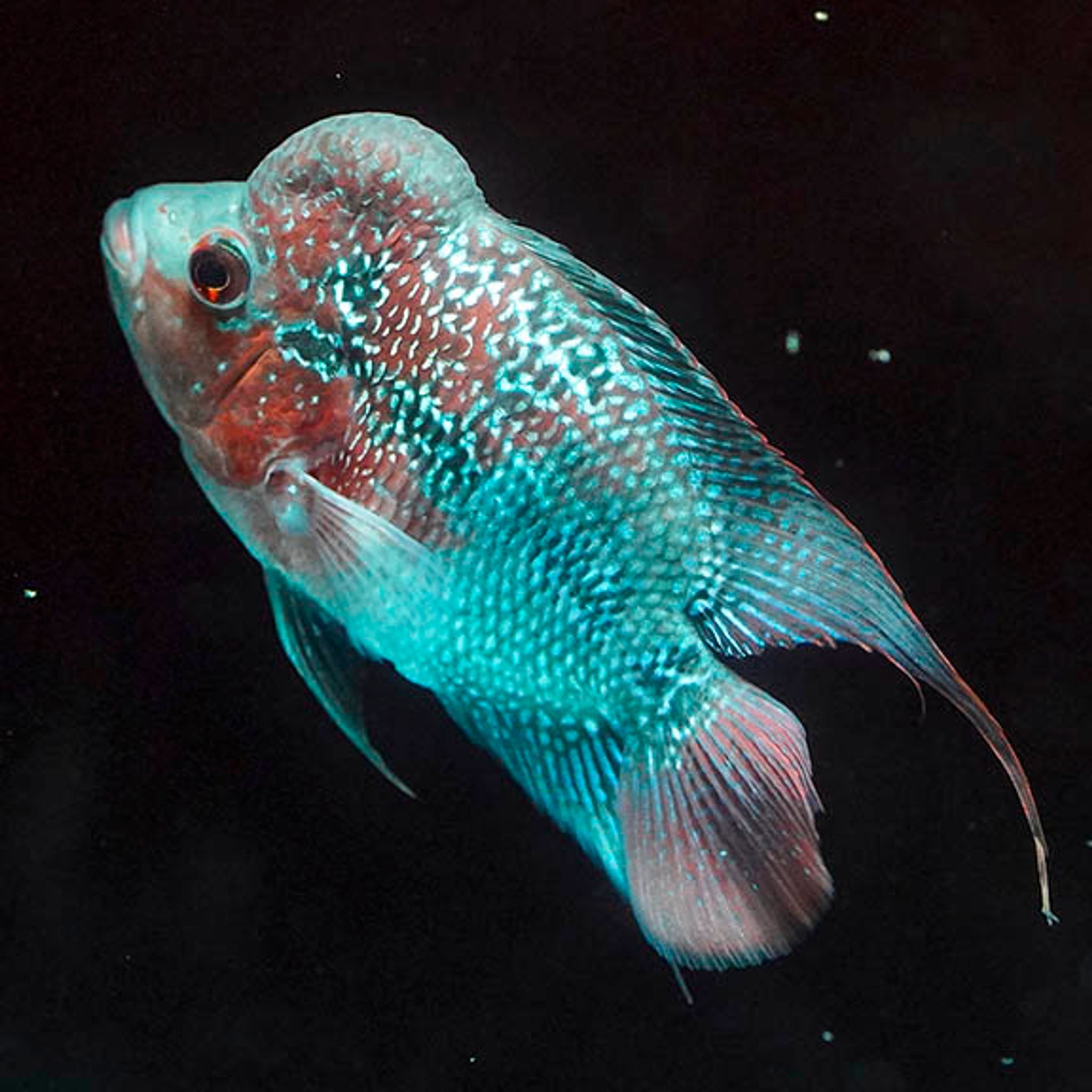
The flowerhorn is a man-made hybrid bred from Central American cichlids in the Amphilophus group. Adults usually reach 10–16 inches (25–40 cm), and males grow larger and develop the prominent forehead bump called a nuchal hump. Aggression tends to climb as the fish grows, so a juvenile that ignores its tank mates at 3 inches can turn on them at 8.
Temperament also varies a lot between individual fish and between strains:
- Zhen Zhu types are often described as somewhat gentler.
- Kamfa types sit in the middle and are unpredictable.
- Louhan types are often the most aggressive.
No list can promise peace. Plenty of flowerhorns never accept any companion, so everything below comes with a condition attached.
Solo Keeping: The Default Recommendation
Keeping the fish alone isn't a compromise. Flowerhorns are known for recognizing their owners, following hands along the glass, and "begging" at feeding time. Instead of tank mates, you can give them enrichment:
- Hand-feeding or target-feeding with tongs
- Moving a rock or piece of driftwood now and then so there's new territory to explore
- Short mirror sessions (a few minutes, not constant), which trigger display behavior without stress from a real rival
- A floating object they can push around
When people ask whether the fish gets lonely, the honest answer is that a flowerhorn living alone is usually far less stressed than one sharing a tank with a fish it wants to kill.
Tank Size by Stocking Plan
Sources give anything from 55 to 75 gallons for a single adult. We recommend a standard 75-gallon (284 L) tank, 48 × 18 inches (122 × 46 cm), as the practical minimum. A 55-gallon (208 L) is only a short-term home for a juvenile. Tank length matters more than volume: 4 feet (122 cm) is the minimum and 6 feet (183 cm) is better.
| Stocking plan | Minimum volume | Common US tank | Footprint |
|---|---|---|---|
| Juvenile, temporary | 55 gal (208 L) | 55 gal | 48 × 13 in (122 × 33 cm) |
| One adult flowerhorn | 75 gal (284 L) | 75 gal | 48 × 18 in (122 × 46 cm) |
| Flowerhorn + one large mate, or a male-female pair | 125–150+ gal (473–568+ L) | 125 gal | 72 × 18 in (183 × 46 cm) |
| Flowerhorn + several large fish | 180–200+ gal (681–757+ L) | 180 or 220 gal | 72 × 24 in (183 × 61 cm) or larger |
| Flowerhorn + tinfoil barb school at adult size | ~250 gal (946 L) | Custom | 8 ft (244 cm) class |
Before you commit, be realistic about 6-foot tanks. A filled 125- or 180-gallon aquarium weighs well over a ton, needs a purpose-built stand and a solid floor, and costs much more to filter, heat and maintain than a 75. If that isn't practical, go solo.
Water Parameters for a Shared Tank
Every tank mate has to tolerate the same warm, hard, alkaline water the flowerhorn prefers:
- Temperature: 80–86°F (27–30°C) is the usual range, and some sources go as wide as 78–89°F (26–32°C). Aim for 80–84°F (27–29°C) day to day.
- pH: 7.0–8.0. Some sources allow down to 6.5, but staying at 7.0 or above suits the species listed here.
- Hardness: 9–20 dGH.
- Filtration: aim for 5–10× tank volume per hour of turnover.
- Water changes: 30–50% weekly, keeping nitrate under 20–40 ppm.
Two large, messy eaters can easily double the bioload. Many owners underestimate this, which leads to ammonia spikes and a higher risk of hole-in-the-head disease. If you add a mate, upgrade filtration at the same time.
The Four Rules for Any Flowerhorn Tank Mate
- Similar or larger adult size. Anything that fits in the flowerhorn's mouth eventually ends up there.
- Able to defend itself or out-swim trouble. That means armor, a strong temperament, or real speed.
- Uses a different part of the tank where possible, such as the bottom, the surface, or open water.
- Thrives in warm, hard water. No soft-water or cool-water species.
Compatible Tank Mates: A Risk Table
Sources disagree on which approach is better: aggressive cichlids that can fight back, or peaceful big fish that rely on speed and space. Treat both as conditional. Aggressive cichlids hold their ground but can escalate into serious fights, and peaceful fish only stay safe when the tank is large enough to get away.
| Species | Adult size | Risk | Min shared tank | Water level |
|---|---|---|---|---|
| Red Terror | 12–16 in (30–40 cm) | High | 150+ gal (568+ L) | Mid |
| Jaguar cichlid | 14–16 in (35–40 cm) | High | 150+ gal | Mid |
| Midas / Red Devil | 10–14 in (25–35 cm) | High | 150+ gal | Mid |
| Texas cichlid | 10–12 in (25–30 cm) | High | 125–150 gal | Mid |
| Green Terror | 8–12 in (20–30 cm) | High (gets outweighed) | 125–150 gal | Mid |
| Oscar | 12–14 in (30–35 cm) | Medium (often the victim) | 150+ gal | Mid |
| Bichirs | 12–24 in (30–60 cm), by species | Low–medium | 125+ gal | Bottom, nocturnal |
| Large plecos (common, leopard/sailfin) | 12–20 in (30–50 cm) | Low | 125+ gal | Bottom |
| Spotted hoplo | 6–8 in (15–20 cm) | Low–medium | 125+ gal | Bottom |
| Giant gourami | 18+ in (45+ cm) | Medium | 180–200+ gal | Mid–top |
| Silver arowana | 30+ in (75+ cm) | Medium | Very large, 200+ gal | Top |
| Fire eel / large spiny eels | 20–36 in (50–90 cm) | Medium | 180+ gal | Bottom, burrowing |
| Silver dollars (5+) | 6 in (15 cm) | Medium | 180+ gal | Mid, schooling |
| Tinfoil barbs (5+) | 12–14 in (30–35 cm) | Medium | ~250 gal (946 L) | Mid, schooling |
Size figures are typical adult ranges and vary by species and individual.
Aggressive Cichlid Options
Other big Central American cichlids can hold their own. The Red Terror, Jaguar cichlid, Midas/Red Devil and Texas cichlid are all powerful enough to push back, but when two dominant fish meet, the fights can be serious. The Green Terror is tough but usually gets outweighed by an adult flowerhorn. You can browse American cichlids on FishyHub if you're planning a large cichlid community.
Hybridization warning: Midas, Red Devil and Red Terror cichlids can crossbreed with flowerhorns. If you don't want hybrid fry, avoid pairing opposite sexes of these species.
The Oscar Question
Some care lists call the Oscar a good match. But its calmer, semi-aggressive temperament means it's frequently the one that gets bullied, especially in cramped tanks. Treat it as a medium-risk choice that only makes sense in 150+ gallons (568+ L).
Non-Cichlid Options
- Bichirs: armored, bottom-dwelling and mostly active at night, so they rarely compete for space.
- Large plecos: common plecos, leopard/sailfin plecos and other suckermouth catfish. Buy them at 6 inches (15 cm) or larger. Browse plecos and bottom dwellers for suitable species.
- Spotted hoplo: a sturdy armored catfish that stays near the bottom.
- Giant gourami: big and generally calm, but it needs a huge tank.
- Silver arowana: a surface swimmer that needs an enormous tank and a tight lid because it jumps.
- Fire eels and large spiny eels: burrowing bottom dwellers that need soft substrate areas and an escape-proof lid.
Dither and Schooling Fish
Silver dollars and tinfoil barbs in groups of five or more can spread out the flowerhorn's attention and make it more confident. Tinfoils grow large, though, and a school at adult size needs roughly 250 gallons (946 L).
Juvenile-Only Ideas
Giant danios, larger barbs and mollies can live with a small juvenile flowerhorn. Once the flowerhorn grows, they usually become targets or food, so treat them as temporary and plan where they'll go next.
Can Flowerhorns Live With Other Flowerhorns?
- Two males: no. They fight until one is injured or dead.
- Male + female raised together: can work in 125–150+ gallons (473–568+ L). Watch closely around spawning, when the male may turn on the female.
- Two females: sometimes tolerated, but not reliably.
A perforated divider that lets water flow through is a practical long-term way to keep two flowerhorns in one tank. Many owners find that the fish enjoy displaying at each other through it.
Species to Avoid
| Avoid | Why |
|---|---|
| Tetras, guppies, rasboras and other small fish | Eaten |
| Goldfish | Too slow, need cooler water, eaten |
| Bettas and fancy long-finned fish | Fins get shredded |
| Angelfish and discus | Slow, peaceful, need soft water |
| Shy or timid species | Stressed into hiding and starvation |
| Shrimp, snails, crabs | Eaten; they don't work as a cleanup crew |
Aquascaping to Reduce Aggression
- Break up sight lines with large rocks and driftwood so each fish can get out of the other's view.
- Anchor heavy decor on the glass bottom before adding substrate, because flowerhorns dig and can topple stacked rock.
- Keep plants minimal and sturdy. Delicate plants get uprooted.
- Use a tight, weighted lid.
- Before adding a newcomer, rearrange the decor so the resident loses its established territory.
Feeding a Mixed Tank
The flowerhorn will try to eat everything first. Feed it at the surface, then target-feed bottom dwellers after lights out, using sinking wafers for plecos and sinking pellets for bichirs, hoplos and eels. If a mate is losing weight, feed it on the other side of a divider.
Step-by-Step Introduction Plan
- Quarantine every newcomer for 2–4 weeks in a separate tank. Don't skip this step.
- Rearrange rocks and driftwood in the main tank the day you introduce the fish.
- Install a clear divider and keep the fish on either side of it for 1–2 weeks.
- If you're adding several fish, add them together rather than one at a time.
- Remove the divider when you can watch for several hours. Brief jaw-locking sparring is normal. Constant pursuit is not.
- Keep a backup plan: a spare 40–55 gallon (151–208 L) tank or a divider ready to go in on short notice.
Signs It's Time to Separate
- Torn or shredded fins
- A fish hiding at the surface or behind the heater
- Refusing food
- Constant chasing
- Lip-locking that goes beyond brief sparring
Common Mistakes
- Adding mates to an established adult's tank without rearranging, using a divider, or quarantining first.
- Buying juveniles together and assuming the peace will last. Plan to separate them at 5–7 inches (13–18 cm), when temperament starts to show.
- Underestimating bioload and skipping the filtration upgrade.
- Bare-hand maintenance. Adult flowerhorns bite hard. Use gloves and long tools.
- Ignoring legal rules. Some US states restrict certain species. The Asian arowana can't be imported into the US, but the silver arowana is legal. Check your state's rules before buying any large exotic.
Frequently Asked Questions
Can a flowerhorn live alone?
Yes, and many do best that way. A solo flowerhorn avoids the injuries and stress of territorial fights, and it often bonds more closely with its owner. Hand-feeding, rearranging decor and short mirror sessions give it plenty of stimulation.
Can I keep two flowerhorns together?
Only a male and female raised together, in 125–150+ gallons (473–568+ L). Never keep two males together, because they'll fight to injury or death. A perforated divider is a reliable way to keep two in the same tank long-term.
Will a flowerhorn eat plecos?
It usually won't eat large armored plecos, but it may harass them. Buy plecos that are already 6 inches (15 cm) or longer, and give them caves and sinking wafers after lights out.
Can flowerhorns live with Oscars?
Sometimes, in tanks of 150+ gallons (568+ L). The Oscar's calmer temperament means it often loses, so treat it as a medium-risk pairing and have a separation plan ready.
Are shrimp and snails safe as a cleanup crew?
No. Flowerhorns eat shrimp, snails and crabs. Rely on strong filtration, gravel vacuuming and weekly water changes instead.
Can I add dither fish?
Yes, silver dollars or tinfoil barbs in schools of five or more, but only in large tanks. Plan on 180+ gallons for silver dollars and around 250 gallons (946 L) for adult tinfoils.
Choosing Companions With Care
Start with a solo flowerhorn. If you do add company, choose robust fish that match the four rules, and don't do it without a tank of 125 gallons or more and a backup plan. When you're ready, browse FishyHub's freshwater livestock for large, hardy species that can hold their own.


