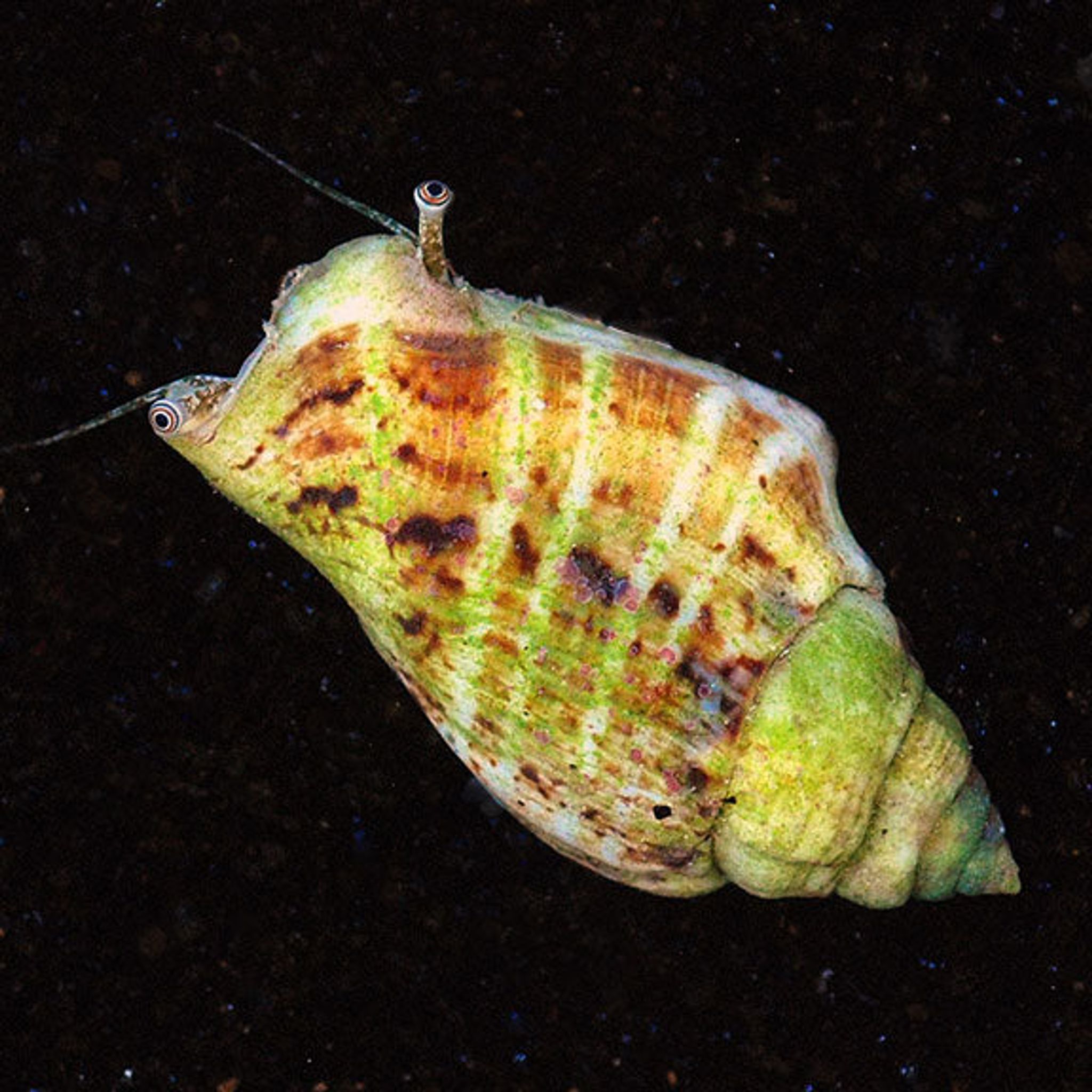

Best Tank Mates for Fighting Conch in a Reef Aquarium
The fighting conch is one of the most useful sand-sifting cleanup crew animals for a reef tank, but the wrong tank mates can turn a peaceful grazer into an easy meal. This guide covers exactly which fish, invertebrates, and corals pair well, which ones put a conch at risk, and the sand bed and water chemistry conditions it needs to thrive.
What "Fighting" Actually Means
The species most commonly sold as the fighting conch is Strombus alatus, the Florida fighting conch. Despite the name, it is not aggressive toward other tank residents. The term refers to male-on-male shell-jousting behavior, where two males shove and knock shells against each other while competing for space or a mate.
Toward fish, corals, and other invertebrates, a fighting conch is entirely peaceful. It has no interest in eating coral tissue, harassing fish, or competing with other cleanup crew for anything but algae and detritus. Assuming the name implies general aggression is one of the most common misunderstandings new keepers bring to this species.
Is a Fighting Conch Reef Safe?
Yes. A fighting conch is fully reef safe and will not nip at coral flesh or polyps. The one physical risk it poses is mechanical, not predatory: as it cruises across the substrate, its shell and foot can bump or topple lightweight frags, loose rockwork, or unglued frag plugs.
To prevent this:
- Glue or epoxy frag plugs to the rockscape rather than leaving them loose on the sand.
- Keep top-heavy or precariously stacked rock structures secured with reef-safe putty or rock rods.
- Give it a clear foraging path along the sand rather than a maze of loose frags at substrate level.
Best Tank Mates for a Fighting Conch
The safest tank mates are peaceful, non-predatory species that ignore the conch's shell and foot entirely.
| Category | Good tank mates | Why they work |
|---|---|---|
| Fish | Clownfish, gobies, chromis, cardinalfish, small non-predatory wrasses, blennies, dartfish | Peaceful, don't target shelled invertebrates |
| Shrimp | Peppermint, fire, cleaner, skunk shrimp | Reef-safe, no interest in attacking snails |
| Snails | Cerith, astrea, turbo, nassarius, bumblebee | Complementary or overlapping grazers, non-aggressive |
| Other | Sea stars, most corals, other peaceful cleanup crew | No predatory behavior toward shelled animals |
If you're stocking a mixed reef tank, browsing options in marine fish or corals is a reasonable starting point, since most standard reef community fish and coral species on a typical stocking list are compatible.
Tank Mates to Avoid
The fighting conch's biggest vulnerability is its exposed foot and operculum when it's extended and moving. Any animal built to pry open or crush shells is a serious risk.
Poor or dangerous tank mates:
- Hermit crabs — by far the most common threat. Hermits will evict and kill conchs to take over their shell, even though both are marketed as "cleanup crew."
- Coral banded shrimp
- Mantis shrimp
- Larger or aggressive wrasse species
- Triggerfish
- Puffers
- Hawkfish
- Arrow crabs
- Other shell-invading or snail-eating species
Housing a fighting conch with hermit crabs "because they're both cleanup crew" is one of the most frequent and avoidable mistakes in reef stocking. Hermits are opportunistic and will attack a conch specifically for its shell, not for food value — treat this as a real, common risk rather than a rare edge case.
How Many Fighting Conchs Can You Keep Together?
Generally, stick to one male fighting conch per tank unless the aquarium is large and sandy enough to give each animal its own territory. Two males in tight quarters can shove, nudge, and occasionally injure or kill each other during shell-jousting disputes.
If you want to keep more than one:
- Provide a long, wide sand bed so each conch has independent foraging space.
- A single male with one or more females is generally more peaceful than multiple males.
- As a rough stocking guideline, aim for roughly one conch per 30–50 gallons (114–189 L) of sand-bed footprint, adjusting based on how much algae and detritus the tank actually produces rather than water volume alone. Some guidance suggests ratios as generous as one per 30-40 gallons or as conservative as two per 100 gallons — actual carrying capacity depends heavily on feeding load, not a fixed number.
Tank Size and Sand Bed Setup
A fighting conch needs a minimum of a 20-gallon (76 L) tank, though this is a floor, not a target. Because it forages by plowing through sand rather than swimming through open water, footprint matters more than depth. A long, shallow tank with a wide sand surface will support a conch far better than a tall tank with the same total volume.
Setting Up the Sand Bed
- Use several inches of fine aragonite sand or a sand/silt blend — coarse gravel or a shallow substrate layer prevents normal burrowing.
- Deep, fine substrate lets the conch bury itself to rest and gives it a steady natural supply of detritus and biofilm to graze.
- Don't overclean the sand bed. Aggressively vacuuming or running an overly sterile system strips away the biofilm and detritus the conch depends on for food.
Substrate and Aquascaping Products
If you're building or refreshing a sand bed for a conch, check the fine-grain options under substrate before stocking.
Water Parameters for a Fighting Conch
Stable water chemistry — especially calcium and alkalinity — matters more to a fighting conch than almost any other factor, since its shell is directly affected by mineral balance.
| Parameter | Range | Target |
|---|---|---|
| Temperature | 72–84°F (22–29°C) | Mid-range, 75–80°F (24–27°C) |
| Specific gravity | 1.023–1.026 | Stable within range |
| pH | 8.0–8.4 | Stable, avoid swings |
| Alkalinity | 8–12 dKH | Consistent |
| Calcium | 400–450 ppm | Consistent |
| Magnesium | 1280–1350 ppm | Consistent |
| Nitrate | Under 20 ppm | Lower is better |
Temperature figures reported across sources range widely, from 72°F up to 84°F. Rather than chasing either extreme, target the stable reef-standard mid-70s to high-70s (°F) and avoid large swings.
Never dose copper-based medication in a tank housing a fighting conch or any other invertebrate. Copper is lethal to conchs at concentrations used to treat fish disease. If a fish in the display needs medicating, move it to a separate quarantine tank rather than treating the display tank directly — this is also the safest general quarantine approach, since standard fish medications are frequently invertebrate-unsafe.
Low pH or insufficient calcium and alkalinity will erode and thin the shell over time, which is one of the most preventable causes of decline in captive conchs. Skipping regular testing or dosing is a common mistake that shows up as shell pitting, thinning, or cracking well before other symptoms appear.
Feeding a Fighting Conch
In a mature, well-established reef tank, a fighting conch grazes on:
- Film algae
- Diatoms
- Cyanobacteria
- Detritus sieved from the sand
In a tank like this, it typically needs little to no supplemental feeding.
Feeding When Algae Runs Low
Newer tanks, or reef systems kept unusually clean, often don't generate enough natural film algae and detritus to sustain a conch long-term. Watch for these starvation warning signs:
- Thinning or increasingly fragile shell
- Reduced foraging activity
- Retreating into the sand for unusually long periods without resurfacing
If you notice these signs, supplement with sinking algae wafers, nori, or herbivore pellets a few times a week, adjusting frequency based on how quickly the food disappears and whether activity picks back up.
Overlapping Cleanup Crew Niches
Fighting conchs share a foraging niche with other sand-sifting detritivores like nassarius snails and sand-sifting gobies. Stocking several species that all compete for the same limited detritus and biofilm supply can leave all of them undernourished. Balance your cleanup crew across different niches — algae grazers, detritus sifters, and film feeders — rather than loading up on multiple animals doing the same job.
Herbivore-friendly foods and wafers are available under food & supplements if your sand bed needs a supplemental feeding routine.
Acclimation and Buying Tips
Fighting conchs are sensitive to sudden salinity and pH swings, so drip acclimation over an extended period is strongly recommended rather than a quick float-and-dump.
Before buying one, physically inspect it:
- Check for an intact, undamaged shell with no cracks or chips along the lip.
- Look for an active foot that responds when gently touched or when the animal is turned over.
- Avoid specimens that stay retracted deep in the shell and show no movement after a few minutes of observation.
A Quarantine Note
Because copper and many standard fish medications are unsafe for conchs, there's no straightforward way to run them through a typical medicated quarantine protocol. The safest approach is a plain quarantine tank with stable, mature water parameters and no medication, used mainly to observe shell condition and activity before adding the animal to the display.
Sexual Maturity and Breeding Basics
A flared shell lip is the visible marker of sexual maturity in a fighting conch — juveniles have a simple, unflared spiral shell edge.
For the curious: fighting conchs are dioecious (separate male and female individuals), and courtship involves direct proboscis contact between a male and female. A single female can produce enormous numbers of eggs, which hatch into a planktonic larval stage that drifts in open water before eventually settling and developing into a juvenile conch. This larval stage is extremely difficult to sustain in a home aquarium, so breeding fighting conchs successfully in captivity is rare and not something most reef keepers should plan around.
Lifespan
Under stable, well-fed reef conditions, a fighting conch can live up to around 10 years. In captivity, lifespan is often shorter than this ceiling, typically due to starvation in overly clean tanks or unstable calcium, alkalinity, and pH — both preventable with the husbandry practices above.
Frequently Asked Questions
Is a fighting conch actually aggressive?
No. The name refers only to male-on-male shell-jousting behavior. Toward fish, corals, and other invertebrates, it's completely peaceful.
Can I keep a fighting conch with hermit crabs?
It's not recommended. Hermit crabs are one of the leading causes of conch deaths in home reef tanks, since they will evict and kill a conch to claim its shell.
How many fighting conchs can I keep together?
Generally one per tank, unless the aquarium is large and sandy enough for multiple males to hold separate territories. Two males in a small tank risk fighting, sometimes fatally.
What size tank does a fighting conch need?
A 20-gallon (76 L) tank minimum, with a longer, wider footprint preferred over a tall tank. More sand surface area supports larger or multiple conchs better than extra water volume does.
Will a fighting conch eat my corals?
No. It grazes on algae, diatoms, and detritus, not coral tissue. It can, however, bump or topple loose, unglued frags while moving across the sand.
What do I feed a fighting conch if there's not enough algae?
Sinking algae wafers, nori, or herbivore pellets a few times a week, especially in newer tanks or very clean reef systems that don't generate much natural film algae.
Why did my fighting conch bury itself and disappear?
This is normal foraging and resting behavior in the sand bed, not a sign of death. Only be concerned if it stays motionless for an extended period and you notice a foul odor, which would indicate it has died.
Can fighting conchs live with a cleaner shrimp or peppermint shrimp?
Yes. Both are commonly compatible reef tank mates and pose no threat to a fighting conch's shell or foot.
A fighting conch can be one of the lowest-maintenance, most effective sand-bed cleaners in a reef tank as long as it's paired with peaceful tank mates and kept out of reach of shell predators. Browse marine invertebrates on FishyHub to round out a cleanup crew that complements rather than competes with your conch.


