
Best Tank Mates for Feather Duster Worm in a Reef Aquarium
A feather duster worm can't sting, bite, or chase anything out of a reef tank, so compatibility questions really run one direction: what might harm the worm. This guide covers safe tank mates, species to avoid, placement hazards, and the feeding and water quality habits that decide whether any tank mate list even matters.
Why Compatibility Is a One-Way Street
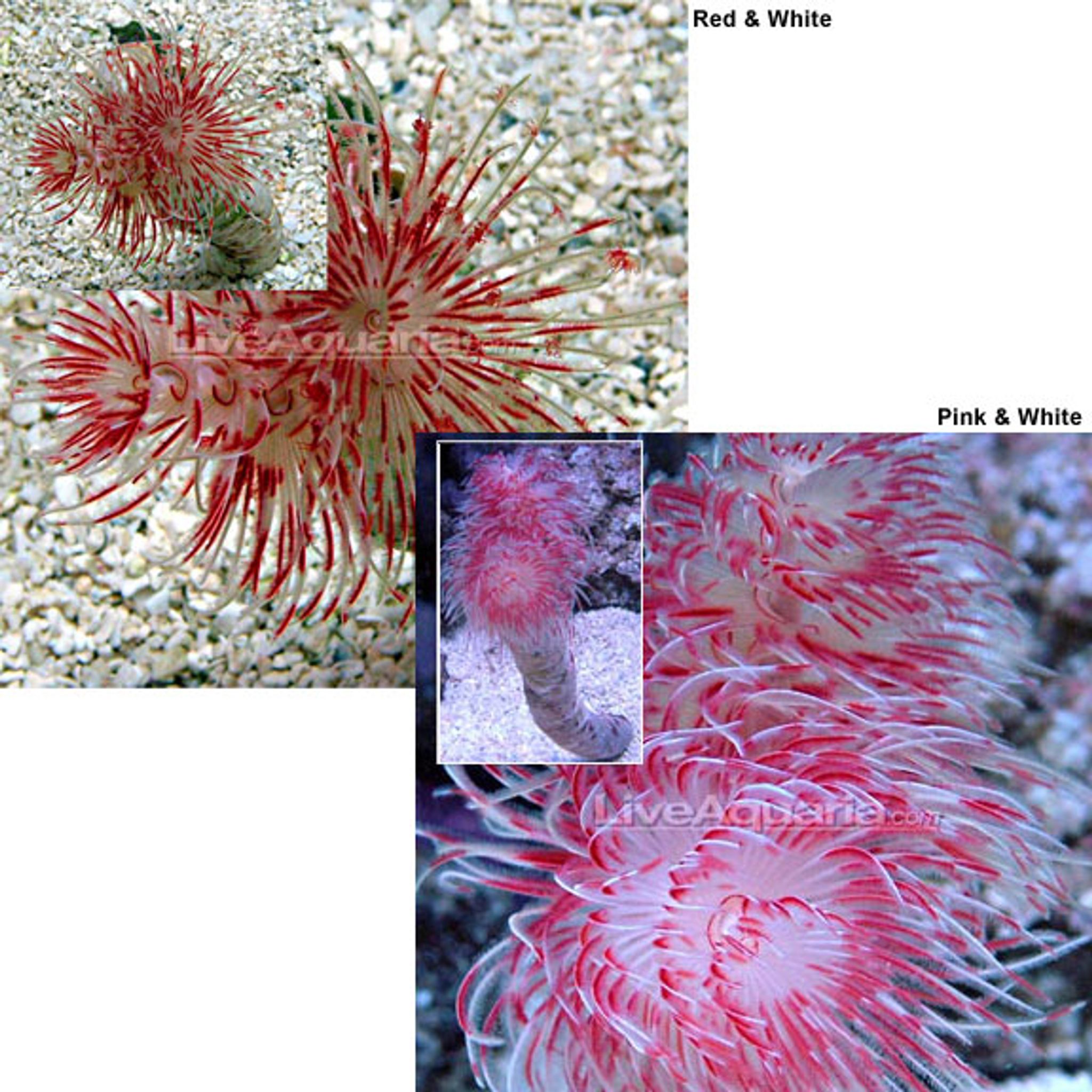
Feather dusters (family Sabellidae, including Sabellastarte and Bispira species) are sessile tube worms that build a parchment-like tube and extend a feathery radiole crown to filter plankton from the water. They have no stinging cells, no bite, and no way to move away from a threat. That means:
- They pose zero risk to fish, shrimp, crabs, snails, or corals.
- Every "compatibility" question is really about what might nip, crush, bury, or starve the worm.
- Most reported "aggression" problems in feather duster tanks are actually husbandry failures — poor flow placement, low food availability, or unstable water — not a tank mate attacking the worm.
Keep that distinction in mind as you read species lists below: a crown that disappears is more often a care issue than a predation event.
Safe Tank Mates
The following groups are generally low-risk around a feather duster's crown and tube.
Fish
- Clownfish — peaceful, don't pick at sessile inverts.
- Gobies (neon goby, watchman goby) — stay near the substrate, ignore dusters.
- Basslets, including royal gramma — peaceful mid-water fish.
- Cardinalfish — slow, non-aggressive plankton feeders.
- Firefish — shy, hover near rockwork without disturbing tubes.
- Dwarf/pygmy angelfish — generally safer than their larger cousins, though individuals vary.
- Chromis — schooling and peaceful toward inverts.
- Mandarin and scooter dragonets — hunt copepods away from the worm's tube, but see the feeding-competition note below.
You can browse a wide range of these species in FishyHub's marine fish selection when planning a peaceful reef community.
Invertebrates
- Cleaner shrimp and peppermint shrimp — reef-safe, ignore feather dusters.
- Snails — algae grazers with no interest in sessile worms.
- Small hermit crabs (blue-leg, red-leg) — generally safe.
- Clams and some sponges — fellow filter feeders that compete for the same food but don't harm each other physically.
Check FishyHub's marine invertebrates category for cleaner shrimp, peppermint shrimp, and small hermit species suited to a peaceful reef.
Corals
Soft corals, LPS, and SPS are all compatible as long as they're placed with adequate spacing so growing coral tissue doesn't sting or shade the worm's crown over time. Browse reef corals to plan a layout that leaves room to grow.
Species and Groups to Avoid
| Group | Why to avoid |
|---|---|
| Butterflyfish | Commonly pick at and eat feather duster crowns |
| Many angelfish (especially larger species) | Known crown-nippers |
| Triggerfish | Aggressive, will test and damage sessile inverts |
| Puffers | Opportunistic, will bite crowns and tubes |
| Large or aggressive wrasses | Can harass or eat exposed crowns |
| Predatory starfish | Some species actively eat feather dusters |
| Large or aggressive hermit/box crabs | Can pinch or crush the tube |
Not every individual in these groups will bother a duster, but as a group they carry meaningfully higher risk than the safe list above.
A Note on Hermit Crabs
Sources disagree here. Some guides call all hermit crabs safe; others flag them as a risk. The practical middle ground: small species like blue-leg and red-leg hermits are fine, but larger, more aggressive hermits (including electric blue hermits) have a track record of bothering sessile inverts and are best kept out of a duster tank.
A Note on Mandarins and Dragonets
Mandarins and scooter dragonets are peaceful and won't touch a feather duster physically, but they hunt the same copepods and zooplankton the worm relies on for food. In a tank with a large, established pod population — or one where you're supplementing zooplankton regularly — this isn't a problem. In a smaller or newer system, the two can end up competing for the same limited food supply, and the worm may lose out over time.
Placement Hazards Matter as Much as Species Choice
Even a tank stocked entirely with "safe" species can stress or kill a feather duster through poor placement.
- Flow: Avoid pointing a powerhead directly at the crown — direct blasts can shred the delicate radioles. Aim for moderate, indirect flow that delivers suspended food without battering the worm.
- Digging and burying: Sand-sifting gobies, jawfish, and some wrasses move substrate around and can bury a duster's tube. Site the worm away from active sand-sifting zones.
- Rockwork shading: Don't tuck a duster so deep in rockwork that light-loving neighbors (like SPS) eventually shade it out, or that growing coral crowds its crown.
- Distance from digging fish: Give bottom-dwelling, substrate-disturbing fish enough distance that normal foraging doesn't knock the tube loose.
A simple placement checklist: moderate indirect flow, clear of sand-sifters, spaced from neighboring coral growth, visible enough to monitor for shedding.
Water Parameters
Feather dusters need the same stable, reef-standard conditions as most marine invertebrates.
| Parameter | Target range |
|---|---|
| Temperature | 72–78°F (22–26°C); tolerates up to ~83°F (28°C) short-term as a stress ceiling, not a target |
| pH | 8.1–8.4 |
| Salinity (SG) | 1.023–1.026 |
| Alkalinity (dKH) | 8–12 |
| Ammonia/Nitrite | Near zero |
| Nitrate/Phosphate | Low but nonzero — some particulate nutrient load is needed to support food availability |
On temperature, sources vary: some cap the "safe" range at 78–80°F, others cite tolerance up to 83°F. Treat 72–78°F as the actual target and anything in the low 80s as a short-term tolerance ceiling, not a goal to aim for.
Never use copper-based medications in any tank containing feather dusters or other invertebrates — copper is lethal to them. Always treat sick fish in a separate quarantine tank rather than dosing the display.
Feeding: The Part Most Compatibility Lists Skip
Feather dusters are obligate filter feeders. They need phytoplankton, zooplankton (rotifers, copepods), and marine snow suspended in the water column — they can't graze or hunt for food themselves.
This is where most "compatibility" failures actually happen. A tank can be stocked with nothing but peaceful tank mates and still starve a feather duster if the system is too clean:
- Heavily skimmed, ultra-low-nutrient reef tanks strip out the very plankton a duster needs.
- UV sterilizers can also reduce planktonic food availability.
- A "pristine," crystal-clear reef is not automatically a good environment for filter feeders.
Target feed 2–4 times per week using a turkey baster or pipette to deliver phytoplankton and zooplankton directly near the crown, ideally with pumps turned down briefly so the food doesn't blow past before the worm can catch it. FishyHub's food and supplements range includes options suited to filter feeders.
How to Grow Phytoplankton at Home
Culturing live phytoplankton is a cost-effective way to keep a steady, fresh food supply for feather dusters and other filter feeders:
- Use a 2-liter bottle or carboy filled with saltwater and an F/2-type fertilizer blend.
- Inoculate with a starter culture (species like Nannochloropsis or Tetraselmis are common choices).
- Provide continuous or 18–24 hour light and gentle air-stir/bubbling to keep cells suspended.
- Harvest using the "greenwater" dilution method — pour off a portion daily and replace with fresh fertilized saltwater.
Home-cultured phyto is generally cheaper long-term than bottled products and delivers fresher, more nutritious cells. The main risk is contamination or a culture crash, so keep a backup culture running separately in case the main batch fails.
The Role of Filter Feeders in a Reef System
Feather dusters aren't just decorative — they're part of a functioning reef food web. Filter feeders (dusters, clams, some sponges, gorgonians) process suspended organics and plankton, and their health is a signal of whether a tank actually has enough planktonic food flowing through it. This is a case for planning nutrient export (skimming, UV, water changes) around what your filter feeders need, rather than optimizing purely for the clearest possible water.
Common Mistakes
- Pointing a powerhead straight at the crown, shredding the delicate radioles.
- Assuming a bare, ultra-clean reef is automatically good for filter feeders — without supplemental feeding, low-nutrient systems starve them.
- Stocking known crown-nippers (some angelfish, butterflyfish) and then blaming water quality when the crown vanishes.
- Dosing copper-based medication in a display tank with dusters present — always quarantine and treat fish separately.
- Giving up too early on a "dying" worm. Crown loss is often just stress-related shedding, not death. Give it 1–2 weeks in stable water before assuming the worst; check the tube itself for a foul smell or visible decay as the real indicator of a dead worm.
- Overcrowding sessile inverts. Placing dusters too close to fast-growing coral colonies leads to stinging or shading as everything matures.
Tank Size and Reproduction
There's no strict minimum tank size tied to the worm itself — a 10–20 gallon (38–76 liter) nano reef works fine for a duster-focused setup. Tank size should instead be driven by whichever fish or coral tank mates you plan to add.
Feather dusters can also reproduce on their own over time through budding/fragmentation and occasional broadcast spawning. A healthy specimen in stable conditions may slowly multiply, reducing the need to purchase additional worms to build up a colony.
Frequently Asked Questions
Will a feather duster worm sting or hurt other tank inhabitants?
No. Feather dusters have no stinging cells and no aggressive behavior — they're purely passive filter feeders and pose no risk to any tank mate.
What fish will eat my feather duster worm?
Butterflyfish, some angelfish, triggerfish, and puffers are the most common crown-nippers. Peaceful reef fish like clownfish, gobies, basslets, and chromis generally leave dusters alone.
Can feather duster worms live with shrimp and crabs?
Yes, with peaceful cleaner shrimp, peppermint shrimp, and small hermit crab species like blue-leg or red-leg hermits. Avoid larger, more aggressive crab species that can pinch or crush the tube.
Do feather dusters need to be fed directly, or will they get enough from the water column?
In a well-stocked reef with fish waste and some phytoplankton dosing, they can often survive on ambient plankton. Supplemental target feeding 2–4 times a week with a baster or pipette generally improves growth and crown size.
Why did my feather duster lose its crown?
Usually stress from water quality swings, physical disturbance, high flow, or a nip from a tank mate. The worm often regrows the crown if the tube stays intact and water conditions stabilize — give it 1–2 weeks before assuming it's dead.
Can feather duster worms live in a nano reef tank?
Yes. They don't need much space themselves, so a 10–20 gallon (38–76 liter) nano reef works fine. Overall tank size should be sized to whatever fish or coral tank mates you choose, not to the worm.
Do feather dusters reproduce in home aquariums?
Yes, via fragmentation/budding and occasional broadcast spawning. A healthy specimen kept in stable conditions may multiply on its own over time.
Ready to build out a peaceful reef community around your feather duster? Browse FishyHub's full range of marine livestock to find reef-safe fish, shrimp, and corals suited to a filter-feeder-friendly setup.


