

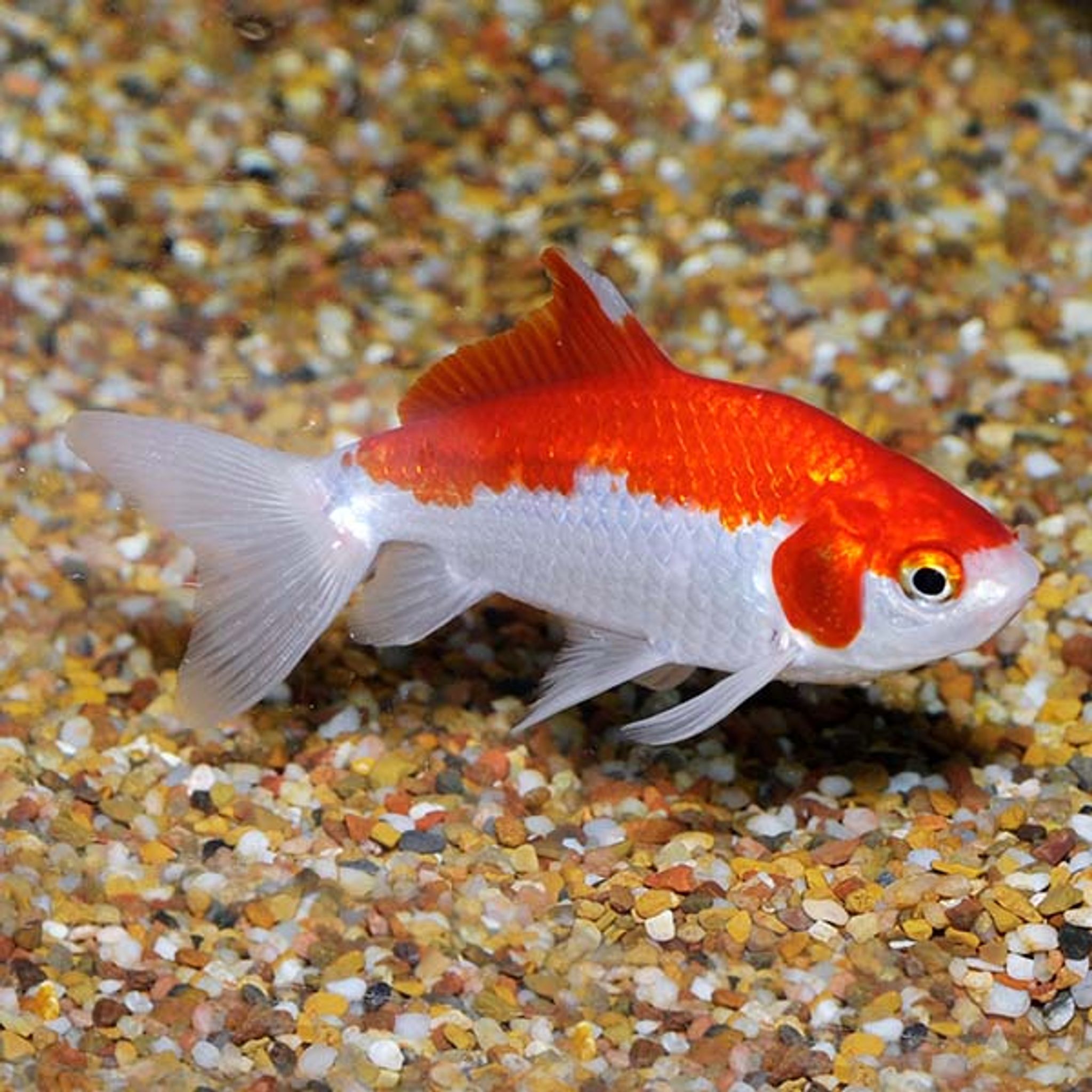

Best Tank Mates for Fancy Goldfish: Compatible Fish and Species to Avoid
The best tank mate for a fancy goldfish is another fancy goldfish of similar shape and speed. After that, a short list of cool-water companions works well: white cloud mountain minnows, ricefish, hillstream and dojo loaches, hoplo catfish, bristlenose plecos and large snails. Bettas, cichlids, tetras, shrimp and anything that needs 78°F (26°C) or warmer should stay out.
This guide assumes a typical unheated US living room and covers fancy varieties such as orandas, ryukins, fantails, ranchus, lionheads, black moors, pearlscales, bubble eyes and telescopes, not comets or commons.
Four Tests Every Tank Mate Must Pass
Before you buy any companion, check it against four questions:
- Is it too big to swallow? Goldfish eat anything that fits in their mouths, and a large oranda has a bigger mouth than you might expect.
- Is it peaceful? Fancy goldfish have long, flowing fins and slow bodies. Fin-nippers will shred them.
- Does it truly live in the same temperature band? Surviving 70°F for a few months is not the same as thriving there.
- Can it avoid outcompeting slow fancies at feeding time? A fast fish that eats everything leaves your goldfish thin and stressed.
If a species fails any one of these, skip it.
Start With More Fancy Goldfish
Goldfish are social and do best in groups of their own kind. Within fancies, though, not every variety mixes well.
- Round, egg-shaped types (ranchu, lionhead, pearlscale) swim slowly and belong together.
- Vision-impaired types (bubble eye, celestial, telescope, black moor) should only share a tank with other slow, poor-sighted fancies. Bubble eye sacs are fragile, so skip sharp decor and fast, pushy tank mates.
- Sleeker fancies (fantail, ryukin, oranda) are quicker and can bully the round and bug-eyed types at mealtime.
Why Comets, Commons and Koi Don't Belong
Do not mix fancies with single-tail goldfish such as comets, commons and shubunkins, or with koi. Single-tails are much faster, grab most of the food and grow 10–12 inches (25–30 cm) or more. They also prefer cooler water, around 60–72°F (16–22°C). Fancies kept with them tend to get thin and stressed and end up with torn fins. Single-tails and koi belong in ponds.
Compatible Tank Mates at a Glance
| Species | Adult size | Comfortable temp | Minimum tank | Verdict |
|---|---|---|---|---|
| Fancy goldfish (similar type) | varies by variety | 68–74°F (20–23°C) | 20–30 gal (75–115 L) for one | Best choice |
| White cloud mountain minnow | 1.5 in (4 cm) | cool water | shared goldfish tank | Good, with some risk |
| Ricefish (medaka) | 1.5 in (4 cm) | cool water | shared goldfish tank | Good, with some risk |
| Hillstream loach (reticulated) | small | 65–75°F (18–24°C) | shared goldfish tank | Good |
| Dojo (weather) loach | 6–12 in (15–30 cm) | cold-hardy | 40+ gal (150+ L) | Good in groups of 3+ |
| Hoplo catfish / hognose brochis | too large to swallow | cool-temperate | 30+ gal (115+ L) | Good |
| Bristlenose pleco | small | cool-temperate | shared goldfish tank | Good if well-fed |
| Variatus platy | small | tolerates cooler water | shared goldfish tank | Good (fry get eaten) |
| Mystery or nerite snail | large snail | cool-temperate | any | Good |
| Zebra / giant danio | small to medium | cool-temperate | shared goldfish tank | Maybe |
| Corydoras | small | prefers warmer | shared goldfish tank | Maybe (choking risk) |
| Rosy barb | medium | cool-temperate | shared goldfish tank | Maybe (can nip) |
The Best Companions in Detail
White Cloud Mountain Minnows
A true cool-water schooler that stays around 1.5 inches (4 cm). Keep six or more, and pick standard-finned fish rather than long-finned forms. They are quick enough to dodge most fancies, but a large oranda may still catch a few. Treat them as semi-expendable, and only pair them with small to medium fancies.
Ricefish (Medaka)
Peaceful, cool-water fish of about the same size as white clouds, with the same swallowing caveat. They make a calm upper-water group above slow goldfish.
Hillstream Loaches
Reticulated hillstream types cling to the glass and graze algae, and they like 65–75°F (18–24°C). They need strong flow and high oxygen, which fits the heavy filtration a goldfish tank already needs. Browse suitable species in our loach selection.
Dojo (Weather) Loaches
Cold-hardy, peaceful burrowers that grow 6–12 inches (15–30 cm). Keep three or more in 40+ gallons (150+ L) with fine sand to dig in and a secure lid, because they are escape artists.
Hoplo Catfish and Hognose Brochis
Sturdy, peaceful bottom dwellers that are too large for a goldfish to swallow. Plan on 30+ gallons (115+ L).
Bristlenose Plecos and Other Grazers
A bristlenose stays small and handles algae. Feed sinking wafers at night so it doesn't go hungry and start sucking the goldfish's slime coat. Watch for that behavior anyway. A rubbernose pleco is an alternative grazer, and large mystery and nerite snails round out the cleanup crew.
Variatus Platies
Unlike most livebearers, variatus platies tolerate cooler water. They will breed, and the goldfish will eat the fry.
Maybes: Only Under the Right Conditions
- Zebra and giant danios: Peaceful and cool-tolerant, but fast. They can beat fancies to the food, so target-feed your goldfish.
- Corydoras: They prefer warmer water and are small with hard, sharp fin spines. A large goldfish that tries to swallow one can choke. Only consider them with small fancies and at the warm end of the range.
- Rosy barbs: Fine with single-tails, but standard rosy barbs can nip long fancy fins.
Species to Avoid
- Bettas: Tropical, and fin damage can go either way.
- Cichlids, including angelfish and oscars: territorial, tropical or both.
- Tiger barbs, serpae and other nippy tetras: Fin-nippers.
- Neon and other small tetras: Tropical and bite-sized.
- Guppies: Tropical, and small enough to be eaten.
- Shrimp: Goldfish see them as food.
- Common plecos: They get huge and suck slime coats.
- Chinese algae eaters: Known to latch onto goldfish.
- Paradise fish and gouramis: Territorial and tropical.
- Discus and any fish that needs 78°F (26°C) or warmer.
About "Warm-Water" Goldfish Companions
Some lists include angelfish, gouramis, guppies, gold barbs and tetras because goldfish tolerate about 75°F (24°C). We leave them out. A compromise temperature keeps the tropical fish too cool and the goldfish too warm, which shortens goldfish lifespan and raises disease risk.
Tank Size and Stocking
Plan on roughly 20–30 gallons (75–115 L) for the first fancy and about 10 gallons (38 L) for each additional fancy. Add companion bioload on top of that. The inch-per-gallon rule doesn't work for goldfish, which are bulky and produce a lot of waste. A pair of fancies with a small group of white clouds and a bristlenose, for example, needs more than the 30–40 gallons (115–150 L) the two goldfish alone require.
Water Temperature: Does a Goldfish Need a Heater?
Goldfish are cold-tolerant, not cold-requiring. Fancies do best at about 68–74°F (20–23°C) and tolerate roughly 60–78°F (16–26°C). Published ranges vary widely, from 50–70°F to 70–76°F, but stability matters more than the exact number. Avoid swings of more than about 4°F (2°C) per day.
A heater isn't always necessary. Use a preset heater if the room drops below about 65°F (18°C) or the temperature swings a lot, as in a basement tank or a room where the thermostat is turned down on winter nights. In summer, watch for rooms that push the tank above 78°F (26°C).
Ideal Water Parameters
| Parameter | Target |
|---|---|
| pH | 7.0–8.0 (about 7.2–7.6 ideal) |
| General hardness | about 8–12 dGH (150–200 ppm) |
| Ammonia | 0 ppm |
| Nitrite | 0 ppm |
| Nitrate | under 20–40 ppm |
Hardness recommendations run from 80 to 400 ppm depending on the source. The middle ground is fine as long as it stays stable. Test weekly, and always test before adding companions.
Filtration and Aeration
Do Goldfish Need a Filter?
Yes. Goldfish are heavy waste producers. Aim for 6–10 times the tank volume per hour in turnover, with a gentle outflow so slow fancies aren't blown around. Sponge filters add aeration and are gentle on fins. Without a filter, only large daily water changes keep goldfish alive. You can compare options in our filters category.
Does a Goldfish Need an Air Pump?
Not strictly, but extra oxygen helps, especially in summer because warmer water holds less oxygen. An air pump is essentially required if you keep oxygen-hungry companions such as hillstream loaches.
Feeding a Mixed Goldfish Tank
- Target-feed slow or poor-sighted fancies with a baster or feeding tongs so faster fish don't take everything.
- Drop sinking wafers at lights-out for plecos, loaches and catfish.
- Watch the first several feedings after adding any new fish. If a goldfish is losing out, rethink the mix.
Adding Companions Safely
- Cycle the tank first. Never add companions to an uncycled tank.
- Quarantine new fish for 2–4 weeks in a separate tank. Goldfish often pick up parasites, flukes and ich from new arrivals.
- Stock slowly. Add one group at a time and let the filter catch up before the next.
- Observe. Check fins, appetite and behavior daily for the first two weeks.
Common Mistakes and Troubleshooting
- Buying "community" tropicals and raising the temperature to suit them.
- Mixing fancies with comets, which leads to thin, stressed goldfish with damaged fins.
- Adding small fish that vanish overnight because they were bite-sized.
- Overstocking. Every companion adds waste to a tank of already messy fish.
- Skipping quarantine.
Quick troubleshooting:
- Torn fins: Look for a nipper or sharp decor.
- Goldfish won't eat: Suspect food competition or ammonia.
- Flashing or rubbing on objects: Test the water first, then consider parasites.
Lowering Ammonia and Treating Ammonia Burns
Signs of ammonia trouble include red streaks on fins or body, gasping at the surface, clamped fins and lying on the bottom. To fix it:
- Do a 30–50% water change with dechlorinated water.
- Dose a water conditioner that binds ammonia.
- Cut feeding back.
- Add bacteria or seeded filter media.
- Recheck your stocking level.
Eliminating Fish Tank Odors
A healthy tank smells earthy. A foul smell usually comes from rotting food, a dead fish or snail, a clogged filter, dirty substrate or cyanobacteria. Find the source, vacuum the gravel, rinse filter media in tank water (not tap water) and add activated carbon if needed.
What About an Outdoor Pond?
Fancy goldfish are poor pond fish. They are slow, sensitive to temperature swings and easy targets for predators. Ponds suit comets, shubunkins and koi, and mixing fancies with koi isn't advised.
If you do plan a first pond for single-tails, or for fancies in summer only in a mild climate:
- Make it at least 3 feet (0.9 m) deep so fish can overwinter.
- Allow about 30+ gallons (115+ L) per adult goldfish.
- Keep a hole open in winter ice for gas exchange.
- Test the water in spring and fall, and do 30–50% changes when quality drops.
- Use a pond vacuum to remove bottom sludge, which fuels ammonia and odor.
- Add netting or other predator protection.
Frequently Asked Questions
Can fancy goldfish live with bettas?
No. Bettas need tropical temperatures that are too warm for goldfish long-term. Fin damage is also a risk both ways: goldfish may pick at a betta's fins, and a betta may nip a fancy's.
Can fancy and common goldfish live together?
It's not ideal. Commons and comets are faster, eat most of the food and grow much larger, so fancies tend to end up thin and stressed. Keep single-tails in their own tank or a pond.
Can goldfish live with shrimp or snails?
Shrimp, no. Goldfish will eat them. Large snails such as mystery and nerite snails are generally fine, while small snails usually get eaten.
What is the best algae eater for fancy goldfish?
A hillstream loach, a bristlenose pleco, or nerite and mystery snails. Avoid Chinese algae eaters and common plecos, both of which can latch onto goldfish and damage their slime coat.
How many fancy goldfish can I keep?
Plan on roughly 20–30 gallons (75–115 L) for the first fancy and about 10 gallons (38 L) for each one after that. Leave extra room for any companions.
Can goldfish live with tropical fish?
Generally, no. Keeping a compromise temperature stresses both groups, and in goldfish it can shorten lifespan and raise disease risk. Goldfish do not get lonely when kept without tropicals. They are social, but what they need is company of their own kind.
When you're ready to plan your stocking, browse fancy varieties in our goldfish collection and build the tank around them first.