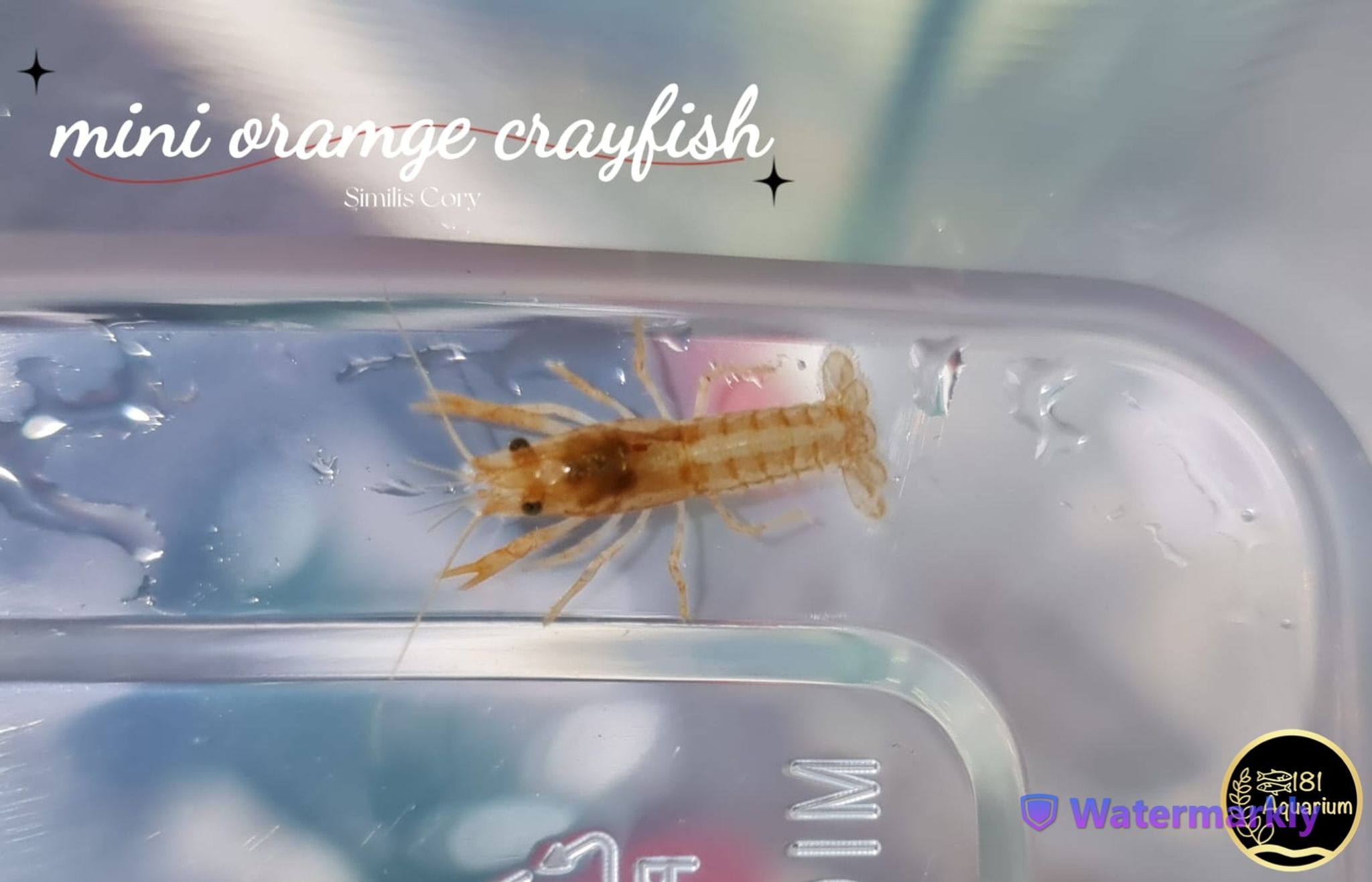

Best Tank Mates for Dwarf Crayfish: Safe Fish and Invertebrate Companions
Dwarf crayfish (genus Cambarellus) are small enough to share a community tank, but they're still nocturnal ambush predators that will eat anything slow enough to catch. This guide gives you a specific, size-based shortlist of safe fish and invertebrates, the ones to avoid, and a framework for judging any species not covered here.
Can Dwarf Crayfish Live With Other Fish At All?
Yes — but only because dwarf crayfish are a different animal from the "true" crayfish most people picture. Species like the CPO (Cambarellus patzcuarensis) and Cajun dwarf crayfish (C. shufeldtii) top out at 1.5–2 inches, with proportionally small, weak claws. Full-size crayfish such as blue crayfish (Procambarus alleni) or red swamp crayfish reach 4–6 inches with claws strong enough to crush snail shells and grab fish twice their own body length. Those larger species are best kept solo or in species-only setups — they are not community-tank material, and advice written for them doesn't transfer to a dwarf crayfish stocking plan.
Because dwarf crayfish are smaller and less aggressive, a well-planned community is realistic. But "possible" isn't "guaranteed" — success depends on tank size, décor, and choosing fish that never spend time on the substrate.
Popular Pet Crayfish Species at a Glance
If you're shopping for "a crayfish," size is the single biggest factor in whether community keeping is even an option.
| Species | Adult size | Community-tank suitability |
|---|---|---|
| CPO / Cambarellus patzcuarensis | 1.5 in (3.8 cm) | Good, with the right fish |
| Cajun dwarf crayfish (C. shufeldtii) | 1.5–2 in (4–5 cm) | Good, with the right fish |
| Blue crayfish (Procambarus alleni) | 4–6 in (10–15 cm) | Poor — solo tank recommended |
| Red swamp crayfish | 5–6 in (13–15 cm) | Poor — solo tank recommended |
This article focuses entirely on the dwarf group. If you own or plan to buy a larger species, treat it as a single-occupant pet, not a community addition.
Tank Size and Water Parameters
A pair or trio of dwarf crayfish alone can live in 8–10 gallons (30–38 L). Once you add fish, size up to 15–20+ gallons so fish have real escape routes and encounter the crayfish less often. Cramped quarters raise the odds of a bad night for everyone.
Target parameters:
- Temperature: 68–75°F (20–24°C) — room temperature is usually fine, and dwarf crayfish tolerate dips into the low 60s°F (16°C)
- pH: 6.5–8.0
- Hardness: moderate, roughly 6–12 dGH/dKH
- Water changes: about 25% weekly
- Cycling: the tank must be fully cycled before crayfish or fish go in
Because crayfish scavenge and produce meaningful bioload, a mixed tank needs filtration sized for the fish load plus a bottom-feeding crustacean — undersized filtration is one of the more overlooked stressors in these setups.
The Core Compatibility Rule
Dwarf crayfish are bottom-dwelling ambush predators that do most of their hunting after dark. The safest tank mates are fast swimmers that stay in the mid-to-upper water column and rarely, if ever, come down to the substrate. Anything slow, long-finned, or bottom-oriented is at risk.
Use this quick framework for any species not on the list below:
- Speed — can it outswim a lunge from a hidden crayfish?
- Water column — does it feed and rest near the surface or midwater, away from the substrate?
- Size and fins — is it too large to be gripped, and does it lack long, trailing fins a claw can latch onto?
A "yes" on all three is a reasonable candidate. A "no" on any one is a gamble.
Good Fish Tank Mates
| Fish | Why it works |
|---|---|
| Guppies, platies, short-fin mollies, endler's livebearers | Fast, midwater, short fins |
| Zebra danios | Very fast, constantly active, rarely near substrate |
| White cloud mountain minnows | Fast, cold-tolerant, midwater |
| Celestial pearl danios / rasboras | Quick, schooling, stay off the bottom |
| Medaka ricefish | Fast surface-oriented swimmers |
| Pencilfish, hatchetfish | Surface dwellers; hatchetfish need a tight-fitting lid, as they jump |
| Rainbowfish | Fast, midwater, larger-bodied |
| Neon, ember, or rummy-nose tetras | Workable in larger schools (8–10+) in a spacious, well-planted tank; some keepers find them slower and more vulnerable than danios, so treat them as a secondary choice rather than a default pick |
| Silver dollars or single-tailed goldfish | Large-bodied and effectively claw-proof; goldfish only suit a cooler, unheated setup, not a tropical dwarf-crayfish community — a niche pairing, not a default one |
You can browse many of these options, including guppies, platies, danios, and tetras, in FishyHub's small community fishes selection.
Fish to Avoid
- True bottom dwellers — corydoras, loaches, plecos, and other bottom-feeding catfish share the crayfish's foraging zone and get cornered. Skip plecos, corys, and other bottom dwellers for a crayfish tank.
- Long-fin or fancy-tail livebearers — slow and nippable; trailing fins invite claw strikes.
- Bettas — workable only in larger tanks with heavy cover, and still high-risk, especially during a crayfish molt. Not a beginner pairing; if you already keep bettas, plan on a species-only tank for them instead.
- Large or aggressive cichlids — small cichlids become food, and larger ones can attack a soft, freshly molted crayfish.
Invertebrate Tank Mates: The Highest-Risk Category
Across crayfish species generally, invertebrates are the riskiest group of tank mates, dwarf or not. Crayfish claws are built for cracking shells and gripping slow-moving prey, so shrimp and snails are naturally at a disadvantage.
- Small, slow shrimp (cherry shrimp, neon shrimp, other dwarf shrimp) are eaten almost universally. If shrimp survival matters to you, keep them in a dedicated species-only tank.
- Larger, faster shrimp (adult Amano shrimp, ghost shrimp, bamboo/vampire filter-feeding shrimp) have better odds because they can outgrow or outrun a dwarf crayfish's claws — but "better odds" is not a guarantee. Treat any shrimp addition as a gamble, not a plan.
- Snails are a near-universal "avoid." Very large, hard-shelled species like mystery snails may be too big for a dwarf crayfish to crack, but that's a minor exception, not a safe bet.
If you want to stock both, look at shrimp for a separate, crayfish-free aquarium rather than mixing them in with your crayfish tank.
Molting: The Critical Danger Window
A freshly molted crayfish is soft-bodied and defenseless for 24–72 hours. During this window, even normally "safe" tank mates can injure or kill it, and the crayfish itself is at its most vulnerable to opportunistic nipping.
To protect a molting crayfish:
- Provide caves, PVC pipe sections, and dense plant cover so it can hide immediately after shedding
- Avoid disturbing the tank (water changes, rearranging décor) right around a molt
- If nippy or predatory fish are present, consider moving the crayfish to a breeder net or hospital tank until the new shell hardens
Feeding Strategy to Reduce Predation
Feeding won't eliminate hunting behavior, but it reduces it. Offer a varied diet — sinking pellets, algae wafers, blanched vegetables, and occasional protein like bloodworms or brine shrimp — and feed heavily right before lights-out. A well-fed crayfish is less driven to actively hunt tank mates after dark. Underfeeding has the opposite effect: it increases hunting pressure on anything sharing the tank.
Décor, Substrate, and Multiple Crayfish
Dense planting, rockwork, and driftwood aren't optional extras — they're what makes a mixed tank workable at all. More hardscape means more places for fish to escape a lunge and more refuges for any shrimp or snails you attempt.
A few practical notes sources often skip:
- Substrate: dwarf crayfish dig and burrow, which can uproot loose-planted stems and disturb hiding spots. Root-anchored or epiphyte plants like Anubias and Java fern (attached to wood or rock rather than planted in substrate) resist this disturbance better than stem plants.
- Multiple crayfish: if keeping more than one dwarf crayfish, provide plenty of hiding spots per individual and enough floor space. They do spar over territory, but disputes among dwarf species are rarely fatal.
- Quarantine: quarantine new fish or shrimp before adding them to an established crayfish tank. Introducing disease into a mixed setup stresses every occupant at once, crayfish included.
- Stocking order: consider establishing your fish first and adding the crayfish last (or vice versa, deliberately) rather than dropping everything in at once — a gradual introduction reduces the initial predation window.
- Legal note: some crayfish species are regulated or restricted as invasive in certain US states. Check your state's rules before buying, particularly for non-dwarf species.
Common Mistakes to Avoid
- Adding shrimp or snails "to see what happens." If they vanish, assume predation, not escape, unless you find clear evidence otherwise.
- Understocking hiding spots. A bare or lightly planted tank turns any tank mate into easy pickings.
- Choosing slow, long-finned fish for looks. Fancy guppies and veiltail-type fish look appealing but their fins and slow speed are exactly what triggers claw strikes.
- Not planning for molts. Losing a crayfish — or a tank mate — because no hiding spot or breeder net was ready during a molt is avoidable with a little foresight.
- Overcrowding a small tank. Packing too many fast fish in with crayfish spikes bioload and stress for the whole tank.
- Applying larger-species advice to dwarf crayfish. Sizing and compatibility guidance for a blue crayfish doesn't apply to a 1.5-inch CPO.
Frequently Asked Questions
Can dwarf crayfish live with shrimp?
Generally no for small, slow shrimp like cherries — expect losses. Larger, faster shrimp such as adult Amano or ghost shrimp have somewhat better odds but no guarantee. If shrimp survival is a priority, keep them in a dedicated shrimp-only tank.
Can dwarf crayfish live with snails?
It's not recommended. Dwarf crayfish will crack and eat most snails, with only very large, hard-shelled species like mystery snails offering a marginal, unreliable exception.
What is the best tank size for dwarf crayfish with fish?
Plan for at least 15–20 gallons once fish are added, even though the crayfish alone could live in 8–10 gallons. The extra space gives fish room to escape and lowers encounter rates overnight.
Are dwarf crayfish aggressive toward fish?
They're opportunistic nocturnal predators rather than overtly aggressive during the day. They'll ambush slow or bottom-dwelling fish, especially after lights-out, but generally ignore fast midwater and surface fish.
Can you keep multiple dwarf crayfish together?
Yes, as long as you provide enough hiding spots and floor space per individual. Territorial disputes happen but are rarely fatal among dwarf species.
What should I do when my crayfish is molting?
Make sure there's ample hiding cover, avoid disturbing the tank, and consider isolating the crayfish or temporarily removing riskier tank mates for 24–72 hours until its new shell hardens.
Ready to plan your stocking list? Browse FishyHub's full range of small community fishes to find fast, dwarf-crayfish-compatible additions for your tank.


