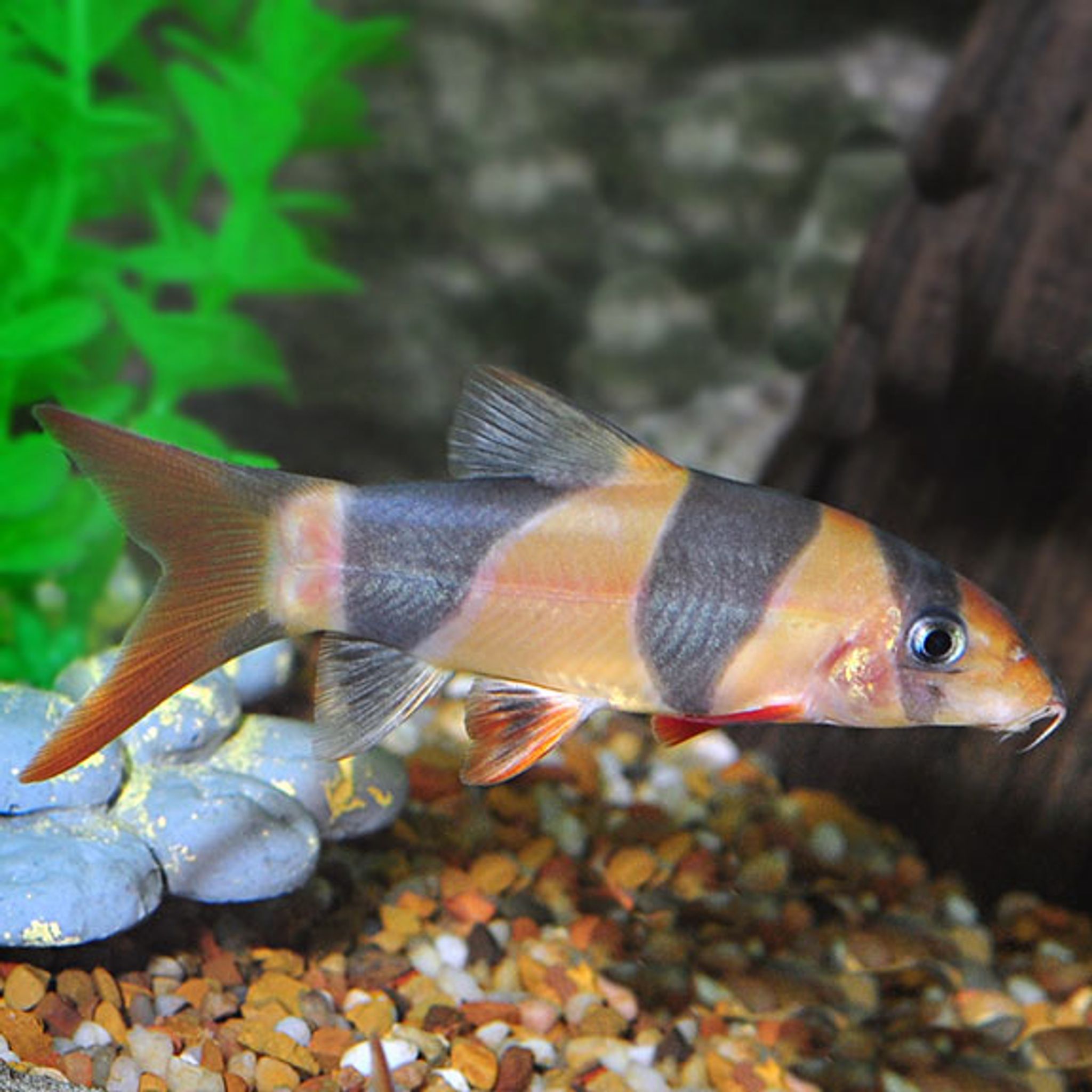
Best Tank Mates for Clown Loach: Compatible Fish and Species to Avoid
The best clown loach tank mates are peaceful, medium-to-large fish that like warm water: rainbowfish, Congo tetras, giant danios, larger barbs, angelfish, pearl gouramis, bristlenose plecos and other botiid loaches. Avoid snails, shrimp, bettas, goldfish, tiny fish and aggressive bottom-dwelling cichlids. Choose companions for the 12-inch adult your loach will become, not the 2-inch juvenile in the store bag.
Plan for the Adult Fish, Not the Juvenile
Most clown loaches (Chromobotia macracanthus) are sold at 2–3 inches (5–8 cm), which makes them look like a community-tank fish. They come from Borneo and Sumatra in Indonesia and grow slowly, but in captivity they still reach roughly 10–12 inches (25–30 cm) and can live 10–20+ years. Buying clowns means committing to decades of care, so every tank mate decision should assume a large, fast adult group.
Key facts that shape compatibility:
- Social and diurnal. Clowns are peaceful, active by day and friendly toward other fish.
- Group of 5 or more. Six or more is better. Kept alone or in pairs, they hide, get stressed and may pester other fish. A proper group is bolder and behaves naturally.
- Big tank eventually. Juveniles can live in 55–75 gallons (210–285 L) for about the first 2–3 years. Adults need 125–150+ gallons (475–570+ L) with a long footprint, ideally 6 feet (180 cm). A rough rule is about 30 gallons (115 L) per adult loach. Plan the upgrade before you buy.
Water and Setup Basics
| Parameter | Clown loach range | Practical target for a community |
|---|---|---|
| Temperature | 77–86°F (25–30°C), ideal 80–84°F (27–29°C) | 80–82°F (27–28°C) |
| pH | 6.0–7.8 | Stable 6.5–7.5 |
| Hardness | Soft to moderately hard | Whatever you can keep steady |
| Filtration | Strong, with some current | Oversized filter plus weekly water changes |
Sources quote a temperature floor anywhere from 77°F to 82°F. Running the tank at 80–82°F keeps the loaches healthy while staying within what most warm-water companions tolerate. For pH, stability matters more than an exact number, so don't chase readings with chemicals.
Clowns produce a lot of waste. Give them smooth sand or fine rounded gravel, plenty of caves, driftwood and hiding spots, robust plants that can take some digging, and a tight-fitting lid, because they can jump.
The Clown Loach Compatibility Checklist
Run every candidate through these five questions. A "no" to any of them rules the fish out.
- Temperature: Does it tolerate 78–84°F (26–29°C) long term?
- Mouth size: Is it too big to fit in an adult loach's mouth, or at least a fast mid- or top-water swimmer?
- Bottom behavior: Is it free of aggressive or territorial habits on the substrate?
- Temperament: Does it avoid fin nipping and bullying?
- Invertebrates: Is it something other than a snail or shrimp you care about?
Water layer matters too. Clowns use the bottom and lower-middle of the tank, so mid- and top-water swimmers spread the activity out and reduce competition for caves.
Best Tank Mates for Clown Loach
These fish pass all five checks when the tank is big enough.
Mid- and Top-Water Schoolers
- Rainbowfish (Boeseman's, red, Australian): active, colorful, warm-tolerant and large enough to be safe. You can browse rainbowfish on FishyHub for this layer.
- Congo tetras: a larger tetra that holds its own and stays out of the loaches' way.
- Giant danios: fast, hardy and happy in the upper water column.
- Larger barbs: tiger barbs in big groups work because clowns are quick enough to ignore nipping attempts. Denison (roseline) barbs and black ruby barbs are good choices. Tinfoil barbs grow very large, so keep them only in very large tanks.
Centerpiece Fish
- Angelfish: a classic pairing with overlapping temperature needs.
- Pearl and moonlight gouramis: peaceful, larger gouramis that stay near the surface.
- Rams: small but warm-loving and generally left alone.
- Peaceful South American cichlids: eartheaters, keyholes and severums suit big tanks where there's room for everyone.
Bottom and Algae Crew
- Bristlenose pleco and larger peaceful plecos: they spend the day on wood and glass rather than fighting for caves.
- Siamese algae eater: active, sturdy and compatible.
- Other botiid loaches: yoyo, zebra and kubotai loaches mix well with clowns of similar size. The loach selection on FishyHub is a good place to look for botiids.
Workable With Caveats
- Discus: the temperature matches, but discus are timid and dislike boisterous loaches. It only works in a very large, calm tank.
- Corydoras: fine alongside juvenile clowns, but corys prefer cooler water and can get crowded out at feeding time.
- Kuhli loaches: opinions differ. Some keepers rate them highly compatible, others report them bullied or outcompeted. They're reasonable with juvenile clowns in a spacious tank with many hiding spots. Otherwise, choose larger botiids.
- Small tetras and rasboras (neons, harlequins, rummy nose): they survive with juveniles, but adult clowns can eat very small fish. For a permanent setup, pick fish at least 2 inches (5 cm) long.
Species to Avoid With Clown Loaches
| Avoid | Why |
|---|---|
| Snails and shrimp | Clowns are dedicated snail eaters, which is great for pest control and fatal for pet snails. Dwarf shrimp are likely eaten too. |
| Fish small enough to swallow | Adults may eat tiny or sleeping fish. |
| Aggressive or territorial bottom-dwelling cichlids | Mature oscars, jack Dempseys and many African cichlids fight for the same floor space. |
| Predators | Large catfish, some knifefish, and arowanas in anything short of a huge tank. |
| Slow, long-finned fish | Fancy guppies, bettas and long-fin variants get jostled and outcompeted. |
| Goldfish and coldwater fish | The temperature needs don't overlap. |
| Very small or timid loaches | Kuhlis and similar species can be bullied or starved out by adults. |
A Note on Monster-Fish Companions
Some lists pair clowns with arowanas, stingrays, clown knifefish or puffers. Treat that as a 250+ gallon (950+ L) project for experienced keepers only. Puffers are nippy and a risky choice at any size. Clown knifefish are also restricted in some places, so check your state's rules first.
Sample Stocking Plans by Tank Size
These are starting points, not exact counts. Adjust for your filtration and how fast your fish grow.
- 75 gallons (285 L), juvenile setup: 5–6 young clown loaches, a school of Congo tetras or giant danios, a pair of pearl gouramis and a bristlenose pleco. Plan the move to a bigger tank within 2–3 years.
- 150 gallons (570 L), adult Asian-style community: 6+ adult clowns, a large group of Boeseman's or red rainbowfish, denison barbs, a Siamese algae eater and a small group of yoyo or zebra loaches.
- 200+ gallons (760+ L), South American/Asian mix: a large clown group, angelfish, a group of eartheaters or severums, a rainbowfish school, and larger peaceful plecos, with plenty of wood and caves to break up sight lines.
Introducing and Feeding Tank Mates
- Quarantine every new fish for 2–4 weeks. Clowns are notorious for catching ich.
- Add companions in the same session or in a planned order so no one group claims the whole tank first.
- Watch feeding time and make sure sinking foods reach the bottom.
- Rearrange decor if one loach starts bullying, which resets territories.
Clowns are omnivores. Feed sinking pellets and wafers, frozen bloodworms, brine shrimp and mysis, blanched vegetables, and snails. Loud clicking at mealtimes is normal.
Common Mistakes and Troubleshooting
- Too small, too few: buying one or two juveniles for a 29–40 gallon (110–150 L) tank leaves you with no room later.
- Forgetting the invertebrates: adding clowns to a tank with prized snails or shrimp ends badly.
- Skipping quarantine: this is the usual route to an ich outbreak. Treat ich early. As fish with very fine scales, clowns are sensitive to full-dose copper and malachite medications, so use half doses, or heat-and-salt methods with caution.
- "Dead" loaches: lying on their side is normal resting behavior. Check that the fish breathes normally and eats before worrying.
- Constant hiding: the group is too small, the lighting too bright, or the tank mates too boisterous.
- Chasing or nipping: usually a pecking-order squabble or an undersized group. Add more loaches and more caves.
- Starving tank mates: fast loaches steal food. Feed in several spots and target-feed slower species.
- Netting trouble: the spines below their eyes snag nets. Move them with a container instead.
Clown Loach vs. Dojo Loach: Don't Mix Them
Beginners often assume all loaches share a tank. Dojo (weather) loaches are subtropical to coldwater fish that prefer about 50–75°F (10–24°C), ideally the mid-60s°F (about 18°C). That barely overlaps with clowns, so don't keep them together.
Tank Mates for Dojo Loaches
- Good companions: other dojos in groups of 3+, goldfish in large tanks, white cloud mountain minnows, rosy barbs, zebra danios, hillstream loaches, and larger peaceful coldwater fish.
- Setup: 55+ gallons (210+ L), since dojos reach 6–10 inches (15–25 cm), soft sand and a tight lid, because they escape and jump.
- Avoid: shrimp and small snails (they eat them) and aggressive fish.
- Legal note: some US states restrict dojo loaches because of invasive wild populations. Check local rules before buying.
Frequently Asked Questions
How many clown loaches should be kept together?
Keep at least 5, and more is better. Larger groups are bolder, hide less and are less likely to pester other fish. Make sure your long-term tank can hold that many adults.
Can clown loaches live with bettas?
It's not recommended. Active, fast-feeding loaches stress bettas, which prefer calm tanks and have long fins that get jostled. Keep bettas in a quieter setup.
Can clown loaches live with shrimp or snails?
No. Clowns actively hunt snails, and small shrimp will likely be eaten too. They're useful for clearing pest snails, but not in a tank with invertebrates you value.
Will clown loaches eat small fish?
Juveniles rarely do. Adults may eat tiny or sleeping fish, so choose companions at least 2 inches (5 cm) long for a permanent community.
Can clown loaches live with goldfish, angelfish or discus?
Goldfish, no, because of the temperature mismatch and different needs. Angelfish, yes, they're a good match. Discus only work in a large, calm tank because they're timid.
Can different loach species be mixed, and what's the smallest tank?
Yes, with other botiids of similar size such as yoyo, zebra or kubotai loaches, but not dojos, because of temperature. A 55–75 gallon (210–285 L) tank works short term for juveniles, but plan for 150+ gallons (570+ L) for adults.
Build a Community That Lasts
Clown loaches do well in a warm, spacious tank with a big group of their own kind and sturdy, peaceful companions sized for the adult fish. When you're ready to stock, browse FishyHub's Freshwater Livestock category for rainbowfish, barbs, gouramis, plecos and botiid loaches that fit the checklist above.

