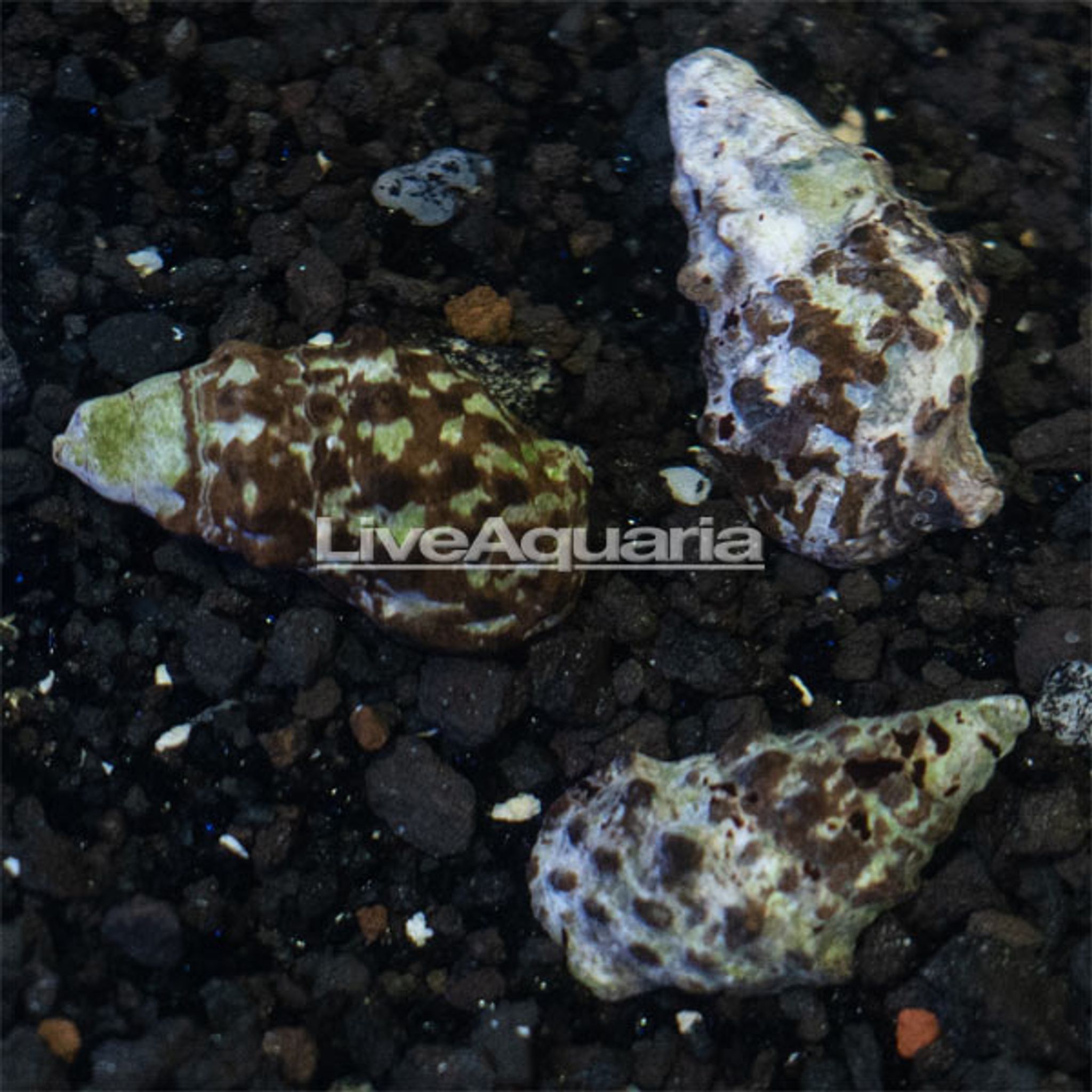

Best Tank Mates for Cerith Snail in a Reef Aquarium
Cerith snails are about as close to bulletproof reef cleanup crew members as you'll find, but "reef safe" doesn't automatically mean "compatible with everything in the tank." This guide breaks down exactly which fish, shrimp, crabs, and other snails pair well with ceriths, which animals put them at risk, and how to build a mixed cleanup crew that actually divides the labor instead of competing over it.
Why Cerith Snails Are an Easy Stocking Decision
Cerith snails are nocturnal, sand-burrowing detritivores that graze on film algae, cyanobacteria, diatoms, and detritus. They are one of the few cleanup crew animals that reliably eat brown diatoms and blue-green algae, which makes them a natural complement to fish and inverts that focus on rockwork or the water column instead of the substrate.
Because they never touch live tissue, ceriths are essentially 100% reef safe. They ignore:
- Coral of all types
- Sponges
- Anemones
- Clams
- Feather dusters
That single trait is what makes tank mate selection about behavior and competition rather than predation risk to your corals — the real questions are whether something eats the snail, competes with it for food, or steals its shell.
Ideal Water Parameters for Cerith Snails
Before adding any tank mates, the tank itself needs to be right for ceriths. They're forgiving of minor swings once established, but sensitive during transfer, so slow drip acclimation matters more than any single parameter.
| Parameter | Target Range |
|---|---|
| Temperature | 72–80°F (22–27°C) |
| pH | 8.0–8.4 |
| Specific gravity | 1.023–1.025 |
| dKH (alkalinity) | ~8–12 |
| Ammonia / Nitrite | 0 ppm |
| Nitrate | Under ~20 ppm |
The tank should be established — cycled for at least a few weeks to a few months — with a sand or mud substrate in place before ceriths go in. They depend on substrate microfauna and detritus for food, so a bare-bottom or brand-new tank with no biofilm will starve them out within days.
Best Fish Tank Mates for Cerith Snails
Cerith snails do well alongside most peaceful reef community fish, since none of these species show any interest in hunting snails:
- Clownfish
- Gobies
- Cardinalfish
- Dwarf and pygmy angelfish
- Dartfish
- Blennies
- Most tangs, with one caveat below
You can browse compatible options like clownfish or reef-safe gobies on FishyHub when planning a community stocking list around a cerith-based cleanup crew.
The Tang and Rabbitfish Food-Competition Caveat
Behaviorally, tangs, surgeonfish, and rabbitfish are perfectly compatible — they won't harm a cerith. The issue is niche overlap. Large, strongly herbivorous grazers can strip algae faster than snails can graze, which effectively starves ceriths in a very clean or low-nutrient tank. If your display runs lean, or you're stocking heavy grazers alongside a big cleanup crew, supplement with sinking algae wafers or pellet foods so the snails aren't left competing for scraps.
Best Invertebrate Tank Mates for Cerith Snails
Most peaceful reef shrimp and crustaceans coexist with ceriths without issue:
- Peppermint shrimp
- Cleaner shrimp and skunk cleaner shrimp
- Fire/sexy shrimp
- Emerald crabs — generally ignore ceriths entirely
- Sea stars
Shrimp options such as marine shrimp round out a cleanup crew nicely, since they scavenge leftover food and detritus in areas ceriths don't typically patrol.
Building a Mixed Cleanup Crew: Who Eats What
A common mistake is stacking a tank with multiple snail species that all compete for the same food. The better approach is picking species that divide labor by niche:
| Species | Primary Niche | Feeds On |
|---|---|---|
| Cerith snail | Sand surface, nocturnal | Film algae, diatoms, cyanobacteria, detritus |
| Nassarius snail | Sand surface scavenger | Leftover food, buried detritus |
| Astrea / Trochus / Turbo snail | Rockwork and glass grazer | Hair algae, film algae on hard surfaces |
| Fighting conch | Sand sifter | Detritus, sand-dwelling algae |
| Emerald crab | Rockwork | Bubble algae, hair algae |
| Cleaner/peppermint shrimp | Water column and rock crevices | Leftover food, parasites, aiptasia (peppermint) |
Note that nerite snails, while popular in freshwater and brackish setups, are not appropriate for a marine reef tank — they're a different animal group entirely and shouldn't be confused with marine-grazing snails when planning a saltwater cleanup crew. You can browse dedicated marine snails and crabs to fill out each niche.
Fish and Invertebrates to Avoid
Some tank mates pose a direct threat to cerith snails, either as predators or as shell thieves.
Predators that eat snails:
- Triggerfish
- Puffers
- Large or medium wrasses
- Snowflake and other moray eels
Shell-thieves and snail-pickers:
- Arrow crabs (pick snails directly out of their shells)
- Coral banded shrimp (same behavior)
- Hermit crabs, especially blue-leg hermits, which frequently attack live ceriths or evict them from their shells to steal the shell itself
Not All Wrasses or Crabs Are Equally Risky
A common mistake is assuming every wrasse or every crab is either fully safe or fully dangerous. Size and species matter: a small, peaceful goby-like wrasse is generally fine, while a six-line wrasse or larger predatory wrasse species is not. The same logic applies to crabs — a small, docile hermit is usually manageable, while an arrow crab is a consistent snail predator regardless of tank size.
Reducing Hermit Crab Conflict
If you keep hermit crabs alongside ceriths, always provide extra empty snail shells in the tank. This gives hermits a shell-upgrade option that doesn't involve attacking a live snail, and it significantly cuts down on shell-jacking incidents. Keep in mind that conflict risk shifts over time: as ceriths grow, their shells eventually outgrow what most hermit crabs want, which can reduce (or in some cases change) the competition dynamic as both animals mature.
Acclimation and Quarantine Notes
Cerith snails are hardy long-term but sensitive during transfer. A few practical steps reduce stress and losses:
- Drip acclimate slowly — sudden salinity or temperature shifts are a leading cause of death during introduction, even in otherwise healthy snails.
- Inspect for hitchhikers — any snail order can arrive with unwanted pests like aiptasia or bristleworms attached to the shell; a brief visual check or quarantine period before adding to the display reduces this risk.
- Don't rush stocking — add snails gradually rather than all at once, especially in a newer tank still building up its algae and detritus supply.
Common Mistakes to Avoid
- Adding ceriths to an uncycled or brand-new tank. With no biofilm or algae established, they starve within days.
- Overstocking relative to available food. Too many snails competing for a limited detritus and algae supply can cause die-offs, which then spike ammonia.
- Mixing with hermit crabs and no spare shells. This is one of the most common causes of unexplained snail losses, often mistaken for random die-off.
- Panicking over daytime inactivity. Ceriths are nocturnal and burrow in the substrate during the day — this is normal behavior, not a sign of illness or death.
- Skipping drip acclimation. Even hardy, established snails can die from a fast temperature or salinity change during transfer.
How Many Cerith Snails Per Gallon?
Stocking advice varies widely across sources, ranging from 1 snail per gallon to 1 per 5 gallons. A conservative, sensible rule is:
- 1 cerith snail per 3–5 gallons of total system water as a general baseline
- Scale down (fewer snails) if other algae grazers like astrea or turbo snails are already present
- Scale down further in a very clean, low-nutrient display where food is limited
Tank size itself isn't usually the limiting factor — ceriths do fine in nano reefs as small as 5 gallons (19 L) as long as there's enough live sand and algae/detritus to sustain them. Extremely small setups in the 1–2 gallon range risk both starvation and unstable water parameters, so they're best avoided.
Frequently Asked Questions
Can cerith snails live with hermit crabs?
Generally yes, if the hermits are small and peaceful and you always keep extra empty shells available. Risk rises significantly with aggressive species or blue-leg hermits, which are known to attack live ceriths for their shells.
Will cerith snails eat coral or clams?
No. Ceriths only eat algae, biofilm, and detritus — they never touch live coral tissue or clam mantle, which is why they're considered essentially 100% reef safe.
How many cerith snails per gallon?
A safe general rule is roughly 1 snail per 3–5 gallons of total system water. Adjust downward if other grazers are already present or if the tank runs very clean with limited algae.
Do cerith snails need a mate to breed, and will they overpopulate the tank?
They can reproduce in home aquariums, but their larvae rarely survive without access to live plankton. Noticeable overpopulation from home breeding is uncommon as a result.
What fish will eat my cerith snails?
Triggerfish, puffers, large or medium wrasses, and moray eels are the primary fish predators to avoid. Small, peaceful community fish like clownfish, gobies, and blennies pose no threat.
Are cerith snails nocturnal — why don't I see them during the day?
Yes, they're primarily active at night and burrow into the sand during the day. This is completely normal behavior and not a sign of illness or death.
Can cerith snails go in a nano reef tank?
Yes, they do well in tanks as small as 5 gallons (19 L), provided there's adequate sand and a steady supply of algae and detritus to feed on.
What do I feed cerith snails if my tank is too clean?
Drop sinking algae wafers or pellet foods near the substrate at night, when ceriths are naturally active and foraging.
Ready to round out your cleanup crew? Browse compatible options across marine invertebrates on FishyHub to pair cerith snails with shrimp, crabs, and other grazing snails suited to your reef tank.


