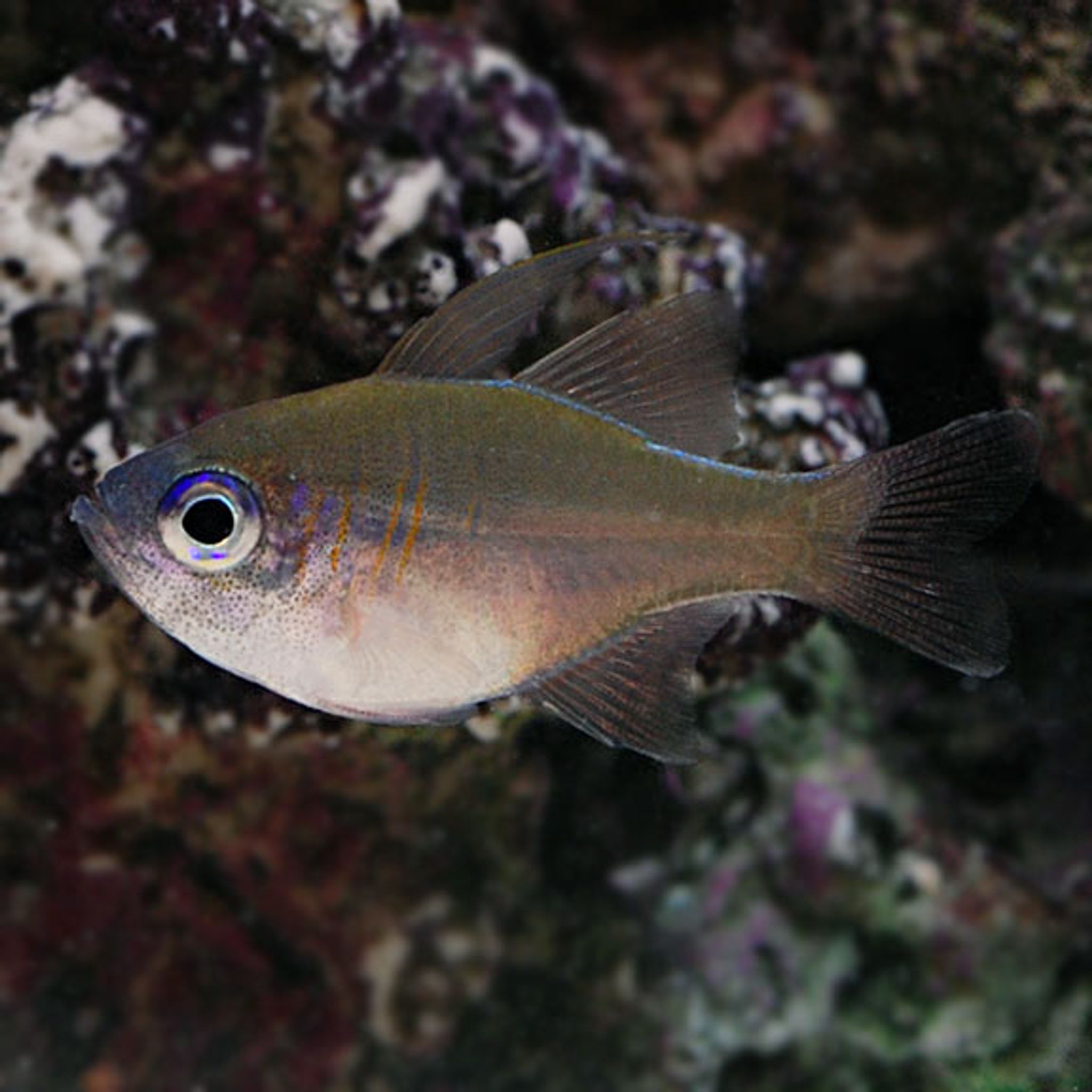
Best Tank Mates for Banggai Cardinalfish: Peaceful, Risky and Incompatible Choices
Banggai Cardinalfish (BCF) fail in community tanks for one reason far more often than aggression: they simply lose the race for food. This guide sorts tank mates into peaceful, risky, and incompatible categories based on that real weakness, plus gives concrete stocking, feeding, and setup guidance for a first marine community built around them.
Why Banggai Cardinalfish Are Tricky to Stock
Pterapogon kauderni, known as the Banggai or Kaudern's Cardinalfish, is a small, peaceful mouthbrooder native to Indonesia's Banggai Archipelago. It's listed as Endangered in the wild, though it's common and widely captive-bred for the aquarium trade — buying captive-bred stock whenever possible takes pressure off wild populations.
The compatibility issue isn't temperament. BCF are non-aggressive and rarely bother anything. The problem is how they behave:
- They hover near shelter — branching coral, rock crevices, long-spined urchins, anemones — instead of patrolling open water.
- They are slow, deliberate feeders that pick food out of the water column rather than chasing it down.
- Under any pressure, they retreat and stop eating rather than compete.
Put a BCF next to fast, pushy eaters and it will quietly lose weight over weeks, even without a single act of aggression. That single fact should drive most of your stocking decisions.
Tank Size and Water Parameters
A single Banggai Cardinalfish or a bonded pair does fine in a 20-30 gallon (75-115 L) tank. If you want to keep a small shoal or harem, plan for 55+ gallons (210+ L) — groups need enough floor space to establish a loose pecking order without constant chasing.
| Parameter | Target Range |
|---|---|
| Temperature | 74-80°F (23-27°C) |
| Specific gravity | 1.023-1.025 |
| pH | 8.1-8.4 |
| dKH | 8-12 |
| Ammonia / Nitrite | 0 ppm |
| Nitrate | Under 10-20 ppm |
BCF are fully reef-safe — they don't host on or damage corals, and they leave clean-up crew snails, hermit crabs, and most shrimp alone. That makes them a good fit for an established reef tank, provided the tank mates you add around them are chosen carefully.
Good Tank Mates: Peaceful and Low-Competition
The best companions share the BCF's low-key pace and don't dominate feeding time. Consider:
- Other cardinalfish species, such as the pajama cardinal, which share a similarly slow feeding style.
- Gobies — clown gobies, watchman gobies, and shrimp gobies — which occupy the bottom and rockwork rather than competing in open water.
- Blennies, like bicolor or lawnmower blennies, though it's worth monitoring these for territoriality around rockwork.
- Firefish and dartfish, which are equally shy and rarely contest food aggressively.
- Chromis, one of the best low-aggression dither fish for a mixed reef, since they school peacefully and don't harass tank mates.
- Established clownfish pairs, once they're settled and not actively guarding eggs or an anemone.
- Mandarin dragonets, which feed on a completely different niche (pods off live rock) so there's essentially no competition.
- Pipefish or seahorses, in a species-appropriate, slow-flow setup.
- Peaceful wrasses that don't dominate at feeding — species-specific, so check individual feeding style before adding one.
You can browse many of these directly, including clownfish and gobies, on FishyHub.
Risky Tank Mates: Manage Carefully
These aren't automatic no-gos, but they need the right tank size, structure, and introduction order to work:
- Six-line and four-line wrasses — commonly sold as reef-safe pest control, but they can harass smaller, slower tank mates, especially in tanks under 40 gallons (150 L). They tend to work better in larger, well-stocked tanks with plenty of hiding spots and simultaneous introduction rather than as a solo "first fish" alongside a shy BCF pair.
- Hawkfish — generally leave adult BCF alone, but they're ambush predators that can pick off small fish and shrimp. Adult-to-adult pairing is usually fine; hawkfish should never be combined with BCF fry or juveniles.
- Maroon clownfish — territorially aggressive once mature, unlike most other clownfish species.
- Larger, energetic tangs in tanks under roughly 75 gallons (285 L) — they can dominate feeding simply through speed and size.
- Damselfish generally — species-dependent, but many are too pushy for a BCF to compete with at feeding time.
Incompatible Tank Mates: Avoid Entirely
Skip these regardless of tank size:
- Large or aggressive damsels (domino, three-stripe)
- Triggerfish
- Large angelfish
- Lionfish and other predatory fish large enough to view a BCF as prey
- Eels, groupers, and other large basses
- Mantis shrimp and other predatory crustaceans
- Any species that will out-compete a BCF at every single feeding or physically bully a slow swimmer
Ideal Tank Setup for Banggai Cardinalfish
Shelter structure directly affects how well a BCF tolerates its tank mates — this connection gets skipped in most generic stocking advice, but it matters. A BCF with secure hiding spots tolerates more boisterous neighbors than one in an open, bare-bottom tank.
Build the setup around:
- Live rock structure with crevices at multiple heights
- Branching coral or gorgonians, which BCF naturally hover around and use as a visual anchor
- Long-spined urchins (optional) as another natural shelter point that also encourages schooling-like behavior in small groups
- Moderate flow — avoid strong current that forces constant swimming, which stresses a fish built to hover rather than fight water movement
Very bright lighting or high flow with no shelter will keep a BCF hiding and off food. That often gets misdiagnosed as a tank mate incompatibility when it's really a setup problem.
Feeding Banggai Cardinalfish in a Mixed Tank
Since feeding competition is the single biggest risk, a deliberate feeding routine matters more than any other stocking decision:
- Feed 2-3 small meals daily rather than one large feeding — this gives a slow eater more total opportunities.
- Use slow-sinking foods — mysis shrimp and enriched brine shrimp are easy for BCF to pick off calmly instead of chasing.
- Target-feed with a turkey baster or feeding tube, releasing food directly near the BCF's shelter spot rather than broadcasting it across the tank.
- Time feedings around faster tank mates — feed the BCF first, or in a different corner of the tank, before introducing food that will pull attention elsewhere.
A slow-sinking gel food or freeze-dried food can also help, since it breaks apart gradually rather than getting grabbed all at once by faster fish.
Social Structure: How Many BCF Can You Keep Together?
BCF can be kept solo, as a bonded pair, or in a small group of five or more introduced simultaneously. The "why" behind this rule matters more than the rule itself:
- A single pair has no hierarchy to negotiate — there's nothing to fight over.
- A group of 5+ same-size juveniles added at once spreads out aggression across enough individuals that no single fish gets targeted repeatedly, and a loose pecking order settles quickly.
- Adding 2-4 unrelated adults creates just enough individuals to compete for a narrow set of shelter spots and rank, without enough numbers to diffuse that competition — this is the combination most likely to trigger fighting.
Sources disagree on the exact numbers here: some guides say keep singles or pairs only, while others report successful groups of 5+ in 75-gallon-plus tanks. The safest generalization is that singles and pairs work reliably in most home tanks, while larger groups only succeed in bigger tanks with same-size juveniles introduced together.
Breeding and Raising Fry Safely Alongside Tank Mates
BCF are paternal mouthbrooders — the male holds fertilized eggs in his mouth for roughly 20-30 days before releasing free-swimming juveniles that already look like miniature adults. Watch for a male with a visibly swollen, extended lower jaw as the sign he's holding.
The part most tank mate guides skip entirely: fry predation is the single biggest reason home breeding attempts fail, not incompatibility between adult fish. Newly released juveniles are extremely vulnerable to:
- Nearly any other fish in the display, including some other adult cardinalfish
- Bristleworms
- Crabs
Because of this, hobbyists who want to actually raise fry to adulthood typically isolate either the holding male or the newly released juveniles in a breeder net or a separate tank until the juveniles are large enough to hold their own.
Wild Population and Why Captive-Bred Stock Matters
Banggai Cardinalfish are native to a small range around Indonesia's Banggai Archipelago and are currently listed as Endangered in the wild, largely due to over-collection for the aquarium trade combined with a naturally limited native range. The species breeds readily in captivity, which is why captive-bred BCF are now widely available. Choosing captive-bred stock over wild-caught individuals reduces pressure on these already-stressed wild populations and typically results in a hardier fish that's already adjusted to aquarium conditions.
Common Mistakes to Avoid
- Pairing BCF with fast, aggressive feeders (tangs, damsels, active wrasses) in an undersized tank — the fix is target feeding plus more hiding structure, not removing the tank mate outright.
- Adding 2-4 unrelated adult BCF at once, expecting them to school like a shoal. This combination reliably triggers fighting — go with a bonded pair or 5+ juveniles introduced together instead.
- Assuming BCF are reef-safe toward their own fry. Predation within the same tank, from tank mates and sometimes other adult cardinalfish, is the main reason home breeding attempts fail without isolating the brood.
- Underestimating tank size for a shoal, leading to territorial stress and thin, stunted fish.
- Ignoring lighting and flow stress. Bright light or strong current with no shelter keeps BCF hiding and off food — a setup issue that looks like an incompatibility problem.
- Skipping acclimation buffers. Introducing a new, boisterous tank mate after BCF are already established, without any quarantine period, can trigger sudden bullying.
Frequently Asked Questions
Can Banggai Cardinalfish live with clownfish?
Yes. Established, non-aggressive clownfish pairs are generally compatible with BCF. Watch a clownfish guarding eggs or an anemone, since territorial behavior can spike during those periods.
Are Banggai Cardinalfish reef safe with shrimp and snails?
Yes — BCF don't harm invertebrates or corals. The concern runs the other direction: predatory shrimp and crabs can threaten BCF fry, not the reverse.
Can I keep more than one Banggai Cardinalfish together?
Yes, as a bonded pair or a group of five or more introduced at the same time and size. Adding 2-4 unrelated adults tends to cause fighting because there aren't enough fish to diffuse the competition for rank and shelter.
What fish should never go in a tank with Banggai Cardinalfish?
Large predators like lionfish, groupers, and eels, plus aggressive damsels and triggerfish. Anything large or aggressive enough to eat, bully, or consistently out-compete a slow feeder should be avoided.
Will Banggai Cardinalfish breed in a home aquarium?
Yes — they're one of the easier marine fish to breed at home thanks to paternal mouthbrooding. The challenge isn't getting them to breed, it's protecting the fry from predation by tank mates once they're released.
Do Banggai Cardinalfish need a species-only tank?
No. They do best with calm, similarly paced tank mates and adequate shelter structure rather than being kept alone in a species tank.
How big a tank do Banggai Cardinalfish need?
20-30 gallons (75-115 L) minimum for a single fish or bonded pair. Plan for 55 gallons (210 L) or more if you want to keep a small group or build out a larger mixed reef community around them.
What's the biggest risk when mixing Banggai Cardinalfish with other fish?
Getting out-competed at feeding time, not physical aggression. They're slow, deliberate eaters that need target feeding and shelter structure to hold their weight in a mixed tank.
Ready to plan your community? Browse marine fish on FishyHub to find calm, compatible tank mates for your Banggai Cardinalfish setup.

