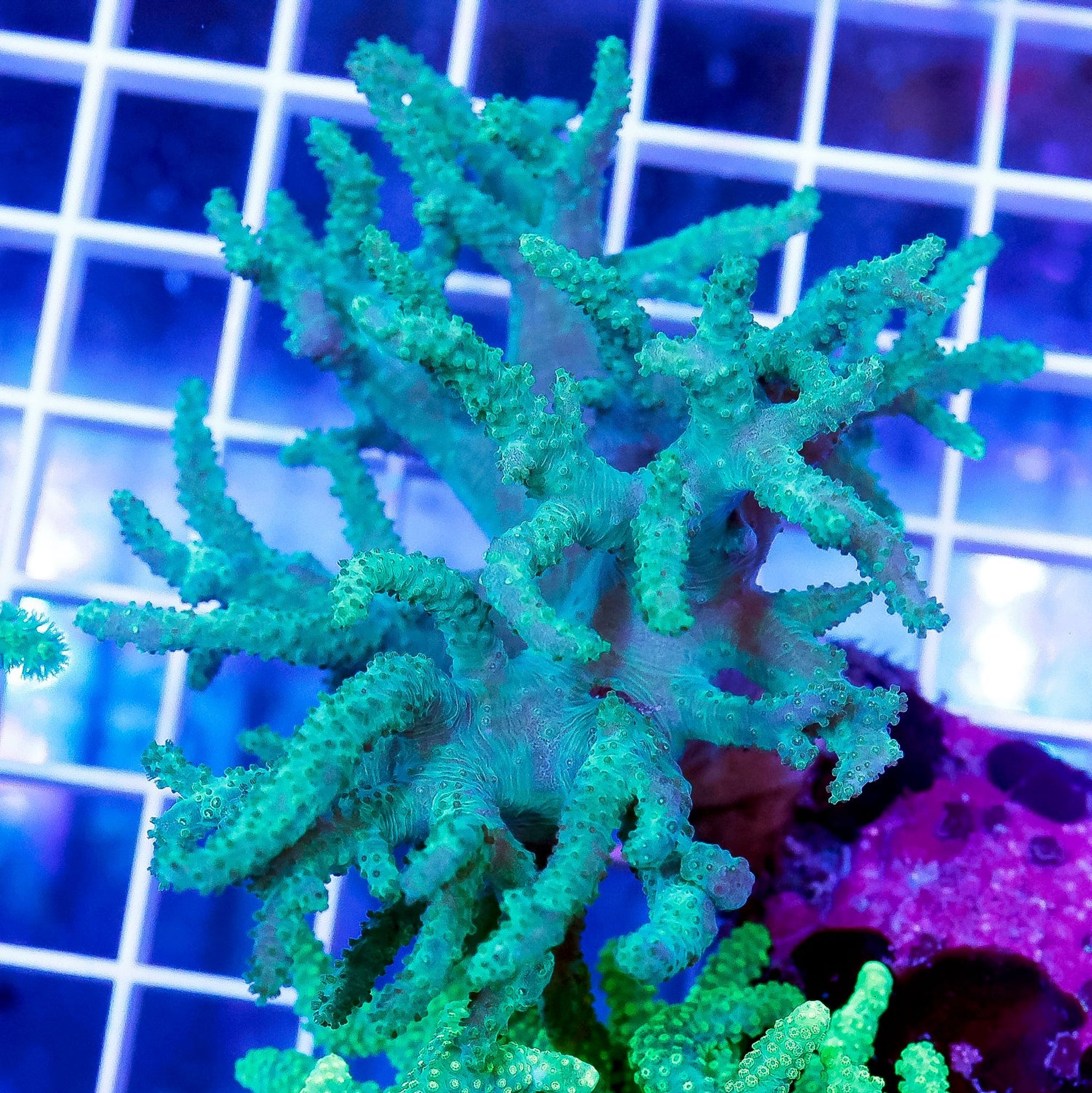

Best Placement for Leather Corals: PAR, Flow and Space Requirements
Leather corals are among the most forgiving soft corals a reef keeper can add, but "forgiving" isn't the same as "put it anywhere." Getting the light, flow and spacing right the first time means a colony that opens fully within days instead of sulking for weeks. Below is the PAR range, flow style and clearance you actually need, broken down by the common leather genera sold as aquarium livestock.
Why Leathers Are More Placement-Flexible Than SPS
Leather corals belong to the family Alcyoniidae and include Sarcophyton (toadstool), Lobophytum (devil's hand), Sinularia (finger leather), and Cladiella (finger leather/colt coral). Unlike stony corals, they have no hard skeleton. They draw meaningful energy from photosynthetic zooxanthellae living in their tissue, but they also capture particulates and dissolved organics directly from the water column.
That dual feeding strategy is why leathers tolerate a wider PAR and flow window than SPS corals do. Light and flow both matter for growth and coloration, but neither has to be dialed in with the precision an Acropora demands.
PAR and Light Placement
The Working PAR Range
Most leather corals do well between 50 and 150 PAR. Many acclimated specimens tolerate up to roughly 200 PAR without issue, but that's a ceiling to grow into, not a starting point. New keepers should default to the lower-middle of the 50–150 range and increase gradually rather than starting high.
Sources disagree on how to describe this: some call leathers "moderate to high light" and rack them mid-to-upper tank, others call them shade-tolerant and keep them low. Both are partly right — treat 50–150 PAR as the safe core window, and let species and acclimation history push you toward either end.
Translating PAR Into a Shelf
"50–150 PAR" is only useful once you know which ledge in your tank actually delivers it. As a rough guide under typical reef LED or T5 fixtures running at moderate intensity:
| Depth Below the Fixture | Typical PAR (moderate LED/T5 setting) | Good For |
|---|---|---|
| ~12 in (30 cm) | 150–250+ PAR | Upper-tank SPS, not new leathers |
| ~18 in (46 cm) | 80–150 PAR | Most leathers, sited mid-tank |
| ~24 in (61 cm) | 40–90 PAR | Lobophytum, shaded leathers, newly acclimating colonies |
These numbers vary by fixture output and dimming settings, so treat the table as a starting point and confirm with a PAR meter where possible rather than assuming your fixture matches it exactly.
What Makes Aquarium Lighting "Reef-Safe"
A fixture being bright enough isn't the same as being reef-appropriate. Three things matter more than raw PAR:
- Even coverage. A fixture that delivers 120 PAR at the center of the footprint but 40 PAR at the edges creates hot spots and dead zones — a leather placed at the edge won't perform like the spec sheet suggests.
- Blue-spectrum output. Corals rely on blue wavelengths (roughly 400–480 nm) to drive photosynthesis and calcification more efficiently than pure white or warm light.
- A consistent photoperiod. Aim for roughly equal light and dark hours. Corals recover and process metabolic waste during darkness, and an inconsistent photoperiod is as disruptive as inconsistent intensity.
When shopping for an LED fixture, look for adjustable intensity so you can start a new leather low and ramp up rather than being locked into one output level. FishyHub carries LED aquarium lighting with dimmable channels suited to this kind of gradual ramp-up.
Vertical Placement Zone
Leathers generally do best in the lower third to middle third of the aquascape, mounted on solid rock or a rock ledge. Avoid two extremes:
- The sandbed — a leather resting directly on substrate can smother sand-dwelling life and accumulates detritus underneath it.
- The very top, under full-intensity light — unless the fixture is dialed down, this is the single most common cause of new-leather photo-shock.
Flow: Type Matters More Than Strength
What Kind of Flow Leathers Want
Leathers want moderate, turbulent, multidirectional flow — the kind that makes polyps wave gently rather than flatten in one direction. A direct, laser-like jet from a powerhead aimed straight at the colony causes constant retraction and tissue irritation, and can prevent the polyps from ever fully extending.
Sources that call for "strong flow" and sources that call for "moderate/indirect" flow aren't necessarily contradicting each other — they're usually describing overall tank turnover versus flow hitting the coral directly. Reconcile it this way: overall system flow can be moderate-to-fairly-strong, as long as the specific spot you choose sits out of any direct blast.
As a general reef-tank baseline (not leather-specific), aim for total system turnover somewhere in the 10–20x tank volume per hour range, achieved through multiple return or circulation points rather than one powerhead pointed at the rockwork.
Why Flow Matters More Than People Expect
Leathers periodically shed a thin, waxy or mucus-like film — roughly monthly for many colonies, though it varies — to clean detritus and algae off their surface. Good turbulent flow helps that sloughed film detach and blow away. Without adequate flow, the film can sit on the coral and settle onto neighboring corals as it decomposes, which is a bigger practical problem than most keepers expect.
A Flow Warning for Freshly Glued Frags
One thing that's easy to miss: strong flow and a newly attached frag don't mix. A leather that hasn't had time to fully bond its base to the rock can be dislodged by flow that an established colony would shrug off. Ramp flow up alongside light during the 2–3 week acclimation window rather than exposing a fresh frag to full tank flow on day one.
Space and Spacing Requirements
How Much Room to Leave
Give a leather coral at least 6–8 inches (15–20 cm) of clearance on all sides, and plan for more with large species. Toadstools in particular can expand to a foot (30 cm) or more across once mature, so the spacing that looks generous at frag size can feel cramped within a year or two. Always plan around the mature footprint, not the size at purchase.
Allelopathy and Shading
Leather corals release terpenoid compounds into the water that can irritate nearby stony corals, especially SPS. As a colony grows, it also physically shades whatever sits beneath or beside it. Two practical rules follow from this:
- Keep sensitive SPS a real distance away, not just outside arm's reach today.
- Avoid siting delicate stony corals directly downstream in the flow path from a leather, since that's where shed film and chemical output tend to travel.
Species-by-Species Notes
| Genus (common name) | Light Preference | Flow Tolerance | Notes |
|---|---|---|---|
| Sarcophyton (toadstool) | Moderate | Modest to fairly strong | Grows largest of the group; plan the most spacing |
| Lobophytum (devil's hand) | Low to moderate | Moderate | Among the least light-demanding leathers |
| Sinularia (finger leather) | Low to moderate | Wide range, including lower flow | Extends better under gentler light than under intense output |
| Cladiella (finger leather/colt) | Moderate | Moderate, turbulent | Similar general profile to Sinularia |
Choosing a Species for Your Existing Setup
Rather than treating "leather coral" as one care profile, match the genus to what your tank already delivers:
- Lower-output fixture or a shadier lower-tank spot: Lobophytum is the safer starting choice.
- Moderate light with turbulent flow at any strength: Sarcophyton and Cladiella both do well.
- Lower flow zones, or tanks without strong circulation: Sinularia tolerates that range better than most leathers.
Planning a Small Reef Build Around Leather Placement
Compact tanks — a 30-gallon (114 L) breeder-style setup is a common starting point — can still support a leather coral, but the aquascape needs to be planned with mature size in mind from the start.
- Rock amount: a rough rule of thumb is about 1 lb of live or dry rock per gallon, though many keepers run less when using high-quality, porous rock.
- Sand bed depth: decide up front whether you want a thin cosmetic bed or a deeper bed, since this affects how much vertical rock height you have to work with.
- Rockwork shape: build a mid-tank ledge deliberately, with the leather's mature 12+ inch spread and 6–8 inch clearance already accounted for, rather than discovering there's no room once the colony grows in.
Aquascaping and Tank Stability Basics
Smaller systems swing faster on water parameters than larger ones, so light- and flow-sensitive corals like leathers should go in only after the tank has finished cycling and shown parameter stability. Before placing any coral:
- Confirm the tank is fully cycled, not just "the ammonia looks okay today."
- Have lighting and flow equipment installed and dialed in before adding corals, not adjusted around them after the fact.
- Decide between an all-in-one system and a custom-built setup early, since that choice determines what fixture and pump options are physically available at the ledge you've planned for the leather.
Acclimating and Re-Acclimating Leathers
New Coral Acclimation
When adding a leather to a new tank, start it lower and shadier than its target position, then increase light and flow gradually over about 2–3 weeks. Sudden jumps in PAR — a new fixture, or moving straight to a brighter spot — cause the colony to stay shrunken and closed for days to weeks while it adjusts.
Re-Acclimating After a Rearrange
This part gets missed often: an established leather that's been thriving for months can still photo-shock if you rearrange the aquascape or upgrade the fixture and its ledge ends up brighter than before. Treat a significant lighting or flow change the same way you'd treat a brand-new coral — step the intensity up over 2–3 weeks rather than assuming an established colony is immune.
Attachment
Mount leathers with reef-safe coral glue, epoxy, or putty onto stable rock — never loose on sand or rubble. A colony glued to loose rubble can tip, get buried, or roll into flow it wasn't sited for. Leathers don't reposition themselves once they've settled, so get the spot right the first time.
Common Mistakes to Avoid
- Direct powerhead output. Placing a leather in a pump's output stream causes constant retraction and can prevent full polyp extension indefinitely.
- Un-acclimated light jumps. Moving straight to a brighter fixture or spot causes prolonged closure; ramp gradually instead.
- Crowding next to SPS. Terpenoid output and physical shading from a growing leather can stunt or kill nearby stony corals.
- Mistaking shedding for dying. A leather covered in a filmy layer with closed polyps for a few days is usually just shedding, not sick — good flow and patience resolve it without dosing anything.
- Gluing onto loose rubble or sand. This risks tipping, burial, or rolling into unintended flow.
- Full-intensity placement on day one. Especially risky for wild-collected leathers acclimated to lower-light collection depths.
Frequently Asked Questions
How much PAR do leather corals need?
Roughly 50–150 PAR is the reliable working range for most leathers. It varies somewhat by genus, and some specimens tolerate up to around 200 PAR once fully acclimated.
Can leather corals go in low light?
Yes. Lobophytum in particular tolerates fairly low to moderate light well, and Sinularia does reasonably well under lower-to-medium output too, making both good choices for shadier setups.
How much flow do leather corals need?
Moderate, turbulent, indirect flow rather than a direct jet. That movement is also what helps a leather shed its periodic waxy film cleanly instead of letting it sit on the colony.
Where should I place a leather coral in my tank?
On stable rock in the lower to middle third of the aquascape, with at least 6–8 inches of clearance from neighboring corals, sized to the colony's eventual mature footprint rather than its frag size.
Why is my leather coral shrunk, deflated, or covered in film?
Most often this is a normal shedding cycle, which happens roughly monthly, or a temporary reaction to a recent light or flow change. Give it several days before assuming there's a health problem.
Do leather corals harm other corals?
They can. Leathers release terpenoid compounds that irritate nearby stony corals, especially SPS, and large colonies will physically shade neighbors as they grow — so spacing and downstream flow position both matter.
How big do leather corals get, and how much space should I plan for?
Many species, toadstools especially, can reach a foot or more across at maturity. Plan spacing and rockwork real estate for that mature size at purchase time, not the smaller frag size you're starting with.
Do leather corals need to be fed?
Not typically. Most of their energy comes from light via zooxanthellae, though occasional particulate or planktonic feeding can benefit a healthy, well-lit colony without being a requirement.
Once you've mapped out the right ledge, flow zone and spacing, browse FishyHub's soft coral livestock to find a leather species that matches your tank's existing light and flow setup.


