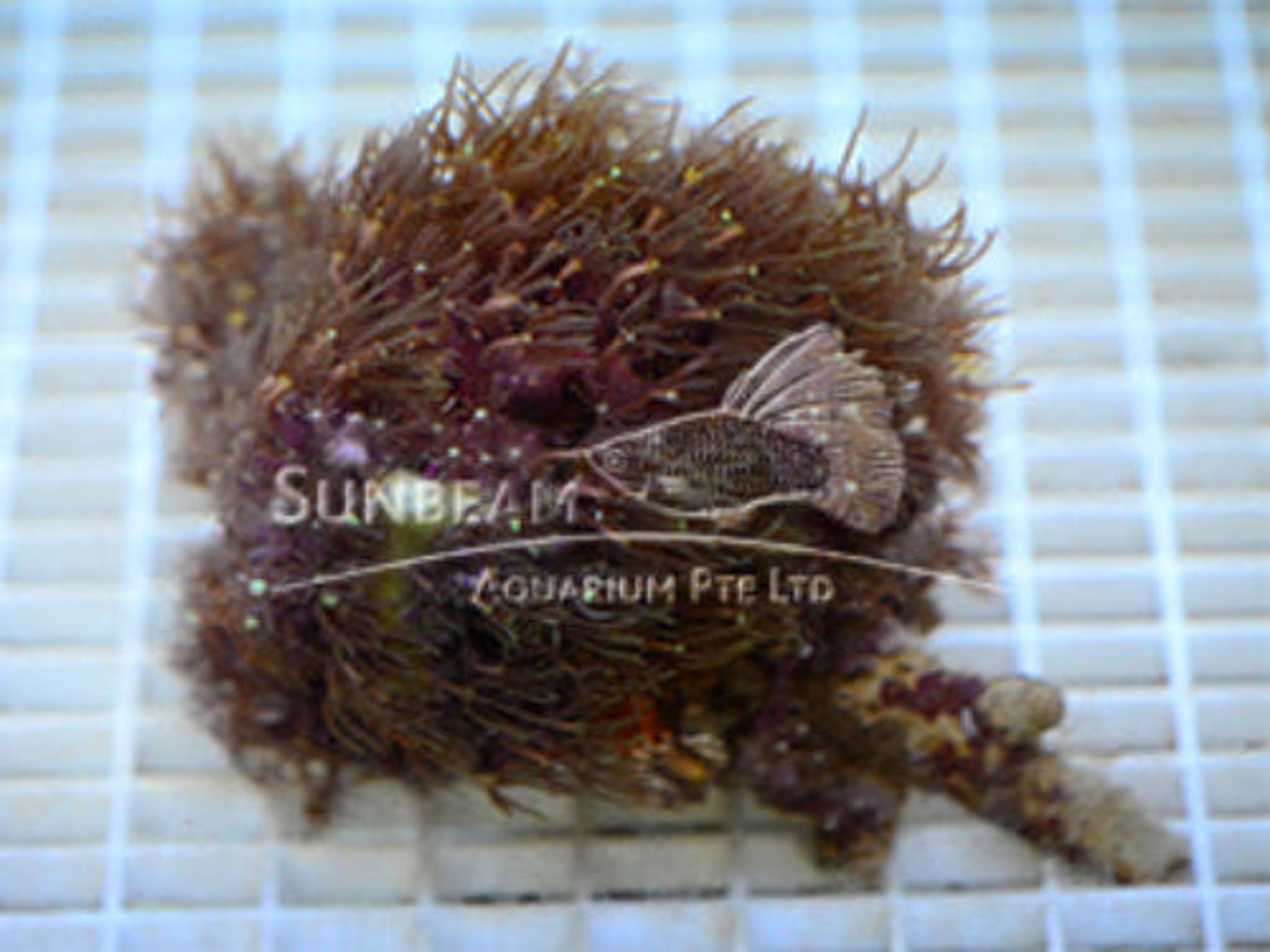
Best Placement for Green Star Polyps: PAR, Flow and Space Requirements
Green Star Polyps (GSP) will grow almost anywhere in a reef tank, which is exactly why placement matters more than most hobbyists assume. Give it the right light, turbulent flow, and a clear buffer from its neighbors, and you get a dense, colorful mat instead of an encrusting problem child that swallows your rockwork and glass.
What Green Star Polyps Actually Need
GSP (Pachyclavularia) is an encrusting soft coral that carpets any solid surface with a thin purple mat and green polyps. It's photosynthetic, meaning it gets most of its energy from the zooxanthellae algae living in its tissue rather than from capturing food. Dosing a gel food or phytoplankton occasionally can help boost polyp extension, but it is a bonus, not a requirement — light is the main driver of health and growth.
Because it depends so heavily on light and only lightly on flow-delivered nutrition, the two placement variables that matter most are:
- PAR (light intensity) at the spot on the rock or glass
- Flow pattern around the polyp mat and its base
Get those two right, and space management becomes the main long-term maintenance task.
PAR Range: How Much Light Does GSP Need?
GSP is one of the most light-adaptable corals available, which is part of why it's such a popular beginner soft coral.
| Light level | Approximate PAR | Result |
|---|---|---|
| Low | 30–50 | Survives, but polyps stretch and stalks elongate reaching for light; minimal color |
| Moderate (ideal) | 75–150 | Compact, dense polyp mats with the best coloration |
| High | 150–250+ | Tolerated well; growth stays vigorous, though acclimation matters more |
Sources disagree on where the "ideal" ceiling sits — some cap it around 150 PAR, others report healthy colonies thriving past 250 PAR with no issue. The practical takeaway: GSP tolerates a very wide range (roughly 50–250 PAR), and the sweet spot for balanced growth and color sits around 75–150 PAR. Exact PAR numbers matter far less here than they would for SPS corals, where a 20-point swing can stress a colony.
How Light Intensity Changes Morphology
Light level doesn't just affect survival — it visibly changes the coral's shape:
- Lower light → polyps and stalks stretch longer, reaching toward the light source. The mat looks leggier and less dense.
- Higher light → polyps stay shorter and more compact, and the mat tends to pack in tighter with richer color.
This makes GSP a useful visual gauge. Watch how the polyps extend and color up after any lighting change, and you'll get an early read on whether your fixture's output is landing where you think it is — useful information before committing a pricier LPS or SPS piece to the same spot.
GSP will grow under almost any light source: aging T8 or T5 fluorescent tubes, T5HO, metal halide, or LED. Few corals in the hobby are this forgiving of lighting hardware.
Choosing a Fixture: LED vs. T5 vs. Metal Halide
If you're setting up a mixed reef with GSP as one resident among others, the fixture choice affects the whole tank, not just this one coral.
- LED — efficient, tunable spectrum and intensity, long bulb life. Downside: point-source lighting can create shadowing under overhangs or dense rockwork.
- T5 — even spread across the tank with no shadowing and strong color rendering. Downside: output drops meaningfully within about 12 months, so bulbs need regular replacement to hold PAR steady.
- Metal halide — the most intense output with a shimmer effect many reefers like. Downside: high heat and power draw compared to LED or T5.
For most soft corals, including GSP, a consistent photoperiod and stable intensity matter more than chasing maximum PAR. A steady 8–10 hour photoperiod under any of these three technologies will outperform an inconsistent schedule under a "better" fixture.
A Budget-Friendly T5 Option
Multi-bulb T5 fixtures sold as inexpensive or general-purpose units (not marketed specifically for reef use) can still hit 200+ PAR when fitted with a proper reef-spectrum bulb mix — typically one actinic/blue bulb paired with a coral-growth bulb. Some cheaper fixtures have a higher failure rate on connectors or ballasts than premium units, but for growing GSP and other soft corals, that tradeoff is one many budget-minded reefers accept. Just plan on replacing bulbs roughly once a year as output fades, regardless of which fixture you run. You can browse coral-safe LED lighting options for a reef-ready alternative if you'd rather skip bulb replacement schedules entirely.
Flow: Turbulent, Not Direct
GSP prefers moderate to moderately-high flow that's turbulent and random rather than a steady, direct blast. The purpose of that flow is less about feeding and more about housekeeping: it keeps detritus and algae from settling into the mat and around the base of the polyps.
Sources disagree on exact intensity — some describe GSP as wanting only "moderate" flow, while others say the base specifically benefits from stronger flow because that's where debris collects. The practical guidance: aim for moderate-to-high turbulence rather than fixating on a single flow number, and always avoid pointing a powerhead straight at the colony.
- Too little flow → detritus and nuisance algae build up under and around the mat, dulling color and stressing the coral.
- Too much direct flow → polyps stay clamped shut and retracted, giving the colony a "dead" or drab look even though it's alive.
If your GSP looks perpetually closed, check whether a pump is aimed directly at it before assuming a light or health problem. Repositioning the pump for indirect, off-axis flow usually resolves it within a day or two.
Placement Options, Ranked
Here's a practical decision tree for where to put GSP, ranked by how much control it gives you over its spread:
- Isolated rock or frag plug, set apart from the main aquascape — the best option for control. A single rock in open sand with no contact to other rock gives GSP room to fill its own space without bridging to neighbors.
- Mid-to-lower rockwork within the main display — works fine as long as there's a buffer from slow-growing corals nearby.
- Back glass or inside an overflow box — many aquarists let GSP grow deliberately in these spots, using it to hide equipment, cords, or dead space behind the aquascape.
- Sandbed edges or a frag rack — useful in nano systems or as a low-commitment starting point before deciding on a permanent home.
Avoid placing GSP directly touching, or immediately upstream of, prized slow-growing corals like LPS or SPS. GSP isn't highly toxic to neighbors, but it can still crowd and shade sessile corals through sheer growth rate, and direct contact risks stinging or eventual overgrowth. In a small or nano tank, GSP works especially well as a purposeful background or "wall" coral — let it fill the back glass on purpose rather than fighting it for open rock space up front.
For placement relative to your return flow, a simple rule works well: put GSP on rock that's off-axis from your main pump's output, in a spot that gets turbulent secondary flow rather than the direct stream. That's usually enough to avoid the "always closed" problem without needing a dedicated powerhead just for one coral.
Space and Containment: Keeping GSP Where You Put It
GSP spreads via runners across any solid surface it touches — rock, glass, equipment, tubing, even the skeleton of other corals. This is the single biggest thing new keepers underestimate: a small gap that looks safe today can be bridged and colonized within weeks to months.
A concrete rule of thumb: leave at least 2–3 inches (5–7.5 cm) of open sand or rock gap around an isolated GSP colony. That's enough separation that casual growth won't bridge the gap unnoticed, though you should still check the perimeter periodically, since a stray runner can cross a smaller gap than you'd expect if it finds a chance touch-point (a snail shell, a piece of frag glue, a stray rock chip).
Options for containment:
- Mount it on its own isolated rock or frag plug, physically separated from other rockwork.
- Use a floating frag rack so there's no rock-to-rock contact at all.
- If it's already established in the main aquascape, maintain a visible sand or open-water gap and inspect it every few weeks.
Periodic scraping, cutting back, or removing frags is normal upkeep for GSP — it isn't a sign that something's wrong. Budget for occasional trimming the same way you'd budget for glass cleaning. You can find frag-safe tools and other coral care supplies to keep this maintenance routine simple.
Maintenance Tool: The Turkey Baster
A dedicated aquarium-only turkey baster is one of the cheapest and most useful tools in a reef keeper's kit. Use it to blast detritus out of rockwork crevices and off coral bases, including around and under a dense GSP mat where flow may not reach well. Because GSP forms such a thick carpet, debris can settle underneath it even in a tank with decent overall circulation.
Regular use — every few days, or even daily in a heavily stocked tank — prevents the buildup that leads to algae and fouling at the coral's base. It's a simple habit that pairs well with the flow guidance above: good turbulent flow reduces how much debris settles, and a baster clears out what does.
Common Mistakes to Avoid
- Placing GSP against or upstream of prized corals. Always leave a buffer or isolate it, since encrusting growth can smother or shade slower neighbors.
- Underestimating spread rate. GSP can bridge a small sand gap or touch adjacent rock/glass and colonize it within weeks. Check the perimeter regularly.
- Too little flow at the base. Leads to detritus and algae buildup that dulls color — fix with better turbulent flow and regular baster-cleaning.
- Too much direct flow. Keeps polyps retracted and the colony looking lifeless — reposition powerheads for indirect flow.
- Skipping acclimation. Moving GSP to a much brighter tank or a higher-output fixture without gradual acclimation can cause pale color or polyps that won't open.
- Assuming it needs strong light to thrive. Moderate light often produces better color and a more compact mat than high light — more isn't automatically better here.
Frequently Asked Questions
What is the minimum light GSP needs to survive?
Very low light — GSP can persist under weak fluorescent lighting around 30–50 PAR. It will survive at that level, but expect minimal growth and pale color rather than the compact, vivid mat you'd see under moderate light.
Can GSP be kept in a low-tech or beginner tank?
Yes. It's one of the hardiest, most adaptable soft corals for beginners when it comes to light and flow requirements, and it tolerates a wide range of aging or basic fixtures.
Does GSP need to be fed?
No. It's mostly photosynthetic and gets the bulk of its energy from light via zooxanthellae. Occasional phytoplankton dosing can support polyp extension, but it isn't required for a healthy colony.
Will GSP take over my tank?
It can, if left unchecked. GSP is a fast-spreading encrusting coral, so isolate it on its own rock or plan for regular trimming once it starts approaching other corals or surfaces you want kept clear.
Where's the safest spot to put GSP?
On its own separated rock or frag plug, or along the back glass or inside an overflow box, away from other corals. All three keep its spread contained or purposeful rather than accidental.
Why are my GSP polyps not opening?
Usually one of three causes: too much direct flow keeping them clamped shut, insufficient light, or recent placement that hasn't finished acclimating yet. Give a new placement a few days to two weeks before assuming a problem.
Can GSP grow on the glass itself?
Yes. It readily encrusts glass and equipment, which is exactly why many aquarists let it fill the back wall on purpose — it hides gear and dead space while giving the colony room to spread without threatening other corals.
How often should I trim GSP?
As needed, once it approaches neighboring corals or surfaces you want kept clear. Frequency varies by tank conditions — some setups need monthly trimming, others less often — so trim based on observed spread rather than a fixed schedule.
Ready to add Green Star Polyps to your reef? Browse live soft corals and other polyps on FishyHub to find a colony sized right for your tank's aquascape.

