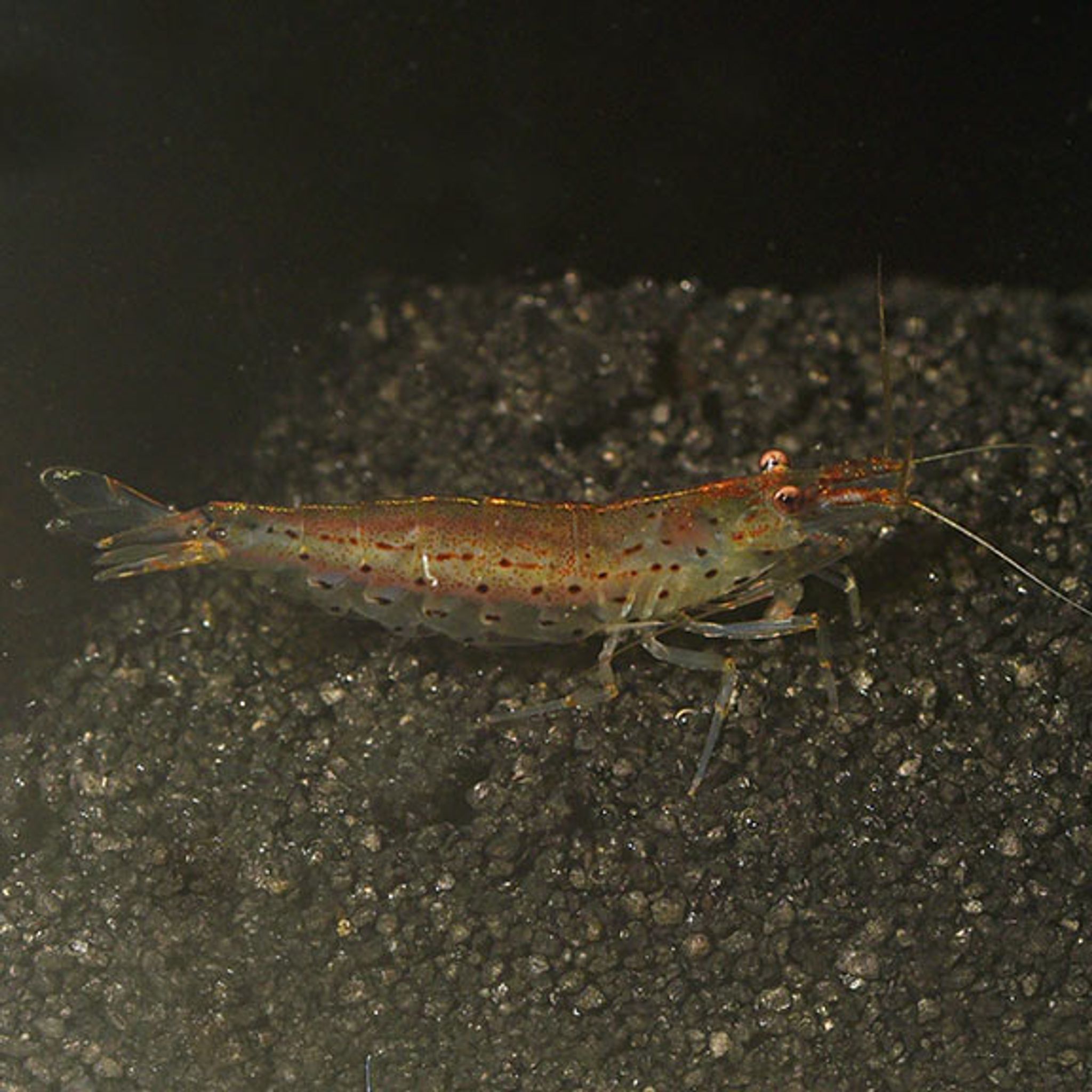

Amano Shrimp Problems: Common Causes of Stress, Death and Poor Growth
Amano shrimp have a reputation as nearly indestructible algae-cleaning crews, so when one turns up dead, a whole group vanishes overnight, or growth stalls for months, owners are often caught off guard. This guide walks through the real causes behind sudden die-offs, slow chronic decline, molting failures, and "disappearing" shrimp, and gives you a testing order to work through before assuming disease.
Hardy, But Not Invincible
Amano shrimp (Caridina multidentata) tolerate a wider range of temperature, pH, and hardness than most dwarf shrimp species, which is exactly why problems catch people off guard. Their reputation for shrugging off gradual water changes leads some owners to overlook the handful of things that genuinely can kill them fast: trace chemical toxins, ammonia and nitrite spikes, and abrupt parameter swings.
The rule of thumb worth remembering: Amano shrimp are hardy against gradual variation but fragile against sudden chemical shock. Keep that distinction in mind as you troubleshoot.
Safe Parameter Ranges
Exact "ideal" numbers vary a bit between sources, so treat the ranges below as the safe window and the narrower band as the target — stability matters more than hitting a precise figure.
| Parameter | Safe range | Ideal target |
|---|---|---|
| Temperature | 68–82°F (20–28°C) | ~75°F (24°C) |
| pH | 6.5–8.0 | 7.0–7.4 |
| General hardness (GH) | Soft to very hard tolerated | Moderate to moderately hard |
| Carbonate hardness (KH) | Low to moderate | Low-moderate, stable |
| Ammonia | 0 ppm, always | 0 ppm |
| Nitrite | 0 ppm, always | 0 ppm |
| Nitrate | Under 20 ppm | Under 10–20 ppm |
There is no safe nonzero reading for ammonia or nitrite — unlike fish, shrimp show damage at levels aquarists sometimes consider "trace."
Sudden, Unexplained Death
When several shrimp die within a day or two with no prior signs of illness, the cause is almost always chemical rather than biological. Work through this list:
- Copper exposure. Copper is lethal to all aquatic invertebrates, including Amano shrimp, even in trace amounts. Check plant fertilizers, algaecides, and fish medications — many contain copper sulfate — before dosing a tank that holds shrimp. Older homes and well water can also leach copper from plumbing, so it is worth testing tap water for copper before setting up a shrimp tank, not just after a die-off.
- Ammonia or nitrite spike. A newly cycled tank, a filter that was cleaned too aggressively, or a sudden bioload increase can push either compound above zero.
- Insecticide or aerosol drift. Scented candles, room sprays, and insect fumigation near an open-top tank can introduce airborne toxins that settle into the water.
- Undechlorinated tap water. Chlorine and chloramine are toxic to shrimp; a water top-off or change without a dechlorinator is a common, easily missed cause.
- A fast, large water change. Swapping more than about half the tank volume at once, or changing pH/hardness abruptly, can shock shrimp badly enough to kill them outright or trigger egg-dropping and molting failure.
A Note on Acclimation
Amano shrimp are noticeably more sensitive to fast temperature and pH swings during introduction than most community fish. A slow drip acclimation over an hour or more, rather than a quick float-and-dump, meaningfully reduces early losses in new arrivals. New stock is also worth keeping in a separate quarantine setup for a few weeks before adding it to an established colony, since incoming parasites or pathogens are a common source of chronic decline that never traces back to water chemistry.
Slow, Ongoing Losses
If shrimp are dying one at a time over weeks rather than all at once, look for chronic stress rather than a single acute event:
- Nitrate creep above the 20 ppm target from infrequent water changes or overfeeding.
- Unstable pH that drifts up and down rather than sitting anywhere in the safe range.
- Poor oxygenation or flow, especially in planted tanks running CO2 injection. Mis-dosed CO2 or low dissolved oxygen overnight is an under-discussed stressor in high-tech planted setups housing shrimp.
- Overcrowding or food competition, which stresses subordinate shrimp even when water tests look fine.
- Old age. Amano shrimp typically live around 2–3 years in captivity, and a shrimp reaching the end of that span will simply decline regardless of husbandry.
Molting Problems and Poor Growth
Molting is the single most vulnerable moment in a shrimp's life, and most growth or molt complaints trace back to mineral content or parameter instability rather than disease.
Shrimp need adequate, stable GH and KH along with trace minerals like calcium and iodine to build a new exoskeleton after each molt. When water is too soft, mineral-poor, or swings sharply right around a molt, shrimp can become "stuck in molt" — unable to fully shed the old shell — which is often fatal.
Nitrite exposure deserves special mention here: even at sublethal levels that fish tolerate without symptoms, nitrite is linked to molting problems and stunted growth in shrimp. A tank with fish showing no issues can still be quietly stalling shrimp growth through nitrite that never reaches a level dangerous to vertebrates.
Other causes of poor growth worth ruling out:
- Malnutrition in an overly clean tank. Shrimp fed only on biofilm and algae in a tank with too little to graze can actually undereat. A gel food or sinking wafer offered a few times a week supplements what algae alone doesn't provide.
- Competition from faster feeders. Amano shrimp are strong, food-driven foragers, and in a mixed shrimp tank they can outcompete smaller or slower dwarf shrimp for food — meaning the "poor growth" complaint may belong to the other species, not the Amanos, or vice versa if a larger tankmate dominates the food.
- Simple aging. Growth naturally slows as shrimp mature; a two-year-old shrimp that has stopped growing is not necessarily unwell.
Missing or "Disappeared" Shrimp
A shrimp that seems to vanish overnight is one of the most common troubleshooting questions, and the explanation is rarely disease.
- Check the lid first. Amano shrimp jump or climb when stressed by poor water quality, and a shrimp found dried out on the floor next to the tank is often wrongly chalked up to illness. A tight-fitting lid or cover should be the very first check, before assuming predation.
- Predation. Larger or boisterous fish, other invertebrates, and even other Amano shrimp competing over food can account for missing individuals.
- Post-molt hiding. A freshly molted, soft-shelled shrimp is extremely vulnerable and will often hide for a day or two. This looks exactly like disappearance but is normal behavior, not death.
Breeding, Eggs, and "Vanishing" Larvae
A berried female — one visibly carrying eggs under her abdomen — is a normal and common sight, but Amano shrimp cannot complete their life cycle in freshwater. The larvae need brackish or full saltwater to develop; in a standard home tank they hatch and die within days, or the eggs are lost before hatching altogether. A shrinking egg mass or eggs that simply disappear without any larvae showing up is expected biology, not a sign of illness.
Before eggs appear, females develop a saddle — a visible patch of ovaries near the back of the carapace — which is one of several reliable ways to sex Amano and dwarf shrimp:
| Cue | Female | Male |
|---|---|---|
| Abdomen shape | Rounder, D-shaped underside | Flatter, straighter |
| Saddle | Present when developing eggs | Never present |
| Carrying eggs | Yes, when berried | Never |
| Size | Slightly larger on average | Slightly smaller |
| Coloring | Richer, more opaque | More translucent, speckled |
Size and color alone are the least reliable cues — always confirm with abdomen shape or the presence of a saddle or eggs.
Culling for a Colony
Anyone maintaining a shrimp colony for appearance or line purity will occasionally cull — removing individuals with deformities or off-color, off-pattern traits so the group doesn't drift back toward wild-type coloring over generations. The usual method is to briefly withhold food, which draws the whole group out into the open for inspection.
Water Quality Deep Dive
Nitrites
Nitrite typically appears from overfeeding, overstocking, a new or still-cycling tank, or a filter that hasn't been maintained. Because there is no safe nonzero level for shrimp, any detectable nitrite calls for action: a large water change followed by smaller daily changes, gravel vacuuming to remove waste, cutting back feeding, and giving the filter's bacteria colony time to mature.
Nitrates
Nitrate builds up gradually from fish and shrimp waste, uneaten food, and infrequent water changes. Keep it under roughly 20 ppm for a shrimp tank, with lower being better for sensitive invertebrates. Routine partial water changes, live plants that consume nitrate, and avoiding overfeeding are the standard controls.
Can a Cycle Crash?
Yes. A tank that has been stable for months can crash after antibiotic or medication use (which kills beneficial bacteria along with the target pathogen), a major substrate disturbance, a prolonged power or filter outage, or a sudden increase in bioload that overwhelms the existing bacteria colony. Recovery means treating the tank like a new setup: test ammonia and nitrite daily and keep up water changes until both consistently read zero again.
General Water Quality Checklist
- Test ammonia, nitrite, nitrate, pH, GH, KH, and temperature on a regular schedule, not just when something looks wrong.
- Avoid overstocking and overfeeding — both are the root cause behind most nitrite and nitrate problems.
- Dechlorinate every new bucket of water before it goes in the tank.
- Never use copper-containing fertilizers, algaecides, or medications in a shrimp tank.
- Change water gradually and in moderate volumes to avoid shocking the colony.
Algae, Diet, and an Unusual Color Change
Amano shrimp are prized precisely because they eat algae, so it helps to recognize what they're up against:
- Diatoms (brown algae) — common in new tanks, usually temporary.
- Green film, dust, or spot algae — tied to excess light or nutrients.
- Hair or thread algae — thrives on light plus nutrient imbalance.
- Black beard algae — tougher, often linked to unstable CO2 or flow.
- Cyanobacteria (blue-green "algae") — actually bacteria, often a sign of poor flow or excess organics.
- Green water — a free-floating algae bloom from excess light and nutrients.
The same excess light and nutrients that fuel these blooms also destabilize water chemistry, which is the same instability that stresses shrimp. Treating an algae problem and treating a shrimp-stress problem are often the same task.
One color change is worth flagging specifically: a shrimp turning an unusual, saturated green — distinct from the normal greenish tint that comes from an algae-heavy diet — can indicate a fungal-like parasitic infection (Ellobiopsidae) rather than diet. If the color looks off compared to tankmates and doesn't track with what the shrimp has been eating, treat it as a possible infection rather than assuming it's cosmetic.
Basic Troubleshooting Order
When something looks wrong, work through these steps in sequence rather than jumping straight to disease:
- Test water — ammonia, nitrite, nitrate, pH, GH, KH, and temperature.
- Review anything recently added — new plants, decor, fertilizer, or medication.
- Check the lid and tank rim for gaps a shrimp could climb through.
- Look at tankmates and feeding before concluding it's illness.
Common Mistakes
- Expecting eggs or larvae to turn into juvenile shrimp in a plain freshwater tank.
- Dosing a copper-based fertilizer, algaecide, or medication in a tank that holds shrimp.
- Doing one large, fast water change instead of smaller, regular ones.
- Skipping the lid check and assuming a vanished shrimp died of disease.
- Ignoring sublethal nitrite or nitrate because fish in the same tank look fine.
- Mistaking a hiding, freshly molted shrimp for a dead or missing one.
- Overfeeding to "help" a shrimp that isn't growing, which raises ammonia and nitrite and makes the real problem worse.
If you're restocking a colony after sorting out a water quality issue, browse shrimp on FishyHub, and pair new arrivals with a reliable water conditioner or additive to keep parameters stable during acclimation.
Frequently Asked Questions
Why did my Amano shrimp die suddenly with no warning?
Usually acute toxin exposure — copper, medication, insecticide fumes or spray, or undechlorinated water — or an ammonia/nitrite spike. Check what was added to the tank or the room recently, since the trigger is almost always something new rather than a slow decline.
Why do my Amano shrimp keep disappearing?
Check for a gap in the lid first, since stressed shrimp jump or climb out. After that, consider predation from tankmates, and remember that a soft-shelled shrimp hiding after a molt can look exactly like a missing one.
Can Amano shrimp breed in my freshwater tank?
Females can carry eggs and even hatch them, but the larvae need brackish or saltwater to survive past hatching, so a home freshwater tank essentially never raises fry. Eggs shrinking or disappearing before hatching is a normal part of that cycle, not a health problem.
Why won't my Amano shrimp molt, or why did it die during a molt?
This usually comes down to a GH/KH or trace mineral deficiency, or unstable water chemistry stressing the shrimp during the molt window. Stabilize parameters and make sure GH and KH sit in the moderate range before the next molt.
Why are my Amano shrimp turning a strange green color?
It could be simple diet-based coloring from a heavy algae diet, or a specific parasitic/fungal-like infection. Compare the tint against tankmates and check whether behavior is otherwise normal — a consistent, diet-linked green is usually harmless, while an unusually saturated color paired with lethargy points to infection.
What nitrate and nitrite level is safe for Amano shrimp?
Ammonia and nitrite must read 0 ppm at all times — there is no safe nonzero level for either. Nitrate should stay under roughly 20 ppm, with lower being better for sensitive invertebrates.
How do I know if my tank's nitrogen cycle crashed?
A spike in ammonia or nitrite after a period of stability — often following medication use, filter neglect, or a power outage — signals a crash. Treat it like cycling a new tank: test daily and keep doing water changes until both read zero again.
Is it normal for my Amano shrimp not to grow much?
Growth naturally slows with age, and it can also stall from chronic nitrite or nitrate stress, poor nutrition, or competition with faster-feeding tankmates. Check parameters and feeding access before assuming it's simply genetics.


