1–7 of 7
Showing 7 of 7 products
Shop Koi fish online from pond stores, breeders and specialist freshwater fish sellers across the United States on FishyHub. Compare Kohaku, Sanke, Showa, Butterfly Koi and other varieties by pattern, size, breeder and seller.
Koi are ornamental carp bred for distinctive colors, patterns and body shape. FishyHub helps U.S. pond keepers compare Koi listings from multiple sellers in one marketplace.
Buying Koi online gives pond keepers access to a wider selection of varieties, sizes and breeder lines than may be available from a single local pond shop.
Compare exact variety, current size, pattern quality, breeder information, seller details and shipping options before choosing Koi for your pond.
Popular Koi varieties include:
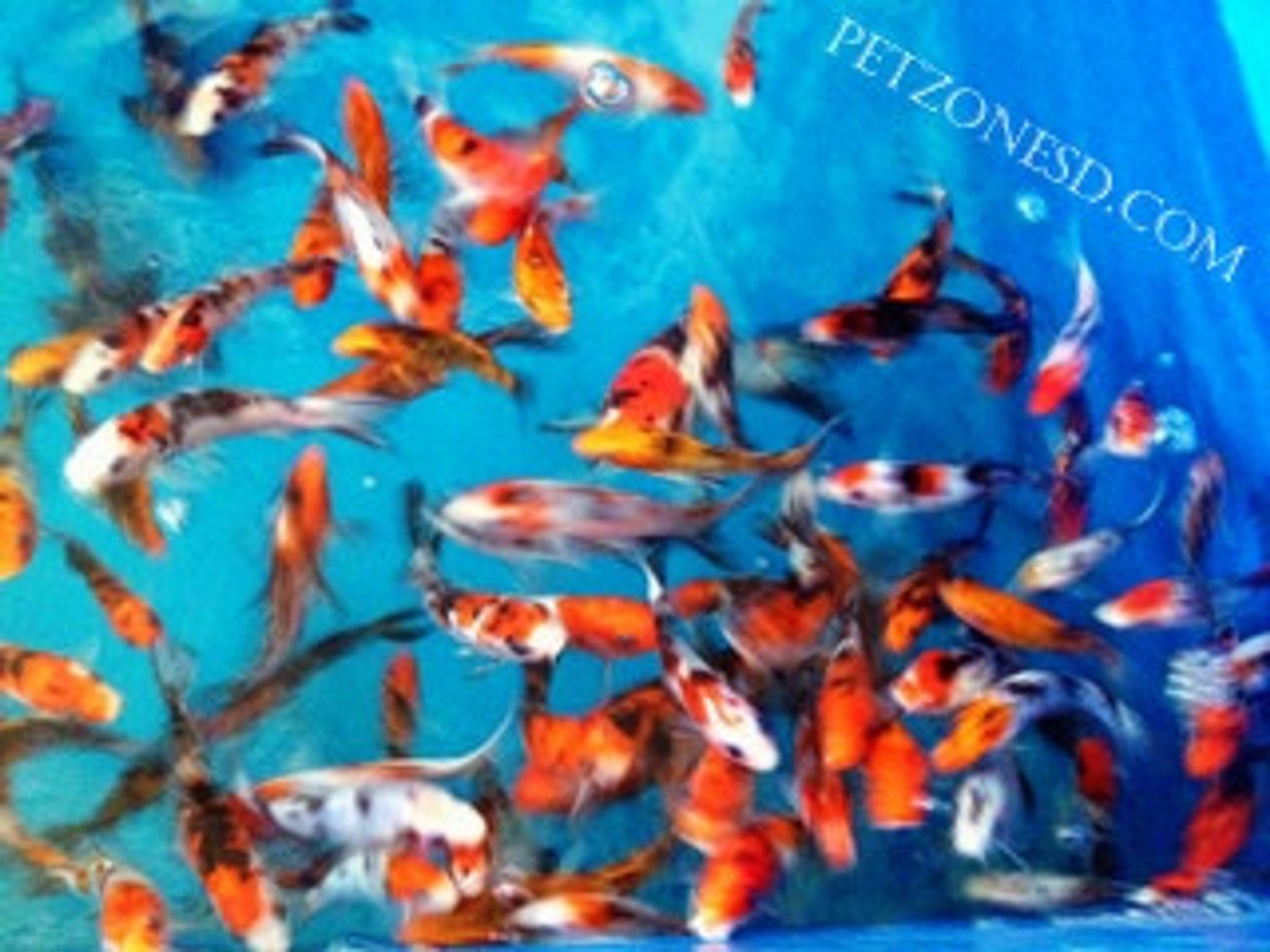
Kohaku are among the most iconic Koi, known for red patterning over a white body.
Pattern balance, skin quality and body shape are important considerations when comparing Kohaku from different breeders.
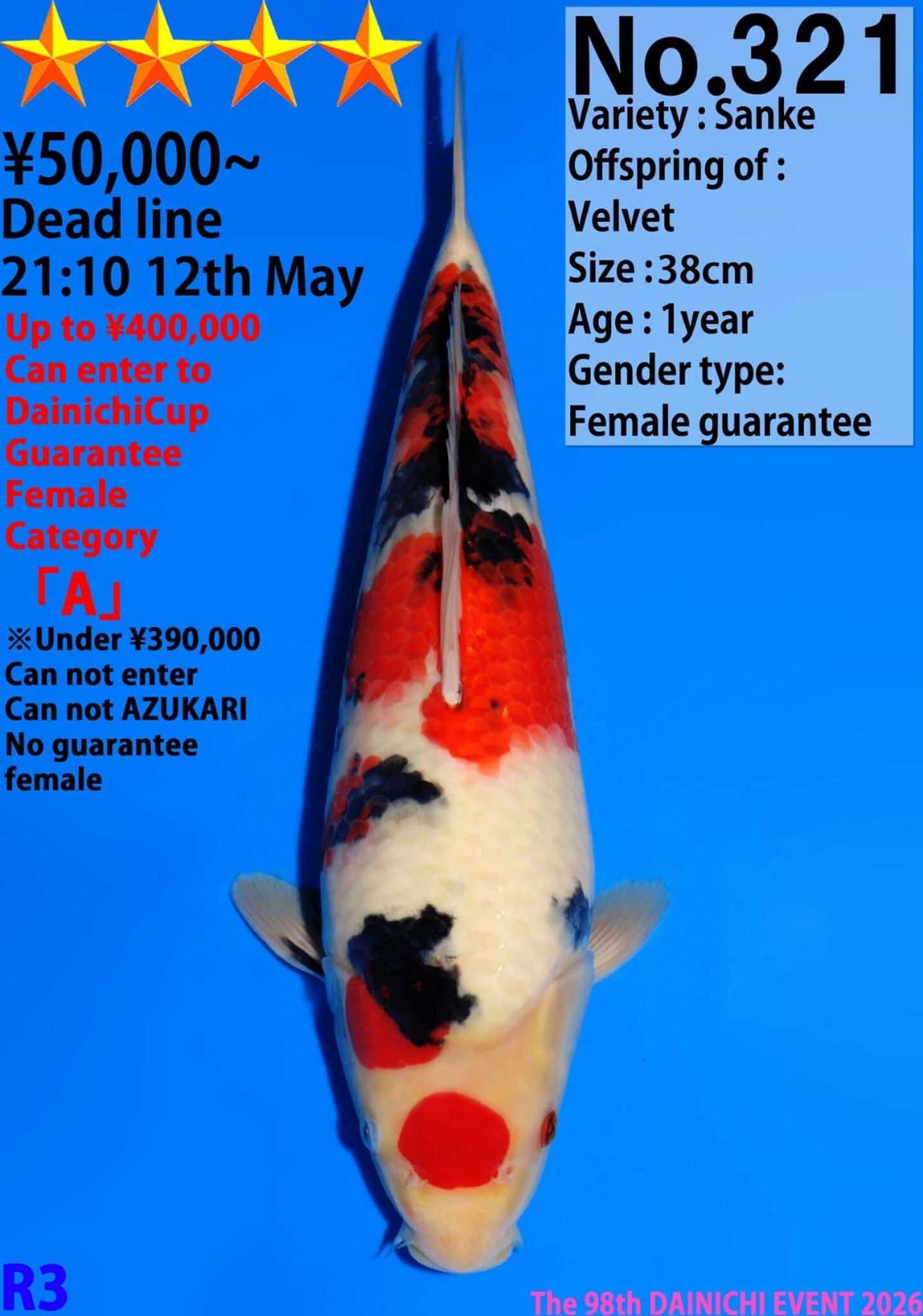
Taisho Sanke feature red and black markings over a white base.
The placement and balance of red and black markings can vary considerably between individual fish.
Showa Sanshoku are dramatic tricolor Koi combining black, white and red.
Their darker base and bold patterning distinguish them from Sanke and make Showa especially striking in larger ponds.
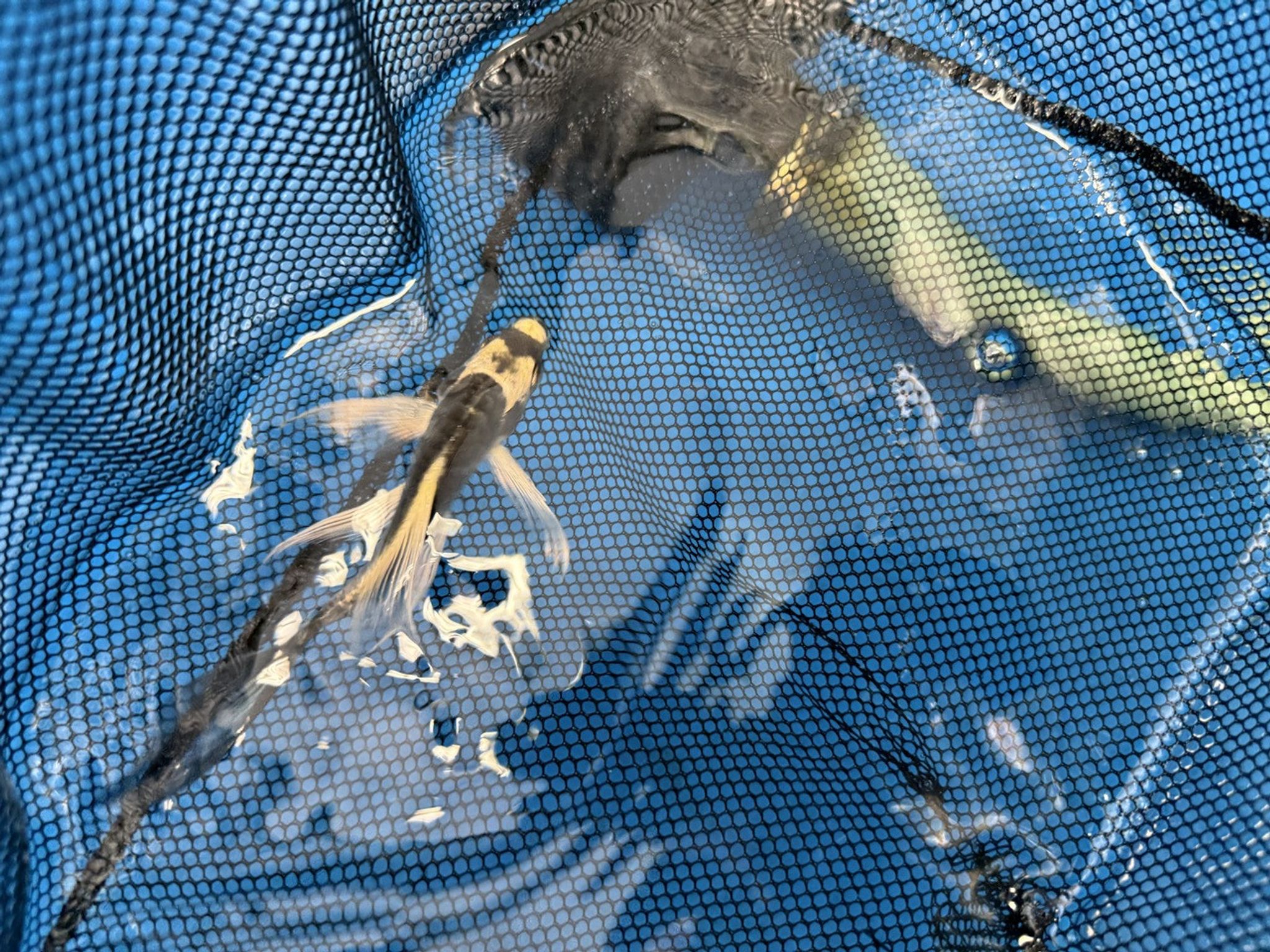
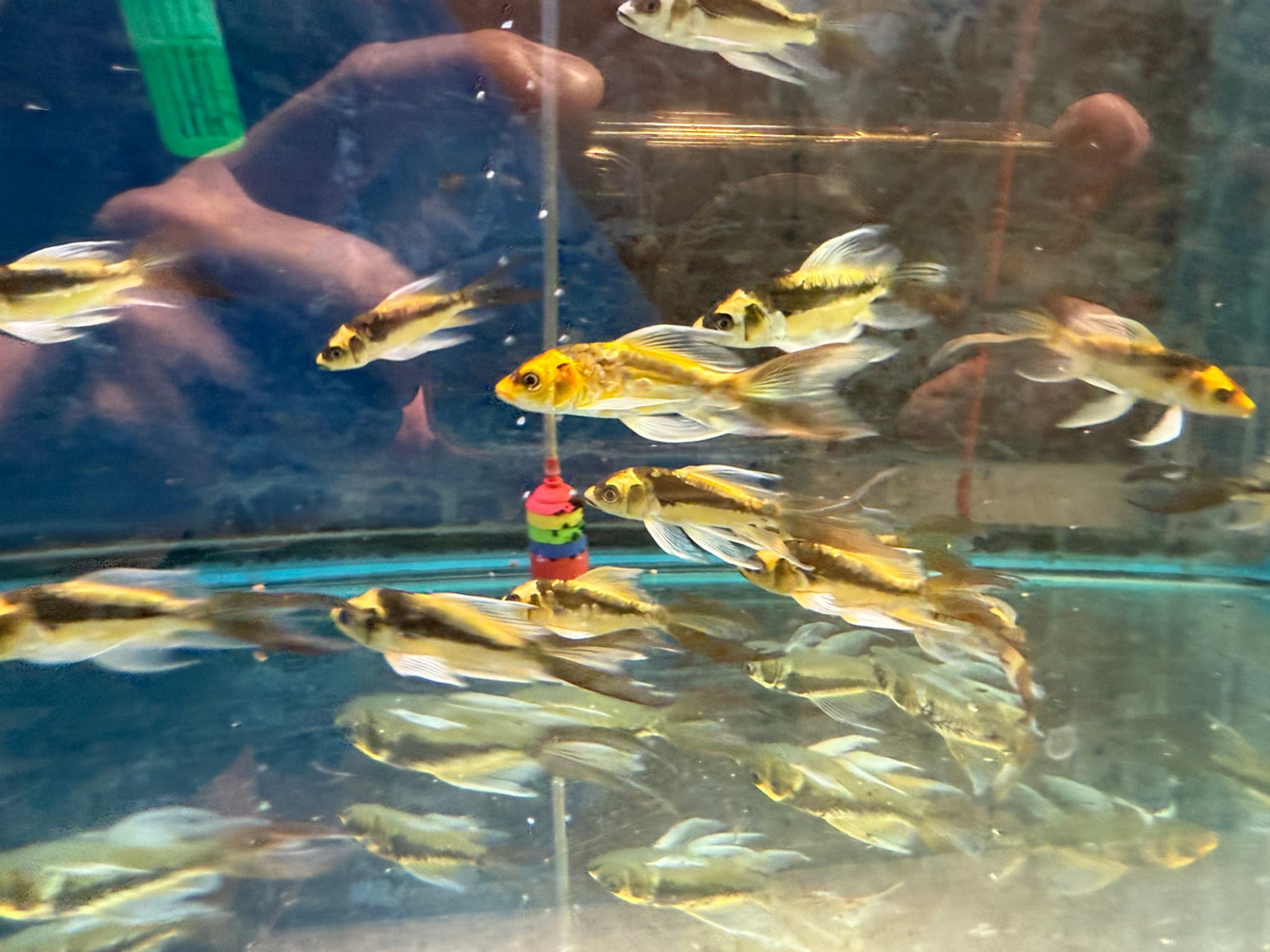
Butterfly Koi are known for elongated fins and a graceful swimming appearance.
They are available in many colors and patterns, and their long fins make them visually distinctive in ornamental ponds.
Shiro Utsuri are black-and-white Koi with bold contrasting patterning.
Strong contrast and balanced markings can make individual fish particularly eye-catching.
Asagi are traditional Koi recognized by blue-gray reticulated scales and contrasting reddish coloration along the sides and fins.
Their understated pattern makes them very different from heavily patterned varieties such as Showa or Sanke.
Shusui are doitsu-style Koi related to Asagi and are known for rows of dark scales along the back with contrasting side coloration.
Their reduced scale pattern creates a very different visual texture from fully scaled Koi.
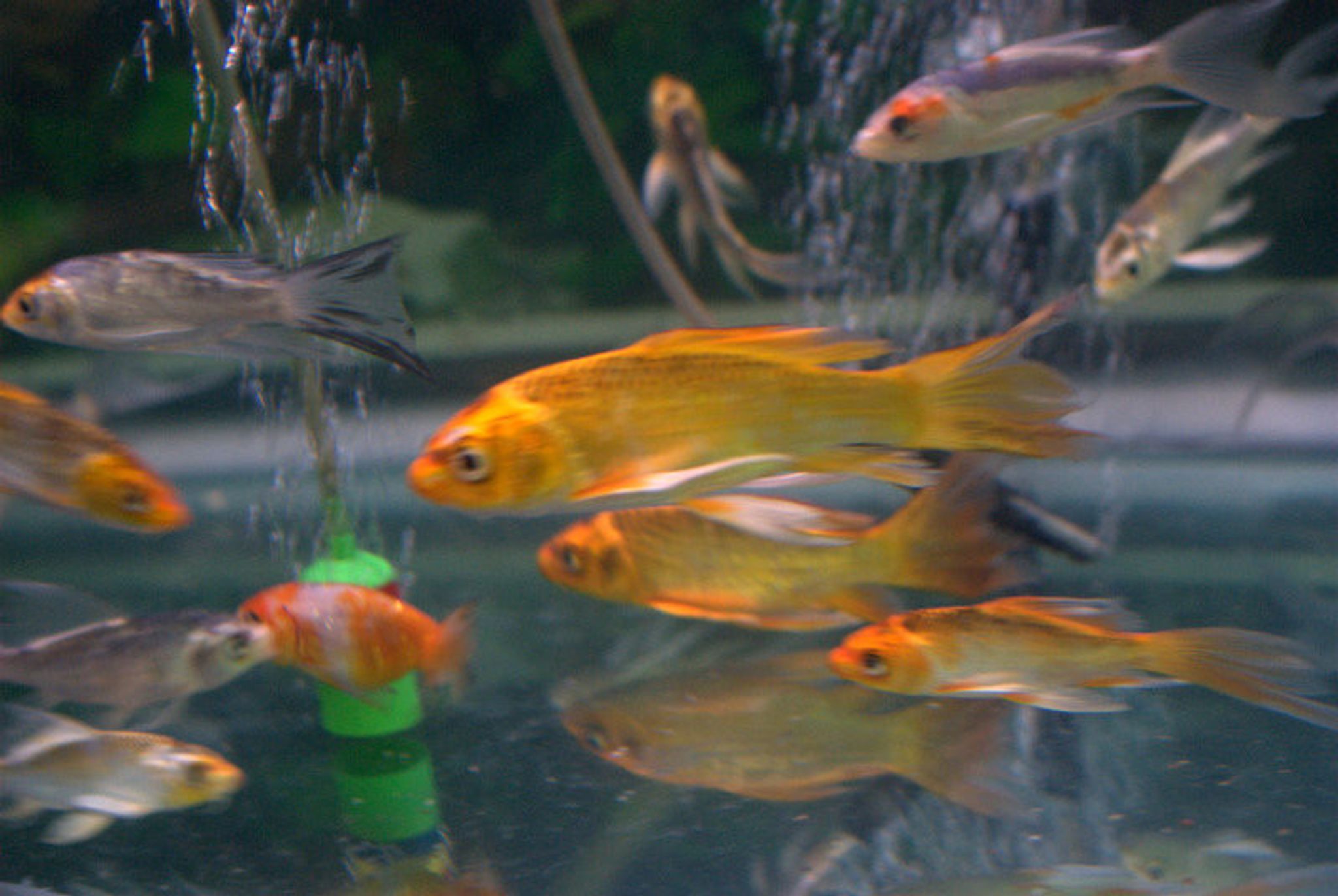
Ogon Koi are solid metallic fish available in bright gold, silver and other reflective tones.
Their simple color pattern puts more emphasis on metallic sheen, body shape and skin quality.
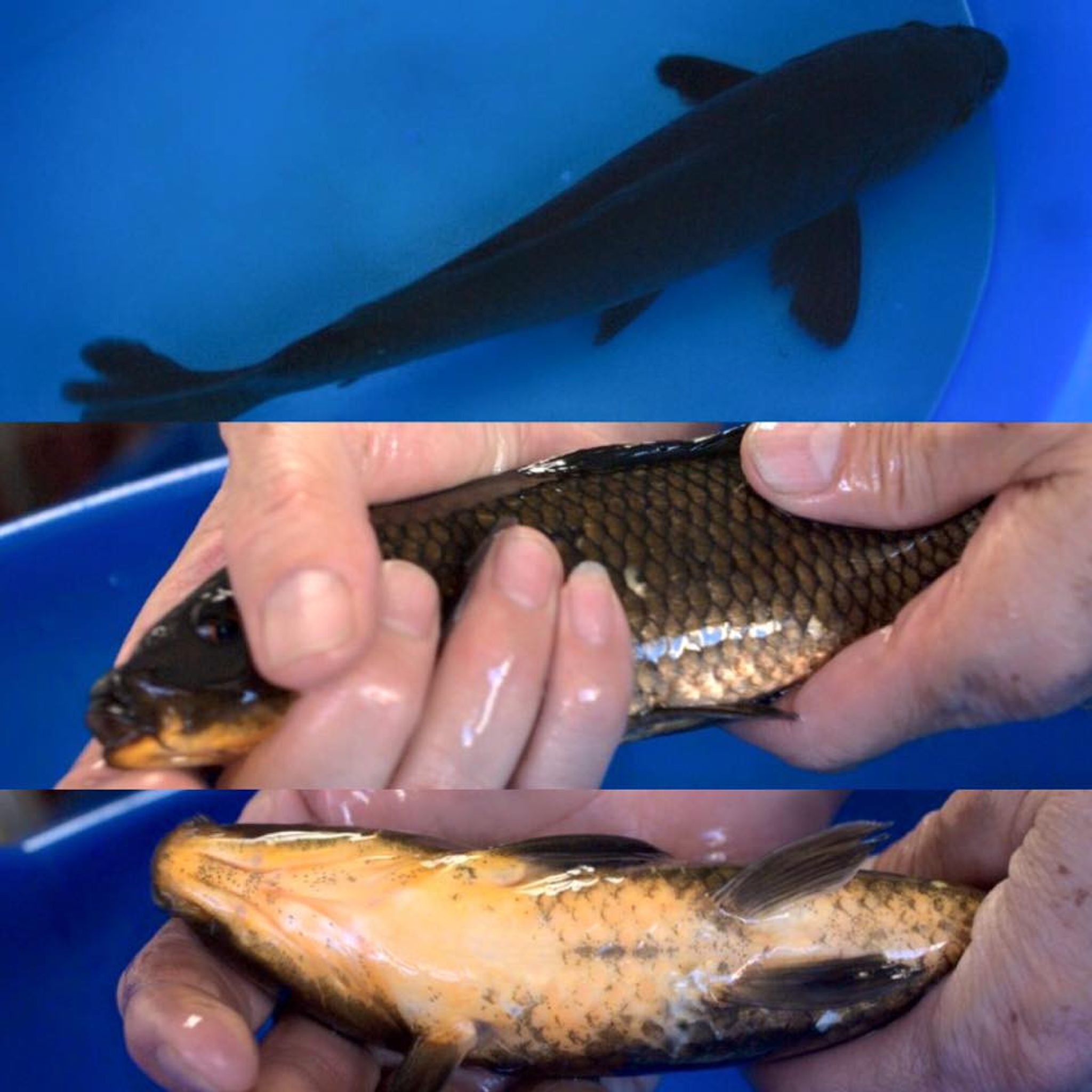
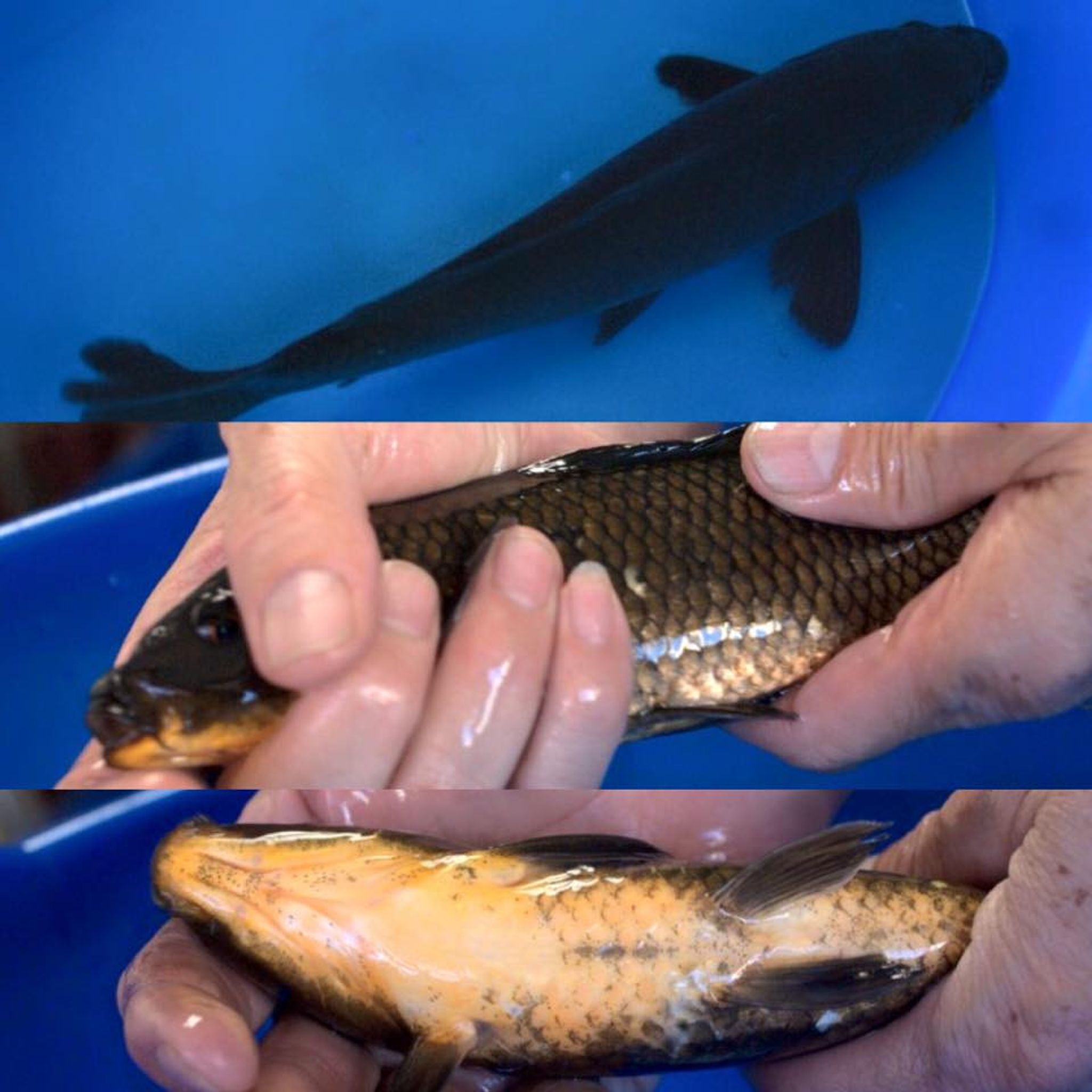
Chagoi are solid brown or tea-colored Koi known for strong growth potential and relatively calm behavior.
They are often valued for body development and personality rather than complex patterning.
Japanese Koi are ornamental carp developed through selective breeding for color, pattern and body form.
Seller listings may include breeder, bloodline or farm information where available, which can help buyers compare origin and quality.
Koi can grow much larger than many aquarium fish and should be planned as long-term pond animals.
Current sale size is only a starting point, so pond volume, filtration and future stocking should be based on mature fish.
Koi are best known as ornamental pond fish because their adult size and swimming behavior demand substantial water volume and filtration.
Small indoor holding systems may be useful temporarily, but long-term care should be designed around the needs of mature Koi.
A successful Koi pond should provide enough swimming space, stable filtration, good oxygenation and protection from extreme environmental changes.
Pond depth, climate, stocking level and predator protection should all be considered during design.
Koi are active feeders and produce substantial waste as they grow.
Strong mechanical and biological filtration is essential for maintaining water quality in established Koi ponds.
Good oxygenation supports fish health and biological filtration.
Waterfalls, air pumps, diffusers and other circulation methods can help maintain suitable oxygen levels depending on pond design.
Stable water quality is one of the most important parts of long-term Koi care.
Regular testing, appropriate filtration and gradual changes are generally preferable to allowing water conditions to fluctuate sharply.
Koi are kept outdoors across a wide range of climates, but seasonal temperature changes affect feeding, metabolism and pond management.
Pond care should be adjusted for local climate rather than using one rigid temperature target year-round.
Koi are omnivorous and generally accept high-quality formulated Koi foods.
Diet should be appropriate to fish size, season, water temperature and growth goals rather than simply feeding as much as the fish will consume.
Koi are enthusiastic feeders, and overfeeding can quickly increase waste and reduce water quality.
Observe feeding behavior and adjust portions according to temperature, fish condition and pond filtration capacity.
Koi are selected for combinations of body shape, skin quality, color and pattern.
Pattern can continue to develop as fish grow, so juvenile appearance does not always predict the final look of an adult Koi.
Koi quality can be assessed using factors such as body shape, skin condition, pattern balance and color development.
Hobby-grade pond fish and higher-end breeder Koi can differ greatly in price and selection criteria.
Mature male and female Koi may differ in body shape and breeding condition, but sexing younger fish can be difficult.
Seller or breeder information can be useful when purchasing specific fish for breeding or show-oriented goals.
Koi can reproduce readily under suitable conditions, but controlled breeding is very different from simply allowing fish to spawn in a pond.
Breeders select parent fish carefully and raise large numbers of juveniles before choosing individuals with desirable traits.
Koi and Goldfish are sometimes kept together in large ponds because they can tolerate broadly similar environments.
Koi grow much larger and can dominate feeding, so pond size, stocking level and access to food should be considered carefully.
Koi may uproot, nibble or disturb aquatic plants while foraging.
Planting baskets, protected planting zones or separate filtration and planting areas may help if a heavily planted pond is desired.
Koi may coexist with other pond fish when size, water requirements and feeding behavior are compatible.
Avoid adding very small fish that may be outcompeted or accidentally consumed by larger Koi.
Outdoor Koi can attract birds and other wildlife.
Pond depth, shelters, netting and other predator-deterrent measures may be useful depending on the local environment.
Newly shipped Koi may be stressed after transport and should be introduced carefully to stable pond or quarantine water.
Follow the seller's acclimation guidance and avoid unnecessary rapid changes in temperature or water chemistry.
Quarantine and observation can help reduce the risk of introducing disease or parasites into an established pond.
A separate quarantine system also makes it easier to observe feeding, behavior and body condition before new fish join the main collection.
When comparing Koi for sale, look for:
Koi prices vary according to variety, size, breeder, body shape, pattern, skin quality, rarity and seller.
Pond-grade Koi and higher-end breeder fish can differ dramatically in price, so compare the exact fish, size and breeder information rather than price alone.
FishyHub brings Koi listings from pond stores, breeders and specialist freshwater fish sellers together in one marketplace.
When comparing Koi online, consider:
Shipping availability depends on the seller, destination, fish size, weather and livestock-shipping policy.
Review packaging, delivery timing and live-arrival terms before ordering, and make sure the pond or quarantine system is fully prepared before the Koi arrive.
Yes. Pond stores, Koi breeders and specialist fish sellers offer Koi online across the U.S., depending on seller shipping coverage and fish availability.
Kohaku, Sanke, Showa, Shiro Utsuri, Asagi, Shusui, Ogon, Chagoi and Butterfly Koi are among the best-known varieties.
Koi can be held temporarily in suitable indoor systems, but their large adult size and waste production make ponds or other very large systems more appropriate for long-term care.
They sometimes can in large ponds, but Koi grow larger and may dominate feeding, so pond size and stocking should be planned carefully.
Koi may nibble, uproot or disturb aquatic plants while foraging, especially softer vegetation.
Koi can become large fish, with final size influenced by genetics, nutrition, pond conditions and long-term care.
Kohaku are red and white, Sanke add black markings over a white base, and Showa combine black, white and red with a darker overall pattern structure.
FishyHub helps U.S. pond keepers compare Koi from pond stores, breeders and specialist freshwater fish sellers in one marketplace.
Explore Koi for sale on FishyHub and compare Kohaku, Sanke, Showa, Butterfly Koi, Shiro Utsuri, Asagi, Ogon, Chagoi and other ornamental varieties. Discover listings from pond stores and breeders across the United States, and compare variety, size, pattern, breeder, price and shipping options before choosing Koi for your pond.