Why Is My Rotala Rotundifolia Melting or Turning Brown? Causes and Fixes
Watching a newly planted stem of Rotala rotundifolia turn brown and mushy is alarming, but it isn't always a sign of failure. Most melting falls into one of two buckets: a normal, temporary adjustment, or a genuine imbalance in light, CO2, nutrients, or water quality that needs correcting. This guide walks through how to tell the two apart and exactly what to fix once you know which one you're dealing with.
Is It Normal Transition Melt or a Real Problem?
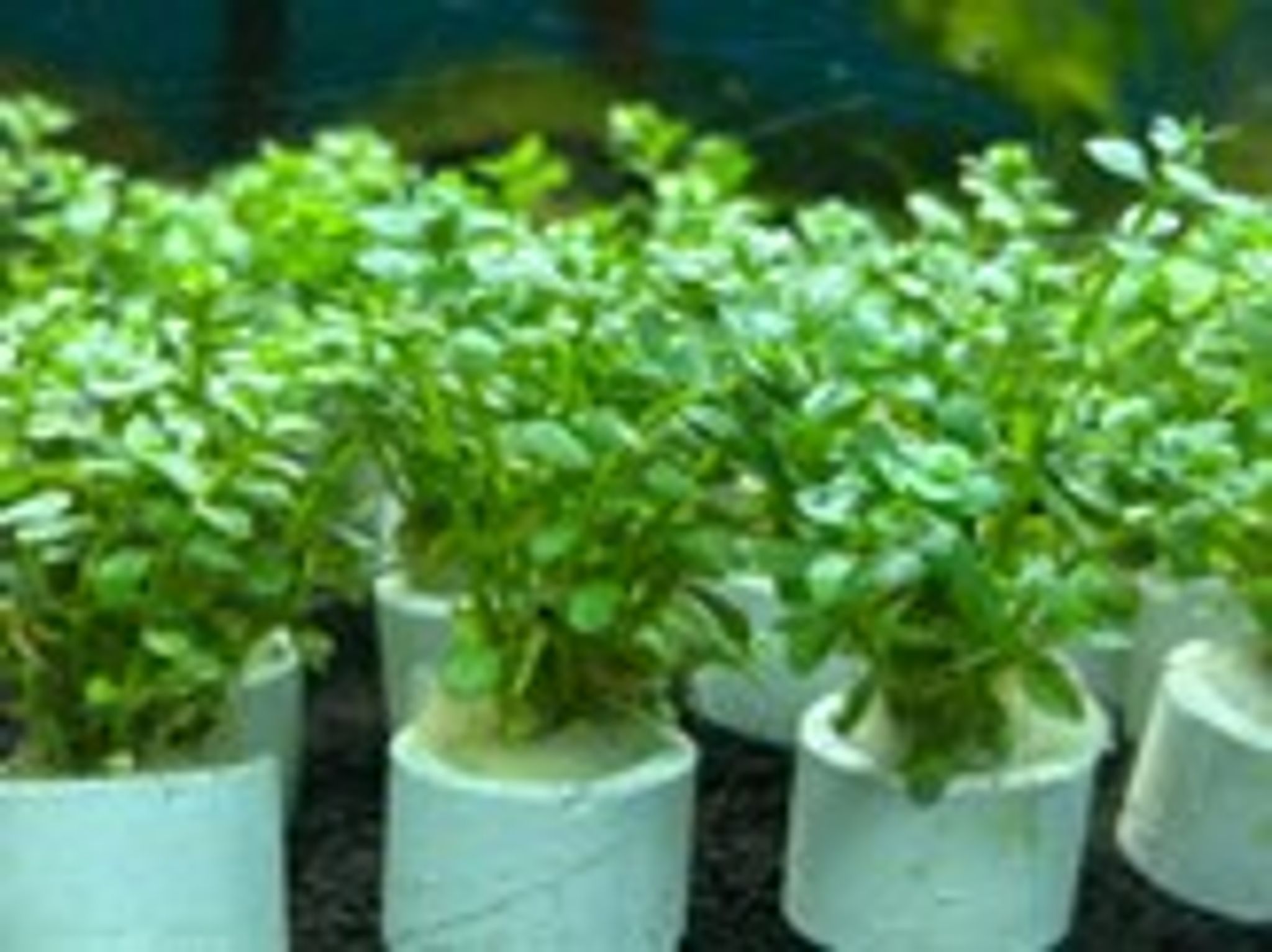
Rotala rotundifolia is usually grown emersed (out of water) in commercial nurseries because it's faster and cheaper to produce that way. Emersed leaves are structurally different from the leaves the plant grows underwater — thinner cuticle, different cell walls — and they are not built to survive full submersion.
When you plant a stem in your tank, those original emersed leaves commonly yellow, brown, and dissolve within 1–3 weeks, even in a well-run tank. This is programmed die-back, not tissue damage from stress. As long as fresh, smaller, more colorful submersed-form leaves are emerging at the growing tips while the old leaves melt away, the plant is doing exactly what it's supposed to do.
The same temporary browning can show up after transplanting or trimming: uprooting a stem, replanting a cut top, or shipping stress all cause the plant to redirect energy toward new roots and shoots, and lower leaves may brown off in the process. Expect recovery within 1–2 weeks if conditions are stable.
| Sign | Transition/stress melt (normal) | Genuine problem |
|---|---|---|
| Location | Older, lower, or emersed-form leaves | Spreads to new growth or whole stem |
| New growth | Fresh green tips still appearing | Stalled or absent |
| Stem texture | Firm, only leaves affected | Stem itself turns soft/translucent |
| Scope | Isolated to recently planted stems | Tank-wide, including established plants |
| Timeline | Resolves in 1–3 weeks | Persists or worsens past 3 weeks |
The fix: don't panic-uproot a stem that's simply transitioning. Give it two weeks and watch the growing tip, not the leaves that are dying off.
The Mental Model: Liebig's Law of the Minimum
Before troubleshooting individual causes, it helps to have a framework. In a planted tank, growth is limited by whichever single input — light, CO2, macro/micronutrients, or water quality — is scarcest relative to the others. This is sometimes called Liebig's Law of the Minimum, borrowed from agricultural science.
Practically, this means:
- Increasing light when CO2 or nutrients are already the bottleneck won't help — it usually makes things worse by fueling algae.
- Dosing more fertilizer when light is too low does nothing for the actual limiting factor.
- The goal of diagnosis is to find the one lagging input, not to add more of everything at once.
Keep this in mind as you work through the sections below: Rotala melting or browning almost always traces back to one factor falling behind the rest, not a total system failure.
Light: Intensity, Spectrum, and Photoperiod
Rotala rotundifolia wants medium-to-high light, roughly 35–50+ PAR at the substrate, delivered by a full-spectrum bulb in the 5000–7000K range.
Symptoms of too little light:
- Lower leaves yellow, brown, and drop
- Thin, leggy, pale-green stems reaching for the surface
- Loss of the red/pink coloration the species is known for
Symptoms of too much light (without matching CO2/nutrients):
- Algae growth on stems and older leaves
- That algae shades and browns the leaves beneath it, which can look like a deficiency but is really a light/algae problem
How Long Should the Lights Run?
Sources disagree here: some recommend a flat 8 hours as the safest option against algae, while others say 10–12 hours is fine in a well-balanced planted tank. A sensible middle ground:
- Start at 8 hours/day on a timer for consistency.
- Extend toward 9–10 hours only if the plant shows light-starved symptoms and there's no algae problem.
- Never exceed roughly 10–12 hours.
- If algae appears, cut back toward 6–8 hours temporarily rather than reducing intensity first.
Evaluate photoperiod alongside intensity and spectrum together — a long photoperiod at low intensity and a short photoperiod at high intensity can produce very different Rotala results, so duration alone isn't the whole picture. A good LED fixture with adjustable intensity, browsable in FishyHub's lighting selection, makes it much easier to dial in the right level without swapping bulbs.
CO2: Optional, But Light-Dependent
CO2 injection is not strictly required for Rotala rotundifolia, but it dramatically improves growth rate, stem density, and red coloration when dosed around 20–30 ppm.
Sources disagree on how central CO2 is to melting: some call it optional once the plant adjusts, others treat low CO2 as a primary driver of melt and stunting. The practical resolution is that CO2 absence alone rarely causes problems — mismatched light and CO2 does. A low-tech (no-CO2) tank running high-intensity light is asking the plant to grow faster than the available carbon allows, which shows up as:
- Stunted new growth
- Melt in the crown or lower stems
- Algae on older leaves as the plant fails to use the light being provided
Fix: if you're not running CO2, keep light on the moderate end of the range rather than pushing for maximum intensity. If you are injecting CO2, consistency matters more than the exact number — a drop checker that drifts from green toward blue over a few days, or a bubble count that slowly declines as a diffuser clogs, can produce intermittent browning that looks like a nutrient problem but is actually a fluctuating carbon supply. Check the drop checker color and bubble rate weekly, not just on setup day.
Nutrient Deficiencies and How to Read Them
Rotala rotundifolia is a heavy root-and-column feeder — it draws nutrients through both its roots and its leaves, which is why it responds well to a combination approach.
| Deficiency | What you'll see | Where it shows first |
|---|---|---|
| Nitrogen (N) | Overall pale color, weak/thin stems | Older leaves yellow first |
| Iron/micronutrients | Yellowing between veins while veins stay green (chlorosis) | New growth |
| Potassium (K) | Pinholes or brown/translucent necrotic spots | Older leaves |
| Phosphorus | Dark green color but stunted, slow growth | Whole plant |
Fix: dose a liquid all-in-one fertilizer or separate macro/micro products per the label — both EI (Estimative Index) dosing and leaner daily dosing are common approaches in the hobby — and add root tabs near the base of the stems for the root-feeding side of the equation. Because Rotala feeds from both ends, root tabs plus a water-column fertilizer typically outperform either one alone. A nutrient-rich substrate or a few root tabs pushed near the root zone, along with a water conditioner for stable water changes, can be found in FishyHub's substrate and treatment categories.
A Note on pH and Iron Lockout
Dosing iron won't help much if pH is swinging — unstable pH can lock iron out of a form the plant can absorb, even at correct dosing. Aim for stability, not just the right number.
Potassium Pinholes vs. Leaf Spot
Potassium-deficiency pinholes are small, roughly round, and tend to appear scattered across older leaves without any fuzzy or discolored halo around them. Bacterial or fungal leaf spot, by contrast, usually has an irregular shape, a darker or slimy-looking border, and often spreads leaf to leaf rather than appearing uniformly. If the spots are accompanied by pale, weak growth elsewhere, lean toward a potassium deficiency; if they look wet, fuzzy, or are spreading fast, treat it as a pathogen issue instead.
Water Parameters and Sudden, Tank-Wide Melt
Rotala rotundifolia tolerates a fairly wide range:
- Temperature: 68–82°F (20–28°C)
- pH: 6.0–7.5, tolerating up to about 8.0, though coloration and growth are best on the lower end
- GH: roughly 2–12 dGH
- Ammonia/nitrite: should be at or near zero
- Nitrate: present but not excessive
If melting is sudden and affects the whole tank rather than just recently planted stems, treat it as a water quality issue first, not a nutrient one. New tank syndrome, overstocking, and overfeeding all cause ammonia or nitrite spikes that directly brown and melt plant tissue — often faster than any nutrient deficiency would. Test your water and perform a water change as the first troubleshooting step whenever the pattern looks tank-wide.
Very soft or very hard water outside the GH range above can also indirectly interfere with nutrient uptake, so if dosing and light look correct but growth still stalls, GH is worth checking too.
Self-Shading: The Overlooked Cause
Dense, tall stands of Rotala often shade themselves. Inner and lower leaves lose light to the plant's own canopy, brown, and drop — which can look exactly like a light or nutrient deficiency but is really a spacing problem. If only the leaves buried inside a thick clump are affected while thinner areas of the tank look fine, thinning the stand or trimming and replanting the tops usually solves it without any change to light or dosing.
Algae as a Symptom, Not a Standalone Cause
Algae growing on Rotala's stems and older leaves competes for light and nutrients and physically coats the leaf surface, accelerating browning underneath. It's rarely the root cause on its own — it's almost always a downstream symptom of a light/nutrient imbalance (commonly excess light relative to CO2 or nutrients). Treat the algae's cause, not just the algae itself, or it will return.
Common Mistakes to Avoid
- Uprooting too soon. Give a newly planted stem two weeks before assuming it's dying.
- Cranking up light to fix pale or brown plants. Check CO2 and nutrients first — more light without more carbon/nutrients just invites algae.
- Heavy fertilizer dosing without testing water first. This can mask an ammonia or nitrite spike that's the actual cause.
- Leaving melted leaf matter in the substrate. Decaying tissue fouls the water and can worsen ammonia or algae locally — siphon it out during water changes.
- Planting too densely. Self-shading looks like a deficiency but is really a spacing issue.
- Dosing iron while ignoring pH swings. Unstable pH can lock out iron regardless of dose.
- Ignoring GH extremes. Very soft or very hard water can indirectly affect nutrient uptake.
Step-by-Step Fix Checklist
- Confirm it's not transition melt. Wait 2 weeks if new growth is visible at the tips.
- Test the water: ammonia, nitrite, nitrate, pH, and GH.
- Check light: intensity (PAR), spectrum (5000–7000K), and photoperiod (8–10 hours).
- Evaluate CO2: bubble rate and drop checker color if you're injecting it.
- Start or adjust fertilizer dosing: macro + micro liquid dosing plus root tabs.
- Trim dead or melted tissue promptly with clean scissors to prevent it fouling the water.
- Replant healthy tops and discard mushy stems rather than trying to save them.
For new stems specifically, it also helps to remove the most melt-prone emersed leaves — the thinnest, most delicate ones near the top — before planting, so the messiest part of the transition happens in your hand rather than in the tank.
Frequently Asked Questions
Is it normal for Rotala rotundifolia to melt after planting?
Yes. Emersed-grown leaves commonly die back within a couple of weeks while submersed growth establishes itself. Only worry if no new growth appears or the whole stem turns mushy and translucent.
How do I tell transition melt from a real problem?
Transition melt is limited to older or lower leaves while fresh green growth continues at the tips. A real problem shows spreading browning, softening stems, or stalled new growth across the tank rather than just on recently planted stems.
Why are my Rotala's lower leaves browning but the tops look fine?
This is usually self-shading or a developing nutrient/light gap that reaches older leaves first. Thin the stand or trim and replant the healthy tops to fix it.
Do I need CO2 to keep Rotala rotundifolia healthy?
No, but without CO2 injection you need to keep light moderate. High light paired with no CO2 is one of the most common triggers for melt and algae.
What's the ideal light schedule to stop it from melting or browning?
Roughly 8–10 hours per day of medium-high light on a timer works for most setups. Cut back toward 6–8 hours if algae appears, and extend cautiously only if the plant shows clear light-starved symptoms.
Could my water parameters be causing this?
Yes. Test ammonia, nitrite, nitrate, pH, and GH — even a brief ammonia or nitrite spike can brown and melt plant tissue quickly, faster than a nutrient deficiency would.
Should I trim off the brown or melted parts?
Yes, promptly, using clean scissors, and remove the debris from the substrate. Left in place, decaying tissue fouls the water and can worsen algae or ammonia locally.
Can algae cause my Rotala to brown?
Indirectly. Algae coating the leaves blocks light and competes for nutrients, which accelerates browning, but it's usually a sign of an underlying light or nutrient imbalance rather than the root cause itself.
Once you've matched the symptom to its cause, the right supplies make the fix straightforward — browse FishyHub's full range of filters to keep water parameters stable while your Rotala settles in.

