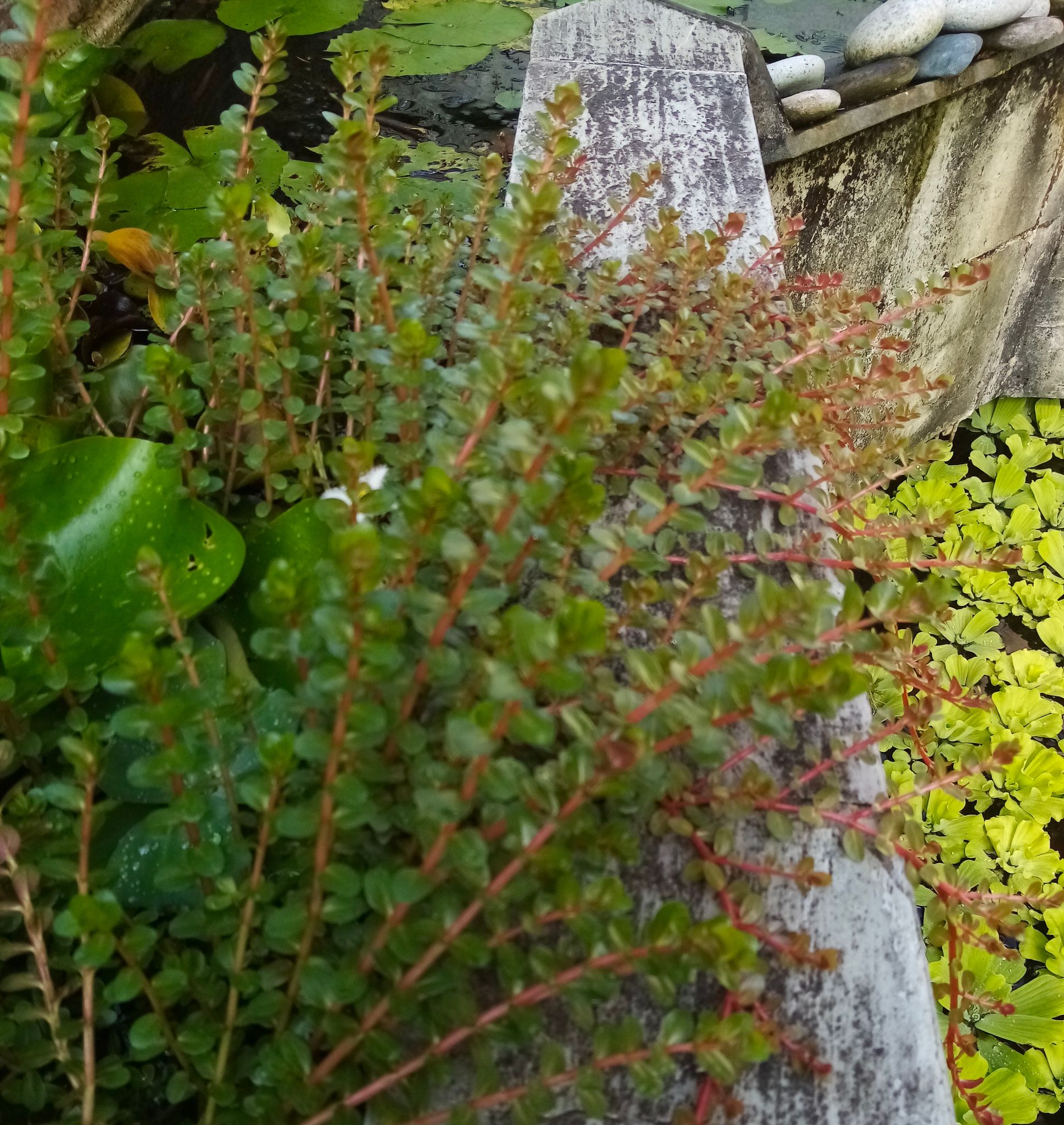
Why Is My Rotala H'ra Melting or Turning Brown? Causes and Fixes
Rotala h'ra is one of the more demanding fine-leaved stem plants in the hobby, and its lower leaves turning clear and mushy or its foliage bleaching brown are two of the most common complaints after planting it. The good news is that "melting" and "browning" have different causes and different fixes, and most cases resolve within a few weeks once you know which one you're dealing with. This guide walks through both, with a quick-check flow, root-cause fixes, and a realistic recovery timeline.
Melting vs. Browning: Know Which One You Have
These two problems look similar at a glance but point to different root causes, so diagnosing correctly first saves you from fixing the wrong thing.
Melting is rapid tissue breakdown. Leaves go translucent or mushy, the stem may feel slimy, and losses often show up within days of planting or after a major tank change. This is typically transition shock — the plant was grown emersed (out of water, often tissue-cultured) in a nursery, and it has to shed that growth form and rebuild leaves suited to being fully submerged.
Browning is different: leaves turn brown, tan, or rusty while the stem itself stays firm, not slimy. This usually points to a light, algae, or nutrient problem rather than a transition issue, and it tends to develop more gradually.
| Symptom | Melting | Browning |
|---|---|---|
| Leaf texture | Clear, mushy, slimy | Dry, firm, may have spots |
| Speed of onset | Days, often right after planting | Days to weeks, more gradual |
| Stem condition | Can soften and collapse | Usually stays rigid |
| Typical trigger | Emersed-to-submersed conversion, physical damage | Light/CO2/nutrient mismatch, algae, ammonia spike |
| Location on plant | Often lower third first | Older lower leaves, or tips if light-shock |
Why New Rotala h'ra Melts After Planting
Most stem plants sold in stores, including Rotala h'ra, were grown in a humid greenhouse environment rather than fully underwater. Once submerged, the emersed leaves aren't built for life underwater and the plant sacrifices them to grow a new submersed leaf form. Expect the bottom third of each stem to melt back before new growth appears, typically within 1 to 3 weeks. This is normal and not a sign you're doing something wrong — panicking and pulling the plant in the first week is one of the most common mistakes people make with it.
Physical damage during planting also causes localized melt: a crushed stem or an exposed root at the point of insertion will often rot right at that spot even if the rest of the plant is healthy. When you see this, trim off the damaged section and replant the healthy top rather than trying to nurse the base back.
Why Rotala h'ra Turns Brown Instead of Pink
Rotala h'ra is grown for its pink-to-red coloration, and browning almost always traces back to one of these:
Light and CO2 mismatch
This species wants moderate-to-high light — roughly 2 to 3+ watts per gallon equivalent on T5/LED fixtures, or 50+ PAR at the substrate — paired with CO2 injection or at least liquid carbon to hold tight growth and strong color. Under weak light, it stretches, pales, and drops lower leaves. But the opposite problem is just as common: light that outpaces the tank's CO2 and nutrient supply. When light drives photosynthesis faster than the plant can actually use, the excess energy causes photo-oxidative stress — leaves bleach or brown even before algae shows up, and weakened tissue gets colonized by black beard or staghorn algae soon after. Bumping up light to "help" a struggling plant, without also raising CO2 and fertilizer, usually makes browning worse, not better.
Nutrient deficiencies
Healthy stems need a stable baseline: temperature 72–82°F, pH 6.0–7.5, soft-to-moderate hardness, CO2 around 20–30 ppm if injected, nitrate 5–20 ppm, and phosphate 0.5–2 ppm. Starving nitrate or phosphate causes yellowing and browning that starts on the lower, older leaves and works upward.
Two deficiencies have distinct signatures worth telling apart:
- Iron/micronutrient deficiency: new growth yellows while the veins stay green (classic chlorosis).
- Potassium deficiency: pinholes and brown spotting appear on older leaves specifically.
Ammonia or nitrite spikes
A new or overstocked tank can burn plant tissue directly, showing up as blotchy brown patches across many stems at once, not just the oldest leaves. If browning appears suddenly and tank-wide rather than gradually on lower leaves, test your water before assuming it's a lighting or fertilizer issue.
Poor flow and detritus
Weak circulation near the substrate lets debris settle around the base of the stems, which can cause localized rot and browning independent of light or CO2. This is easy to miss because the water column above looks fine.
Normal aging
Not all lower-leaf browning is a problem. As a stem plant matures, it naturally redirects energy toward new top growth, and the oldest lower leaves yellow, brown, and drop off on their own. If the top growth stays vivid and healthy, this is just senescence, not decline.
How Much Aquarium Lighting Is Too Much
Signs you've overshot on light intensity or duration:
- Algae blooms — green water, or black beard/staghorn algae on leaves and hardscape
- Leaf bleaching or browning even though nutrients are dosed correctly
- Fast but weak, pale growth rather than compact, colorful stems
The fix isn't to cut light to nothing — it's to bring intensity and duration back in line with what your CO2 and fertilizer routine can support. That means dimming the fixture, raising it further from the water surface, shortening the photoperiod, or increasing CO2/nutrient dosing to match the light you already have. "More light" only helps if everything else scales with it.
Aquarium Lighting Timers and Photoperiod
Start with 6 to 8 hours of light per day for most planted tanks — that's plenty for Rotala h'ra as long as CO2 and nutrients are consistent. Some high-tech CO2 setups can stretch to 10–12 hours without issue, but for most tanks, going past 8–10 hours without matching CO2/fert increases invites algae and stress-browning rather than better growth. Consistency also matters more than total hours: irregular photoperiods stress plants even if the average is reasonable, so putting the light on an outlet timer removes the guesswork of manual switching. Splitting the day into two shorter periods with a midday break can also curb algae without reducing total growth time.
If you're upgrading a weak fixture to give Rotala h'ra the intensity it needs, browse LED aquarium lighting sized to your tank rather than jumping straight to the brightest option available.
One detail that's easy to overlook: if you inject CO2, sync it with the light timer. Start CO2 1–2 hours before lights-on and stop it about 1 hour before lights-off, so CO2 is already available when photosynthesis demand ramps up each morning. A timer mismatch here stresses plants right when they need CO2 most.
Step-by-Step Fixes
- Confirm melt vs. decline first. Give a newly planted stem 2–3 weeks before intervening further — most transition melt resolves on its own.
- Trim mushy or brown tissue promptly. Rot spreads if left in place, and removing it redirects the plant's energy to new growth.
- Adjust light appropriately. Raise it if growth is pale and leggy under weak light; shorten the photoperiod or reduce intensity if algae is present.
- Add or dial in CO2/liquid carbon. This is the single biggest lever for compact growth and color.
- Dose a complete fertilizer. Cover nitrogen, phosphorus, potassium, and micros/iron — a root or liquid fertilizer fills gaps that light and CO2 alone can't fix.
- Test and correct water parameters. Check ammonia, nitrite, and nitrate whenever browning appears suddenly or tank-wide.
- Improve flow near the substrate. Reduce detritus buildup around the base of the stems.
- Replant healthy cuttings shallowly. Don't bury nodes too deep, and space stems so light and flow reach the lower leaves.
A simple weekly log of light hours, fertilizer doses, and test results makes it much easier to spot which variable changed right before browning or melting started — most people skip this and end up guessing.
What to Expect During Recovery
Once the underlying issue is fixed, look for new pink or red growth at the stem tips within 1–2 weeks, with full recovery into a compact, colorful submersed growth pattern over 3–6 weeks. If you're still seeing new melt or browning past that window, revisit the checklist above rather than assuming the plant is simply unsuited to your tank.
Frequently Asked Questions
Is melting normal when I first plant Rotala h'ra?
Yes. Expect some lower-leaf loss in the first 1–3 weeks as the plant converts from emersed to submersed growth. Only worry if the entire plant liquefies or no new growth appears after that window.
Should I trim melting stems or wait?
Trim off clearly mushy or brown sections promptly to stop rot from spreading, but leave healthy green tissue alone. New shoots typically form from nodes or directly from the substrate.
Why is my Rotala turning green instead of staying pink/red?
This is usually insufficient light intensity, low iron/micronutrient dosing, or too much nitrate relative to the light level. Increase light or iron dosing while keeping nitrate in the moderate range.
Do I need CO2 for this plant?
Not strictly. CO2 injection makes a noticeable difference in compact growth and color, but the plant can survive on liquid carbon alone in a low-tech setup — just expect slower, greener growth with less red.
How many hours of light should I run?
Start with 6–8 hours on a timer and extend cautiously only if algae stays under control and your CO2/nutrient dosing is stable.
Can too much light alone cause browning without algae?
Yes. Excess light without matching CO2 and nutrients causes photo-oxidative stress that bleaches or browns tissue even before any visible algae shows up.
Is brown/red the same as unhealthy browning?
No. A rich reddish-brown or copper hue on new top growth under strong light is the desired coloration. Unhealthy browning shows up on older or lower leaves along with softening, spotting, or drop.
How do I tell melting from a nutrient deficiency?
Melting is rapid, tissue turns clear and mushy, and it's usually tied to a recent change like a new plant or new light. Deficiency browning is gradual, starts at leaf edges or tips or follows a yellow-then-brown pattern, and tracks with gaps in your fertilizer dosing.
Once your Rotala h'ra is stable, browse aquarium lighting on FishyHub to match your fixture to the tank size and plant load you're actually running.

