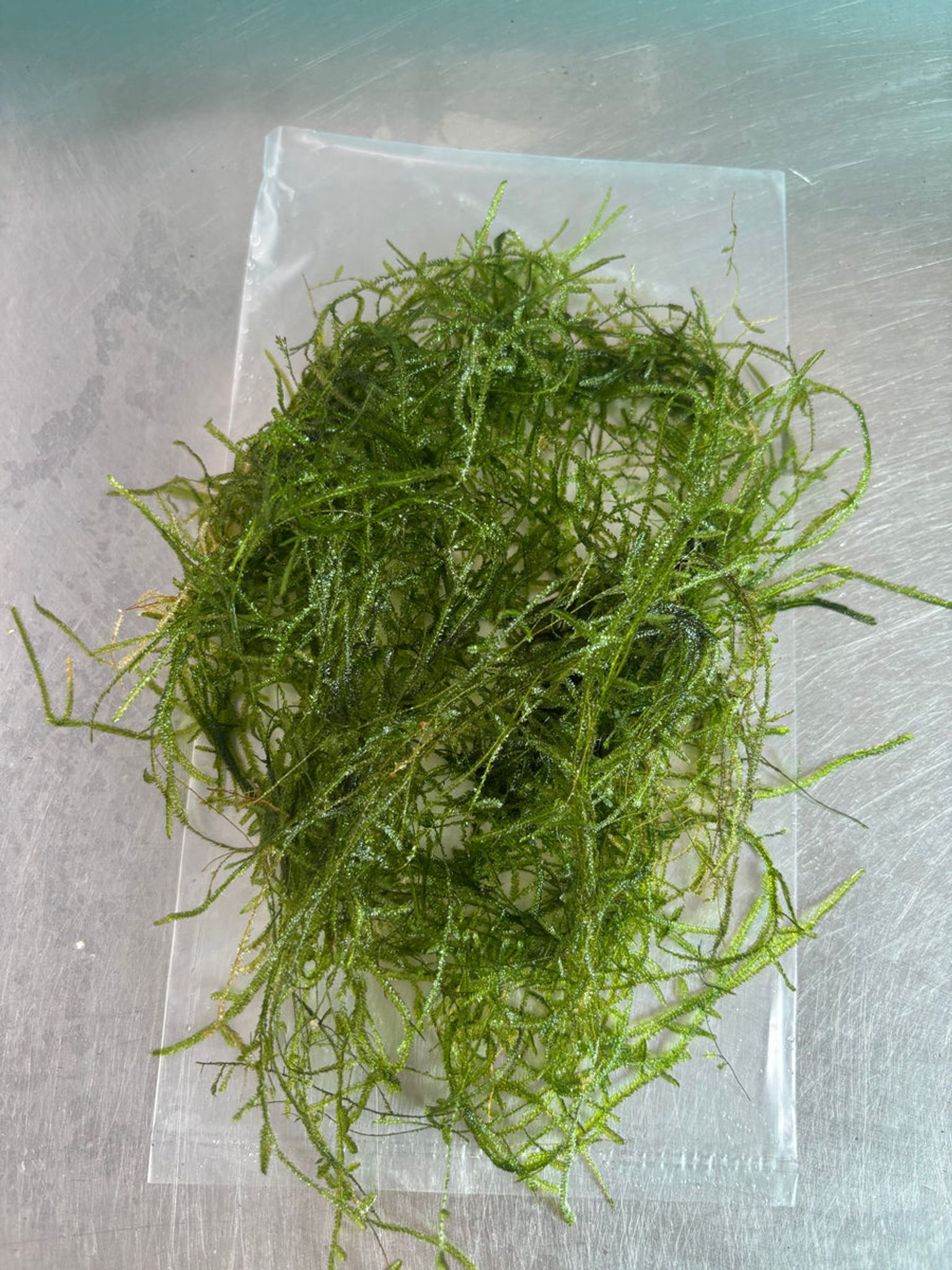
Why Is My Java Moss Melting or Turning Brown? Causes and Fixes
Brown patches or mushy strands in a clump of java moss aren't automatically a death sentence. Sometimes it's a short, normal adjustment period; other times it's a sign that flow, light, or water quality in the tank needs attention. This guide walks through how to tell the two apart and exactly what to do about each.
Two different problems, not one
Before troubleshooting, sort what you're seeing into one of two buckets. Treating a normal transition like a tank emergency (or ignoring a real chronic problem as "just moss being moss") is the single most common mistake people make.
- Transition melt — time-limited, self-resolving, tied to a recent change (new purchase, replanting, or a tank move).
- Chronic browning — ongoing or worsening, tied to a persistent condition in the tank (flow, light, temperature, water quality, or algae).
The sections below cover both, starting with why moss behaves this way in the first place.
Why java moss browns from the inside out
Java moss (Taxiphyllum barbieri) doesn't feed the way rooted plants do. It absorbs nutrients mainly through its stems and leaves; the thread-like rhizoids at its base only anchor it to rock, wood, or mesh and don't pull in nutrition. That single fact explains a lot of the browning people see:
- A dense mat shades and starves its own interior, since inner strands can't reach light or absorb nutrients as easily as the outer layer.
- Because it has no root system to fall back on, java moss can't "tough out" poor conditions the way a substrate-rooted plant sometimes can — every strand depends on direct contact with light, flow, and dissolved nutrients.
This is also why java moss is meant to be attached to hardscape or draped loosely over an object, never buried in substrate like a rooted plant. Burying it cuts off the leaf surfaces that would otherwise be doing all the feeding, and the buried portion typically rots.
Is this normal? Transition melt and emersed die-back
If your moss started browning within the last few weeks of a purchase, a replant, or a tank change, this is very likely normal.
Transition melt: newly acquired or freshly planted java moss commonly sheds or browns some of its growth in the first 1–3 weeks as it adjusts to new water chemistry and lighting. Older or outer growth can look dead while the plant quietly re-establishes itself. This is not usually fatal.
Emersed-to-submersed conversion: a lot of java moss is grown emersed (out of water, in a nursery pot or on a moist mat) before being packaged and shipped. That emersed-grown tissue is often not built for life underwater, and once submerged it will shed within a few weeks and regrow in its denser, more familiar submersed form. Seeing your new moss lose most of its original growth and come back looking different is expected, not a failure.
General guidance: give new or recently replanted moss 2–4 weeks before judging it a failure. Trim off anything that's clearly dead, and let the green portions do their work.
Chronic causes of ongoing or worsening browning
If browning is new on established moss that had been healthy for months, or it keeps getting worse rather than resolving, look at these tank-condition causes.
| Cause | What's happening | What you'll notice |
|---|---|---|
| Dense, untrimmed clumps | Interior is shaded and cut off from flow, CO2, and nutrients | Browning starts in the center, spreads outward |
| Poor water flow | Nutrients and CO2 don't reach leaf surfaces | Dull, thin growth; brown patches in low-flow zones |
| Insufficient CO2/carbon | Strong light without enough carbon to use it | Moss looks stressed despite bright light |
| Too much light | Light outpaces available CO2/nutrients | Bleached or browning tips, algae growth |
| Too little light | Photosynthesis slows, debris and algae take over | Pale, thin, slow-growing moss with brown buildup |
| Algae overgrowth | Green dust, hair/thread algae, or cyanobacteria smother leaves | Fuzzy or slimy coating, brown tissue underneath |
| Trapped debris/uneaten food | Physically blocks light; fuels fungus and rot | Dark, matted-looking patches |
| Water too warm | Java moss is a cool/temperate plant | Slower growth, duller color, browning at higher temps |
| Poor water quality | Ammonia, nitrite, nitrate, or organic waste buildup | General decline, algae favored over moss |
| Nutrient imbalance | Too little iron/potassium, or excess feeding algae | Pale or algae-covered moss |
| Physical/shipping damage | Cell damage from being out of water or handled roughly | Browning concentrated where it was handled |
Temperature: the sweet spot vs. the tolerable range
Java moss does best around 70–77°F (21–25°C). It can tolerate warmer conditions up to roughly 82–86°F (28–30°C), so it will survive in many tropical community tanks, but growth slows and color dulls as temperatures climb, and browning risk goes up in tanks run consistently near 82°F or higher. If you're keeping it alongside heat-loving tropical fish, expect it to be a slower, less vigorous grower than it would be in a cooler setup — that's a trade-off, not a tank problem to chase.
The recovery checklist
Work through these in order. None of this requires CO2 injection or specialty equipment — java moss is a low-tech, beginner-friendly plant, and the upgrades at the bottom are optional.
- Trim away brown, mushy, or dead sections with clean scissors. Snip close to where the tissue is still green and firm; dead moss will not turn green again, and leaving it in place just fouls the water as it decays. Leave healthy green fronds alone — they'll fill back in.
- Thin dense mats. Don't let a clump pack out to more than roughly 0.5–1 inch thick before thinning. Pull sections apart with your fingers or scissors so light and water can reach the interior, rather than shaving only the surface.
- Improve flow. Position the moss near a filter outflow, or add a small powerhead so water moves gently across it. Moss in a dead zone will struggle regardless of how good the water quality is elsewhere in the tank.
- Check the light schedule. Aim for roughly 8–10 hours of moderate light per day. Cut back intensity or duration if algae is heavy; bump it up slightly if the moss looks pale or leggy.
- Manage temperature. Keep it in the 70–77°F comfort zone where you can, and avoid pairing java moss with a tank run in the low-to-mid 80s°F if strong growth matters to you.
- Do regular partial water changes — about 10–25% weekly — and gently rinse or swish the moss during maintenance to knock loose trapped debris and detritus.
- Address algae at the source (excess light or nutrients) before it smothers the moss. Manual removal plus reducing light/nutrient excess is safer and more effective long-term than reaching for a chemical algaecide.
- Add CO2 or liquid carbon/root tabs only if you want faster growth in a higher-light setup. These speed things up but are not required for basic health.
- Be patient with new moss. Give it 2–4 weeks before writing it off, and expect some shedding along the way.
A simple weekly maintenance routine
Tie the fixes above into one short habit rather than treating each as a one-off task:
- Rinse/swish the moss gently during your water change to dislodge debris.
- Spot-trim any new brown tips before they spread.
- Check flow — confirm the moss still gets gentle current, especially after rescaping or adding decor nearby.
Doing these three things on your regular water-change day prevents most of the chronic causes above from building up in the first place.
Green hair/thread algae on or near your moss
Hair or thread algae growing through a moss mat is usually driven by excess light, elevated nitrate or phosphate, and CO2 imbalance (light outpacing available carbon). Fixes:
- Manually remove it — twirl strands out with a toothbrush or algae-removal tool rather than pulling the moss apart.
- Reduce photoperiod or intensity temporarily while nutrient levels come back down.
- Do nutrient-export water changes to bring nitrate/phosphate back into a normal range.
- Add algae-eating cleanup crew as ongoing control, not a one-time cure — options like amano shrimp or nerite snails are popular choices for freshwater setups, and you can browse freshwater shrimp on FishyHub if you want a permanent grazing crew.
Is algae treatment safe with java moss and fish or shrimp?
Be cautious here. Many over-the-counter algaecide products are not labeled safe for shrimp or other invertebrates, and forum reports consistently describe fish stress or worse, and even disruption to the biofilter, after dosing. The safer default is to fix the underlying light/nutrient cause and remove algae manually first, treating chemical algaecides as a last resort rather than a first move.
If you do decide to use one:
- Dose exactly to the label — don't estimate or round up.
- Remove carbon filtration temporarily if the instructions call for it.
- Monitor fish and inverts closely for the following 24–48 hours.
- Never use algaecide in a shrimp or invertebrate tank unless the product explicitly states it's safe for them.
Common mistakes to avoid
- Tossing the whole clump because part of it is brown, instead of trimming selectively and keeping the green portions.
- Letting moss grow as one thick, untrimmed mass for months, which guarantees chronic interior die-off.
- Blasting new moss with high light and no CO2, expecting fast, dense growth it isn't set up to produce.
- Skipping water changes because "it's just moss," letting waste and algae accumulate unchecked.
- Not rinsing or acclimating new moss before adding it to the tank, compounding shipping stress with a sudden water-chemistry shift.
- Confusing normal transition melt with a tank problem and over-correcting with unnecessary dosing or chemicals.
- Tying or gluing moss too tightly, or burying it in substrate — it needs to breathe and move with the current, not be cinched down or buried like a rooted plant.
Frequently Asked Questions
Is it normal for new java moss to turn brown right after planting?
Yes. Expect some transition melt or shedding for 1–3 or more weeks, especially with moss that was grown emersed or shipped. Trim off the dead bits as they appear and give it time before assuming something's wrong.
How do I know if my java moss is dead or just melting?
Look underneath the brown for firm, green-tinted tissue — that portion is alive and recovering. Slimy, dark brown or black strands that are disintegrating with no green regrowth points are dead and should be cut away.
What temperature is best for java moss?
Roughly 70–77°F (21–25°C) is ideal for color and growth rate. It can survive into the low-to-mid 80s°F, but growth slows and browning risk rises, so avoid pairing it with a tropical setup run near 82°F or higher if you want it thriving.
Does java moss need CO2 or fertilizer?
No. It grows fine in a basic low-tech setup with ambient light and normal water changes. CO2 and liquid fertilizers just speed up growth in higher-light setups — they're optional upgrades, not requirements.
Can algae kill my java moss?
Not directly, but heavy algae growth smothers leaves, blocks light, and competes for nutrients. Left unchecked, that combination causes the browning and dieback that can eventually kill sections of the moss.
Is it safe to use algae-control chemicals in a tank with java moss and shrimp or fish?
Generally not recommended as a first step. Many products carry invertebrate-safety warnings and have been linked to fish stress, so address the underlying light/nutrient cause and remove algae manually before considering a chemical treatment.
How often should I trim java moss?
Trim whenever it gets noticeably thick — for most tanks that's roughly every few weeks to once a month, depending on growth rate. Regular trimming keeps light and flow reaching the interior and prevents the center from browning out.
Can java moss recover after turning brown, or should I throw it out?
Living green portions can recover once you've addressed the underlying cause. Only cut away the dead, brown, or mushy sections — there's no need to discard the whole clump if part of it is still green and firm.
Once your moss is back on track, a steadier home for it often comes down to better circulation and lighting. Browse filters and LED lighting on FishyHub to dial in the flow and photoperiod your tank needs.

