Why Is My Java Fern Melting or Turning Brown? Causes and Fixes
A Java fern with blackening or dissolving leaves looks alarming, but it isn't always a crisis. Some melt is a normal, temporary transition, while other cases point to rhizome rot, poor water quality, or a nutrient shortfall. This guide walks through how to tell the difference and what to actually do about it.
Is This Normal, or Is My Java Fern Dying?
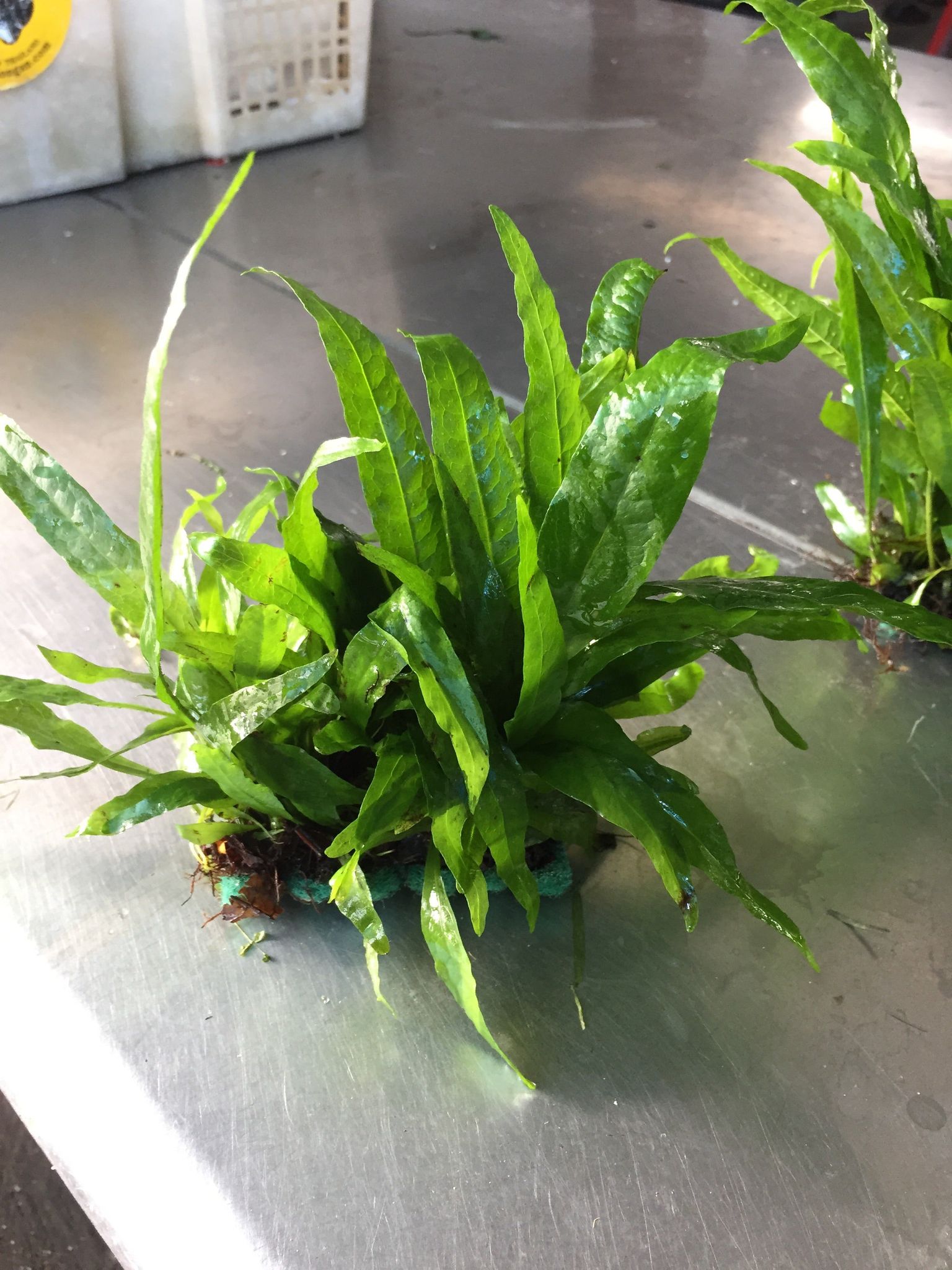
Java fern (Microsorum pteropus) is almost always propagated emersed — grown in air on a nursery bench rather than fully underwater. Those leaves are built for air, not water, so once the plant is submerged, the original leaves often blacken and dissolve while a new set of true aquatic leaves forms underneath.
This transition melt is expected on a freshly purchased plant and typically resolves within 2 to 4 weeks. Signs that you're looking at ordinary transition stress rather than a real problem:
- Only the oldest, original leaves are affected — new leaflets look fine.
- New growth is emerging from the rhizome even as older leaves die back.
- There's no foul smell and the rhizome itself still feels firm.
If leaves keep dying well past a month, new growth also looks sick, or the rhizome turns soft, something else is going on — keep reading.
The One Rule That Prevents Most Problems: Never Bury the Rhizome
Java fern is an epiphyte — in nature it grows attached to rocks and wood, not rooted in soil. The thick horizontal stem (the rhizome) needs to sit on top of the substrate or be tied/glued to hardscape, with its surface exposed to water flow.
Burying the rhizome — even partially, "to help it root" — is one of the most common mistakes with this plant. Substrate around the rhizome blocks oxygen exchange, and the tissue eventually rots and melts. If your plant was planted like a stem or rosette plant, unbury it now and attach it to driftwood or rock with thread, fishing line, or a plant clip until roots grip on their own (usually a few weeks).
A related but less obvious version of this mistake: pressing the rhizome too tightly flat against smooth hardscape with no gap for water movement underneath. Even without any burial, this can starve the rhizome of flow and mimic rot symptoms. Leave a little space or an uneven mounting surface so water can circulate around it.
Black Dots vs. Black Spots: Spores or a Problem?
Small, round, evenly spaced black dots on the underside of mature leaves are usually sori — clusters of spores. This is a sign the plant is healthy and mature enough to reproduce, not a disease, and no action is needed.
The distinguishing test:
| Feature | Normal spores (sori) | Real problem |
|---|---|---|
| Location | Underside of mature leaves only | Anywhere, including leaf edges/tops |
| Shape | Small, round, evenly spaced | Irregular blotches or streaks |
| Surrounding tissue | Firm, green, otherwise healthy | Yellowing, mushy, or developing holes |
| Progression | Stays static | Spreads or the leaf turns black/mushy |
If spotting comes with yellowing, tattering, or a mushy texture, treat it as a real problem and work through the causes below rather than assuming it's just spore production.
Common Causes of Real Melting and Browning
Ammonia or Poor Water Quality
Ragged black or brown patches, especially appearing quickly and on multiple leaves, often track with elevated ammonia or nitrite, or a tank that's overdue for a water change. Test your water: ammonia and nitrite should read 0 ppm, with nitrate at a moderate level. If parameters are off, do a partial water change and check your filtration and stocking level.
Rhizome Rot
A mushy, blackened, foul-smelling rhizome is rot — almost always from burial or from being pinned too tightly against hardscape with no flow. Reattach the plant with better exposure to water movement, and trim away any soft tissue with clean scissors before it spreads to healthy sections.
Excess Light and Algae Smothering
Java fern is a low-to-moderate light plant. Running a photoperiod or intensity meant for high-light, CO2-injected setups without matching fertilization invites algae to coat the leaves. A film of algae blocks light to the leaf surface underneath, and the shaded tissue can brown and die. This often shows up alongside a broader orange or brown algae film (commonly diatoms) on both leaves and glass — not directly toxic in small amounts, but a contributor to leaf decline if left unchecked. Reduce photoperiod, manually wipe leaves and glass, keep up with water changes, and consider algae-eating cleanup crew.
Tank Mates Damaging Leaves
Physical damage from goldfish, larger cichlids, or other plant-nibbling fish can look a lot like disease-driven browning — ragged edges, missing leaf tissue, or bruised patches that later blacken. Before assuming a water quality or nutrient issue, check whether your stocking includes species known to graze on or uproot plants.
Nutrient Deficiency
Java fern feeds mainly through its leaves rather than its roots, so deficiency symptoms show up in leaf color and texture. The general rule: mobile nutrients (nitrogen, potassium, magnesium) get relocated by the plant to new growth, so deficiencies show in old leaves first. Immobile nutrients (iron, calcium, boron) can't be relocated, so their deficiencies show in new growth first.
| Nutrient | Symptom | Where it shows |
|---|---|---|
| Nitrogen | Yellowing that turns translucent, leaf drop | Older/lower leaves first |
| Potassium | Small pinholes or brown spotting that spreads and tatters; stunted growth | Older leaves first |
| Iron (and other immobile micros) | New growth pale, yellow, or near-white with darker veins | New growth |
| Calcium/magnesium/boron | New leaves curl, twist, or come in deformed | New growth |
| Phosphate | Fading or melting, especially on older or red-leaved plants | Older leaves |
For a low-tech Java fern tank, root tabs generally aren't necessary since the plant isn't a heavy root feeder. A simple approach: dose a balanced liquid fertilizer with potassium and iron at a light, once- or twice-weekly rate following the product's low-tech dosing guidance, then watch new growth over 2 to 3 weeks and adjust up slightly if pale new leaves persist. Because Java fern grows slowly, don't expect overnight results — give any fix several weeks before judging whether it worked.
Healthy Java Fern Care Parameters
| Parameter | Range |
|---|---|
| Light | Low to moderate; 6–8 hours photoperiod max |
| Temperature | 68–82°F (20–28°C) |
| pH | 6.0–7.5 |
| CO2 | Optional — not required, but speeds growth and thickens leaves |
| Root feeding | Minimal; feeds mainly through leaves |
CO2 injection is worth mentioning because sources disagree on how essential it is. The honest answer for a beginner: CO2 is an accelerator, not a requirement. Java fern will grow — just slowly — in a low-tech tank with no CO2 at all. Adding it shortens recovery time after melt and produces thicker, glossier leaves, but skipping it won't stall the plant out.
What to Do When Leaves Are Already Melted
- Don't panic and pull the whole plant. A newly planted specimen in transition melt needs time, not intervention.
- Test your water. Rule out ammonia/nitrite before assuming it's "just Java fern being Java fern."
- Trim dead tissue. Fully melted, blackened, or mushy leaves won't recover — cut them off with clean scissors at the base of the affected leaf. This stops decaying tissue from fouling the water and lets the plant redirect energy to new growth instead of maintaining dying leaves.
- Fix the underlying cause. Reattach a buried or poorly mounted rhizome, cut back photoperiod if algae is the culprit, or start a light fertilizer dosing routine if symptoms match a nutrient gap.
- Be patient. Java fern is one of the slower-growing aquarium plants — expect visible improvement over weeks, not days.
A Bonus: Turn a Dying Leaf Into a New Plant
If a leaf is melting anyway, check its tip and margins for tiny plantlets — small new leaves with short roots that Java fern often produces there. Once a plantlet has a few leaves and short roots of its own, snip it free and tie or glue it to a new piece of hardscape. It's a useful way to salvage value from a leaf that was going to be trimmed off regardless.
Live Plant Basics for Beginners
If this is your first live plant, a few fundamentals apply well beyond Java fern:
- The light/CO2/nutrient tripod. Light drives growth speed; CO2 and nutrients need to scale up to match it. Push light without the other two and you invite algae, not faster plant growth.
- A cycled tank matters. Adding plants to an uncycled tank with active ammonia spikes stresses them just like it stresses fish.
- Some transition stress is normal. Melt and leaf drop on arrival aren't unique to Java fern — most aquatic plants shipped or grown emersed show some dieback before settling in.
Quarantining New Plants
New plants can carry hitchhikers: pest snails, planaria, hydra, algae spores, or pesticide residue from commercial growing. A 2 to 4 week quarantine in a separate container, with observation for pests before adding the plant to your display tank, catches most of these issues early.
Tissue-culture (in-vitro) plants are the exception — they're grown in sterile, sealed containers and are already pest- and pesticide-free, so they can generally skip quarantine. For plants from other sources, a brief dip in a diluted bleach, hydrogen peroxide, or alum solution before quarantine adds another layer of protection against hitchhiking pests. A good water conditioner and treatment on hand helps neutralize any residue before plants go into your main tank.
Getting the hardscape and substrate side of your setup right also reduces the odds of rhizome problems down the line — browse substrate options sized and textured for anchoring plants versus rooting them, and check LED lighting built for adjustable low-to-moderate photoperiods if algae has been an issue.
Frequently Asked Questions
Is it normal for a new Java fern to lose leaves after planting?
Yes. Most Java fern is grown emersed before sale, and the original leaves aren't adapted to being fully submerged. Expect some melt that resolves in 2 to 4 weeks as new aquatic-form leaves take over.
What are the black dots on Java fern leaves?
They're usually sori, or spore clusters, found on the underside of mature leaves. This indicates a healthy, established plant rather than disease — unless the surrounding tissue is also yellowing or turning mushy.
Should I cut off melted or brown Java fern leaves?
Yes. Trim dead or mushy tissue with clean scissors, leaving the rhizome and any healthy leaves intact. Dying tissue won't recover, and removing it prevents rot from spreading and keeps the water cleaner.
Can Java fern be planted in substrate like other plants?
No. The rhizome needs to sit on top of the substrate or be attached to driftwood or rock — never buried. Burial blocks oxygen exchange around the rhizome and leads to rot.
Does Java fern need CO2 or high light to stay healthy?
No. It tolerates low-to-moderate light and doesn't require CO2 injection. CO2 can speed up growth and produce thicker leaves, but it's an accelerator, not a requirement.
Why are my Java fern leaves turning yellow instead of black?
Yellowing points more toward a nutrient deficiency (commonly nitrogen or iron) or insufficient light than the ammonia burn or algae smothering typically behind black or brown spotting. Check leaf age against the deficiency pattern — older leaves yellowing suggests nitrogen, new growth turning pale suggests iron.
How long should I quarantine a new Java fern before adding it to my main tank?
Roughly 2 to 4 weeks for plants from typical retail sources. Tissue-culture (in-vitro) plants are grown sterile and pest-free, so they can usually skip quarantine.
Is the orange or brown algae growing on my Java fern harmful?
It isn't directly toxic in small amounts, but it can shade the leaf surface underneath and contribute to overall decline if it builds up. Manage it with a shorter photoperiod, manual cleaning, regular water changes, and algae-eating cleanup crew.
Ready to build out a healthier planted setup? Explore FishyHub's full range of freshwater livestock to find algae-eating cleanup crew and community fish that pair well with a low-tech, plant-friendly tank.

