Why Is My Flame Moss Melting or Turning Brown? Causes and Fixes
Flame moss can go from vivid green to blackened mush within days of coming home, and that shift alone doesn't mean it's dying for good. This guide walks through how to tell normal shedding from a real environmental problem, and gives a step-by-step fix for each cause so you can get the moss growing again.
What Flame Moss Is and What It Needs
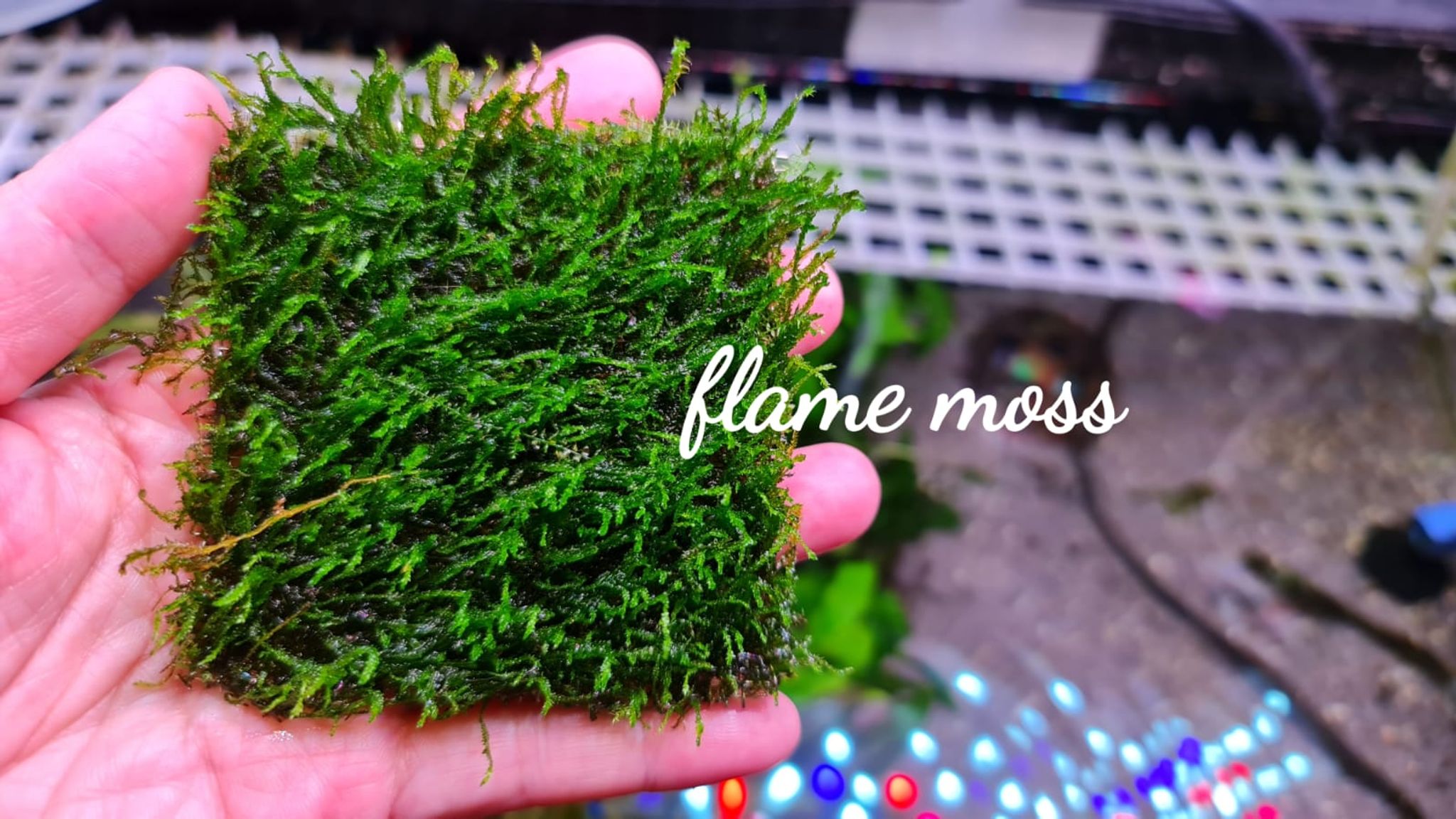
Flame moss is a Taxiphyllum species, a close relative of Java moss, prized for the way its fronds grow upright in tight, softly spiraling clusters that resemble small green flames rather than lying flat like most mosses.
Baseline care is forgiving:
- Light: roughly 10–20+ PAR, or low-to-medium on a standard LED fixture. More light produces tighter, more defined "flame" shapes; less light gives a looser, sprawling growth habit.
- CO2: not required. Growth is noticeably faster and denser with injected CO2, but plenty of low-tech tanks grow healthy flame moss with none.
- Temperature: tolerates roughly 65–85°F (18–29°C); prolonged heat above about 86°F (30°C) stresses it faster than most stem plants.
- pH: wide range, about 6.0–7.5.
- Fertilizer: no special feeding required, but it isn't feeding-proof either — a general liquid fertilizer or nearby root tabs supplying iron and other micronutrients keeps color deep green.
Melting vs. Browning: Two Different Problems
These two symptoms look similar at a glance but point to different causes and different urgency levels.
| Symptom | What's happening | Urgency |
|---|---|---|
| Melting | Leaflets or stems turn translucent, dark, or mushy and physically disintegrate | Trim immediately — dead tissue won't recover and can foul water |
| Browning | Color fades or darkens but the structure stays intact, no mush | Lower urgency — usually a light, flow, or nutrient imbalance to correct |
Melting is tissue death. Browning is a pigment or stress response. A mat can show both at once — melted sections at the core with a browning halo around them from reduced light and flow.
Is It Just Transplant Shock?
New-purchase shock is the single most common reason freshly planted flame moss blackens. Moss is often grown emersed (out of water) or under a different light and water chemistry regime than your tank, and when it's submerged it sheds the growth that adapted to those old conditions.
Expect some blackened tips in the first 1–3 weeks after planting. That's typically normal, especially if you also see fresh green shoots emerging from the base or sides of the mat.
Use this scope test to decide if it's shock or a real problem:
- Normal: a few blackened tips in weeks 1–2, with visible new green growth starting.
- A problem: the whole mat is browning or turning mushy, and there's no new green growth after 3–4 weeks.
If you're in the second category, work through the causes below in order, since they're listed roughly by how often they turn out to be the culprit.
The Ordered Troubleshooting Checklist
1. Transplant Shock (New Plants Only)
Covered above. If the moss is under a month old and shows scattered blackened tips plus new growth, give it time before changing anything else.
2. Poor Water Flow Through the Mat
Flame moss's dense, fine structure traps detritus easily. Stagnant pockets inside the mat suffocate the inner strands, and they turn brown or black from the inside out — often invisible until you part the moss and look.
Fix: reposition the mat or rock away from dead-flow corners, aim a filter outlet or small powerhead across it, and thin dense clumps so water can actually pass through rather than around the mass.
3. Too Little Light
Moss buried under hardscape, taller plants, or a shaded corner browns and grows sparse and leggy instead of holding its tight, vivid flame shape.
Fix: move it to a brighter mid-ground or foreground spot with direct light exposure.
4. Too Much Light Without Enough CO2 or Nutrients
This is where the CO2 question gets confusing. CO2 is genuinely optional for flame moss at low-to-moderate light — but if you raise the light intensity without adding CO2 or nutrients to match, algae outcompetes the moss and coats it, and the moss itself can bleach or brown from the stress of high light it can't use efficiently. The real culprit isn't the absence of CO2; it's mismatched high light paired with nothing to support the faster metabolism that light demands. Either add CO2 to match higher light, or bring the light back down — don't run one without the other.
5. Old-Growth Die-Off (Normal Maintenance)
As a flame moss mat thickens, it naturally sheds its oldest, innermost layers — the ones no longer getting light or flow once newer growth has grown up around them. This shows up as brown, mulch-like material buried inside an otherwise green, healthy mat. It's a maintenance cycle, not disease, and it's one of the most commonly misread symptoms by beginners.
6. Ammonia, Nitrite, or Unstable Parameters
An uncycled tank, overstocking, or infrequent water changes stress moss the same way they stress fish — and moss can show browning or slowed growth from ammonia/nitrite spikes even before your fish display obvious symptoms, especially in newer setups.
Fix: test ammonia, nitrite, and nitrate; do a 25–50% water change if anything is off; confirm the tank is fully cycled before adding sensitive moss.
7. Physical Smothering by Debris or Algae
Fish waste, uneaten food, and dense algae growth can physically block light and gas exchange at the mat's surface, compounding whichever cause got things started.
8. Excess Fertilizer or Liquid CO2/Carbon Overdose
Rare, but overdosing liquid carbon products (the glutaraldehyde-based type) can bleach or kill moss tissue outright. Always follow label dosing exactly, and hold off on dosing until the moss has acclimated rather than starting immediately at planting.
9. Temperature Extremes
Sustained heat above roughly 86°F (30°C) — a heater malfunction, a hot summer with no chiller, a tank near a sunny window — stresses flame moss faster than it stresses many stem plants.
How to Fix Melting or Browning Moss, Step by Step
- Trim away all dead, black, or mushy sections with clean scissors. Dead tissue does not recover, and leaving it in place can foul the water and seed rot in the healthy tissue right next to it.
- Improve circulation. Reposition the mat away from dead-flow zones, redirect a filter outlet across it, or add a small powerhead. Thin overly dense clumps so flow actually reaches the interior.
- Rinse out trapped debris. During water changes, gently rake the mat with a soft brush or agitate it with a turkey baster to dislodge detritus caught in the fronds.
- Adjust the light. Move the moss to a brighter spot if shade caused the browning, or reduce the photoperiod to 6–8 hours and add a diffuser (or simply raise the fixture) if excess light and algae are the issue.
- Stabilize water quality. Test ammonia, nitrite, and nitrate; do a water change if parameters are off; make sure the tank is fully cycled.
- Fertilize lightly. Even low-tech tanks benefit from a low dose of balanced liquid fertilizer with iron and other micronutrients — moss still needs them to hold green color, and skipping fertilization entirely is a common reason moss survives but stays pale.
- Go slow with liquid CO2/carbon. Follow label dosing exactly, and start only after the moss has settled in rather than on planting day.
- Be patient. Under corrected conditions, visible new growth typically shows up in 2–6 weeks.
Trimming and Re-Tying Without Adding Shock
When thinning a thick, self-shading mat, cut in small sections rather than shearing the whole thing at once — this avoids exposing every remaining strand to a sudden change in light and flow simultaneously. If you need to re-tie thinned moss to new hardscape, use thread, fine mesh, or a moss-safe glue, and keep the cuttings out of the water as briefly as possible during the process. Newly re-tied sections may show a few blackened tips of their own within a week or two; treat that the same as post-purchase shock rather than a new problem.
How to Attach Flame Moss So It Doesn't Rot
Attachment method matters more than most people expect. Tying or gluing moss to rock or driftwood, with the rhizoid (the base where it attaches) left exposed to water flow, lets oxygen and nutrients reach the whole mat. Burying moss directly in substrate — a common beginner mistake — smothers the base, cuts off oxygen, and causes rot that spreads upward through otherwise healthy growth. If you're setting up a new hardscape piece, a fine mesh or thread against a piece from the substrate category works better long-term than pressing moss into the gravel itself.
Aquarium Algae Control on Moss
Flame moss's fine, dense structure is a magnet for hair algae, beard algae, and cyanobacteria whenever light and nutrients are out of balance, because that same structure traps debris and slows flow — conditions algae thrives in more than moss does.
- Manual removal first. Dip or swish affected moss in an algae-fighting solution, or spot-treat, then rinse thoroughly before returning it to the tank. This is safer for the moss than dosing the whole tank with an algaecide.
- Algae-eating tankmates help. Amano shrimp, otocinclus catfish, and nerite snails will graze algae off moss without damaging it, and can be browsed in the small community fishes and shrimp categories.
- Fix the root cause. Wiping algae off without correcting light, nutrient, or flow balance just means it comes back. Treat algae as a symptom of an imbalance, not the primary problem.
Common Mistakes to Avoid
- Burying the moss in substrate instead of tying or gluing it to hardscape, causing the base to rot from lack of oxygen.
- Leaving dead, blackened strands in place "hoping they recover" — they won't, and they'll foul water and spread rot to nearby healthy tissue.
- Overreacting to normal post-planting shed by immediately dosing extra chemicals or cranking up the light, which usually compounds the stress instead of fixing anything.
- Placing moss in a dead-flow corner or under a canopy of taller plants, cutting off both light and circulation at once.
- Skipping fertilization because "moss doesn't need much" — in nutrient-poor low-tech tanks, moss often survives but browns or pales from a lack of iron and other micronutrients.
- Never trimming or thinning a mature mat — a thick, untouched mat shades and suffocates its own inner layers, creating a self-inflicted brown core that then gets blamed on water quality or light.
Frequently Asked Questions
Is it normal for new flame moss to turn black or brown right after planting?
Yes. Brief transplant shock from shipping and a change in water chemistry or light is common. Trim off the dead sections and watch for new green growth within the first few weeks — that's the sign it's recovering normally.
Can I save moss that has already turned brown and mushy?
Trim off the mushy, black parts entirely, since rotted tissue will not recover on its own. The remaining healthy green portions can regrow once the underlying cause (light, flow, or water quality) is corrected.
Does flame moss need CO2 to stay healthy?
No. It grows fine without CO2 under low-to-moderate light. CO2 simply speeds up growth and becomes more useful if you're running higher light levels that the moss needs to keep pace with.
How much light does flame moss need?
Roughly low to moderate, around 10–20+ PAR. Too little light causes leggy, dull, sparse growth; too much light without matching CO2 or nutrients invites algae and can stress the moss into browning or bleaching.
Why does my moss have algae growing on it, and is that causing the browning?
Slow water flow, excess light, or excess nutrients let algae colonize the moss's fine structure. Treat the algae directly and rebalance light, flow, and nutrients rather than assuming the moss itself is diseased.
How do I attach flame moss so it doesn't rot?
Tie or glue it to rock or driftwood with the base left exposed to water flow. Pressing it into substrate smothers the attachment point and causes it to rot from lack of oxygen.
How long does it take flame moss to recover after melting?
Typically 2–6 weeks of stable, corrected conditions before visible new growth fills back in. Patience matters more than repeated intervention during this window.
Can bad water parameters cause moss to brown even if fish seem fine?
Yes. Moss can show stress — browning, slowed growth — from ammonia, nitrite, or unstable parameters before fish display obvious symptoms, particularly in newer, not-yet-fully-cycled tanks.
Once your flow, light, and water quality are dialed in, keeping the rest of your setup stable is easier with the right gear — browse filters and lighting on FishyHub to fine-tune the conditions your flame moss needs to thrive.

