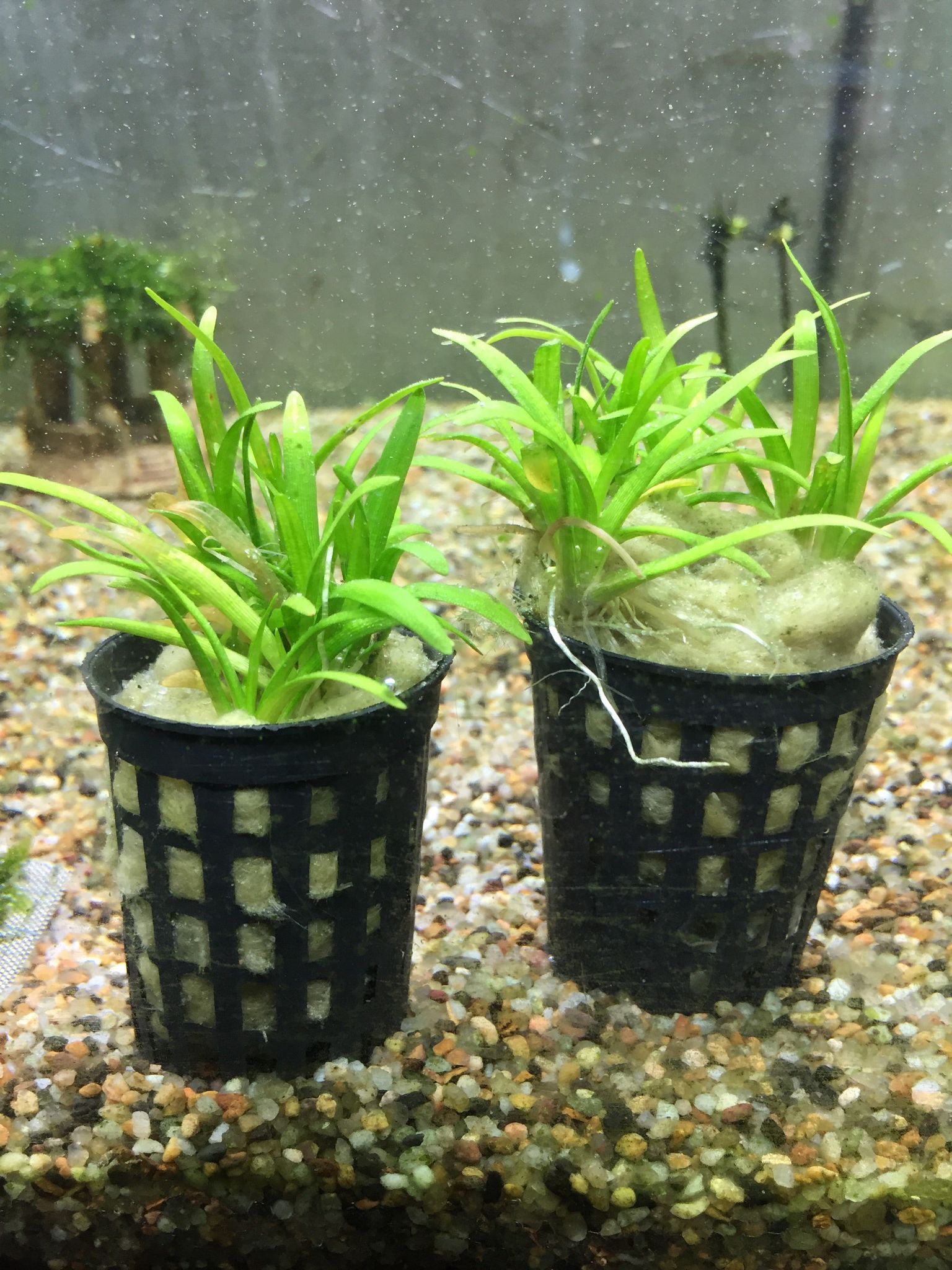
Why Is My Dwarf Sagittaria Melting or Turning Brown? Causes and Fixes
Dwarf sagittaria (Sagittaria subulata) melting or browning after planting is usually a normal adjustment period, not a dying plant. This guide walks through how to tell melting, browning, and yellowing apart, then works through the real causes — from transplant shock to lighting, nutrients, planting depth, and algae — so you know exactly what to fix.
Melting vs. Browning vs. Yellowing: Know Which One You Have
These three words get used interchangeably, but they point to different problems, so diagnosing the right one saves you from treating a plant that's actually fine.
- Melting: Leaf tissue turns translucent, goes mushy, and disintegrates or falls apart when touched. This is cell death combined with structural breakdown.
- Browning: Tissue dies and turns brown or black but keeps its shape — the leaf doesn't dissolve, it just discolors and eventually gets crispy or slimy at the edges.
- Yellowing: The leaf loses chlorophyll (the green pigment) but stays firm and intact. This is often the earliest warning sign, before melting or browning sets in.
| Symptom | What's happening | Common trigger |
|---|---|---|
| Melting (translucent, mushy) | Rapid cell death, tissue structure collapsing | Transplant shock, sudden stress (temperature, chemical exposure) |
| Browning (dead but firm) | Localized tissue death, often at base or tips | Crown rot, old-age turnover, physical damage |
| Yellowing (pale but firm) | Chlorophyll loss, plant still alive | Nutrient deficiency, too much or too little light |
Knowing which category you're looking at narrows the list of causes fast, so start there before assuming the worst.
The Most Common Cause: Transplant Melt After Purchase
If your dwarf sagittaria started melting within days to a couple of weeks of planting, this is almost certainly transplant melt, and it's the single most common reason for this question.
Most nursery-grown stock is raised emersed — grown in air, on land or in very shallow, humid trays — rather than fully submerged. The leaf tissue that forms in that environment is structured for air, not water. Once the plant goes underwater, those emersed-grown leaves are not built to survive there and begin to die back, regardless of how well you plant it.
The good news: as long as the roots and crown are intact, the plant regrows new submerged-form leaves from the crown and root system within roughly 2 to 4 weeks. This is expected, not a sign of a doomed plant.
How to Handle Transplant Melt
- Leave it planted. Don't uproot the plant to inspect the roots — this disturbs the very recovery process you're waiting on.
- Keep water quality stable. Avoid big parameter swings while the plant is adjusting.
- Trim off mushy, translucent leaf tissue close to the base so it doesn't decay in the tank and foul the water, but leave any green, firm tissue alone.
- Be patient. Two to four weeks with no visible new growth is normal; check the crown for small, pale new leaf spikes as the first sign of recovery.
Acclimating New Stock the Right Way
A little care at planting time reduces how dramatic the melt is:
- Rinse off any transport gel, wool, or preservative coating from the roots before planting.
- Remove any rockwool or foam plug still attached from the nursery pot — left in place, it traps debris and rots inside the substrate.
- If your tank has a history of algae outbreaks, a brief quarantine dip for new stock is a reasonable precaution.
- Plant promptly. Don't leave the roots exposed to air for an extended period while you finish aquascaping — dry-out adds another layer of stress on top of the transplant shock it's already dealing with.
Lighting Problems: Too Little or Too Much
Dwarf sagittaria is forgiving on light, but both extremes cause visible damage.
Too little light causes the plant to stretch toward the light source, grow pale and leggy, and eventually yellow and die back from lack of energy to sustain its leaves.
Too much light, especially without enough CO2 or nutrients to match it, triggers melting or yellowing directly, and it also gives algae the advantage — algae grows faster than the plant can use the excess light, and it ends up smothering and outcompeting the sagittaria.
Target range: roughly 20–40 PAR, which typically corresponds to a "low" to "medium" setting on a standard aquarium LED fixture. Reported ideal ranges do vary somewhat across sources — some suggest 20–35 PAR, others 30–60 — but the practical takeaway is the same: stay on the lower-to-middle end unless you're also running CO2 injection and a full fertilizing routine to support the extra light. A suitable LED fixture with adjustable intensity makes it easy to dial this in and adjust as the plant establishes.
Photoperiod length matters too, not just intensity. Running lights for 10+ hours a day — even at moderate intensity — gives algae more total light energy to work with, which can indirectly stress and shade the plant even though the sagittaria itself isn't the direct target. An 8-hour photoperiod is a reasonable, stable starting point.
Nutrient Deficiencies: Reading the Leaves
Dwarf sagittaria is a heavy root feeder — most of its nutrient uptake happens through the root system rather than the water column, which makes substrate quality especially important.
The pattern of yellowing tells you which nutrient is likely short:
- New leaves pale or yellowing, especially between the veins (interveinal yellowing): points to iron or micronutrient deficiency.
- Older, outer leaves yellowing or browning while new growth stays green and healthy: points to potassium or nitrogen deficiency, since these are mobile nutrients the plant pulls from older leaves to support new growth. Watch also for pinholes, leaf curling, or stunted new growth as additional nitrogen/potassium clues, distinct from the more general pale, interveinal look of an iron/micro shortage.
Fixing Nutrient Deficiencies
- Use a nutrient-rich planted substrate or aqua soil to feed the roots continuously, or
- In plain gravel or sand, push root tabs into the substrate near the root zone every 1–2 months.
- Supplement liquid iron/micronutrients and a balanced all-in-one fertilizer if you're not using a nutrient substrate, since gravel and sand offer essentially nothing on their own.
- A nutrient substrate or soil reduces how much you need to rely on dosing, while a plain substrate setup will need consistent root tab supplementation to avoid slow starvation.
Root tabs are technically optional in a rich aqua soil, but in inert gravel or sand they're close to essential — without them, the plant survives for a while on stored reserves before browning and yellowing set in gradually over weeks.
One caution: seeing yellowing and responding by dumping in extra fertilizer and CO2 all at once often backfires. Overcorrecting like this is a common mistake — it tends to trigger an algae bloom before the plant has time to actually absorb and use the added nutrients.
Planting Depth and Technique
Physical planting mistakes are an underrated cause of browning, particularly at the base of the plant.
- Crown placement: the crown — where the leaves meet the roots — needs to sit at or just above the substrate line. Bury it too deep and it can't exchange gases properly, which leads to rot and browning at the base. Plant it too shallow, and the whole plant floats free or gets uprooted by tank flow or fish activity.
- Root spread: roots should be spread out into the substrate, not balled up or bent upward (sometimes called "J-rooting"). Bent or balled roots rot and can't take up nutrients properly, which shows up later as unexplained yellowing.
Is Crown Rot Fixable?
It depends on how far it's progressed. A rotted crown itself typically does not recover — once that tissue has broken down, it's not coming back. But dwarf sagittaria spreads via runners (horizontal shoots that send up new plantlets), so a single melting or rotting plant isn't necessarily a total loss if it's already established a runner network nearby. Practically:
- Remove and discard the rotted crown section.
- Check for healthy runners or side shoots connected to or near the original plant.
- Separate healthy sections and replant them at the correct, shallower depth.
Caught early — before the rot has spread through the whole crown — replanting correctly is usually enough to save the plant.
Water Parameters and Stress-Triggered Browning
Dwarf sagittaria isn't a demanding plant on water chemistry. It tolerates:
- Temperature: roughly 68–82°F (20–28°C)
- pH: 6.0–8.0
- Hardness: moderate, with reasonable flexibility
The plant handles a wide range fine, but sudden swings in any of these — a large temperature drop, a pH crash, or a jump in hardness — can stress it into melting even if the new values are technically within its tolerance range. Stability matters more than hitting a precise number.
Other stress triggers worth ruling out if an established plant suddenly starts melting or browning with no other obvious cause:
- A water change using water with residual chlorine or chloramine that wasn't properly conditioned.
- An ammonia spike, often from overfeeding or an overloaded filter.
- A sudden change in photoperiod length or a light fixture swapped for a much brighter one overnight.
Old Leaves Turning Yellow: Is That Normal?
Yes, in most cases. As dwarf sagittaria grows, it naturally sheds its older, outer leaves as it redirects energy toward new growth — this is normal turnover, not a crisis, as long as the new leaves coming in look healthy, green, and firm. This is the same mobile-nutrient pattern described above: the plant pulls resources from old leaves before letting them go. Don't panic and start dosing extra fertilizer the moment you see one or two older leaves yellow at a time.
Is It Algae, Not the Plant?
This is one of the most common misdiagnoses. Black beard algae, brown diatoms, or a green film growing on sagittaria leaves is frequently mistaken for the plant itself browning or dying, when the plant tissue underneath is actually fine.
The test: try to rub or scrape the discoloration off the leaf.
- If it comes off, or you can see it's a fuzzy or filmy layer sitting on top of the leaf surface, it's algae, not plant damage.
- If the brown or mushy tissue is part of the leaf itself and doesn't wipe away, that's genuine plant tissue death.
This distinction matters because the fix is completely different. Trimming healthy leaves because you mistook algae for disease doesn't solve anything — you need to address the light, nutrient, or photoperiod imbalance feeding the algae instead.
Brown diatom film on a newly set-up tank is especially common in the first few weeks as the tank cycles and silicate levels are still high. This is generally cosmetic and self-limiting — it typically clears on its own as the tank matures and stabilizes, without any special treatment.
The Siesta Method for Algae Outbreaks
When algae — particularly black beard algae or a green water/dust bloom — is actively competing with your sagittaria for light and nutrients, a short blackout technique called the siesta method can help reset the balance. The idea is to sharply reduce or fully black out the tank's lighting (and cut back or pause fertilizer dosing) for several days up to about a week, which starves the algae of the light energy it needs while most healthy, established plants — including dwarf sagittaria — tolerate the brief low-light period without lasting harm.
This ties directly back to the algae-vs-plant diagnostic above: if what looked like "browning" turns out to be algae competing with the plant, a siesta period addresses the actual cause instead of the plant itself.
Common Mistakes That Make Things Worse
- Uprooting a melting, newly planted sagittaria to check the roots. This disturbs the recovery process; leave it alone for 2–4 weeks instead.
- Planting too deep, or leaving roots balled up or bent upward.
- Running high-intensity lighting without CO2 or fertilizer to match it, which invites algae and stresses the plant simultaneously.
- Never dosing root tabs or liquid fertilizer in inert substrate, leading to slow nutrient starvation that shows up weeks later as browning.
- Mistaking algae for plant disease and trimming healthy leaves instead of correcting the light or nutrient imbalance behind the algae.
- Leaving decaying, melted leaf matter in the tank, which can spike ammonia or organics, especially in smaller tanks.
- Overcorrecting with a burst of extra fertilizer or CO2 the moment you see yellowing, which often triggers an algae bloom instead of fixing the plant.
Does Dwarf Sagittaria Need CO2 or a Special Substrate?
No. It's a genuinely beginner-friendly, low-tech-compatible plant that grows fine in plain substrate with root tab supplementation and low-to-medium light. Supplemental CO2 is not required, but it does speed up growth and helps the plant outcompete algae under higher light — if you add CO2, pair it with adequate fertilizing, or the plant can stall and yellow instead of benefiting.
Frequently Asked Questions
Is melting after planting normal, or is my plant dying?
In most cases it's normal, not a sign of a dying plant. As long as the roots and crown are intact, this is typical transplant melt, and new submerged-form leaves regrow from the crown within a few weeks.
How long does it take dwarf sagittaria to recover from melt?
Typically 2 to 4 weeks for new submerged growth to appear, assuming the roots and crown were left undisturbed and water quality stayed stable during that time.
Should I remove melted or brown leaves?
Yes — trim off mushy, translucent, or clearly dead tissue near the base so it doesn't decay and affect water quality. Leave any firm, green growth alone, even if it looks a little rough.
Why are only the older, outer leaves turning yellow while new leaves look fine?
This is usually normal leaf turnover, or a mobile-nutrient deficiency like potassium or nitrogen, where the plant pulls resources from older leaves to support new growth. It's generally not a crisis if the new leaves are healthy.
Does dwarf sagittaria need CO2 or special substrate to survive?
No — it's beginner-friendly and grows fine in plain substrate with root tabs and low-to-medium light. CO2 and a nutrient-rich substrate speed up growth but aren't required for the plant to survive.
How do I tell if it's algae or the plant itself browning?
Try to rub or scrape the discoloration off the leaf. Algae sits on the surface and can usually be wiped or scraped away; true plant tissue damage is part of the leaf itself and won't come off.
Can crown rot be fixed, or do I need to replant?
A rotted crown itself typically won't recover and should be removed and discarded. If healthy runners or side shoots are still attached or growing nearby, separate them and replant at the correct, shallower depth.
If you're setting up a new dwarf sagittaria planting or troubleshooting an existing one, browsing options for substrate and lighting can help you match the setup to what this plant actually needs, rather than guessing after the fact.

