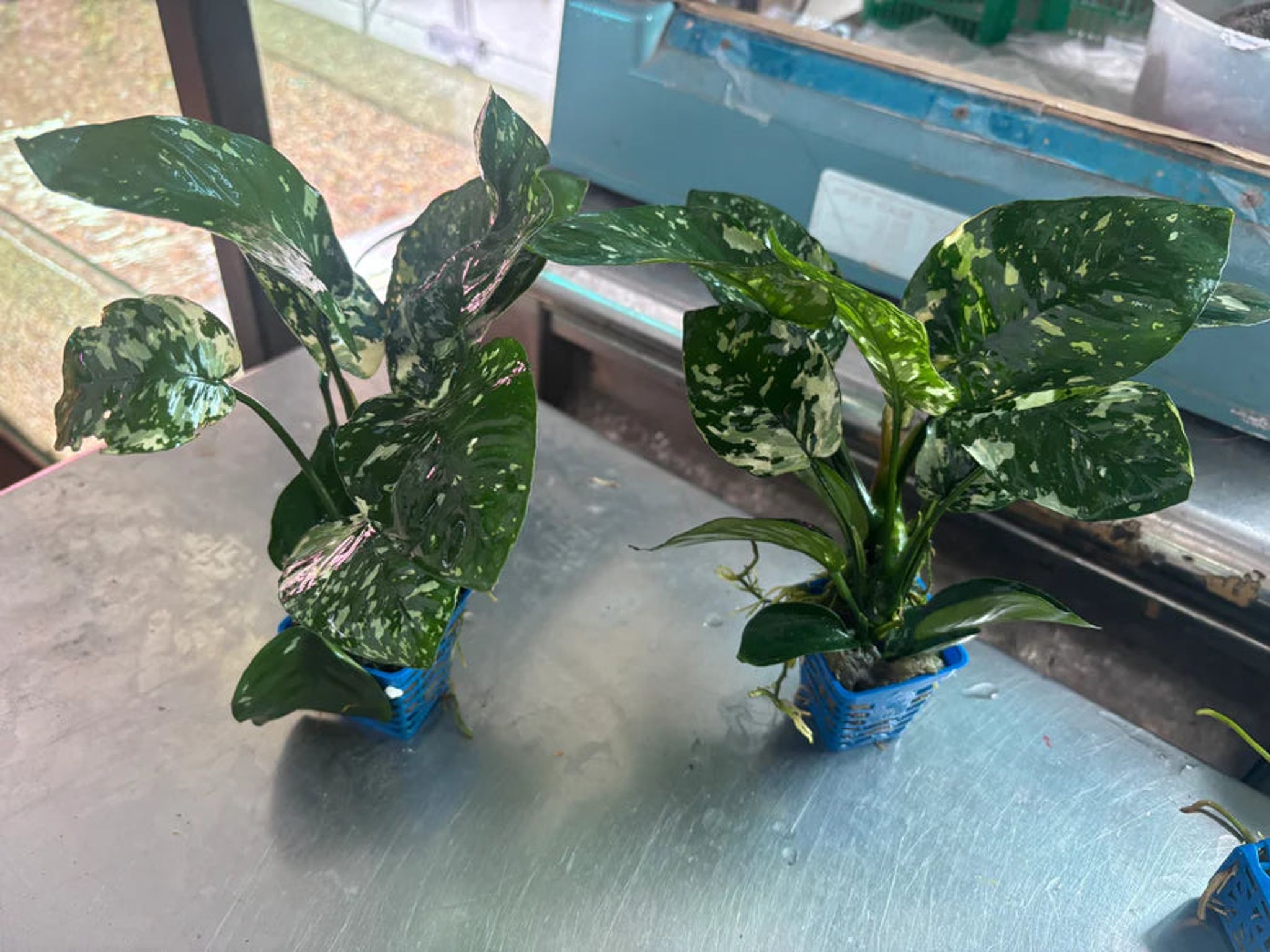
Why Is My Anubias Melting or Turning Brown? Causes and Fixes
A melting or browning Anubias is rarely a death sentence, but it does need a quick diagnosis. The fix depends entirely on whether the rhizome (the thick horizontal stem the leaves grow from) is still firm, or has gone soft and rotten — this guide walks through both paths plus the separate issue of algae-driven browning.
Start Here: Check the Rhizome First
Before doing anything else, gently squeeze the rhizome between two fingers. This single check tells you which of three problems you're dealing with:
- Firm, green or tan rhizome with soft, translucent, or dissolving leaves = normal transition melt. Leave it alone.
- Mushy, discolored (white, yellow, brown, or black), jelly-like rhizome, possibly with a foul smell = rhizome rot. Act now.
- Firm rhizome with intact but spotted, yellowed, or algae-coated leaves = a nutrient, lighting, or algae issue, not rot.
This order matters. Anubias is an epiphyte — in nature it grows attached to wood and rock above the substrate, absorbing nutrients through its roots and leaf surface rather than from buried soil. The rhizome is never meant to be planted in gravel or sand. Understanding that single fact resolves most of the confusion between ordinary melt, real rot, and cosmetic browning.
Ordinary Melt: What It Is and Why It Happens
"Melting" describes leaves turning soft, translucent, yellowish-brown, and eventually dissolving, while the rhizome underneath stays firm. It's extremely common in the first 2 to 4 weeks after buying an Anubias, and in most cases it's a normal transition, not disease.
Common triggers:
- Emersed-to-submersed conversion. Many Anubias sold in stores are grown emersed (above water) at a nursery. Once submerged, the plant sheds its old air-adapted leaves and redirects energy into growing new underwater leaves.
- Parameter swings during acclimation — sudden shifts in temperature, pH, or hardness between the bag/pot water and your tank.
- Shipping stress or cold exposure in transit, especially in colder months.
- Ammonia, nitrite, or nitrate spikes in a new, still-cycling tank. A brand-new or recently set up tank is far more likely to trigger melt than an established one, simply because the water chemistry is less stable.
- Poor circulation or stagnant spots around the plant, which let waste products and low oxygen linger near the leaves.
The Fix: Do Less, Not More
The most common mistake is panicking and pulling the plant at the first sign of trouble. Instead:
- Trim off mushy or clearly dead leaf tissue with clean scissors — don't leave decaying material sitting on or near the rhizome, since it invites bacteria.
- Leave the rhizome and any firm, green leaves alone.
- Keep water parameters stable rather than trying to hit "perfect" numbers.
- Wait. New growth typically appears within the 2–4 week window.
Rule of thumb: if there's still no new leaf growth after 4 to 6 weeks with stable parameters, stop waiting and start investigating — check for early rot signs or a nutrient deficiency instead of assuming it will resolve on its own.
Rhizome Rot: The Serious Version
Rot is a genuine infection of the rhizome tissue, most likely bacterial or fungal. It looks and behaves differently from melt:
| Sign | Ordinary melt | Rhizome rot |
|---|---|---|
| Rhizome texture | Firm | Mushy, jelly-like |
| Rhizome color | Green or tan | White, yellow, brown, or black patches |
| Smell | None | Often foul |
| How leaves detach | Soften and dissolve gradually | Detach cleanly at the base, tissue soggy |
| Nearby roots | Normal | Often blackened and rotting too |
| Timeline | 2–4 weeks, then recovers | Progresses if untreated |
What causes it: the most common trigger is a buried rhizome, which cuts off oxygen exchange. Wrapping the rhizome too tightly with thread or excess glue does the same thing. Left-over decaying leaf litter near the rhizome also builds up bacteria in exactly the spot you don't want it.
There's some debate about whether rot is purely mechanical (the physical stress of burying or over-gluing) or a specific pathogen taking hold. The most useful way to think about it: mechanical stress is the trigger, and opportunistic bacteria or fungus do the actual damage once the tissue is compromised. That's why prevention — never burying the rhizome, using minimal glue, and maintaining flow — matters more than any single treatment.
Treating Rhizome Rot
- Cut away all mushy, discolored tissue with a sterilized blade, working back until you reach firm, healthy rhizome. Don't stop at the first clean-looking millimeter — any soft tissue left behind can keep spreading.
- If a good amount of healthy rhizome remains, you can split it into separate pieces; each piece with intact, firm tissue can regrow on its own.
- Re-attach the surviving piece loosely to hardscape (driftwood or rock) using thread or a small amount of glue on the roots only — never wrapped across the rhizome itself — and position it somewhere with good water flow.
- If you want extra insurance, a brief, diluted hydrogen-peroxide dip on the remaining healthy tissue can be used as an optional precaution. Sources disagree here: some recommend hydrogen peroxide, potassium permanganate, bleach dips, or antibiotics as rot treatments, while others say none of these reliably cure established rot. The trimming itself is the reliable fix — treat any chemical dip as a supplement, not a substitute for cutting away infected tissue.
- If the entire rhizome has turned to mush with no firm sections left, the plant is not salvageable and should be discarded.
Can a rotted Anubias be saved? Usually, yes — as long as some rhizome tissue is still firm when you catch it.
Browning That Isn't Melting or Rot
If the rhizome is firm and leaves are intact (not dissolving) but showing yellow-to-brown discoloration, spotting, or a dulled color, you're looking at a different category of problem: nutrient imbalance, lighting, natural aging, or algae.
Nutrient Deficiency
Anubias is a slow grower that doesn't need CO2 injection or heavy dosing, but it does pull some nutrients through its leaves and roots and can show deficiency symptoms:
- Potassium, iron, or nitrogen deficiency: yellowing combined with brown patches, stunted growth, sometimes a purplish tint on new leaves.
- Phosphate deficiency: stunted growth, yellowing, brown patches, and leaf drop.
Since Anubias is low-tech, light fertilization goes a long way. Root tabs placed near — never directly under — the rhizome, plus an occasional dose of liquid fertilizer, are usually enough to correct color issues over a few weeks. There's no need for a stem-plant-level dosing schedule.
Lighting Issues
Anubias is a classic low-to-moderate light plant. Too little light can cause loss of pigment and browning; too much light — especially without matching nutrients or CO2 — fuels algae growth that coats and browns the leaf surface. If you're running lighting meant for demanding stem plants, that mismatch is often the real culprit behind both browning and algae.
Natural Leaf Senescence
If only the oldest leaves — usually the lowest ones, closest to the substrate — are yellowing and dying off while newer leaves look healthy, that's normal turnover, not a problem. Trim the old leaf once it's clearly spent; there's no need to treat this as disease.
Phosphate's Double Role
Phosphate is not toxic to fish and plants genuinely need it — a workable range for planted tanks is roughly 0.05–1.5 ppm. Too little causes the deficiency symptoms above. Too much, usually from overfeeding, tap water, or overdosed fertilizer, feeds algae blooms, including green spot algae and black beard algae. So algae-driven browning is usually a rebalancing problem — light, nutrients, and flow together — rather than something you can fix by scrubbing leaves alone.
Black Spots and Algae on Anubias Leaves
Not every dark mark on an Anubias leaf is the same thing. Before treating anything as disease, scrape it gently and look at the texture:
- Fuzzy or wiry texture that lifts off → likely algae.
- Flat, embedded, and part of the leaf surface → likely natural dark biofilm, melanin-like patches, or deficiency spotting, not algae.
Black Beard / Black Brush Algae
Despite the name, this red-algae-family species can appear black, dark green, gray, or reddish, growing as dark, wiry tufts. It thrives on excess organics and high nitrate/phosphate from overfeeding or overstocking, inconsistent CO2, and poor flow or filter maintenance.
Treatment:
- Manually remove what you can by hand or with an old toothbrush.
- Spot-treat remaining patches with diluted hydrogen peroxide or a liquid-carbon product.
- Fix the root cause: reduce feeding, do more frequent water changes, and improve flow — otherwise it comes back.
Green Spot Algae
This shows up as hard, crusty, light-green dots, usually on older or slow-growing leaves — Anubias is a common target because it grows slowly enough for the dots to establish. It's tied to a light/phosphate imbalance rather than one single cause; some sources blame phosphate deficiency, others blame excess light. The more accurate framing is too much light relative to the phosphate and CO2 actually available. Remove it by scraping the leaf or letting algae-eating snails handle it, and rebalance your lighting duration or dosing so it doesn't return.
Keeping Algae in Check Generally
A few habits protect Anubias leaves from most algae issues at once:
- Keep lighting to a consistent 6–8 hours per day.
- Do regular water changes rather than letting nutrients build up.
- Avoid overfeeding.
- Dose fertilizer in balance with your light level, not more "just in case."
- Add an algae-eating cleanup crew — nerite snails, amano shrimp, and otocinclus are common choices you can browse in FishyHub's algae eater category.
- Remove visible algae manually as routine maintenance instead of waiting for it to spread.
A General Troubleshooting Checklist for Aquarium Plants
If a plant — Anubias or otherwise — looks off, work through this order before assuming disease:
- Rhizome or crown firmness (for rhizome plants like Anubias and Java fern).
- Leaf color and texture — soft and translucent vs. spotted vs. dry and crumbly.
- Water test results — ammonia, nitrite, nitrate, and phosphate.
- Lighting duration and intensity — too many or too few hours, or too much intensity for the plant.
Only after ruling these out should you treat the issue as an infection or a pest problem.
Why Anubias Browns More Than Other Plants Sometimes
Brown leaves on aquarium plants generally trace back to one of the same handful of causes: nutrient deficiency (iron, nitrogen, potassium, phosphate), inadequate or excessive lighting, ammonia/nitrite/nitrate spikes in an unstable tank, natural decay, or algae smothering the leaf surface. Anubias shows these symptoms more visibly than fast-growing stem plants simply because it grows slowly — a damaged or algae-coated leaf sticks around for months instead of being quickly replaced by new growth.
Anubias in the Low-Light Plant Category
Anubias belongs to a small group of hardy, low-light, no-CO2-required plants that tolerate a wide range of beginner setups — alongside Java fern, Anubias nana petite, various mosses, and dwarf sagittaria. If you're deciding whether Anubias fits your tank, this is useful context: it's forgiving on lighting and doesn't need pressurized CO2, but that same slow growth rate means algae and leaf damage are more visible and take longer to grow out.
A Note on Anubias Varieties
Smaller varieties — nana, nana petite, and similar compact cultivars — have thinner rhizomes than standard barteri or coffeefolia types. A thinner rhizome has less healthy tissue to work with if rot sets in, so it can go from "a rotten patch" to "no salvageable rhizome" faster. If you're growing a petite variety, check the rhizome a little more often and act on rot signs immediately rather than waiting.
Water Parameters and Setup That Prevent Most Problems
Most melt, rot, and browning issues trace back to setup and stability rather than a single "cure." Anubias does best with:
- Temperature: roughly 72–82°F (22–28°C)
- pH: 6.0–7.5
- Water hardness: soft to moderately hard
- Light: low to moderate — no CO2 injection required
- Flow: gentle to moderate — avoid both strong direct current on the leaves and fully stagnant dead spots
Keeping these stable matters more than chasing a "perfect" number. If you're setting up hardscape for a new Anubias, a substrate chosen for stability under driftwood or rock, along with a filter sized to give gentle, even circulation, both help avoid the stagnant zones and current extremes that stress the plant.
New Purchase Checklist
- Never bury the rhizome — tie or glue it (roots only, minimally) to hardscape sitting on top of the substrate.
- Acclimate slowly to reduce parameter-swing shock.
- Consider a brief dip — some hobbyists use a diluted potassium-permanganate or hydrogen-peroxide rinse — before adding a new plant to a display tank, mainly to knock down algae spores or hitchhikers on arrival. This is optional, not a guaranteed cure for anything already established on the plant.
- Expect some melt in the first 2–4 weeks, especially in a newer or still-cycling tank.
Frequently Asked Questions
Is my Anubias dying or just melting?
Check the rhizome. If it's firm and green or tan, this is a normal transition melt and the plant should recover within a few weeks. If the rhizome is mushy, discolored, or smells foul, it's rot and needs immediate trimming.
How long does Anubias melt last?
Typically 2 to 4 weeks after introduction to a new tank, as the plant converts from emersed to submersed growth. New leaves should appear during or shortly after this window; if nothing new shows after 4 to 6 weeks, investigate further.
Can I save an Anubias with rhizome rot?
Usually, yes — cut away all mushy, discolored tissue back to firm, healthy rhizome and reattach the remainder to hardscape with good water flow. If the entire rhizome has turned to mush with no firm section left, the plant likely won't recover.
Why are only my Anubias's oldest leaves turning brown?
This is most likely natural leaf senescence — normal turnover as older leaves near the substrate age out — especially if the newer leaves look healthy. Trim the spent leaf and don't treat it as disease.
What water parameters does Anubias need to avoid stress?
Roughly 72–82°F (22–28°C), pH 6.0–7.5, low-to-moderate light, and gentle-to-moderate flow. Stability matters more than hitting an exact number.
Does Anubias need CO2 or strong fertilizer to stop it browning?
No. Anubias is a low-tech plant that grows fine without CO2 injection or heavy dosing. Browning is more often a light or nutrient imbalance, or algae, than a lack of CO2 — though light root tabs near the rhizome and occasional liquid fertilizer support better leaf color.
What are the black spots or fuzz on my Anubias leaves?
Usually black beard or black brush algae caused by excess nutrients, overfeeding, and inconsistent flow or CO2 — not a plant disease. Fix it by adjusting feeding and water-change habits and spot-treating the affected leaves.
Should I trim melted or browning Anubias leaves?
Yes — remove clearly dead, mushy, or heavily algae-covered leaves with clean scissors to cut down on bacterial load and let the plant redirect energy into healthy growth. Leave otherwise-green, intact leaves alone even if they look a little dull.
If you're setting up or restocking a low-tech planted tank, browse FishyHub's treatment and water conditioning products for the fertilizers and dips mentioned above, alongside substrate and filtration built for stable, plant-friendly conditions.

