Why Is My Amazon Sword Melting or Turning Brown? Causes and Fixes
A newly planted Amazon sword that turns yellow, goes see-through, and dissolves into mush within a week or two is one of the most common freshwater plant scares — and most of the time it is not a disaster. This guide walks through how to tell normal adjustment melt apart from a real nutrient, lighting, or algae problem, and exactly what to do about each one.
First, Is This Normal "Transition Melt"?
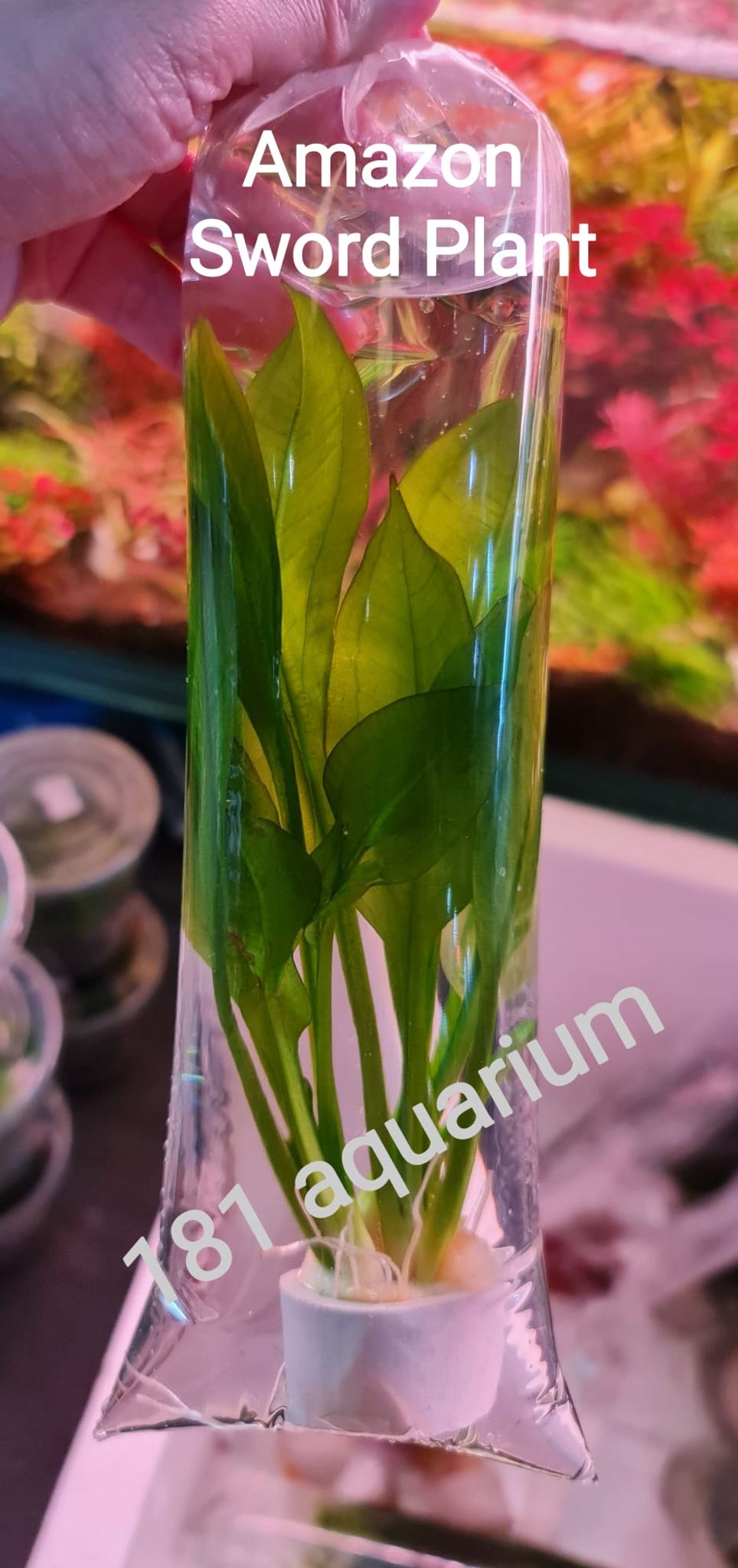
Most Amazon swords sold to hobbyists are farm-raised emersed — grown above water in humid greenhouse beds, not underwater. The leaves that form in open air have a different structure than submersed leaves and simply cannot survive once fully submerged. When you plant one, those original leaves are already living on borrowed time.
Expect this sequence over the first 1–3 weeks:
- Older leaves yellow at the edges or tips
- They turn translucent and limp
- They eventually collapse into mush
This is transition melt, and it's normal. The plant is sacrificing its air-grown leaves while it pushes energy into new, thinner, more flexible submersed-form leaves from the crown. As long as new growth is emerging from the center of the plant while old leaves die off, the plant is doing exactly what it's supposed to do.
The key distinction to track: if only the original nursery leaves are dying and new leaves look normal, that's transition melt. If newly grown leaves also start yellowing, developing holes, or melting, you're looking at an ongoing problem — usually nutrients or water quality — not a one-time adjustment.
A Quick Diagnostic Path
Work through these checks in order before assuming the worst:
- How long has it been planted? Under 3 weeks and only old leaves affected → likely normal melt, be patient.
- Check planting depth. Is the crown buried?
- Wipe a brown leaf with your finger. Does a dusty brown film come off, leaving green tissue underneath?
- Compare new growth to old growth. Are new leaves showing the same symptoms as the ones that died?
- Check water parameters and fertilizing history. Any recent swings, or has the plant never been root-fed?
Planting Depth: The Crown Is Everything
The crown is the base of the plant where all the leaves emerge and where new roots and leaves originate. It must sit at or slightly above the substrate line — never buried.
Burying the crown traps it in an anaerobic pocket, which causes rot at the base. Crown rot looks similar to melt at first glance but won't stop once the original leaves are gone, because the plant's growth point itself is compromised. If you suspect this, gently expose the crown so it sits just above the substrate surface rather than replanting the whole thing repeatedly — excessive handling and repeated uprooting is itself a major stress factor that delays root establishment and triggers additional melt.
Nutrient Deficiencies: The #1 Cause Beyond Transition Melt
Amazon swords are heavy root feeders. If transition melt is dragging on past 3–4 weeks, or an established, previously healthy sword suddenly starts browning, nutrient deficiency is the most likely culprit — especially in tanks with plain gravel or sand and no substrate fertilization.
Symptom-by-Symptom Deficiency Guide
| Nutrient | What you'll see | Where it shows first |
|---|---|---|
| Nitrogen | Yellowing and translucency, starting at leaf tips | Older, lower leaves |
| Potassium | Small pinholes rimmed brown or yellow, enlarging over time | Older leaves |
| Iron | Yellow/pale leaf tissue with veins staying dark green (interveinal chlorosis) | Newest leaves |
| Calcium | New leaves emerge twisted or gnarled | New growth |
| Magnesium | Pale leaves with darker veins; tied to very soft water | New/all leaves |
General overlap symptoms across most deficiencies include stalled growth, general yellowing, and sudden melt of a plant that had been stable for weeks or months. If you're seeing any of these on new growth specifically, treat it as a deficiency rather than transition melt.
Why Aquarium Plants Turn Transparent
Transparent, glassy-looking leaves are most often a sign of potassium deficiency, or a continuation of transition melt in tanks with soft water and inert (non-nutritive) substrate. The fix is the same either way: substrate-level fertilization plus a liquid fertilizer that includes potassium, since water-column dosing alone often isn't enough to reach a root feeder's actual uptake point.
Fixing Nutrient Problems: Root Tabs and Liquid Fertilizer
Amazon swords absorb the bulk of their nutrition through their root system, so root tabs pushed into the substrate near the crown are the single most effective fix for browning tied to deficiency.
- Place root tabs roughly every 5–6 inches (13–15 cm) around a mature sword's root zone; larger, more established plants benefit from more tabs.
- Pair root tabs with a weekly all-in-one liquid fertilizer, dosed after water changes, to cover nutrients the roots can't fully capture.
- Give the plant 2–3 weeks before reassessing — new growth needs time to show whether the fix is working.
- Replace root tabs every 4–6 weeks, or sooner if new deficiency symptoms appear on fresh leaves. Young, actively growing plants deplete tabs faster than mature ones.
Liquid Fertilizer vs. Root Tabs — Know the Difference
| Type | Best for | How it feeds the plant |
|---|---|---|
| Liquid ("water column") fertilizer | Stem plants, floating plants, and general micronutrient top-up | Absorbed through leaves and fine roots suspended in the water |
| Root tabs | Heavy root feeders like Amazon swords, crypts | Absorbed through the root system in the substrate |
Most tanks with swords need both: a liquid all-in-one for general water-column nutrition and light micronutrient coverage, and root tabs specifically for the sword's root system. Dose based on plant mass and light intensity, not just tank volume — a heavily planted, brightly lit tank consumes nutrients much faster than a lightly stocked one.
A Simple Starter Fertilizing Schedule
For low-tech, low-light beginner tanks, this routine is normally enough:
| Task | Frequency |
|---|---|
| All-in-one liquid fertilizer dose | Once weekly, after a water change |
| Root tab replacement | Every 4–6 weeks |
| Water change (25–30%) | Weekly |
Higher-light or CO2-injected setups need more frequent, higher-volume dosing since faster growth burns through nutrients faster. If your substrate is plain gravel or sand rather than an aquasoil, lean more heavily on root tabs — inert substrates have no built-in nutrient reserve, so the sword is entirely dependent on what you feed it directly.
Lighting: Too Little or Too Much
Amazon swords do best under moderate light for 6–8 hours a day, up to 10 hours on a timer for consistency.
- Too little light slows photosynthesis, leading to weak, yellowing growth and melt from insufficient energy production.
- Too much or overly intense light can scorch leaf tips brown, and — more commonly — creates an imbalance where light output outpaces available CO2 and nutrients. That mismatch stresses the plant and fuels algae growth on the leaves, which itself contributes to a dull, browning look.
The instinct to "add more light to help it grow" when a plant is already struggling usually backfires: it increases algae competition and stress rather than solving the underlying issue. Scale light, CO2, and fertilization together rather than adjusting one in isolation. A basic timer-controlled LED fixture makes it easy to keep the daily schedule consistent, which matters as much as intensity for reducing stress-related browning — you can browse timer-compatible options in FishyHub's lighting selection.
Water Parameters That Matter
Amazon swords tolerate a fairly wide range, but steady growth happens within a narrower band:
- Temperature: 72–82°F (22–28°C)
- pH: tolerated from about 6.5–7.8, but 6.5–7.5 is ideal for consistent growth
- Hardness: moderate; very soft water increases the risk of calcium/magnesium deficiency
Swings outside these ranges, or inconsistent water changes that let parameters drift, stress the plant and accelerate leaf loss on top of anything else going on. If you're in an especially soft-water area, test hardness directly — calcium and magnesium deficiency is easy to miss as a root cause when the leaves just look generally pale or twisted.
Brown Algae (Diatoms): Not the Same as Rot
A dusty, brown film coating older sword leaves, the glass, and substrate is almost always diatom algae, not disease. It's extremely common in tanks in their first 2–8 weeks as silicates and excess nutrients spike before the tank fully matures, and it also shows up in low-light or newly set-up systems generally.
The wipe test: run a finger or soft brush across the leaf. If a brown film comes off easily and leaves healthy green tissue underneath, that's diatoms — cosmetic, not fatal. If the leaf itself feels mushy or is visibly disintegrating under the coating, that's true melt or rot, and the leaf should be trimmed.
To manage a diatom bloom:
- Do regular water changes to keep silicates and nutrients in check
- Increase light duration or intensity modestly if it was very low to begin with
- Add algae-grazing cleanup crew such as nerite snails or otocinclus — FishyHub stocks algae-eating fish suited to community tanks
- Wipe glass and leaves manually in the meantime
- Be patient — diatoms typically clear on their own as the tank cycles and silica depletes
General Aquarium Plant Care That Reduces Browning
A few habits reduce stress-related leaf loss across species, not just Amazon swords:
- Keep temperature stable within 72–82°F
- Run lighting on a consistent daily schedule via a timer
- Do partial water changes of 25–30% weekly
- Provide a nutrient-rich substrate or root tabs from the start — substrate options that support root feeders reduce how much fertilizing you need to do manually
- Avoid disturbing roots once a plant is established
New plants also benefit from a quick rinse before planting, to remove transport gel and any pesticide residue that can occasionally cling to shipped stock — a simple preventive step that's rarely mentioned alongside melt discussions but costs nothing to do.
Trimming: What to Cut and When
- Cut off dead, dying, or mushy leaves at the base with clean scissors as soon as you notice them.
- Never remove healthy green leaves — the plant needs them for energy while new growth establishes.
- Removing dead tissue prevents it from decaying in the tank, which can spike ammonia and feed algae.
- Melting leaves will not green back up or recover — always remove rather than wait and see.
Common Mistakes to Avoid
- Panicking and repeatedly replanting a newly planted sword — this resets root establishment every time.
- Burying the crown too deep, causing rot at the base.
- Leaving melted leaves in the tank to decay and foul the water.
- Assuming any brown coating is disease when it's often just surface algae.
- Dosing fertilizer once or twice and giving up instead of committing to a multi-week routine.
- Using only liquid fertilizer for a root-feeding plant while ignoring the substrate.
- Adding more light to a struggling plant, which usually worsens algae and stress.
- Skipping a hardness check in soft-water setups and missing calcium/magnesium deficiency as the actual cause.
Recovery Timeline
Once roots are established and nutrition is corrected, most healthy Amazon swords resume visible new leaf growth within 2–4 weeks. Root tabs and stable water parameters speed this up noticeably compared to leaving the plant to fend for itself in bare substrate.
Frequently Asked Questions
Is it normal for a new Amazon sword to lose most of its leaves?
Yes. Initial melt from the transition between emersed (air-grown) and submersed leaves is common and usually resolves within 2–3 weeks as new growth emerges from the crown.
How long does Amazon sword melt last?
Typically 1–4 weeks, depending on how stressed the plant was during transport and planting and how quickly its roots establish. Melt that continues past a month points to a nutrient or water-quality issue rather than a normal transition.
Should I cut off melting leaves or let them fall off naturally?
Trim them promptly at the base. Melting leaves won't recover, and leaving them in place lets them decay and pollute the water.
Do Amazon swords need root tabs?
Yes. They are heavy root feeders and generally do far better with root tabs than with liquid fertilizer alone, especially in inert substrates like plain gravel or sand that have no built-in nutrient reserve.
What causes brown spots vs. see-through leaves on Amazon swords?
Brown spots usually trace back to potassium deficiency, algae buildup, or a lighting/CO2 imbalance. Transparent, glassy leaves usually point to potassium deficiency or ongoing transition stress.
Can too much light cause my sword to brown?
Yes. Excess light without matching CO2 and nutrient levels stresses the plant and encourages algae growth on the leaves, both of which show up as browning.
Is brown algae on my sword's leaves harmful?
Usually not directly harmful to the plant — it's mainly a light-blocking nuisance common in new or low-light tanks that tends to fade as the tank matures. Heavy coverage is worth wiping off and addressing with more consistent lighting and water changes.
What water parameters are best for Amazon swords?
Roughly 72–82°F with a pH of 6.5–7.5, plus moderate hardness. Extremes outside a 6.5–7.8 pH range, or frequent swings from irregular water changes, stress the plant and worsen leaf loss.
Once you've sorted out the cause, browse FishyHub's substrate and lighting selections to build a setup that keeps your Amazon sword — and the rest of your planted tank — growing steadily instead of melting again.

