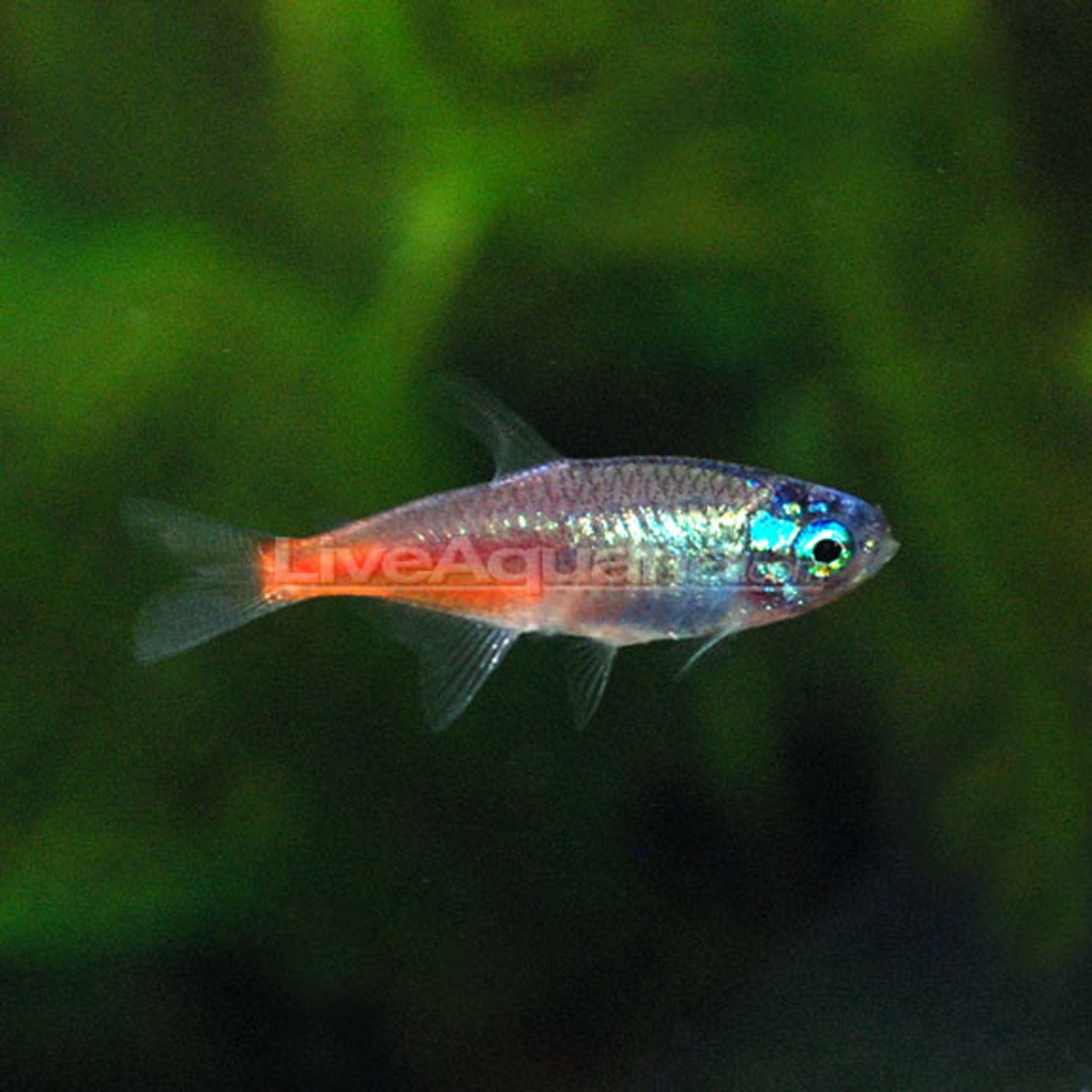
What Do Neon Tetra Eat? A Practical Feeding Guide
Neon tetras need a crushed micro-pellet or flake as a daily staple, topped up two to four times a week with tiny live or frozen proteins like baby brine shrimp or finely chopped bloodworms. Feed only what a school clears in 1-2 minutes, once or twice a day. Get the portion size and food size right and most of the common neon tetra problems — bloating, faded color, early deaths — simply stop happening.
What Neon Tetras Eat in the Wild
In their native blackwater streams, neon tetras behave like tiny omnivorous predators. They pick off:
- Small aquatic insects and larvae
- Worms and tiny crustaceans (like water fleas)
- Algae and biofilm growing on wood and leaves
This background matters for feeding decisions at home. A neon tetra's gut is built for a varied, protein-leaning diet in small bites, not one type of food dumped in large quantities.
The Core Diet: A Daily Staple
A high-quality micro-pellet or crushed flake food formulated for small tropical fish should form the backbone of every feeding. This is the food you offer daily; everything else is a supplement.
Neon tetra mouths are genuinely tiny — roughly the size of a pinhead. Standard-size flakes and normal pellets are often too large; the fish will either ignore them entirely or struggle to get a piece down. To feed correctly:
- Crush regular flakes between your fingers into fine crumbs before adding them
- Choose products labeled "micro," "nano," or "small fish" pellets when possible
- For fry and very young juveniles, use a powdered food
You can browse micro-format staple foods and other freeze dried food options sized for small community fish.
Protein Variety: 2-4 Times a Week
Rotating in animal protein a few times weekly improves growth, conditioning, and color. Good options, always sized down for a neon's mouth:
- Live or frozen baby brine shrimp
- Daphnia (water fleas), live or frozen
- Finely chopped or "mini" cube bloodworms
Feeding Frozen Bloodworms Properly
Frozen bloodworms are a favorite treat, but they cause two common problems if handled carelessly. First, dropping a frozen chunk straight into the tank shocks the local water temperature and often means the fish get more than they can eat before it thaws and sinks. Second, whole adult bloodworms can be too large for a neon's mouth.
The fix is straightforward:
- Break off a small portion and thaw it in a cup of tank water first
- Use very fine or "mini cube" bloodworms rather than whole adult worms
- Feed only what the school finishes in 1-2 minutes
- Avoid feeding from stock that has been frozen for a very long time, since prolonged freezing gradually degrades vitamin content
Occasional Plant Matter
Vegetable matter is a supplement, not a staple, for neon tetras. Offer:
- Crushed spirulina flakes
- Tiny, finely minced bits of blanched zucchini or spinach
Do neon tetras eat algae? They will opportunistically pick at soft algae and biofilm on decor and plant leaves, but this is grazing behavior, not a sufficient diet on its own — it should never replace a proper feeding schedule.
How Often and How Much to Feed
Sources differ slightly on frequency: some say once a day is fine, others recommend twice. Both are defensible, but two small feedings a day generally suit an active, constantly-moving schooling fish like the neon tetra better than one larger meal.
The portion rule that matters most: only feed what the school can finish in 1-2 minutes, then remove anything left over. As a simple visual guide, a pinch of crushed food sized for 6-8 fish, added slowly across the surface, is a reasonable starting point — watch how fast it disappears and adjust from there.
| Life stage | Food type | Frequency | Portion guide |
|---|---|---|---|
| Fry (first 1-2 weeks) | Infusoria or liquid fry food | 3-4 times daily | Trace amounts, siphon out excess |
| Juveniles (2-6 weeks) | Baby brine shrimp, powdered food | 2-3 times daily | Small pinch, eaten within 1-2 minutes |
| Adults | Crushed micro-pellet/flake + protein 2-4x/week | 1-2 times daily | Cleared in 1-2 minutes |
| Vacation (under 5 days) | None needed | Skip feeding | — |
| Vacation (5+ days) | Automatic feeder, pre-portioned dry food | Programmed schedule | Small daily ration |
Feeding a Shy, Midwater School
Neon tetras are shy midwater feeders, especially in a dimly lit, densely planted tank. If you dump food in one spot, bolder or faster fish (including tankmates) reach it first, leaving quieter individuals underfed over time. Distribute food across a wider area of the surface, or feed at two or three points, so the whole school — including lower-ranked fish — gets a fair share.
Fry and Juvenile Feeding
Baby neon tetras cannot eat adult foods at first. The typical progression is:
- First days: infusoria or a liquid fry food
- As they grow: baby brine shrimp and powdered food, offered multiple times a day
- Several weeks old: gradual transition to crushed adult flake or micro-pellet
Breeders conditioning adults before spawning often increase protein-rich live foods like daphnia and baby brine shrimp in the weeks beforehand, since neon tetras are egg-scatterers that lay adhesive eggs over fine-leaved plants or spawning mops in soft, acidic, dim water. Parents will eat their own eggs and fry given the chance, so it's standard practice to remove the adults after spawning and raise fry separately on infusoria-level food.
Why Overfeeding Is the #1 Killer
Overfeeding is widely considered the single most common cause of preventable neon tetra deaths — and it's a water chemistry problem more than a "too much food" problem. Uneaten food breaks down and adds to the ammonia and nitrite load in the tank. In an established, cycled aquarium those compounds should read at essentially zero; repeated overfeeding pushes them upward, stresses the whole school, and makes fish measurably more susceptible to disease.
Signs you're overfeeding:
- Food is still visible on the substrate after a few minutes
- Cloudy water or a persistent film on the surface
- Fish looking bloated or sluggish
The fix is always the same: smaller portions, and physically removing anything uneaten after the 1-2 minute window rather than letting it sit.
Fasting Is Not a Welfare Problem
Sources vary on exactly how long a healthy adult neon tetra can go without food — estimates range from 3-4 days up to roughly two weeks. The sensible way to use these numbers: treat 3-7 days as the comfortable, safe planning window, and treat the two-week figure as a stress-tolerance ceiling for emergencies, not a target.
In practice, this means:
- A skipped feeding day is not a welfare concern
- Many hobbyists build in one no-feed day per week deliberately, which appears to support digestion
- Short trips (under 5 days) don't require any special feeding arrangement at all
Fish Care While on Vacation
For trips longer than about five days, two approaches work reasonably well: an automatic feeder loaded with a pre-measured daily ration of dry food, or a knowledgeable fish-sitter who follows your normal portion rule. Slow-dissolving "vacation food" blocks are a mixed bag — some hobbyists rely on them, but many report the fish don't recognize the block as food at all, leaving it to slowly foul the water instead of being eaten. An automatic feeder or a sitter is the more reliable choice for anything beyond a short trip. Whatever method you choose, resist the urge to add extra food "just in case" before you leave — that's a direct path to an ammonia spike while no one is watching.
A Quick Tour of Food Types
| Food type | Best use for neon tetras |
|---|---|
| Flakes | Versatile daily staple; crush before feeding |
| Micro-pellets | Daily staple, sized right without crushing |
| Freeze-dried (bloodworm, daphnia) | Occasional treat; rehydrate in tank water first to prevent bloating |
| Frozen cubes | Nutrient-preserving treat; thaw a small portion in tank water before feeding |
| Live foods | Best for conditioning before breeding and for enrichment |
| Gel and powdered foods | Powdered forms suit fry and other nano fish |
Storing Dry Food
Keep flake and pellet food in a cool, dry, sealed container away from direct light and humidity. Once opened, potency fades — replace opened dry food roughly every 4-6 months rather than using it until the container is empty.
Common Feeding Mistakes and Fixes
| Mistake | Why it's a problem | Fix |
|---|---|---|
| Overfeeding | Leading cause of death; ammonia/nitrite spikes, fouled water | Smaller portions; remove leftovers within 2 minutes |
| Food too large | Whole flakes, standard pellets, or whole bloodworms can go uneaten or choke a small mouth | Crush flakes, use micro-pellets, mince frozen foods |
| Single-food diet | Flake-only feeding causes nutritional deficiency and dulled color over time | Rotate in frozen/live protein and plant matter weekly |
| Feeding straight from a frozen block | Shocks tank temperature, dumps excess food at once | Thaw a small portion separately first |
| Never skipping a feeding day | Constant heavy feeding can strain digestion | One no-feed day per week is fine and often beneficial |
| Assuming color loss is disease | Stress, aging, and poor lighting cause fading too | Rule out water quality and diet before assuming neon tetra disease |
| Uneven feeding in a school | Bold fish eat first; shy fish go underfed | Spread food over a wider area or feed at multiple points |
Feeding, Color, and Disease
Why Neon Tetras Lose Their Color
Faded color is usually linked to stress, poor water quality, aging, insufficient or outdated lighting, or a nutrient-poor diet — not disease. A more varied diet built around carotenoid-rich foods (brine shrimp, spirulina) supplies the pigment precursors neons need for vivid color, and stable water parameters do the rest. If color loss shows up alongside other symptoms like a curved spine or lethargy, it may point to something more serious.
Neon Tetra Disease vs. Ordinary Color Fading
Neon tetra disease (NTD) is a specific, incurable mycobacterial wasting condition, distinct from routine nutritional color loss. It typically presents as patchy color loss, a curved spine, and lethargy, and it has no cure — affected fish are usually isolated or culled to protect the rest of the school. Prevention relies on quarantining new fish before adding them, keeping water stable, and feeding a varied diet to support overall immune health. Because ordinary stress and aging can mimic some of these signs, always rule out water quality and diet issues first before assuming NTD.
What Not to Feed
Can neon tetras eat bread or other human food scraps? No. Bread offers essentially no nutritional value for fish, they cannot properly digest the starch, and it clouds the water and can clog filter media. Swollen bread inside a fish's small digestive tract also raises the risk of bloating or constipation. Stick to purpose-made fish foods, or safe alternatives like blanched, finely minced vegetables, instead of scraps from your own plate.
A Note on Jumping and Feeding Time
Neon tetras can startle-jump out of an open-top tank when spooked by sudden light, noise, or overhead movement — including a hand or net moving abruptly above the water during feeding. Feeding itself is a minor factor, but a tight-fitting lid and calm, gradual movements at feeding time reduce the risk along with the more common triggers of poor water quality and aggressive tankmates.
Frequently Asked Questions
How often should I feed neon tetras?
Once or twice daily, offering only as much as the school can clear in about 2 minutes each time. Two smaller feedings generally suit their active schooling behavior better than one large one.
What is the best staple food for neon tetras?
A high-quality micro-pellet or crushed flake made specifically for small tropical fish. It should form the daily base of the diet, with protein and vegetable additions layered on top a few times a week.
Can neon tetras eat bloodworms?
Yes. Frozen or freeze-dried bloodworms make a good occasional protein treat, ideally in crushed or "mini cube" form so they fit a neon's small mouth, and thawed or rehydrated in tank water before feeding.
How long can neon tetras go without food?
Healthy adults are generally fine for 3-7 days without any issue, and some can tolerate longer in a pinch. This means short vacations of under five days typically don't require a special feeder at all.
Why are my neon tetras losing their color?
Usually stress, poor water quality, aging, or an unvaried diet — improving water quality and adding color-supporting foods like brine shrimp or spirulina often helps. Persistent color loss combined with a curved spine or lethargy can point to neon tetra disease instead.
Do neon tetras eat algae?
They'll opportunistically pick at soft algae and biofilm on plants and decor, but this isn't enough on its own — it should be treated as incidental grazing, not a substitute for regular feeding.
Can I feed my neon tetras bread or other human food scraps?
No. Bread and most human food scraps are indigestible or unsafe for fish, and they foul the water quickly. Use purpose-made fish foods or safe blanched vegetables instead.
What do baby neon tetra fry eat?
Fry start on infusoria or a liquid fry food, then move to baby brine shrimp and powdered food as they grow over the following weeks. They transition to crushed adult flake or micro-pellet once they're large enough to handle it.
Ready to stock up? You can browse tetra livestock alongside sized-right staple and treat foods in Food & Supplements on FishyHub.

