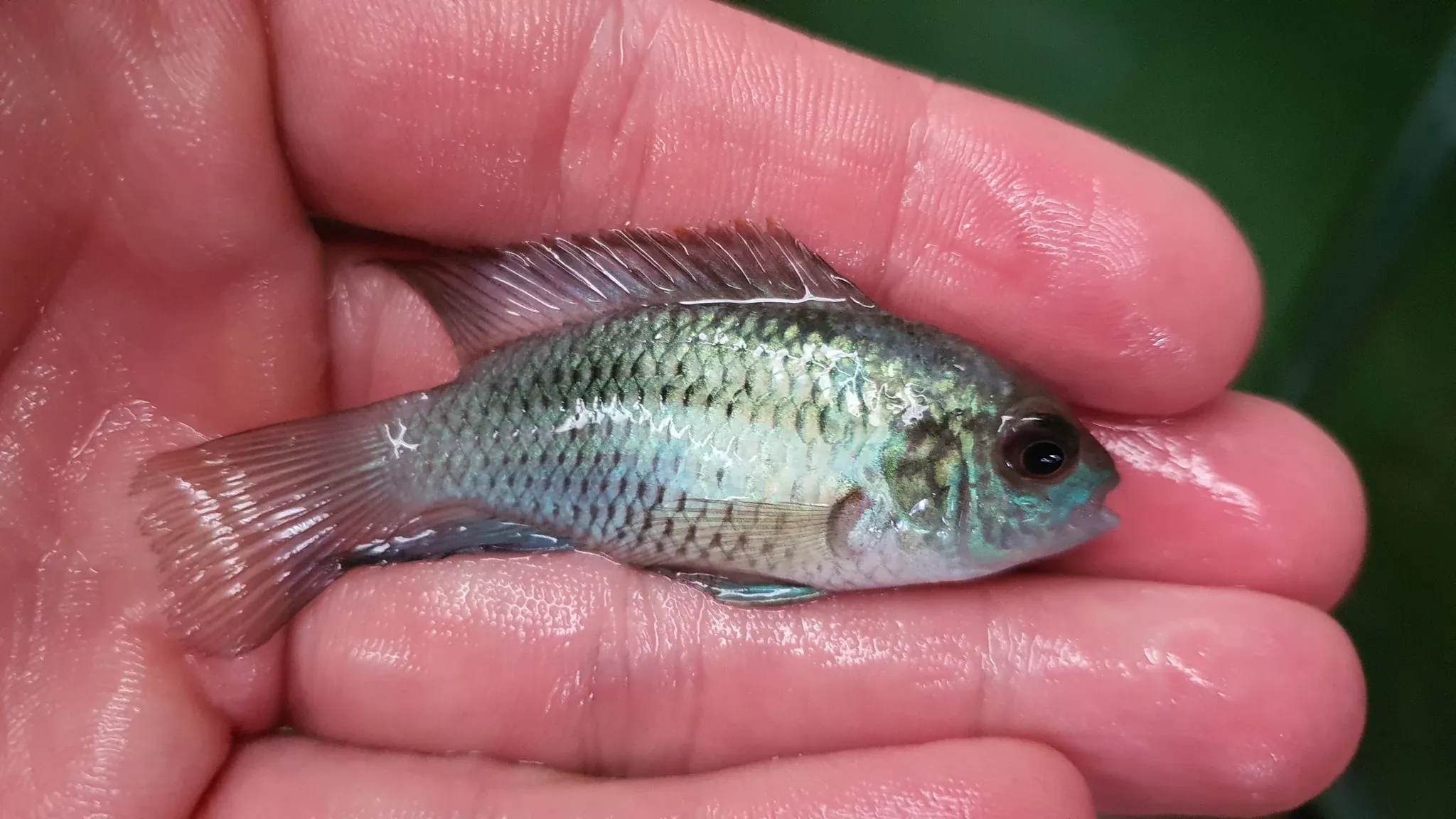
What Do Electric Blue Acara Eat? A Practical Feeding Guide
Electric Blue Acara are omnivores that do best on a rotation of a quality cichlid pellet, meaty protein a few times a week, and occasional vegetables. This guide breaks down exactly what to buy, how often to feed, how much to offer per meal, and how diet shapes their trademark metallic-blue color.
Why Diet Matters So Much for This Fish
The Electric Blue Acara is a captive-bred color morph of the blue (green) acara, a South American cichlid that in the wild spends much of its day digging through substrate to root out insect larvae, worms, small crustaceans, and bits of plant material. That foraging habit explains two things: they're biased toward protein, and they're not fussy eaters. Recreating that natural mix of meaty foods and plant matter — rather than relying on one product — is the single biggest factor in growth, health, and color quality.
The Everyday Staple
A high-quality cichlid pellet or flake formulated for omnivorous or carnivorous cichlids should make up the bulk of the diet. Look for a formula sized appropriately for the fish's mouth — small pellets for juveniles, standard or cichlid-sized pellets once they're past 2–3 inches (5–7.5 cm). This staple food should be offered at nearly every feeding, with protein and vegetable additions layered in around it rather than replacing it.
Relying on flake alone, with no variety, is a common shortcut that tends to catch up with the fish over time in the form of duller color and slower growth.
Protein and Meaty Foods (2–4x a Week)
Because Electric Blue Acara are naturally protein-hungry foragers, meaty foods should be a regular — not occasional — part of the rotation. Good options include:
- Bloodworms
- Brine shrimp
- Mysis shrimp
- Blackworms and tubifex
- Earthworms
- Small pieces of shrimp, mussel, or fish flesh
- Krill
Frozen or freeze-dried versions of any of these are perfectly adequate substitutes for live food, and they carry far less risk of introducing parasites or disease than live feeders do. You can browse a range of ready-to-use options in FishyHub's freeze-dried food selection.
A tip most feeding guides skip: thaw frozen foods in a small cup of tank water rather than dropping a frozen cube straight into the aquarium. This warms the food to tank temperature and rinses off excess liquid, which helps keep water quality stable.
Don't Skip the Vegetables
Because this species is a true omnivore, plant matter should round out the diet, not just the protein side. Blanched or shredded vegetables — spinach, zucchini, cucumber, or peas are all interchangeable examples — work well, as does a spirulina or vegetable-based flake or pellet. Vegetables support digestion and add nutrients that pure protein foods lack.
How Often and How Much to Feed
Twice a day is the sensible default for most home aquarists. Some keepers of larger adult fish split feeding into three smaller meals spread through the day instead, since bigger fish can have higher total food needs — but frequency matters far less than portion control at each sitting.
The portion rule of thumb: offer only what the fish can finish in under 3 minutes. If food is still being picked at past 4 minutes, you fed too much. Whatever isn't eaten should be siphoned or netted out within a few minutes — leftover food, especially meaty or frozen items, decays quickly and can spike ammonia in a cichlid tank's already substantial bioload.
A Simple Weekly Feeding Rotation
Here's a scannable way to structure a week so staple, protein, and vegetable feedings all get covered without overthinking each meal:
| Day | Morning Feeding | Evening Feeding |
|---|---|---|
| Monday | Cichlid pellet | Bloodworms or brine shrimp |
| Tuesday | Cichlid pellet | Blanched vegetable |
| Wednesday | Cichlid pellet | Mysis shrimp or krill |
| Thursday | Cichlid pellet | Cichlid pellet |
| Friday | Cichlid pellet | Blackworms or chopped shrimp |
| Saturday | Cichlid pellet | Blanched vegetable |
| Sunday | Fasting day (skip feeding) | Fasting day (skip feeding) |
Fasting one day a week is a common cichlid-keeping practice that isn't widely discussed but is worth adopting — it gives the digestive system a break and helps prevent obesity in fish that are prone to overeating when food is always available.
For an extra nutrition boost, some keepers soak pellets in a vitamin supplement or "gut-load" live and frozen foods before feeding, which passes along additional nutrients to the acara.
Feeding for Color: What Actually Boosts the Blue
Diet is one of the main levers for keeping the "electric blue" sheen vivid. A varied, protein-rich diet that includes color-enhancing foods — krill, shrimp-based foods, and spirulina all contain natural pigments that support blue and metallic tones — is repeatedly linked to better color intensity. A monotonous diet of a single food, by contrast, tends to dull coloration over time and can even reduce breeding success.
If your fish's color seems to be fading, work through two things at once: feeding variety and water quality. Stress from poor water conditions can wash out color just as easily as a poor diet can.
Feeding Juveniles and Fry
Growing juveniles have higher metabolic and growth demands than adults, so they benefit from more frequent, smaller feedings rather than the standard twice-daily adult schedule. With good feeding and stable water, this species reaches sexual maturity around 4 inches (10 cm) at roughly a year old, and adults approach their full 6–7 inch (15–18 cm) size around the same age.
Fry feeding follows a specific progression, and skipping steps is one of the more common mistakes:
- Right after free-swimming: infusoria or a liquid fry food
- First couple of weeks: baby brine shrimp and microworms
- As they grow: gradually transition to crushed flake or pellet, then normal adult foods
Feeding fry adult-sized pellets too early is a real risk — the food is simply too large for them to eat, and it can go to waste or cause choking. Stepping through the smaller food stages first avoids this.
Tank Mates and Feeding Competition
Electric Blue Acara are commonly housed with other cichlids, plecos, corydoras, and shrimp or snails, and a fast, semi-aggressive eater at the top of the water column can outcompete slower bottom feeders at mealtime. Using sinking pellets or wafers for corydoras and other bottom dwellers — dropped in a separate spot from the floating or mid-water food — helps make sure everyone gets fed. If you're stocking a mixed cichlid tank, it's worth browsing tank mates that can hold their own at feeding time, such as in FishyHub's corydoras selection.
Feeding, Water Quality, and Health
Overfeeding is the single most repeated mistake with this species, and its consequences go beyond wasted food. Uneaten meals foul the water quickly, driving ammonia and nitrite spikes that are especially risky in cichlid tanks given their higher bioload. Since Electric Blue Acara do best in stable water around 72–82°F (22–28°C), with many keepers targeting 76–80°F specifically, a pH of 6.0–7.5, and moderate general hardness of 6–20 dGH, portion control and prompt cleanup of leftovers directly protect the water parameters the fish need to thrive.
Tank size plays into this too: a 30-gallon (114 L) minimum for one adult, with 15 gallons (57 L) added per additional acara, gives waste more room to dilute and makes water quality easier to manage as feeding volume increases.
Good nutrition and stable water together are the two biggest factors in preventing the most commonly reported health issues in this species — ich and skin flukes. A fish fed a varied diet in clean, stable water is far less likely to develop either.
Common Feeding Mistakes to Avoid
- Overfeeding — leads to leftover food fouling the tank and can cause bloating or obesity over time.
- All-flake or all-protein diets with no variety — tends to dull coloration and can lead to digestive issues.
- Leaving uneaten food in the tank, especially meaty or frozen items that decay fast.
- Underfeeding juveniles relative to their higher growth needs, which slows size and color development.
- Feeding fry adult-sized pellets too early, before they've stepped through baby brine shrimp and microworms.
- Letting bottom feeders go hungry because a semi-aggressive acara claims all the food at the surface.
Frequently Asked Questions
How many times a day should I feed an Electric Blue Acara?
Twice daily is a good baseline for most home aquariums, with portion-controlled meals rather than one large feeding. Some owners of larger adult fish split this into a third, smaller feeding, but consistency in portion size matters more than the exact number of feedings.
What is the best food for Electric Blue Acara color?
A varied diet is the key lever — combine a quality cichlid pellet or flake with protein sources like krill, shrimp, and bloodworms. These color-enhancing foods support the blue and metallic tones this species is known for.
Can Electric Blue Acara eat vegetables?
Yes. Blanched vegetables such as spinach, zucchini, cucumber, or peas, or a spirulina-based food, should supplement the protein-heavy side of their diet and support healthy digestion.
Do Electric Blue Acara fry need special food?
Yes. Fry start on infusoria or a liquid fry food right after they become free-swimming, then move to baby brine shrimp and microworms for the first couple of weeks before gradually transitioning to crushed normal food.
How much should I feed at each meal?
Offer only what the fish can finish in roughly 2–3 minutes. If food is still being eaten past 4 minutes, the portion was too large for that sitting.
Will Electric Blue Acara eat live feeder fish?
They may eat small fish or fry opportunistically, but live feeder fish aren't recommended as a regular food source due to the risk of introducing disease or parasites. Frozen or fresh meaty foods are a safer substitute that still meets their protein needs.
Do they need live food, or is frozen/freeze-dried enough?
Frozen and freeze-dried bloodworms, brine shrimp, and mysis shrimp are perfectly adequate substitutes for live food, and they carry a lower risk of introducing disease than live foods do.
Why is my Electric Blue Acara losing color?
It's usually tied to diet — a lack of protein or color-enhancing foods — or to stress from poor water quality. Review both feeding variety and water parameters together rather than assuming it's one or the other.
Whether you're setting up a first cichlid tank or adding to an established one, you can browse Electric Blue Acara and other American cichlids on FishyHub, along with the pellets, frozen foods, and supplements from the Food & Supplements category to build out a full feeding rotation.

