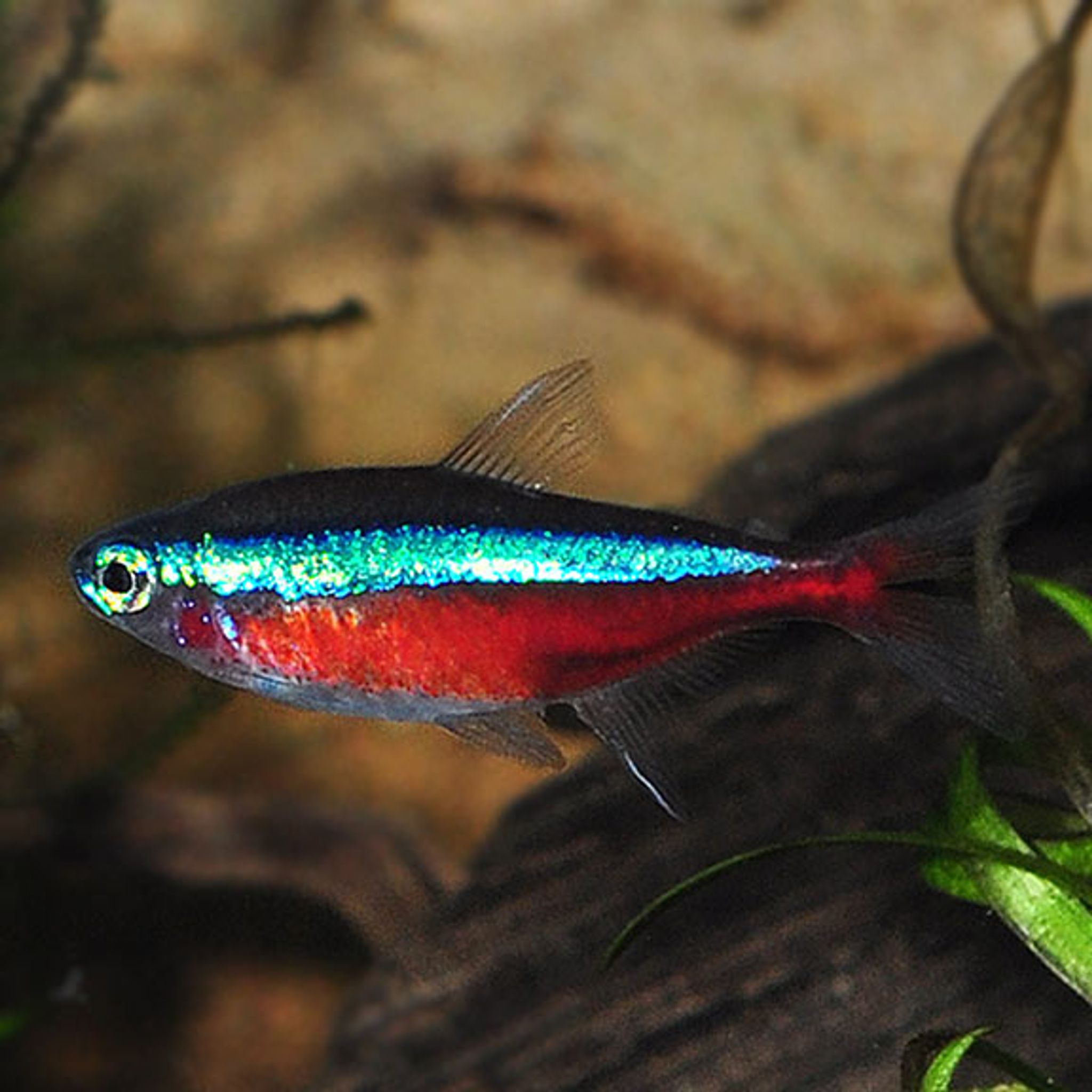
What Do Cardinal Tetra Eat? A Practical Feeding Guide
Cardinal tetras (Paracheirodon axelrodi) are micropredator omnivores that need a small-particle diet built mostly around a quality flake or micro-pellet, with regular live or frozen protein mixed in. Get the portion size, timing, and food size right, and you'll see steadier appetite, less waste in the tank, and a noticeably brighter red-and-blue stripe within a few weeks. Below is a concrete weekly routine, not just a list of ingredients.
What Cardinal Tetras Eat in the Wild
In their native blackwater habitat, cardinal tetras hunt tiny crustaceans, insect larvae, worms, and zooplankton drifting in the water column, and they pick at some plant matter and algae along the way. They're micropredators, not grazers — meaning their instinct is to snap up small, moving food items rather than settle in on a big meal. That instinct matters for how you feed them at home: they're not picky, but everything you offer has to fit a mouth under an inch across.
The Core Diet: Base Food Plus Protein Rotation
A practical cardinal tetra diet breaks into two tiers.
Base diet (roughly 70–75% of total feedings): a high-quality small-particle tropical flake or micro-pellet formulated for tetras or other nano fish. This should be the default food on most days because it's nutritionally complete and easy to portion.
Protein rotation (2–4 times per week): live or frozen foods layered on top of the base diet. Good options include:
- Baby brine shrimp
- Daphnia
- Frozen cyclops
- Mosquito larvae
- Freeze-dried tubifex
You can browse live-caught tetra stock and freeze-dried protein options on FishyHub when planning a new school or restocking your rotation.
A Note on Bloodworms
Bloodworms are fine nutritionally, but they're often too large for a cardinal tetra to swallow whole. Crush, chop, or mash them into smaller pieces before feeding, or lean on baby brine shrimp and daphnia as your primary live foods since their size is already right for a nano fish.
Vegetables: A Minor Supplement, Not a Pillar
Occasional blanched peas, cucumber, spinach, or zucchini in tiny amounts can round out the diet, but cardinals lean more carnivorous than many other tetra species. Treat vegetables as a weekly extra, not a core feeding component — this is a point where cardinal-specific advice differs from more herbivore-leaning tetra guides.
How Much and How Often to Feed
Frequency: 2–4 small feedings a day is the common target. If your schedule only allows once or twice daily, that's acceptable too — cardinals have tiny stomachs and benefit from frequent, small meals, but total daily volume matters more than the exact number of feedings.
Portion rule: feed only what the whole school can finish in about 2–3 minutes, then remove any uneaten food. If you're unsure, always feed less — it's easy to add a pinch more, much harder to fix an overfed tank.
Food size rule of thumb: particles should be roughly pinhead-sized or smaller (under about 1mm). Crush flakes between your fingers or look for products labeled "micro" if the pieces look too big for your school.
| Feeding element | Recommendation |
|---|---|
| Base food | Small-particle flake or micro-pellet, ~70–75% of feedings |
| Protein rotation | Live/frozen food 2–4x/week |
| Feedings per day | 2–4 small meals (1–2 acceptable on a tighter schedule) |
| Clearance time | 2–3 minutes, then remove leftovers |
| Particle size | Pinhead-sized or smaller (~1mm) |
| Vegetables | Occasional, weekly, tiny amounts only |
Water Chemistry Affects Appetite Too
Cardinal tetras come from soft, acidic blackwater — roughly pH 4.5–7.0 and 73–84°F (23–29°C). Because they evolved in low-mineral water, hard or alkaline conditions can stress them, and stressed fish eat less and digest poorly. If your cardinals seem uninterested in food despite a good diet, check water parameters before assuming the food itself is the problem.
Keeping a proper school also affects feeding behavior: a group of at least 6, ideally 8–10 or more, in a 15–20 gallon tank feeds more evenly and confidently than a small or stressed group, since cardinals are calmer and more willing to compete for food when they feel safe in numbers.
Getting Brighter Color Through Diet
The signature red stripe and blue iridescence respond directly to diet. Live and frozen foods, along with color-enhancing foods built on astaxanthin or other carotenoids, intensify both colors over time. If a school looks washed out despite regular feeding, the two usual culprits are:
- Diet lacking live/frozen protein or color-enhancing ingredients — add a live/frozen rotation.
- Water too hard or alkaline — verify soft, acidic, warm parameters.
A Simple 7-Day Feeding Rotation
Sources rarely lay out a concrete weekly template, so here's a practical one to adapt:
| Day | Feeding |
|---|---|
| Monday | Micro-pellet or flake (AM and PM) |
| Tuesday | Flake AM, baby brine shrimp PM |
| Wednesday | Micro-pellet only |
| Thursday | Flake AM, daphnia PM |
| Friday | Micro-pellet only |
| Saturday | Frozen cyclops or chopped bloodworm |
| Sunday | Flake AM, tiny pinch of blanched vegetable PM |
Adjust the exact days to your schedule — the pattern that matters is staple food most days with 2–4 protein-rich meals worked in weekly.
Feeding Fry and Juveniles
Newly hatched cardinal tetra fry can't handle adult foods yet:
- Days 1–14: infusoria or a liquid fry food.
- After about 2 weeks: graduate to baby brine shrimp and finely crushed micro-pellets.
Fry have almost no margin for error on food size or water quality, so keep portions tiny and frequent rather than trying to speed up the transition.
Culturing Daphnia at Home
If you want a steady, low-cost source of live protein, daphnia are easy to culture:
- Use a 5–10 gallon container (bucket, tote, or spare tank) of dechlorinated water at room temperature (60–80°F).
- Daphnia need ambient light but don't strictly require a filter or heater.
- Floating plants like duckweed help maintain water quality in the culture.
- Keep two separate cultures — daphnia populations can crash unexpectedly, and a backup culture means you're never left without live food.
General Fish Nutrition Basics
A few fundamentals apply across species, cardinals included:
- Fish food needs a balance of protein, fat, and vitamins; the right ratio depends on whether a species is herbivore, omnivore, or carnivore.
- Freshness matters — store food sealed, cool, and dry, and use it within a few months of opening.
- Reading a label helps: look at listed protein and fat percentages and watch for excessive fillers low in nutritional value.
Quality flakes, micro-pellets, and freeze-dried proteins for nano fish are available in FishyHub's food and supplements category if you want to compare options before building your rotation.
Top Feeding Tips for Cardinal Tetras
- Know your species' natural diet before choosing food — cardinals are micropredators, not grazers.
- Feed with the lights on so fish are alert and can find food easily.
- Measure portions with a small scoop rather than guessing.
- Vary food types weekly for more balanced nutrition.
- Watch the school while it eats — this is often the easiest time to spot illness or bullying.
- Avoid touching food with lotion- or perfume-contaminated hands, which can contaminate the water.
- Consider briefly soaking dry foods in tank water before feeding — it softens particles and can reduce bloat risk in such a tiny-stomached fish.
Feeding in a Mixed Community Tank
Cardinal tetras often lose out to faster, more aggressive tankmates at feeding time. Two fixes help:
- Feed in multiple spots across the surface so food doesn't clump in one area that faster fish dominate.
- Use sinking micro-pellets occasionally — cardinals feed through the water column in practice, and a portion that sinks slowly gives them a fairer shot alongside bottom or mid-water competitors.
Common Mistakes and Troubleshooting
| Problem | Likely cause | Fix |
|---|---|---|
| Cloudy water, ammonia spikes, bloating | Overfeeding | Smaller, more frequent meals; strict 2–3 minute rule |
| Fish choking or ignoring food | Bloodworms fed whole | Crush/chop first, or favor baby brine shrimp/daphnia |
| New cardinals won't eat | Transport stress, unfamiliar flake | Start with live/frozen food; dim lights initially |
| Some fish never seem to eat | Food clumping in one spot | Feed in multiple locations across the tank |
| Washed-out color | Lacking live/frozen protein or wrong water chemistry | Add protein rotation; verify soft, acidic, warm water |
| Overfed tank while away | Cheap vacation feeder blocks | Use a trusted person for manual feedings or a proper auto-feeder with pre-measured pellets |
Emergency Substitutes If You Run Out of Food
Short-term, in a pinch, cardinals can eat a tiny bit of hard-boiled egg yolk or small chopped pieces of rinsed, pesticide-free earthworm or nightcrawler. This is a "borrow a cup of sugar" fix, not a routine diet. Fish can generally go 3–7 days without food, but treat that range with caution for a nano species like cardinal tetras — their smaller fat reserves mean less margin than a larger fish, so skipping one or two feedings is far safer than pushing toward a full week.
Related Tetra Species With Similar Feeding Needs
Neon, albino neon, black neon, and green neon tetras are all small omnivorous micropredators with nearly identical feeding requirements: a flake or micro-pellet base plus live or frozen brine shrimp, daphnia, and bloodworms. Green neon and black neon tetras in particular do well on micro-pellets supplemented with daphnia and thawed brine shrimp. In practice, this means cardinal tetras can share a single feeding routine with any of these species in a mixed school.
Frequently Asked Questions
How often should I feed cardinal tetras?
Aim for 2–4 small feedings a day, giving only what the school clears in 2–3 minutes. Once or twice a day works fine too if that better fits your schedule — consistency matters more than hitting a specific number of feedings.
Can cardinal tetras eat bloodworms?
Yes, but crush or chop them first. Whole bloodworms are often too large for a cardinal's mouth and can cause choking or wasted food.
What live food is best for cardinal tetras?
Baby brine shrimp and daphnia are the top picks because their size fits a cardinal's mouth and they help boost color. Frozen cyclops and freeze-dried tubifex are good foods to rotate in as well.
Do cardinal tetras need vegetables?
Not essential. An occasional tiny amount of blanched peas, cucumber, or spinach rounds out the diet, but it's a minor supplement rather than a core part of feeding for this species.
How much should I feed a school of cardinal tetras?
Only what the group visibly finishes in 2–3 minutes. Err on the side of too little — it's easy to add more food but much harder to remove excess once it's in the tank.
What can I feed cardinal tetra fry?
Infusoria or a liquid fry food for the first one to two weeks, then baby brine shrimp and finely crushed micro-pellets as they grow.
What do I do if I run out of fish food?
A pinch of hard-boiled egg yolk or a small piece of chopped, rinsed earthworm works as a short-term bridge. The fish will also be fine skipping a feeding or two while you restock.
Why won't my new cardinal tetras eat?
Newly imported or recently added cardinals are often stressed from transport and unfamiliar with flake food. Try live or frozen food first to trigger a feeding response, and dim the lights initially to reduce stress.
Whether you're building out a new school or restocking supplies for an established one, you can browse cardinal tetras and other nano fish in FishyHub's tetra category to get started.

