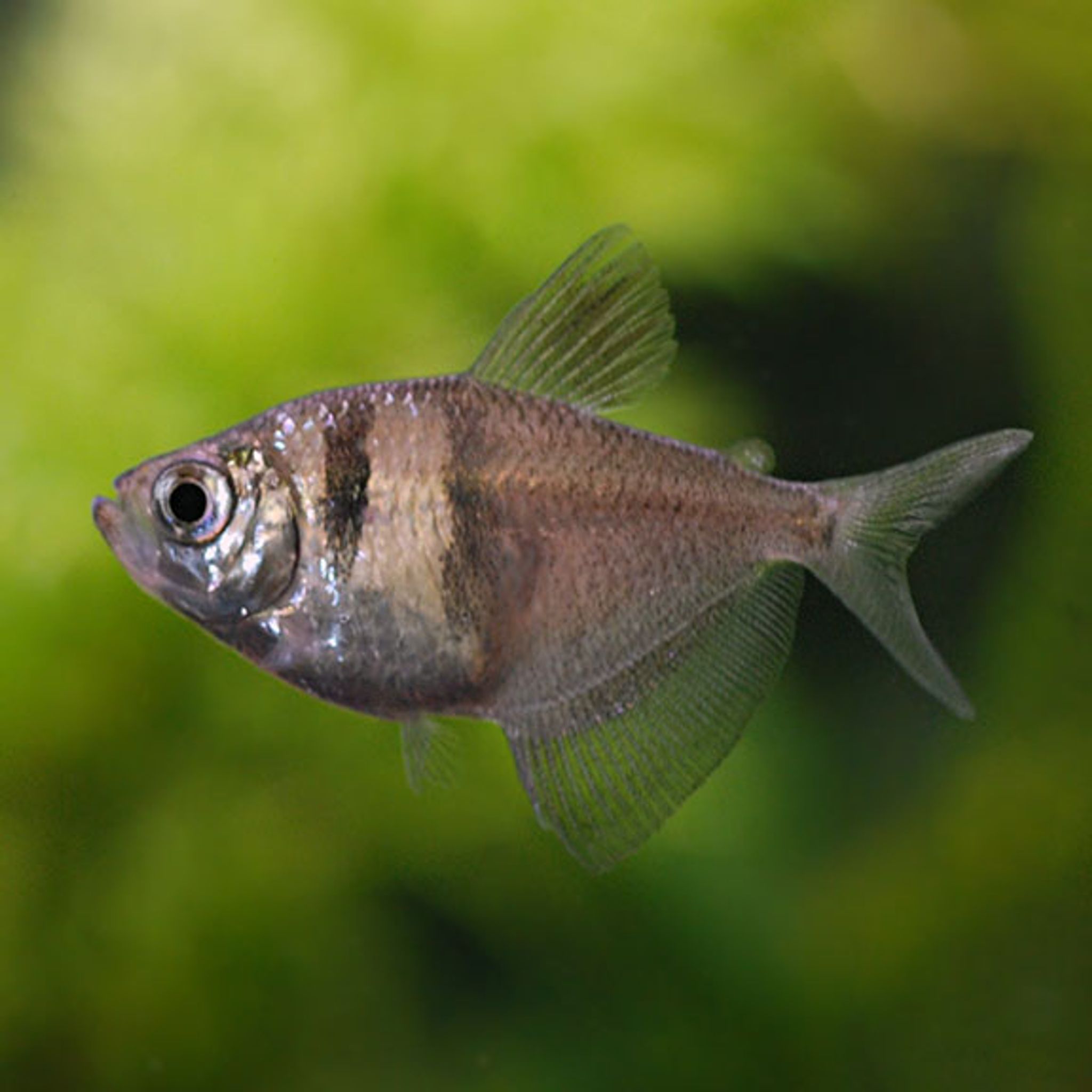

What Do Black Skirt Tetra Eat? A Practical Feeding Guide
Black skirt tetras eat a mix of flake or micro-pellet as a daily staple, plus small helpings of frozen or live protein and blanched vegetables a few times a week. Getting the mix, portion size, and timing right does more for their health and color than any single "best" food. This guide breaks down exactly what to feed, how much, and how to avoid the mistakes that cause bloating, cloudy water, and picky eaters.
What black skirt tetras eat in the wild
Black skirt tetras (Gymnocorymbus ternetzi) are omnivores. In their native South American waters they pick off small insects, insect larvae, tiny crustaceans, worms, algae, and bits of plant matter drifting in the water column. That varied, protein-plus-plant diet is the blueprint for feeding them well in a home tank — no single food type covers everything they need.
The base diet: daily staple food
For day-to-day feeding, a high-quality tropical flake or micro-pellet formulated for omnivorous community fish should be the backbone of the diet. Because black skirt tetras have small mouths, stick to standard flake or crushed/micro pellets rather than large pellets made for bigger fish — oversized food simply gets stripped apart, wasted, and left to foul the water.
A staple flake or pellet, fed once or twice a day in small amounts, covers most of their nutritional needs. Everything else below is there to fill in the gaps a dry staple can't.
Supplementing with protein
Two to three times a week, add a protein-rich supplement on top of the staple. Good options include:
- Brine shrimp (live or frozen)
- Daphnia
- Bloodworms — finely chopped for adults, and especially for juveniles
- Mysis shrimp
On the live-versus-frozen-versus-freeze-dried question, sources genuinely disagree. Some hobbyists favor live foods for conditioning fish before breeding; others point out that live foods from ponds or unreliable sources can carry parasites or disease. Frozen food (properly flash-frozen, never previously thawed and refrozen) is the safest, most convenient middle ground for most home aquariums. Reserve live food as an occasional conditioning boost, and only from a trusted source.
Freeze-dried bloodworms or tubifex are a convenient pantry option, but soak them in a bit of tank water for a minute or two before feeding. Dry freeze-dried food can trap air, and feeding it dry raises the risk of bloat or constipation.
Rounding it out with plant matter
Because black skirt tetras are omnivores, not pure carnivores, they benefit from occasional plant-based food: finely chopped or blanched spinach, zucchini, or a spirulina-based flake or pellet. This supports natural coloration and gives the digestive system some fiber alongside all that protein.
How often and how much to feed
Feeding frequency: Adults do well on one to two small feedings per day. Twice daily in amounts eaten within a minute or two is a solid default for an active, schooling fish like this one; once daily is fine for a lightly stocked, low-maintenance tank. Juveniles and fry grow faster and benefit from two to three smaller feedings a day.
Portion size: Feed only what the school can finish in about 2 minutes. Any food still sitting on the substrate after 5 minutes means you fed too much. As a starting point, a pinch of flake that lightly covers roughly a quarter-sized area of the water's surface is a reasonable amount for a school of six adult black skirt tetras — watch how quickly it disappears and adjust from there.
Use an observe-and-stop approach: drop in a small amount, watch how eagerly the fish forage, add a little more only if they're still actively feeding within the first minute or two, then stop. Feeding at the same time each day also helps the school learn a routine and reduces the temptation to overfeed "just in case."
A simple weekly feeding schedule
| Day | What to feed |
|---|---|
| Monday | Staple flake or micro-pellet |
| Tuesday | Frozen brine shrimp or daphnia |
| Wednesday | Staple flake or micro-pellet |
| Thursday | Bloodworms (chopped) or mysis shrimp |
| Friday | Staple flake + blanched spinach or spirulina flake |
| Saturday | Frozen or freeze-dried protein (soaked) |
| Sunday | Fasting day — no food |
Why a weekly fasting day matters
Fasting recommendations range from a strict weekly 24-hour fast to "just skip a day occasionally." A once-a-week fasting day is a reasonable, easy-to-remember default for most community tanks, tetras included. It gives the digestive system a break, helps reduce waste buildup in the tank, and some hobbyists link regularly skipping fasting days to sluggish digestion over time. Skipping fasting entirely isn't dangerous on its own, but pairing it with routine overfeeding compounds water-quality problems.
Water temperature and appetite
Black skirt tetras are hardy and tolerant of a fairly wide range of conditions — roughly pH 6.0–7.5 and 72–82°F (22–28°C) — which is part of why they're such a beginner-friendly tetra. They grow to about 2–2.5 inches (5–6 cm) and can live 3–5+ years or more with good care, kept in groups of 6 or more. Within that temperature range, metabolism and appetite shift: fish feed more actively at the warmer end and more slowly at the cooler end. Keep feeding amounts consistent with stable, steady tank conditions rather than adjusting portions day to day.
Feeding fry and juveniles
Newly hatched fry can't handle standard flake. Start them on infusoria, then move to crushed or powdered fry food as they grow, before graduating to standard flake once they're large enough to manage it. Juveniles generally need more frequent, smaller feedings than adults to support rapid growth.
Types of fish food and how to use them
| Food type | Best use | Notes |
|---|---|---|
| Flake | Daily staple | Sinks slowly, good for mid-water feeders like black skirt tetras |
| Micro-pellet | Daily staple | Less mess, easier portion control; choose small sizes for tetras |
| Frozen | Staple supplement, 2–3x/week | Closest to live nutrition; thaw before feeding |
| Freeze-dried | Occasional treat | Convenient; always soak briefly first to prevent bloat |
| Live | Breeding conditioning | Best nutrition but carries disease risk from unreliable sources |
| Vegetable-based / blanched veggies | Plant-matter portion | Spinach, zucchini, spirulina flake for the omnivore side of the diet |
You can browse a range of staple and supplemental options, including freeze-dried foods, in the food and supplements category on FishyHub.
Reading fish food labels
Not all flake or pellet food is equal. Check the first three ingredients on the label:
- A whole named protein (whole fish, shrimp, or krill) near the top signals a higher-quality, more digestible food.
- Wheat, corn, or soy listed first signals a filler-heavy food that's cheaper but less digestible.
Undigested fillers pass through the fish largely unused, adding to ammonia spikes and feeding algae growth in the tank. For an omnivorous species like the black skirt tetra, look for a balance of animal protein and plant-based ingredients such as spirulina.
Feeding in a community tank vs. a species-only tank
In a species-only tank, feeding is straightforward — drop food in one or two spots and the school handles the rest evenly. In a busy community tank, faster or more aggressive fish (other tetras, barbs) can outcompete black skirt tetras for food. Spread food across two or more locations at feeding time so the whole school gets a fair share, and watch a few feedings to confirm no fish are consistently missing out.
Since black skirt tetras feed mainly mid-water but will also pick from the surface and substrate, food that reaches multiple levels of the water column helps make sure the entire school eats, not just the fastest individuals at the top.
Planted vs. non-planted tanks
A well-planted tank offers a small buffer that bare tanks don't: fish can graze on biofilm and algae between feedings, and plants take up some of the excess nutrients from slightly generous feeding. That's not a license to overfeed, but it does mean a heavily planted tank can tolerate marginally more food debris than a bare-bottom or lightly decorated setup.
Adjusting feeding during water changes, quarantine, or treatment
Appetite and digestion can shift when the tank is under stress. During a water change, feed normally but avoid feeding right before or during the change itself. In quarantine or during medication treatment, some fish eat less — offer smaller amounts and don't assume a skipped meal means illness; watch for a few days and resume the normal schedule once treatment ends and water parameters are stable.
Common feeding mistakes to avoid
- Overfeeding — the single biggest cause of bloating, constipation, swim bladder problems, and ammonia/nitrite spikes from decaying leftover food.
- Feeding only dry flake long-term — leads to nutritional gaps and dull coloration; fix by rotating in frozen/live protein and vegetable matter.
- Skipping the soak on freeze-dried food — raises the risk of bloat.
- Using food too large for the tetra's small mouth — causes messy stripping and wasted food.
- Uneven feeding in mixed tanks — faster tankmates outcompete black skirt tetras; feed in multiple spots.
- Skipping fasting days entirely — linked by some hobbyists to sluggish digestion over time.
- Letting food go stale — discard and replace opened food after 60–90 days, and store it cool and dry; food more than 2–3 months old loses nutritional value and fish often show less interest in it.
- Assuming stress-refusal is illness — newly introduced tetras may refuse food for a few hours to a day after transport; try live or frozen food to stimulate appetite before assuming a health problem.
Overcrowding a tank makes all of these mistakes worse, since more fish means more waste from the same overfeeding error, straining water quality faster.
A note on fin-nipping
Black skirt tetras can be mild fin-nippers, particularly toward slow-moving, long-finned tankmates. A varied, satiating diet — enough food, fed consistently, with real protein rather than just filler flake — tends to reduce this behavior, since well-fed, satisfied fish are less likely to peck at neighbors out of hunger or boredom.
Black skirt tetras among other "black" aquarium fish
Black skirt tetra is one of several commonly kept dark-colored aquarium fish, alongside black mollies, black neon tetras, black ghost knifefish, and black phantom tetras. Compared to those, the black skirt tetra stands out as peaceful, easy to care for, and a reliable schooler — a good entry point if you're building a black-and-silver community tank without taking on the larger size or specialized needs of something like a black ghost knifefish.
Frequently Asked Questions
How often should I feed black skirt tetras?
Once or twice daily, in amounts the school finishes within 1–2 minutes. Twice daily is a good default for this active shoaling fish, with once daily fine for lightly stocked tanks. Add one fasting day per week to support digestion.
Can black skirt tetras eat just flakes?
Yes, flakes can technically sustain them as a staple. But they thrive better and show brighter color when you add occasional frozen or live protein and vegetable matter alongside the daily flake.
Do black skirt tetras eat algae?
They'll opportunistically pick at algae and biofilm in the tank, but they aren't dedicated algae eaters and shouldn't be relied on as a primary algae-control method or fed algae as their main food source.
What live or frozen foods are best?
Brine shrimp, daphnia, bloodworms, and mysis shrimp are all solid choices, offered 2–3 times a week alongside the daily staple. Frozen versions of these are generally the safer, more convenient option over live food for most home aquariums.
How much should I feed a school of black skirt tetras?
Scale the portion to what the whole group visibly eats within about 2 minutes — a pinch covering roughly a quarter-sized area of the surface is a reasonable starting point for six adults. It's better to underfeed slightly and adjust upward than to overfeed.
Will black skirt tetras eat their own fry or other small fish?
They aren't specialized fry predators, but they are opportunistic. In a community tank, they may eat very small fry or shrimplets if given the chance, so separate breeding pairs or fry if you want them to survive.
Why is my black skirt tetra not eating?
Check for stress from a recent introduction, poor water quality, illness, or bullying from tankmates before assuming it's purely a feeding issue. Try varying the food type or texture, and give a newly added fish a few hours to a day to settle before worrying.
Can I feed black skirt tetras vegetables?
Yes — small amounts of blanched spinach, zucchini, or a spirulina-based food supplement their natural omnivorous diet well and can support better coloration over time.
Ready to stock or expand your school? You can browse live tetra options on FishyHub to find healthy black skirt tetras and other community fish for your setup.


