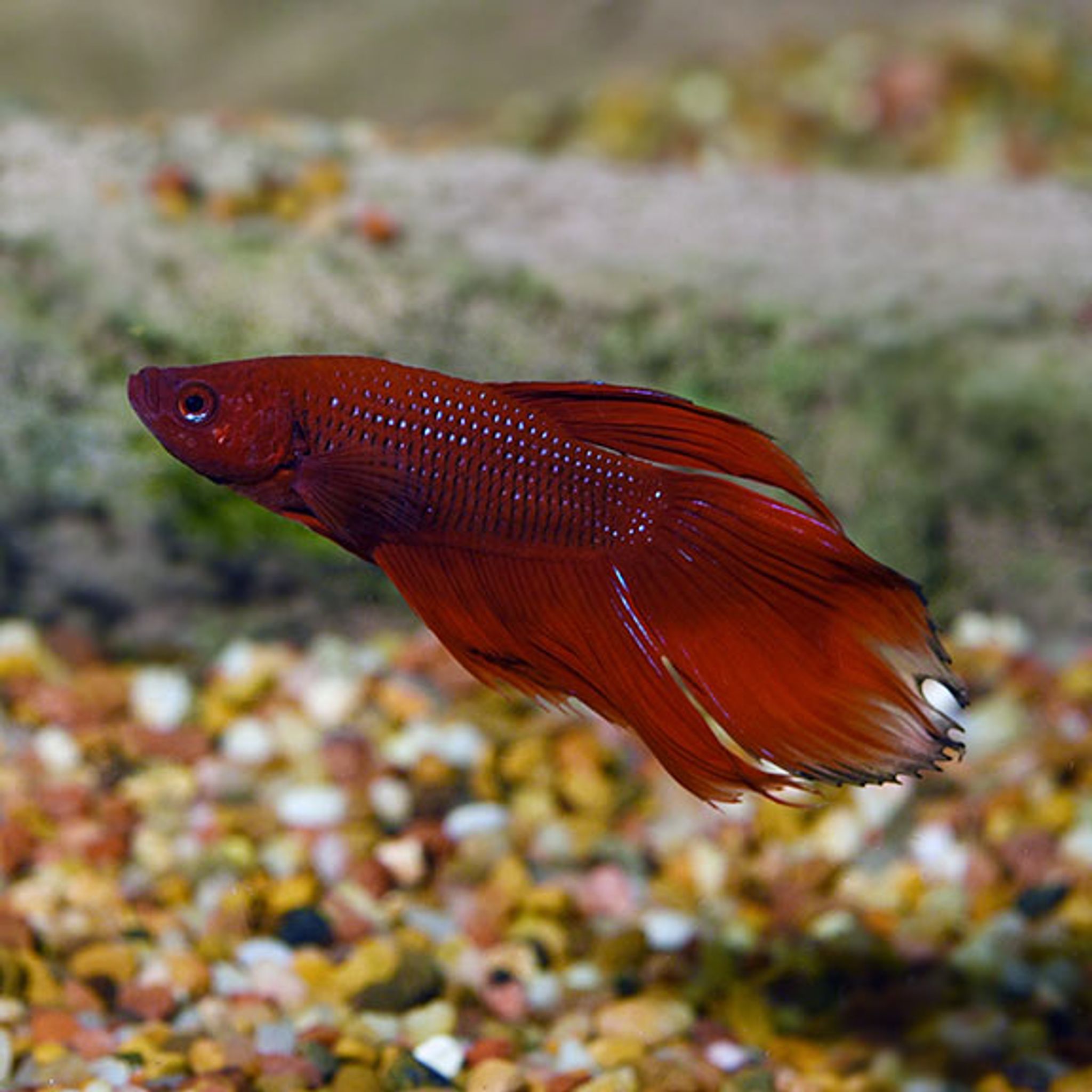

What Do Betta Fish Eat? A Practical Feeding Guide
A betta fish eats a protein-heavy diet built around a high-quality betta pellet, with frozen or freeze-dried bloodworms, brine shrimp, or daphnia mixed in for variety. The right amount is small — roughly 2 to 4 pellets per feeding, once or twice a day — because a betta's stomach is only about the size of its own eyeball. Get the portion and schedule right and you avoid the two most common betta problems: a fish that looks thin and listless, and one that's bloated from being overfed.
What Bettas Eat in the Wild
Bettas are carnivores, more specifically insectivores. In their native rice paddies and slow-moving waters of Southeast Asia, they feed on mosquito larvae, small insects and insect larvae that fall onto the water's surface, tiny crustaceans, and zooplankton. Their small, upturned mouth is built for grabbing prey at or near the surface, not for grazing along the bottom or picking at plant matter.
This matters for how you feed them at home: bettas need concentrated animal protein, not the grain-heavy flake mixes formulated for omnivorous community fish.
Building a Proper Betta Diet
Start With a Quality Pellet
A betta-specific pellet should be the foundation of the diet. Look for:
- Crude protein around 35-45% or higher
- A named animal protein — whole fish, fish meal specified by species, or shrimp meal — listed in the first two or three ingredients
- Minimal grain fillers (corn, wheat, soy) high on the list
Pellets hold their nutritional value better than flakes once they're in the water, and they're easier to portion accurately. You can browse betta-appropriate options in FishyHub's Bettas category alongside prepared foods in Food & Supplements.
Reading a Food Label
You don't need to rely on any specific brand name — you just need to know what to check on the guaranteed analysis and ingredient panel:
| Label item | What to look for | Why it matters |
|---|---|---|
| Ingredient order | Named animal protein first (e.g., "whole shrimp," "salmon meal") | Ingredients are listed by weight; a protein-first label means less filler |
| Crude protein | 35-45%+ | Matches a carnivore's nutritional needs |
| Crude fiber | Low to moderate (under ~5%) | High fiber often signals plant filler, not fish nutrition |
| Pellet size | Small enough to be swallowed in one bite | Oversized pellets get spat out or cause choking attempts |
Flakes: Acceptable, Not Ideal
Flakes are fine as an occasional food but not recommended as the everyday staple. They lose nutrients quickly once they hit the water and crumble into bits that are harder to portion, which often leads to overfeeding by volume. If you already have flakes on hand, use them for variety, but keep pellets as the base of the diet.
Add Variety With Frozen and Freeze-Dried Foods
No single commercial food fully replicates a wild diet, so rotating 2-3 food types a week closes nutritional gaps and keeps a betta from becoming a picky eater. Good rotation options include:
- Frozen bloodworms, brine shrimp, or daphnia — thaw a small portion in a cup of tank water first; never drop in a frozen chunk or thaw under tap water, since chlorine, chloramine, and sudden temperature changes can stress the fish.
- Freeze-dried bloodworms or tubifex — convenient and shelf-stable, but lower in nutrition and prone to expanding in the stomach if fed dry. Soak briefly in tank water before feeding to reduce the risk of bloating or constipation. FishyHub stocks several options in the Freeze Dried Food category.
- Live foods (brine shrimp, mosquito larvae, blackworms, fruit flies) once or twice a week for enrichment and hunting stimulation — but only from a reputable, refrigerated supplier, since live foods carry a real risk of introducing parasites or disease. For most home keepers, frozen or freeze-dried food is the safer everyday supplement, with live food kept as an occasional treat rather than a routine staple.
Occasional Fiber: The Pea Trick
A small piece of skinned, blanched pea a few times a month can help relieve mild constipation. This is a remedy, not a food group — don't work peas into a regular rotation, just keep one on hand for when a betta looks bloated or hasn't passed waste in a few days.
How Much and How Often to Feed
Portion Size
The most useful comparison: a betta's stomach is roughly the size of its own eyeball. That means the daily food volume should be small — not a pinch of flakes covering the surface. As a practical rule:
- 2-4 pellets per feeding for an adult betta (some guidance stretches this to 5, but staying closer to 2-4 and watching the belly is the safer default)
- A slightly rounded belly with visible scale ridges still showing = properly fed
- A ball-shaped, distended belly where the scales start to flare outward (a "pinecone" look) = overfed, and a possible early sign of dropsy if it persists
Feeding Frequency by Life Stage
| Life stage | Feedings per day | Notes |
|---|---|---|
| Juvenile (under 2-3 months) | 3-4 small feedings | Faster metabolism and active growth demand more frequent, smaller meals |
| Adult | 1-2 feedings | Split into morning and evening if feeding twice; easier on digestion than one large meal |
The Weekly Fasting Day
Skip feeding entirely one day per week. A 24-hour fast supports digestion and reduces the risk of constipation and bloating. It's a routine practice, not a punishment — a healthy adult betta can safely go 1-2 weeks without any food if travel or an emergency requires it, though that's an exception, not a habit.
A Simple Weekly Template
| Day | Feeding |
|---|---|
| Mon | Pellets, AM and PM |
| Tue | Pellets AM, thawed frozen food PM |
| Wed | Pellets, AM and PM |
| Thu | Fasting day — no food |
| Fri | Pellets AM, soaked freeze-dried food PM |
| Sat | Pellets, AM and PM |
| Sun | Pellets AM, live or frozen treat PM |
Adjust the specific days to fit your schedule — the pattern that matters is: mostly pellets, one frozen/live variety day, and one fasting day.
Why Water Temperature Affects Appetite
Bettas need water in the roughly 76-82°F (24-28°C) range for normal metabolism and appetite. Feeding into water below about 74°F (23°C) slows digestion, which can leave food sitting in the gut and increase bloat risk even if the portion size was correct. If a betta suddenly seems uninterested in food, check the heater and thermometer before assuming it's a diet problem.
Feeding Habits That Protect Water Quality
- Remove uneaten food within a couple of minutes. Don't use the old "5-minute rule" as a portion guide — bettas will keep eating well past the point of fullness, so their behavior isn't a reliable signal of how much to feed.
- Skip vacation feeder blocks. Slow-dissolving feeder blocks foul the water faster than the fasting they're meant to prevent. A few unfed days is safer for a healthy betta than a block breaking down in the tank.
- Uneaten food and waste drive ammonia spikes. Every bit of food that isn't eaten becomes waste that the nitrogen cycle has to process. Small, accurate portions aren't just about the fish's stomach — they directly protect water chemistry between water changes.
- Store dry food properly. Keep pellets and flakes in a cool, dark place, buy smaller containers, and expect potency to drop within a few months of opening.
Automatic Feeders: Useful, With Caveats
Automatic feeders can help owners who travel often or simply forget a feeding, but pellet dispensers are prone to overfilling or jamming, which can dump an entire container into the tank at once. Calibrate any new feeder carefully, and run it for a few days while you're still feeding manually as a check, before trusting it unattended.
Vitamins and Homemade Options
- Vitamin/garlic supplements: some hobbyists soak food in a fish-safe vitamin or garlic-scented supplement to encourage appetite in picky eaters or fish recovering from illness. It's optional — a healthy betta on a varied diet doesn't need it.
- Live food culturing: blackworms or tubifex can be cultured at home in a shallow, refrigerated container with regular rinsing. This lowers cost and parasite risk compared with one-off purchases, but it's ongoing maintenance that's only worth it for dedicated hobbyists.
- Homemade food: blended mixes of shrimp, white fish, spirulina, and gelatin can be frozen into small cubes as an occasional treat. This gives full control over ingredients, but should supplement — not replace — a complete commercial staple pellet.
Common Feeding Mistakes
- Mistaking normal pickiness for true refusal. A betta skipping one meal isn't a crisis; watch for several consecutive skipped meals before troubleshooting further.
- Feeding frozen or hard freeze-dried food straight from the package. Unthawed or unsoaked food is often rejected outright and can cause digestive blockage if eaten dry.
- Overfeeding because the fish begs. Bettas will act hungry regardless of how full they are — portion size should be set by a measured amount, not by watching the fish's behavior.
- Relying on generic tropical flakes. Low-protein, filler-heavy flakes as a sole diet often show up as dull coloration and weaker immune response over time.
- Ignoring cold water as a cause. A tank running below ~74°F (23°C) slows digestion and raises bloat risk even when portions are correct.
- Assuming appetite loss always means the food is wrong. Stress, illness, or adjustment to a new tank can all suppress appetite temporarily — don't switch foods immediately without ruling these out first.
- Using vacation feeder blocks instead of simply letting a healthy betta fast for a few days while you're away.
Frequently Asked Questions
How long can a betta fish go without eating?
A healthy adult betta in an established, stable tank can typically go 1-2 weeks without food if necessary, such as during travel. It's not ideal as a routine, but it's not an emergency either — far less risky than overfeeding or using a vacation feeder block.
Can betta fish eat flakes instead of pellets?
Yes, flakes are fine as an occasional food. However, pellets are the better everyday staple because they hold their nutritional value longer in the water and are easier to portion accurately.
Do bettas need live food?
No. Live food is a nice occasional treat for enrichment and extra protein, but it isn't required. A quality pellet paired with frozen or freeze-dried variety covers a betta's nutritional needs for most home keepers.
Can I feed my betta human food like bread or rice?
No. Bettas are carnivores that need protein-rich, fish- or insect-based food. Bread and plain carbohydrates provide essentially no useful nutrition and will foul the water quickly.
Why is my betta spitting out food?
The most common causes are a pellet that's too large to swallow comfortably, food that wasn't soaked or rehydrated before feeding, or simple wariness toward an unfamiliar new food. Try soaking pellets briefly in tank water or switching to a smaller pellet size before assuming something is medically wrong.
Is it okay to feed a betta once a day?
Yes, once a day works for most healthy adults as long as the total portion stays small. Splitting the same amount into two smaller feedings, morning and evening, is often gentler on digestion but not strictly necessary.
What can help a betta with constipation?
A small piece of skinned, blanched pea offered a few times a month, combined with a regular weekly fasting day, is the standard home remedy for mild constipation or bloating.
Are automatic feeders safe for bettas?
Yes, as long as they're properly calibrated and monitored for the first several days. The main risk is a jammed or miscalibrated dispenser dumping too much food into the tank at once, so don't leave a new feeder fully unattended right away.
Ready to set up a proper feeding routine? Browse betta-friendly foods and supplies in FishyHub's Food & Supplements category.


