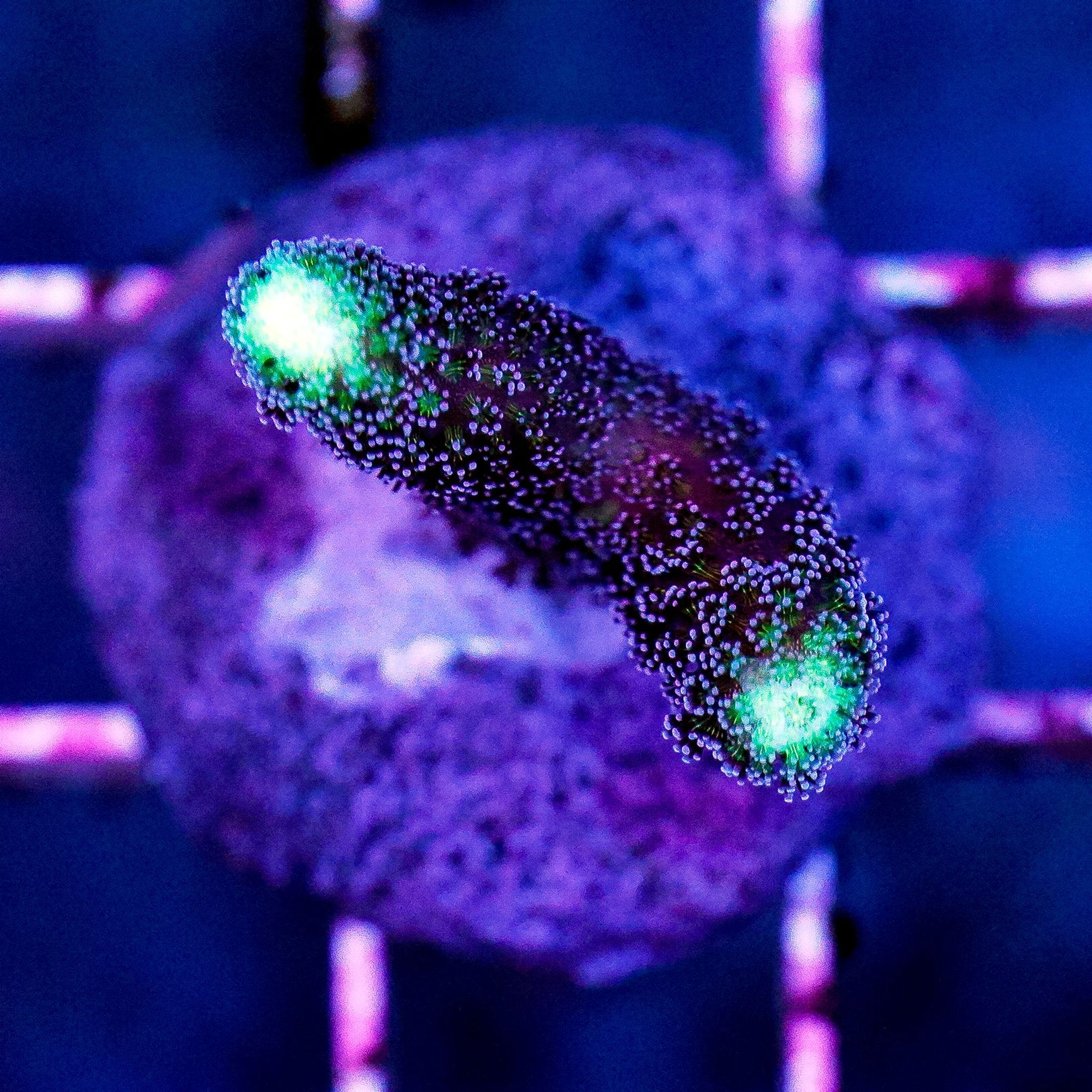

Stylophora Care Guide: Lighting, Flow, Feeding and Placement
Stylophora (Cat's Paw, Birdsnest, or Cluster coral) is one of the most forgiving small-polyp stony corals a reefer can try, which is exactly why it's the coral most hobbyists reach for when stepping up from softies and LPS. This guide covers the lighting, flow, feeding, and placement numbers that keep it healthy, plus the water-chemistry stability habits that actually determine whether it lives or bleaches.
Why Stylophora Is a Good "Gateway SPS"
Stylophora is a genus of small-polyp stony coral that grows in branching or cluster-like colonies, sold under names like Cat's Paw, Birdsnest, Bird's Nest, or Stylo. It's moderately hardy compared to other SPS — noticeably more tolerant of minor parameter swings than Acropora — which makes it a reasonable first SPS for someone who already has stable water chemistry from keeping LPS or soft corals.
That said, "easier SPS" doesn't mean "easy coral." Stylophora still needs consistent alkalinity, calcium, and magnesium, moderate-to-high light, and active water movement. The real gatekeeping factor isn't hitting one perfect number — it's keeping those numbers from swinging.
Water Parameters That Matter
Stable, moderate parameters beat chasing an "ideal" number. Small day-to-day swings are the leading cause of tissue recession in SPS corals, more so than sitting slightly outside a target range.
| Parameter | Target Range | Notes |
|---|---|---|
| Temperature | 76–80°F (24–27°C) | Avoid daily swings over 2°F |
| Salinity | 1.024–1.026 SG (~35 ppt) | Check with a refractometer, not a swing-arm hydrometer |
| pH | 8.0–8.4 | Tends to dip overnight; track the trend, not one reading |
| Alkalinity | 8–10 dKH | Middle ground between growth-focused (7–8) and stability-focused (9–11) advice |
| Calcium | 380–450 ppm | Should track with alkalinity dosing |
| Magnesium | 1250–1350 ppm | Low magnesium makes calcium and alkalinity hard to keep stable |
| Nitrate | ~2–10 ppm | Near-zero nutrients can bleach the coral as easily as excess |
| Phosphate | ~0.03–0.1 ppm | Same logic — some nutrient load is healthy |
The biggest mistake new SPS keepers make is treating "zero nitrate, zero phosphate" as the goal. A tank that's too clean starves the coral's symbiotic algae, and Stylophora will pale or bleach even under good light.
Lighting: Start Low, Build Up
Stylophora does well under moderate-to-high light, generally in the 150–300 PAR range at the coral's placement depth. That's a wide window on purpose — sources disagree on the exact number, with some recommending 100–150 PAR for lower, shaded placements and others pushing past 250 PAR near the surface. Rather than chasing a single figure, treat this as a starting range and let the coral's response guide fine-tuning.
- Fixture type: full-spectrum LED, T5 fluorescent, or a T5/LED hybrid all work.
- Photoperiod: typically 8–10 hours of main lighting.
- Acclimation: when introducing a new frag — or turning up an existing light — ramp intensity gradually over 2–4 weeks or longer. A frag shipped from lower-light holding tanks and dropped straight under a high-output fixture will bleach or show tissue recession within days.
- What to watch: good polyp extension and steady or improving color mean the intensity is appropriate. Tips bleaching out while the base still looks fine is a sign to dial back, not "let it toughen up."
If you're not sure what setting on your specific fixture translates to 150–300 PAR, a PAR meter takes the guesswork out — but in its absence, start on a lower intensity dial or a higher shelf position and creep upward every week or two while watching polyp behavior.
Flow: Turbulent, Not Blasted
Stylophora prefers medium-to-high, turbulent or randomized flow rather than one direct, laminar jet. Older reefing advice sometimes calls for "blasting" SPS with direct flow; the more current consensus favors alternating or pulsing wavemakers that create chaotic movement across the colony.
Turbulent flow matters because it:
- Helps the coral shed built-up mucus and debris
- Improves feeding response by keeping particulate food in suspension near the polyps
- Prevents detritus and algae film from settling on the skeleton in low-flow pockets, which is a common cause of base recession
A single fixed powerhead aimed straight at the colony isn't necessary and can actually cause tissue damage at the point of contact. Two or more flow sources set to alternate or pulse, positioned so their outputs collide near the coral, generally works better than raw volume from one direction.
Placement in the Tank
Stylophora belongs in the upper-to-mid section of the tank, mounted on live rock rather than sand, in a zone with similar light and flow to where you'd place other birdsnest-type SPS.
- Give it real spacing from neighboring corals. Stylophora grows into finger- or branch-like colonies fairly quickly, and it will sting or overgrow anything that ends up too close once it fills out.
- If you're working with a common nano or mid-size tank and an all-in-one LED fixture, start the frag on a lower rock shelf or in the fixture's lower-intensity zone, then move it up a shelf every couple of weeks as it acclimates — this is a practical stand-in for precise PAR numbers when you don't own a meter.
- Avoid sand-bed placement; direct sand contact and the associated detritus buildup stress the base tissue.
Feeding Stylophora
Most of Stylophora's energy comes from photosynthesis through its symbiotic zooxanthellae, so feeding is beneficial rather than strictly required. Sources disagree on how necessary it is — some treat light alone as sufficient, others report meaningfully better growth and color with regular feeding. The practical middle ground: feeding is optional for survival but improves growth rate and coloration.
Good supplemental foods for Stylophora's small polyps include:
- Phytoplankton
- Coral-specific pellet or powder foods
- Rotifers
- Baby brine shrimp
Feed a few times a week. Turning off flow briefly or feeding during a low-flow period helps keep the food near the polyps long enough for a feeding response, and many keepers feed with the lights off or dimmed to encourage more polyp extension.
Coloration and Growth
Stylophora comes in green, pink, purple, blue, and rainbow/tricolor morphs, and color intensity is strongly tied to light and nutrient levels. High light combined with low (not zero) nutrients tends to bring out pastel and blue tones, while excess nutrients typically mute or brown the coloration.
Growth-wise, Stylophora is a relatively fast grower for an SPS. It encrusts its base and branches outward, and once a colony is established it's an easy candidate for fragging — cut healthy branches and mount them on frag plugs. This makes it a popular choice for hobbyists who want to try propagating their own SPS.
Acclimating New Frags
Before adding any new Stylophora frag to the display:
- Dip it in an iodine-based or coral-safe dip to screen out pests like flatworms or red bugs, which specifically target SPS.
- Drip-acclimate for salinity and temperature to avoid shocking the tissue.
- Place it low in light and flow initially, then move it up gradually over several weeks as described above.
Skipping the dip is one of the most common ways hobbyists introduce pest problems into an otherwise healthy SPS system.
Supplementing Calcium and Alkalinity
Corals consume calcium and alkalinity together to build their skeletons, so any Stylophora-keeping tank needs a plan to replace what the coral uses. There are three common methods, and the right one depends on tank size and total coral biomass rather than personal preference alone.
| Method | How It Works | Best For |
|---|---|---|
| Two-part dosing | Manual or pump-dosed calcium and alkalinity solutions added daily | Single colonies or light SPS load; simplest to start with |
| Calcium reactor | CO2 dissolves calcium carbonate media; effluent drips back into the tank, raising Ca and Alk together | Established or larger tanks with heavy SPS demand |
| Kalkwasser (limewater) | Dosed via auto top-off; raises pH, alkalinity, and calcium simultaneously | Budget-conscious setups, but sensitive to pH — needs careful dosing |
| Kalk/reactor combo | Combines kalkwasser with a reactor or two-part method | Larger, heavily stocked SPS tanks balancing demand without pH overshoot |
You do not need a calcium reactor to keep a single Stylophora colony successfully — two-part dosing or kalkwasser handles light demand fine. Reactors and combo methods mainly pay off once total coral biomass (and calcium consumption) climbs high enough that daily hand-dosing becomes impractical.
What Alkalinity Actually Is
Alkalinity is the water's buffering capacity — its carbonate and bicarbonate reserve — which corals draw on alongside calcium to build their skeletons. It's typically measured in dKH or meq/L. Alkalinity is worth monitoring closely because it tends to swing faster than calcium or magnesium, and a fast swing is far more damaging to SPS tissue than a moderate offset from the "ideal" number.
Setting Up and Tuning a Calcium Reactor
A calcium reactor consists of a CO2 cylinder and regulator, a reaction chamber filled with calcium carbonate media, and an effluent line that drips the dissolved output back into the tank. Basic tuning process:
- Set an initial CO2 bubble rate.
- Set the effluent drip rate.
- Test the effluent's pH and alkalinity to confirm the media is dissolving properly.
- Wait several days for tank parameters to stabilize before making further changes.
- Adjust bubble rate or drip rate incrementally — never make large jumps at once.
Reactors are best suited to established tanks or larger SPS-heavy systems where daily dosing volumes would otherwise become unwieldy.
Diagnosing Calcium/Alkalinity Problems
Most parameter crashes trace back to one of a few causes: a dosing pump failure, a reactor running out of CO2 or media, or coral growth simply outpacing your current dosing rate. The fix isn't a single test — it's trend-tracking. Log alkalinity, calcium, and magnesium on a consistent schedule so you catch a drift before it becomes a crash, rather than relying on one-off readings that miss the trend entirely.
Aquarium Controllers for SPS Tanks
As coral load grows, many reefers add an aquarium controller to monitor pH, ORP, temperature, and sometimes continuous alkalinity, and to automate dosing or reactor tuning. This isn't required for a single Stylophora colony, but it becomes increasingly valuable as a tank scales up, since automated monitoring catches the swings that most often cause SPS to decline before a hobbyist would notice them manually.
Coral Nutrition: Photosynthesis and Feeding Together
Most of a coral's daily energy comes from its symbiotic zooxanthellae converting light into food through photosynthesis. Heterotrophic feeding — particulate foods captured by the polyps — supplements that base, adding measurable benefits to growth and coloration, especially in lower-nutrient systems where the zooxanthellae alone aren't providing everything the coral wants.
Other Intermediate SPS Worth Knowing
Stylophora is commonly grouped with other "step-up" SPS corals that intermediate reefers try before attempting Acropora:
- Birdsnest (Seriatopora) — similarly hardy, similar branching growth form
- Pocillopora — tolerant, fast-growing
- Montipora — encrusting or plating growth, wide color range
SPS as a group is the most light-, flow-, and chemistry-demanding coral category in the hobby. Stylophora, Montipora, and Pocillopora sit at the easier end of that spectrum; Acropora sits at the more advanced end, generally attempted only after a hobbyist has demonstrated stable chemistry with the easier genera first. If you're ready to try one, you can browse SPS corals to compare available colonies and color morphs.
The Real Secret: Consistency
SPS success isn't about finding one trick, additive, or fixture setting. It comes from doing the same things the same way, week after week: same testing schedule, same dosing amounts, same light intensity, same flow pattern. A tank that swings alkalinity by 2 dKH between water changes will struggle with Stylophora even if the average number looks fine on paper. A tank that holds a slightly "imperfect" but stable 7.5 dKH will usually outperform it.
Common Mistakes and Troubleshooting
| Mistake | Result | Fix |
|---|---|---|
| New frag placed straight into high light/flow | Bleaching or tissue recession within days | Start low, ramp up over 2–4+ weeks |
| Alkalinity/calcium allowed to swing | STN/RTN-type tissue recession | Test more often; dose smaller amounts more frequently |
| Placed too close to neighboring corals | Stinging or overgrowth once it branches | Leave generous growth room from day one |
| Near-zero nitrate/phosphate | Bleaching or pale color despite good light | Allow modest nutrient levels or add light feeding |
| Low-flow dead spot behind or under the colony | Algae film buildup, base recession | Improve random flow coverage, not just total volume |
| Light intensity pushed too high, too fast | Tip bleaching mistaken for "browning up" | Watch polyp extension and color; dial back if stressed |
| No pest dip before adding to display | Flatworms or red bugs introduced | Always dip new frags before they touch display water |
Frequently Asked Questions
Is Stylophora coral good for beginners?
Not for a true first-ever coral, but it's a reasonable first SPS once you already have stable water chemistry and testing habits from keeping LPS or soft corals. It's more forgiving than Acropora but still needs consistent alkalinity and calcium.
How much light does Stylophora need?
Moderate-to-high light, roughly 150–300 PAR at placement depth. Introduce a new frag gradually over 2–4 weeks rather than placing it directly under high-intensity lighting.
Does Stylophora need to be fed?
Not strictly — most of its nutrition comes from photosynthesis via zooxanthellae. Occasional feeding of fine particulate foods a few times a week improves growth rate and coloration but isn't required for survival.
What flow does Stylophora prefer?
Medium-to-high, turbulent or randomized flow rather than a single direct laminar jet. Alternating or pulsing wavemakers work better than one fixed powerhead aimed straight at the colony.
Why is my Stylophora losing color or turning brown?
Browning is usually caused by too little light or excess nutrients feeding the zooxanthellae. If it's bleaching white instead, suspect too much light, too little nutrient, or a recent chemistry swing.
Why is my Stylophora receding at the base?
Base recession is typically tied to unstable alkalinity or calcium, poor flow allowing detritus to settle around the base, or an undetected pest issue. Check your parameter trend logs and flow pattern before assuming it's a chemistry problem alone.
How fast does Stylophora grow, and can it be fragged?
It's a relatively fast grower for an SPS, encrusting its base and branching outward. Once a colony is well established, it's easy to frag — cut healthy branches and mount them on frag plugs.
Do I need a calcium reactor to keep Stylophora?
No. Two-part dosing or kalkwasser works fine for a single colony or a light overall SPS load. Reactors and combo dosing methods mainly become worthwhile once total coral biomass and calcium demand climb high enough that daily hand-dosing gets impractical.
Ready to add a Stylophora colony to your reef? Browse available color morphs and other easy step-up SPS in FishyHub's Corals category.


