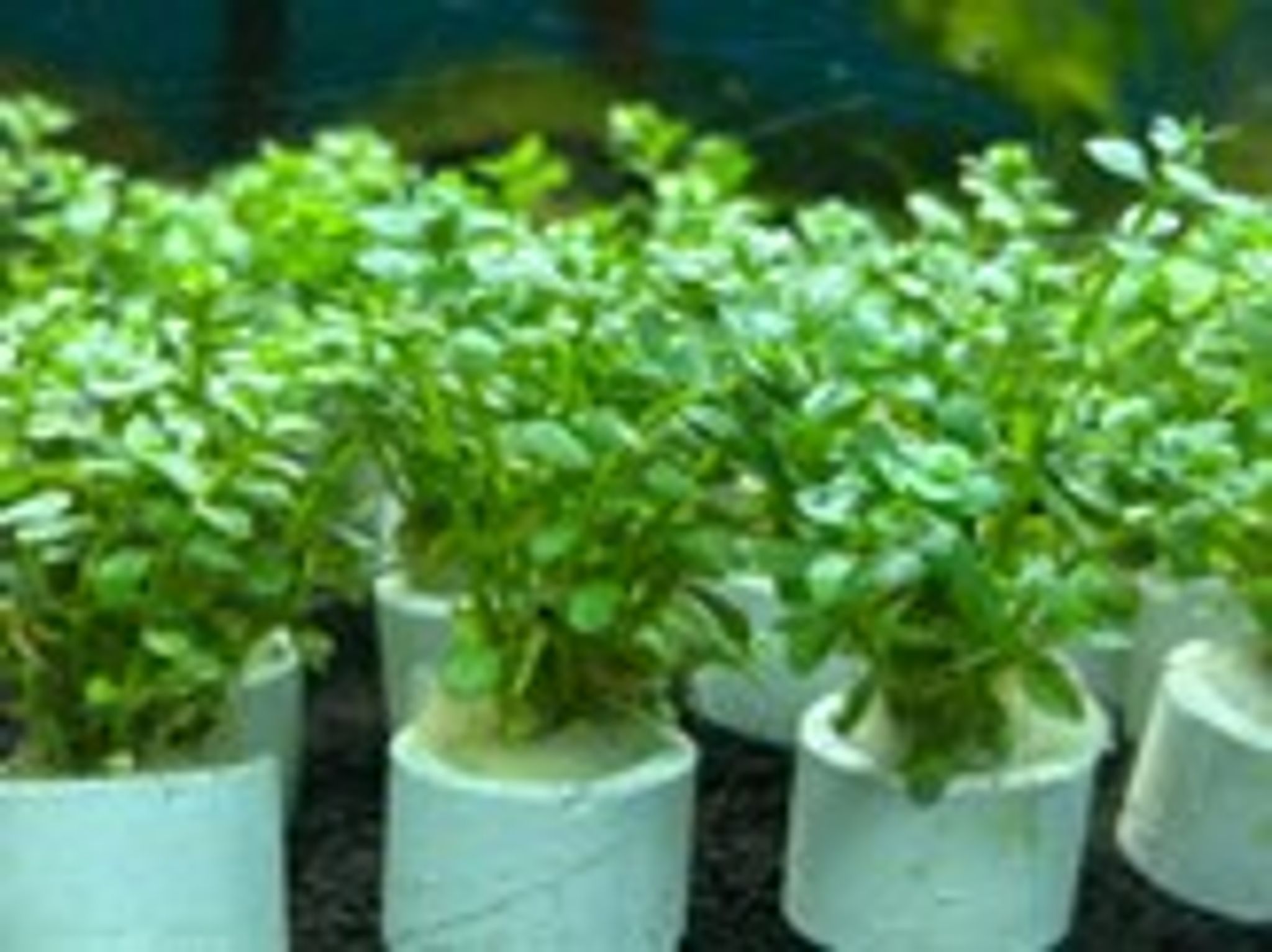
Rotala Rotundifolia Care Guide: Light, CO2, Substrate and Growth Tips
Rotala rotundifolia is one of the most forgiving red-to-pink stem plants you can put in a freshwater tank, but its final look depends almost entirely on light, iron, and trimming habits rather than luck. This guide breaks down the exact parameters, planting method, and troubleshooting steps that separate a bushy, colorful stand of Rotala from a tall, pale, leggy one.
What Is Rotala Rotundifolia
Rotala rotundifolia is a stem plant in the Lythraceae family, native to South and Southeast Asia. It's sold under a few names, including "Rotala Green," "Rotala H'ra," and various red-color trade names, which is why two bags of "the same plant" can look completely different on the shelf.
That difference usually comes down to growth form, not mislabeling:
- Emersed (nursery-grown) form: grown above water in a greenhouse, with rounder, greener, more rigid leaves.
- Submersed form: grown underwater, with narrower, often pink or red leaves and a softer stem.
If you buy emersed stems and drop them into your tank, expect the older emersed leaves to melt away over the first one to two weeks while new, thinner submersed growth takes over. That's a normal transition, not a dying plant — don't panic and pull it.
Difficulty-wise, Rotala rotundifolia is easy to moderate and a common recommendation as a first colored stem plant, since it tolerates a wide range of water conditions while you dial in your lighting and fertilizing routine.
Water Parameters and Tank Requirements
| Parameter | Range | Notes |
|---|---|---|
| Temperature | 68–82°F (20–28°C) | Comfortable across most community tank setups |
| pH | 6.0–8.0 | Does best in the mid-range, roughly 6.5–7.5 |
| General hardness | ~2–12 dGH | Soft to moderately hard water is fine |
| Tank size | 10 gallons (38 L) and up | Flexible on footprint; needs a few inches of water depth to show a proper stem |
| Photoperiod | 8–10 hours/day | More hours doesn't mean more growth — it usually means more algae |
Rotala rotundifolia also tolerates the ammonia and nitrite swings of a newly cycling tank reasonably well, which makes it a practical choice for stocking a tank early rather than waiting for it to fully mature.
Lighting: The Single Biggest Factor in Shape and Color
Light intensity is the main lever controlling whether Rotala rotundifolia stays compact and colorful or grows tall, thin, and green. There isn't universal agreement on exact numbers across sources, but a useful benchmark is medium-to-high light, roughly 35–50+ PAR at the substrate, from a full-spectrum fixture in the 5000–7000K range. Treat that PAR figure as a helpful target rather than a strict requirement — tank depth and fixture design vary enough that two tanks with the "same" light can deliver very different intensity at the substrate.
- Under low light: expect tall, thin stems, wider spacing between leaves (legginess), and a green-to-yellow-green cast.
- Under medium-high light: expect tighter internode spacing, a bushier profile, and pink or red coloration when combined with good iron and micronutrient dosing.
A light rated fine for a 10-gallon tank may not deliver the same PAR at the substrate of a taller tank, so match fixture strength to depth, not just tank footprint. Browse full-spectrum options in FishyHub's LED aquarium lighting selection when upgrading a fixture that's leaving stems stretched.
Why Light Matters Beyond Color
Light drives photosynthesis: plants combine light, CO2, and water to produce energy, releasing oxygen and consuming CO2 during the day. At night, that reverses — plants respire, consuming oxygen and releasing CO2, the same as fish and other livestock. This is part of why heavily planted tanks benefit from surface agitation overnight, and why photoperiod length matters as much as intensity. Light spectrum (Kelvin) and duration both affect fish circadian rhythm too, not just plant growth.
CO2: Optional Booster, Not a Requirement
Rotala rotundifolia will grow in a low-tech tank without any supplemental CO2. Here's the honest split:
- Low-tech (no CO2): survives and grows, but expect slower growth, looser form, and less saturated color even under decent light.
- High-tech (pressurized or liquid carbon CO2): noticeably increases density, growth rate, and color saturation, and helps produce the tight internode spacing hobbyists want in a "street" planting.
Think of CO2 as the fastest lever for color and compactness rather than a survival requirement. If you're not ready to run a pressurized system, liquid carbon supplements are a lower-commitment middle ground.
Substrate and Fertilization
Rotala rotundifolia is adaptable but a moderate root feeder, so substrate choice affects how much extra fertilizing you need to do.
- Nutrient-rich aquasoil: best out-of-the-box results, since it feeds the root zone continuously. Browse planted-tank soil options in FishyHub's aquarium soil substrate category.
- Plain gravel or sand: works fine, but plan on root tabs placed under the root zone since inert substrate provides essentially no nutrition on its own. See gravel and sand substrate options for base material.
On top of substrate feeding, dose a complete liquid fertilizer covering macros (nitrogen, phosphorus, potassium) and micros (iron and trace elements). Iron and potassium are specifically important for vivid red/pink coloration and for preventing stunted new growth. A practical routine is to combine both: root tabs on a monthly cadence for the base, plus liquid fertilizer dosed with your regular water change schedule for the water column. Relying on only one or the other usually gets an "okay" plant rather than a great one.
Iron deficiency (chlorosis) shows up as yellowing, especially in new leaves — that's a trace-element problem, not something more light alone fixes.
Planting Technique
Plant individual stems, not bunches. Bunching several stems together shades the lower leaves, causing leaf drop and stem melt near the base — a very common beginner mistake.
Steps:
- Space stems roughly 1 inch apart.
- Insert each stem at a slight angle so the substrate weighs it down — roots are sparse at first, so a straight vertical poke tends to let stems float back out.
- Use long aquascaping tweezers for precision, especially in nano tanks where finger planting isn't practical.
- Expect some initial melt from emersed-grown leaves in the first one to two weeks as the plant transitions to submersed growth.
Growth Rate, Trimming, and Propagation
Rotala rotundifolia grows at a moderate-to-fast pace, adding several inches a week under good light and CO2. Left untrimmed, total height can run anywhere from about 4 to 24+ inches depending on light intensity and how often it's cut back. It's typically used as a mid-ground to background plant.
Trimming
- Top-trim every 1 to 3 weeks depending on growth speed.
- Cutting the growing tip triggers lateral branching just below the cut — this is what keeps the plant bushy instead of leggy.
- Regularly pluck dead or melting lower leaves with tweezers and remove debris so it doesn't foul the water.
- Skipping regular trims is one of the most common mistakes: the plant gets tall and sparse near the base ("bald stems") instead of full and bushy.
Propagation
Propagation is simple stem cutting:
- Cut a healthy top section, roughly 3–4 inches long.
- Replant the cutting directly into substrate at a slight angle.
- It typically roots within 1–2 weeks.
- The original base will also branch and send out new shoots after trimming, so one healthy stem can turn into several over a few months.
Getting Red or Pink Coloration
Full red or pink coloration in Rotala rotundifolia comes from a combination of three factors working together:
- High light (medium-to-high intensity, in the PAR range noted above)
- Iron and micronutrient dosing
- Supplemental CO2 (often, though not strictly required)
A plant kept under low light with no fertilizer dosing will stay mostly green regardless of which "red" trade name it was sold under. Genetics set the ceiling; light and nutrients determine whether the plant actually gets there.
Symptom-to-Cause Troubleshooting Table
Use this table to connect what you're seeing to the most likely fix, rather than guessing.
| Symptom | Likely Cause | Fix |
|---|---|---|
| Tall, thin, leggy stems with wide leaf spacing | Insufficient light intensity for tank depth | Increase PAR at substrate or move plant higher in the water column |
| Green instead of red/pink | Low light and/or low iron/micronutrient dosing | Raise light intensity and add a trace-element/iron supplement |
| Yellowing new leaves | Iron deficiency (chlorosis) | Dose a trace-element/iron supplement; more light alone won't fix it |
| Lower leaf drop and base melt | Stems planted too close together, shading the base | Replant individually, roughly 1 inch apart |
| Pale, slow growth in bare substrate | No fertilization | Add root tabs, liquid fertilizer, or both |
| Bald, sparse lower stems | Infrequent trimming | Top-trim every 1–3 weeks to force lateral branching |
| Green or hair algae on fine leaves | Light duration or intensity outpacing nutrient dosing | Shorten photoperiod toward 8–10 hours and balance fertilizer dosing with light level |
| Rounded green leaves turning thin and pink after purchase | Emersed-to-submersed transition | Normal — expect old leaf melt over 1–2 weeks, not a dead plant |
A Note on Algae Risk
Rotala's fine, feathery leaves offer a lot of surface area, which makes them a common spot for green or hair algae to take hold once light and nutrients fall out of balance. If algae starts appearing on the foliage rather than the glass, check both ends of the equation — cutting photoperiod back toward 8–10 hours and confirming fertilizer dosing matches your light intensity is usually more effective than scrubbing leaves by hand.
Which Rotala Did I Actually Buy? Varieties Overview
Retailers use "Rotala" loosely, and buyers often end up with a different species or cultivar than they expected. Here's a quick rundown:
- Rotala 'Vietnam H'ra': a reddish-orange submersed form of rotundifolia itself, not a separate species.
- Rotala 'Orange Juice': an orange-toned cultivar, similar care to standard rotundifolia.
- Rotala Bonsai (Ammannia): dwarf and very slow-growing, used more as a foreground accent than a background row.
- Rotala Nanjenshan: fine, needle-like leaves; wants high-tech conditions (strong light, CO2) to look its best.
- Rotala Wallichii: whorled needle leaves and the most demanding common Rotala — see below.
Rotala Indica: The Close Cousin
Rotala indica has a care profile very similar to rotundifolia, and some retailers use the two names interchangeably. It's a tall background plant with a fragile, sparse root system, so it needs the same careful angled planting with tweezers. Regular pruning keeps it bushy, and it colors up best with bright light, fertilizer, and CO2 — essentially the same formula as rotundifolia.
Rotala Macrandra: The Harder Contrast Plant
If rotundifolia is the easy entry point into red stem plants, Rotala macrandra is the next step up in difficulty:
- Wants strong light, roughly equivalent to 4+ watts per gallon or a high PAR reading
- Needs stable CO2 rather than the "optional booster" treatment rotundifolia tolerates
- Prefers lean-to-moderate water column dosing with an iron-rich substrate
- Does best at the cooler end of the tropical range, around 72–78°F
- Sensitive to copper-based medications — isolate it during any fish treatment that uses copper
- Green forms are noticeably easier to keep than variegated forms
Rotala Wallichii: The Most Demanding
Rotala wallichii has whorled, needle-thin leaves and can form pink or purple blooms above the waterline. It prefers to be trimmed at just a few inches of new growth rather than left to grow long and gangly. Because its stems are fragile, it pairs best with calm tankmates — boisterous or digging fish will uproot or eat it.
A Similar-Looking Plant: Stargrass
Heteranthera zosterifolia, commonly called stargrass, is a different genus but frequently grouped with Rotala because of its similar fine-stemmed look. It likes bright light and soft water with a pH around 6.0–7.5, propagates easily from cuttings, and can be trimmed hard to form a dense low carpet or left tall as a bushy background plant. It benefits from CO2 and, like the more delicate Rotala species, has fragile stems best kept away from digging or plant-eating fish.
Rotala in Aquascaping: Dutch Style and Stem-Plant Rows
Rotala rotundifolia is a staple "street" plant in Dutch-style aquascaping, a classic layout built from dense rows of different stem plants. A few rules commonly cited for this style:
- Avoid duplicating one species across multiple rows/groups.
- Aim for roughly one plant species per 4 inches of tank length.
- Terrace rows by height and color for visual contrast.
It's also consistently listed among the top beginner-friendly stem plants for aquascaping, alongside fast growers like water wisteria and various Ludwigia species — reinforcing its reputation as an easy, reliable background workhorse.
Rotala Rotundifolia with Shrimp and Fry
Because it tolerates cycling-tank ammonia bumps and forms dense cover once trimmed, Rotala rotundifolia is a solid choice for shrimp and fry tanks, offering shelter and grazing surface without demanding a high-maintenance setup. If you're stocking a shrimp tank alongside it, FishyHub's freshwater shrimp selection is a good place to browse tankmates that appreciate the same dense planting.
Frequently Asked Questions
Does Rotala rotundifolia need CO2?
No. It grows without supplemental CO2, but adding it noticeably speeds growth, increases stem density, and deepens red or pink coloration. Treat CO2 as an optional booster rather than a requirement.
Why is my Rotala rotundifolia green instead of red/pink?
This is usually a combination of insufficient light intensity and low iron or micronutrient dosing. Increasing both light and trace-element fertilization is the fix — genetics alone won't turn it red under weak light.
How often should I trim Rotala rotundifolia?
Roughly every 1 to 3 weeks, depending on growth speed and desired height. Trimming the growing tip triggers bushier branching just below the cut, which is what keeps the plant full instead of leggy.
Can Rotala rotundifolia grow in low light or a low-tech tank?
Yes, but expect it to grow taller, thinner, and paler than it would under medium-high light with CO2 supplementation. It's a survivable setup, just not the one that produces the best color or density.
What's the difference between Rotala rotundifolia, Rotala indica, and Rotala macrandra?
Rotundifolia and indica have very similar, beginner-friendly care requirements and are sometimes sold under overlapping names. Macrandra is notably more demanding, needing stronger light, steadier CO2, and cooler water, and it's more sensitive to medications.
How do I plant Rotala rotundifolia so it doesn't float away?
Plant individual stems, not bunches, at a slight angle so substrate weight holds them down, since roots are sparse at first. Long aquascaping tweezers make this much easier to do with precision, especially in smaller tanks.
Is Rotala rotundifolia good for beginners, and does it need special substrate?
Yes, it's considered an easy stem plant overall. It adapts to most substrates, though it grows best with a nutrient-rich aquasoil or with root tabs added to an inert substrate like plain gravel or sand.
Can I keep Rotala rotundifolia with shrimp or fry?
Yes. It tolerates the ammonia bump of a newly cycling tank, and its dense, well-trimmed growth provides shelter and grazing surface that both shrimp and fry commonly use.
Ready to set up a Rotala rotundifolia stand of your own? Browse substrate, lighting, and planted-tank supplies in FishyHub's substrate category to match the setup this guide describes.

