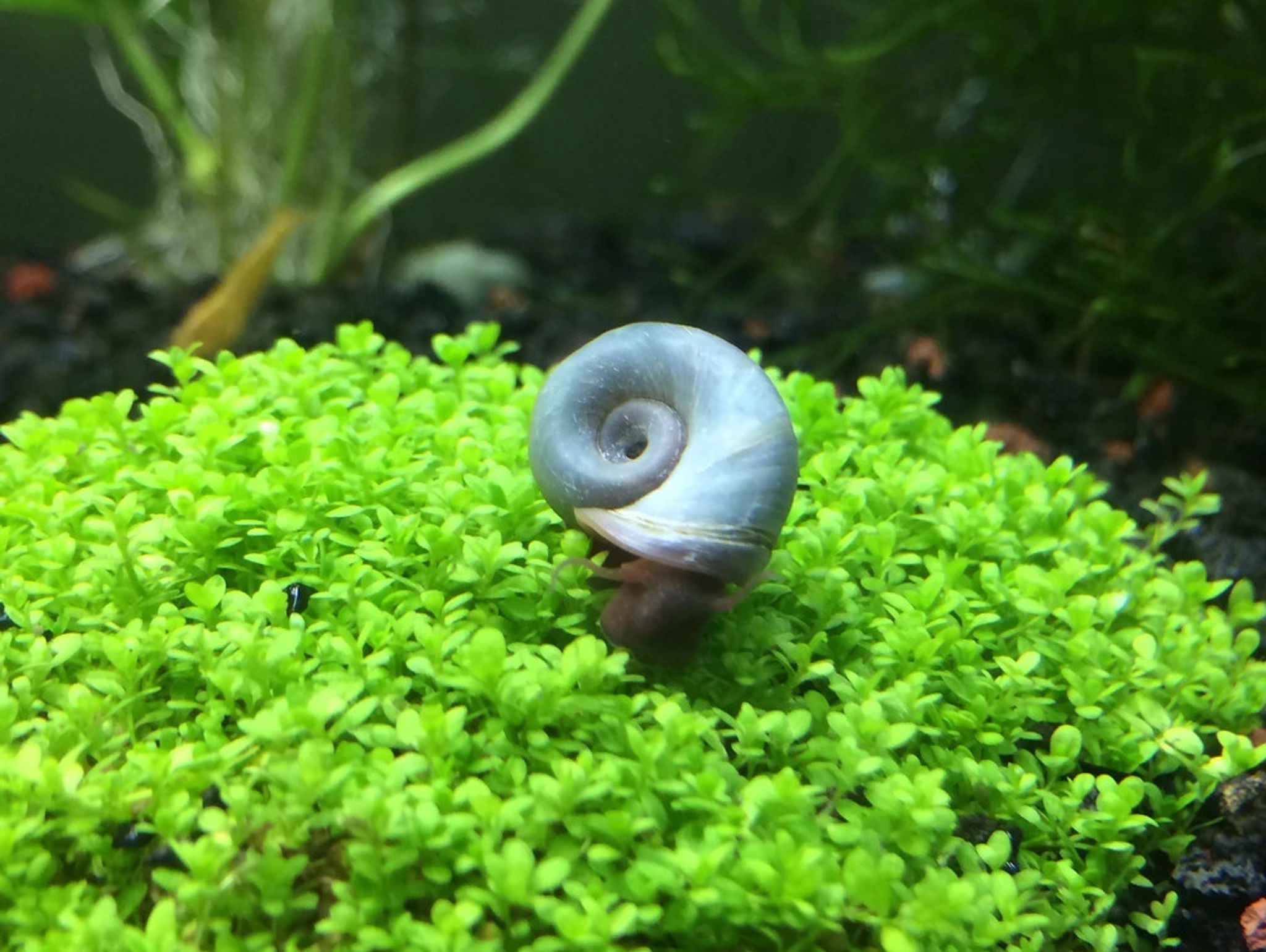
Ramshorn Snail Care Guide: Setup, Feeding, Water Parameters and Breeding
Ramshorn snails are one of the most common freshwater invertebrates in the hobby, whether you buy them on purpose as a cleanup crew or find them riding in on a new plant. This guide covers tank setup, water parameters, feeding, breeding biology, and — since population control is the question most owners actually have — how to keep numbers in check without resorting to chemicals that harm shrimp and other invertebrates.
Overview: What Is a Ramshorn Snail?
Ramshorn snails belong to the genus Planorbella (also Planorbarius in some species), family Planorbidae. Their name comes from a flat, tightly coiled shell that looks like a ram's horn, which sets them apart from the taller, pointed spiral shape of pond snails. Common color morphs sold in the hobby include:
- Brown/tan — the wild-type color, most common on hitchhiker specimens
- Red or pink — selectively bred for stronger pigment
- Blue — a lighter, cooler-toned morph
- Albino/pink-white — a lighter, translucent variant, also selectively bred
These color morphs exist because ramshorns breed quickly and pass on shell and body color reliably, making them easy for hobbyists to selectively line-breed for specific hues — a detail most care sheets skip but worth knowing if you're trying to keep a particular color pure in a colony.
Is a Ramshorn Snail Good or Bad for Your Tank?
This is really two different questions depending on how the snail arrived. If you bought ramshorns intentionally, they're a genuinely useful cleanup crew: they graze algae, biofilm, leftover food, and decaying plant matter, helping manage detritus (though they never replace regular water changes and filtration). If they hitchhiked in on a plant and you didn't want them, the exact same biology that makes them useful becomes a nuisance once their numbers get out of hand. Neither framing is universally "right" — most tanks benefit from a modest ramshorn population, and only overfed or overstocked tanks end up with a real problem.
Tank Setup and Size
Ramshorn snails are low-bioload animals, but they still need adequate space and surface area to graze on.
- Minimum tank size: A practical floor is 5 gallons (19 L) for a couple of snails, since they're almost always kept alongside fish or shrimp rather than alone. Some hobbyists keep them in bowls as small as 2 gallons, but that leaves no margin for a growing colony.
- For a breeding colony: Plan for 10 gallons (38 L) or more so population growth doesn't outpace available food and surface area.
- Equipment: Standard filtration and a heater sized for the tank are all that's needed — no specialized gear. More plants and hardscape simply give them more grazing surface.
Water Parameters
Ramshorns are adaptable, but shell health depends heavily on hardness and pH. The table below merges the commonly cited ranges into practical targets.
| Parameter | Acceptable Range | Ideal Target | Notes |
|---|---|---|---|
| Temperature | 64–86°F (18–30°C) | 70–78°F (21–26°C) | Fits most tropical community setups |
| pH | 7.0–8.0 | 7.2–7.8 | Avoid below ~6.5; acidic water erodes shells |
| GH (general hardness) | 8–18 dGH | Mid-range or higher | Supplies calcium for shell growth |
| KH (carbonate hardness) | 5–15 dKH | Stable, moderate | Buffers pH; distinct from GH |
| Ammonia / Nitrite | 0 ppm | 0 ppm | Non-negotiable, as with any tank |
| Nitrate | Low | Under typical fish-safe limits | Snails tolerate nitrate better than fish do |
GH vs. KH matters more than most sources admit. GH (general hardness) reflects dissolved calcium and magnesium — this is the mineral pool your snails pull from to build and repair shell. KH (carbonate hardness) is a separate measurement that affects how stable your pH stays over time. A tank can have adequate KH but still be too soft in GH for healthy shells, so if you're troubleshooting shell problems, test GH specifically rather than assuming "hardness" is one single number.
Feeding Ramshorn Snails
Ramshorns are omnivorous scavengers that will eat almost anything organic in the tank:
- Algae and biofilm growing on glass, decor, and plant leaves
- Decaying plant matter and dead leaves
- Leftover fish food and detritus
- Dead animal matter, including deceased fish or shrimp
Supplemental feeding is optional in an established tank but useful if algae growth is low:
- Algae wafers or a sinking gel food
- Blanched vegetables — zucchini, cucumber, spinach, or lettuce, left in for a few hours and removed
- A calcium source such as cuttlebone, crushed coral, or a commercial calcium supplement, especially important in soft water or if you notice thin or pitted shells
The single biggest feeding mistake is overfeeding. Excess food doesn't just foul water quality — it's the direct driver of population explosions, since ramshorn reproduction rate scales with how much food is available. Feed only what fish and shrimp finish within a few minutes, and resist the urge to supplement heavily "for the snails."
Breeding and Reproduction
Ramshorn snails are hermaphrodites — every individual carries both male and female reproductive organs. This means a single snail can self-fertilize and start an entire colony on its own, though most individuals will cross-fertilize with a partner when one is available.
- Eggs: Laid in small gelatinous clusters of roughly 10–12 eggs, attached to glass, decor, or plant leaves.
- Hatch time: Roughly 2 to 4 weeks, with warmer water speeding up development toward the shorter end of that range.
- Juveniles: Fully independent from hatching and eat the same foods as adults — there's no separate fry-rearing stage.
No special breeding setup is required for ramshorns or most freshwater snails in general. Ordinary stable, warm water and consistent food availability are the only "trigger" needed — which is exactly why population control, not encouragement, is the more common concern in this species.
How Fast Can a Colony Grow?
Because every snail can reproduce alone and eggs hatch in a few weeks, a handful of snails in a well-fed tank can realistically multiply into dozens within two to three months. The scaling factor is food, not innate breeding drive — cut feeding and the growth rate drops sharply within a generation or two.
Controlling an Overpopulation
If your ramshorn numbers have gotten ahead of you, work through these steps in order:
- Reduce feeding to the amount your fish or shrimp finish in a few minutes — this alone slows reproduction over the following weeks.
- Manually remove snails and eggs on a routine schedule — a weekly pass scraping visible egg clusters off glass and decor, combined with gravel vacuuming to remove eggs hidden in substrate, meaningfully caps growth.
- Set a bait trap using a piece of blanched lettuce or zucchini weighted down overnight; snails congregate on it and can be scooped out in bulk each morning.
- Add a predator if manual control isn't enough — see the tank mates section below.
- Quarantine and dip new plants going forward so you don't reintroduce the problem.
Avoid copper-based fish medications or "snail killer" chemical treatments as a shortcut. These products are also toxic to shrimp and other invertebrates sharing the tank, and a sudden die-off of snails can spike ammonia. A population boom is a food and husbandry issue, not a disease — treat it as such rather than reaching for medication.
Tank Mates
Ramshorns are peaceful and get along with most community fish and shrimp:
- Good tank mates: corydoras, tetras, rasboras, guppies, gouramis, cherry shrimp, ghost shrimp, and other peaceful snails
- Predators/snail-eaters to avoid (unless deliberately used for population control): clown and yoyo loaches, pufferfish, larger cichlids, crayfish, and opportunistic goldfish
- Assassin snails: a deliberate exception — they're commonly kept specifically to hunt down excess ramshorn, pond, and bladder snails
You can browse compatible community fish and shrimp options in FishyHub's freshwater livestock and shrimp categories when stocking a tank that will include ramshorns.
Shell Health: Diagnosing Pitted or Cracked Shells
A pitted, flaking, or cracked shell almost always points to water chemistry, not illness:
- Low GH/calcium: not enough dissolved mineral for the snail to maintain its shell
- Acidic water (pH below ~6.5): actively dissolves shell material over time
The fix is adjusting hardness and adding a calcium source — crushed coral, cuttlebone, or a mineral supplement — never medication. Medicating a shell problem treats the wrong cause and risks harming other invertebrates in the tank.
Snails in Planted Tanks
Ramshorns are one of the more plant-friendly snails available. They strongly prefer algae, biofilm, and decaying plant tissue over healthy leaves, which is why they're frequently recommended alongside nerite snails, mystery snails, rabbit snails, and Malaysian trumpet snails as safe algae-control options for planted setups. The exception is a heavily overpopulated colony — when food is scarce, large numbers of snails may start grazing on soft new growth or biofilm-coated leaves simply because there's nothing else left to eat. Keeping numbers in check (see the control section above) protects your plants as much as it protects your water quality.
Preventing Hitchhikers: Quarantining and Dipping New Plants
Ramshorn and bladder snails are among the most common uninvited passengers on new aquarium plants. If you want to keep them out of a display tank entirely, quarantine every new plant and dip it before adding it. Common dip options, each followed by a thorough rinse in dechlorinated water:
- A diluted bleach dip
- An alum dip
- A potassium permanganate dip
- A hydrogen peroxide soak
Any of these will kill snails and their eggs on contact without introducing chemicals into your display tank, provided the plant is rinsed thoroughly afterward. FishyHub's water treatment and medication category carries relevant conditioning and treatment products if you need supplies for a quarantine routine.
Ramshorn vs. Other Small Hitchhiker Snails
Several small snails get lumped together by new hobbyists. Here's how to tell them apart:
| Snail | Shell Shape | Typical Behavior |
|---|---|---|
| Ramshorn | Flat, coiled like a wheel | Plant-safe, moderate breeder, several color morphs |
| Pond snail | Taller, pointed spiral | Larger, often more prolific hitchhiker |
| Bladder snail | Small, oval/teardrop | Extremely prolific, very common hitchhiker |
| Freshwater limpet | Flattened cone | Clings to glass and hardscape, rarely noticed |
| Ear/spixi snail | Larger, elongated | Sometimes kept intentionally; spixi varieties are marketed as non-breeding for pest-averse keepers |
Pond snails and bladder snails are managed the same way as ramshorns: reduce feeding, remove manually, or introduce a predator species — there's no special treatment needed just because the species differs.
Common Mistakes to Avoid
- Overfeeding the tank — the single biggest driver of a snail explosion
- Skipping plant quarantine/dips — the most common way ramshorns and bladder snails enter a tank uninvited
- Keeping them in soft, acidic water — causes shell pitting; fix with hardness and calcium, not medication
- Reaching for copper-based medications to "solve" a population boom — toxic to shrimp and other invertebrates
- Mistaking a population boom for disease — it's almost always a food surplus, not illness
- Allowing sudden temperature swings — stability matters more to snails than fish; keep parameters consistent
Frequently Asked Questions
Are ramshorn snails good or bad for my aquarium?
They're a beneficial cleanup crew in the vast majority of tanks, eating algae, leftover food, and decaying matter. They only become a nuisance when overpopulated, and even then they're harmless to fish and plants — just visually excessive.
How do I get rid of too many ramshorn snails?
Cut back feeding, manually remove snails and eggs on a regular schedule, and consider adding a predator like an assassin snail or a snail-eating fish. Going forward, quarantine and dip new plants so you don't reintroduce more.
Do ramshorn snails need a male and female to breed?
No. They're hermaphrodites, meaning a single snail carries both reproductive organs and can self-fertilize to start a colony alone, though cross-fertilization with another snail is common when a partner is present.
Will ramshorn snails eat my live plants?
Rarely. They strongly prefer algae, biofilm, and decaying matter over healthy plant tissue. Very large, overcrowded colonies may nibble soft new growth or dying leaves once other food runs short.
What eats ramshorn snails?
Assassin snails, certain loaches, pufferfish, larger cichlids, and crayfish will all eat ramshorns. They're useful for population control but can also be risky additions to an otherwise peaceful community tank.
How can I tell a ramshorn snail from a bladder or pond snail?
Look at shell shape: ramshorns are flat and coiled like a wheel or ram's horn, bladder snails are small and oval/teardrop-shaped, and pond snails have a taller, more pointed spiral shell.
Why does my ramshorn snail's shell look cracked or eroded?
This is almost always caused by low GH/calcium or acidic water rather than disease. Raise general hardness and add a calcium source such as crushed coral or cuttlebone to correct it.
How long do ramshorn snails live?
Typically 1 to 2 years, with some individuals reaching about 3 years under stable, well-maintained water conditions.
Ready to stock a tank around a ramshorn cleanup crew? Browse compatible community fish, shrimp, and other freshwater livestock in FishyHub's Freshwater Livestock category.

