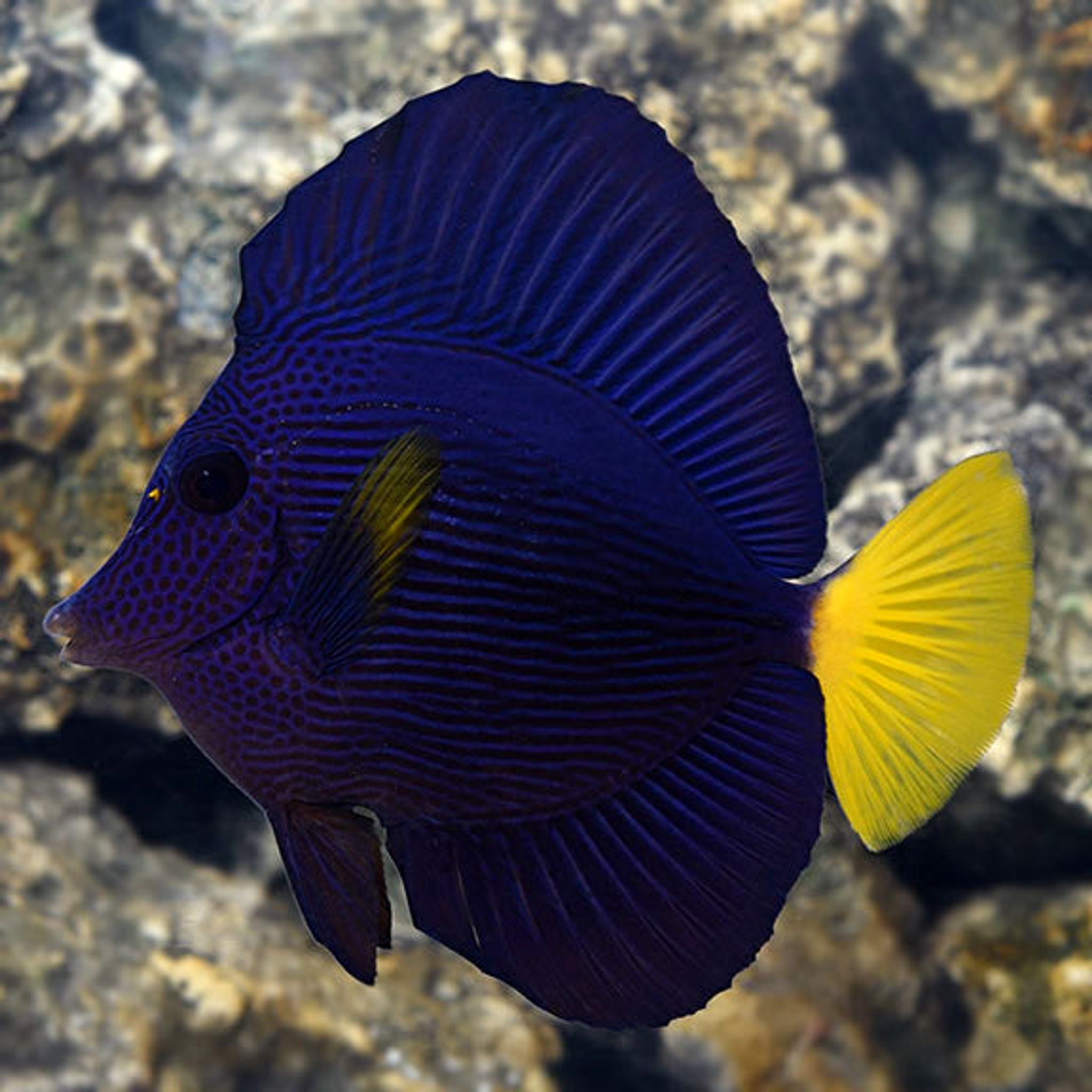
Purple Tang Care Guide: Tank Size, Diet, Compatibility and Reef Safety
The Purple Tang (Zebrasoma xanthurum) is one of the most striking algae grazers in the marine hobby, but its adult size and territorial streak catch a lot of new owners off guard. This guide walks through tank size, water parameters, diet, compatibility, and reef safety so you can decide whether your system is ready and set it up correctly from day one.
Species Overview
The Purple Tang carries a deep violet-purple body with a contrasting bright yellow tail, and it's native to the Red Sea and western Indian Ocean. You'll see it sold under a few different names, which causes confusion for shoppers:
- Lavender Tang — simply an alternate common name for the same fish, Zebrasoma xanthurum. It is not a separate species or variant.
- "Showstopper" grade — a marketing term some sellers use for specimens with unusually deep purple coloration and strong yellow-tail contrast. It describes color intensity, not a different fish, so judge health signs first and treat color grading as a bonus.
Adults reach roughly 8–10 inches in length, which is a major factor in stocking decisions below.
Don't Confuse It With Other Zebrasoma Species
A few relatives get mixed up with the Purple Tang in online listings:
- Yellow Tang (Zebrasoma flavescens) — solid bright yellow, smaller and generally less territorial toward non-tangs.
- Sailfin Tang (Zebrasoma veliferum / desjardinii) — larger dorsal/anal fins forming a "sail," different body pattern.
- Gem Tang (Zebrasoma gemmatum) — a rare, significantly more expensive cousin with a dark body covered in fine gold-ringed spots. It is not the same fish as the Purple Tang and shouldn't be confused with a purple-colored listing.
Tank Size and Setup
Minimum Tank Size
100 gallons (379 L) is the consensus floor for a single adult Purple Tang. Because this fish reaches 8–10 inches and is a constant, active swimmer, 125 gallons (473 L) or more is the better long-term choice, especially once you factor in rockwork that eats into open swimming space.
Tank shape matters as much as raw volume. Favor a long, wide footprint over a tall one — tangs cruise along the length of a tank rather than swimming vertically, and a narrow or tall tank restricts that natural movement, which contributes to stress and fin damage against rockwork.
Stocking Order
Add the Purple Tang after other fish are already established, or plan for it to be the only tang in the system. Introducing it into an empty tank (or as the first tang) tends to make it more territorial as later fish arrive; adding it later into a tank with existing residents reduces the odds of it claiming the whole aquascape as its territory.
Equipment Basics
Purple Tangs are messy, heavy waste producers relative to their size, so equipment should be sized up rather than minimized:
- A strong protein skimmer rated for your actual water volume, not just the display tank.
- High-flow return pumps and powerheads to keep water moving and waste in suspension for filtration to catch.
- Solid mechanical and biological filtration, checked and maintained on a regular schedule.
Many reef keepers running a fish this size add a sump — a secondary tank plumbed below or behind the display that holds the skimmer, heater, and extra water volume out of sight. A sump increases total system water volume (which buffers parameter swings), gives you room for more filtration hardware, and keeps equipment out of the display's sightline. For a Purple Tang's bioload, that added stability is worth the extra plumbing.
Water Parameters
Keep parameters consistent — Purple Tangs are sensitive to fluctuating water quality, and instability is a common trigger for both disease and aggression.
| Parameter | Target Range |
|---|---|
| Temperature | 72–78°F (22–26°C) |
| Salinity (specific gravity) | 1.023–1.025 |
| pH | 8.1–8.4 |
| Alkalinity | ~8–12 dKH |
| Ammonia / Nitrite | 0 ppm |
| Nitrate | Under ~20 ppm; lower is better in reef tanks with corals |
Use RO/DI water for both top-off and mixing new saltwater. Tap water can carry silicates, phosphates, and nitrates that fuel nuisance algae — somewhat ironic for an algae-eating fish, but a nuisance algae outbreak is itself a sign of poor source water. RO/DI also strips out copper and other heavy metals that are toxic to corals and invertebrates.
RO/DI maintenance schedule:
- Sediment and carbon prefilters: every 6–12 months, or sooner based on gallons processed.
- RO membrane: roughly every 1–2 years, or when TDS output starts creeping up.
- DI resin: replace once your TDS meter reads above 0–1 ppm after the DI stage.
Skipping this maintenance means you could be topping off with contaminated water for months without noticing, which quietly stresses fish and feeds algae.
Diet and Feeding
Purple Tangs are primarily herbivorous grazers in the wild, picking at algae almost continuously throughout the day. Recreate that pattern as closely as your schedule allows:
- Base diet: dried nori (seaweed) sheets clipped inside the tank, plus spirulina- or algae-based flakes or pellets.
- Supplement: occasional meaty frozen foods such as mysis or brine shrimp for variety and to round out nutrition.
- Frequency: feed 2–3 times daily, and keep a nori sheet clipped in the tank between meals so the fish can graze on its own schedule, mimicking near-constant natural feeding.
Underfeeding is a direct contributor to both aggression and Head and Lateral Line Erosion (HLLE) — a condition causing pitting and color loss around the head and lateral line, usually linked to nutritional deficiency and poor water quality. Feeding only meaty foods and skipping algae is one of the most common mistakes owners make with any tang, and Purple Tangs are no exception. A varied, algae-forward diet with good water quality is your best prevention.
You can browse live specimens in FishyHub's Tangs & Surgeons category alongside other herbivorous grazers that share similar dietary needs.
Compatibility and Tankmates
Purple Tangs are generally peaceful with non-tang tankmates. They pair well with:
- Wrasses
- Clownfish
- Gobies
- Dwarf angelfish
The trouble starts with other tangs and surgeonfish, especially species with a similar body shape or color. Purple Tangs are notoriously territorial toward their own kind and lookalikes, and this aggression scales with how cramped the tank feels.
Default rule: one tang per tank. The exception is a system exceeding roughly 180–200 gallons, where you can attempt combining tangs only if they have clearly different body shapes and colors (for example, a bristletooth-type tang alongside a Zebrasoma) and are introduced to the display at the same time, ideally as juveniles. Adding a second tang later, or into anything smaller, is a common cause of chasing, torn fins, and stress-driven illness.
Reef Safety
Purple Tangs are considered reef safe. They don't eat coral polyps and generally leave typical clams and invertebrates alone, making them a solid grazer for tanks that also host corals and cleanup crews.
The caveat: a minority of keepers report occasional nipping at soft coral tissue or clam mantles. This is rare and incidental rather than a primary feeding behavior, but it's worth watching for if your tank includes soft corals or clams — keep an eye on those pieces after adding a Purple Tang, particularly if the fish is underfed. You can browse coral options, including soft corals, to plan compatible additions around this behavior.
Selecting a Healthy Specimen
Whether buying in person or online, evaluate the fish before it comes home:
Good signs:
- Active, confident swimming rather than hovering in a corner
- Bright, full coloration
- Visible feeding response (eating readily when offered food)
Warning signs to avoid:
- Clamped fins
- Cloudy eyes
- Rapid or labored breathing
- Visible spots, streaks, nipped fins, or missing scales
- Hiding or refusing to eat
Color grading terms like "showstopper" are a bonus, not a substitute for these health checks — a dull but healthy fish will color up over time; a vibrant but sick fish will not.
Acclimation and Quarantine
Marine fish are more sensitive to rapid parameter shifts than freshwater fish, so rushing acclimation is a common and costly mistake. Drip acclimate over roughly 45–60 minutes minimum, with some keepers extending this to 1–2 hours for extra caution, to let salinity and pH adjust gradually. Turn off tank lights during acclimation and for the initial settling-in period to reduce stress.
After acclimation, quarantine the new arrival for 2–4 weeks minimum before adding it to the display tank. This window lets you spot and treat parasites like ich or velvet while you still have full treatment options (including copper-based medications), which typically can't be used once a fish is in a reef system with corals and invertebrates. Check FishyHub's treatment and medication selection if you need to prepare a quarantine kit before your fish arrives.
Common Mistakes to Avoid
| Mistake | Consequence |
|---|---|
| Housing an adult in under 100 gallons | Stress, stunted growth, increased aggression |
| Adding a second tang too soon or in too small a tank | Chasing, torn fins, stress-related illness |
| Feeding only meaty foods, skipping algae/nori | Nutritional deficiency, HLLE, dull color |
| Skipping quarantine | Ich or velvet introduced into a reef display |
| Rushing acclimation | pH/salinity shock |
| Neglecting flow and skimming | Nitrate buildup, nuisance algae, fish stress |
| Ignoring RO/DI media replacement schedule | Contaminated top-off water long-term |
If a Purple Tang stops eating, work through it methodically: rule out new-arrival stress (give it a few days in a calm, dimly lit quarantine setup), then check whether you're offering the right food type (some individuals need nori before they'll accept pellets), and finally watch for bullying from tankmates that may be blocking access to food. Isolating the cause usually resolves the issue faster than assuming it's just being picky.
Frequently Asked Questions
How big does a Purple Tang get?
Purple Tangs reach roughly 8–10 inches at full adult size, which is why tank size planning matters from the start rather than after the fish outgrows a smaller setup.
What is the minimum tank size for a Purple Tang?
100 gallons is the minimum, with 125 gallons or more preferred for long-term health, especially in reef tanks where rockwork reduces open swimming space.
Is the Purple Tang reef safe?
Yes, it's generally considered reef safe and won't eat coral or most invertebrates. A small minority of keepers report occasional nipping at soft coral tissue or clam mantles, so monitor those additions if you keep them.
Can I keep two tangs together?
Only in large systems of roughly 180 gallons or more, using different-looking species introduced to the tank simultaneously. Otherwise, stick to one tang per tank to avoid chasing and stress.
What do Purple Tangs eat?
A base diet of marine algae and nori, supplemented with algae-based pellets or flakes and occasional meaty frozen foods like mysis or brine shrimp for variety.
Why is my Purple Tang losing color or developing white patches on its head?
This is most likely HLLE (Head and Lateral Line Erosion), usually caused by poor diet or declining water quality. Improve dietary variety with more algae and nori, and check your water parameters, particularly nitrate.
Is Lavender Tang the same as Purple Tang?
Yes. "Lavender Tang" is simply an alternate common name for the same species, Zebrasoma xanthurum, not a separate fish.
How long should I acclimate a new Purple Tang?
Drip acclimate for roughly 45–60 minutes minimum, with lights off, then quarantine the fish for 2–4 weeks before introducing it to your display tank.
Ready to find your next algae grazer? Browse live Purple Tangs and other compatible species in FishyHub's Tangs & Surgeons category.

