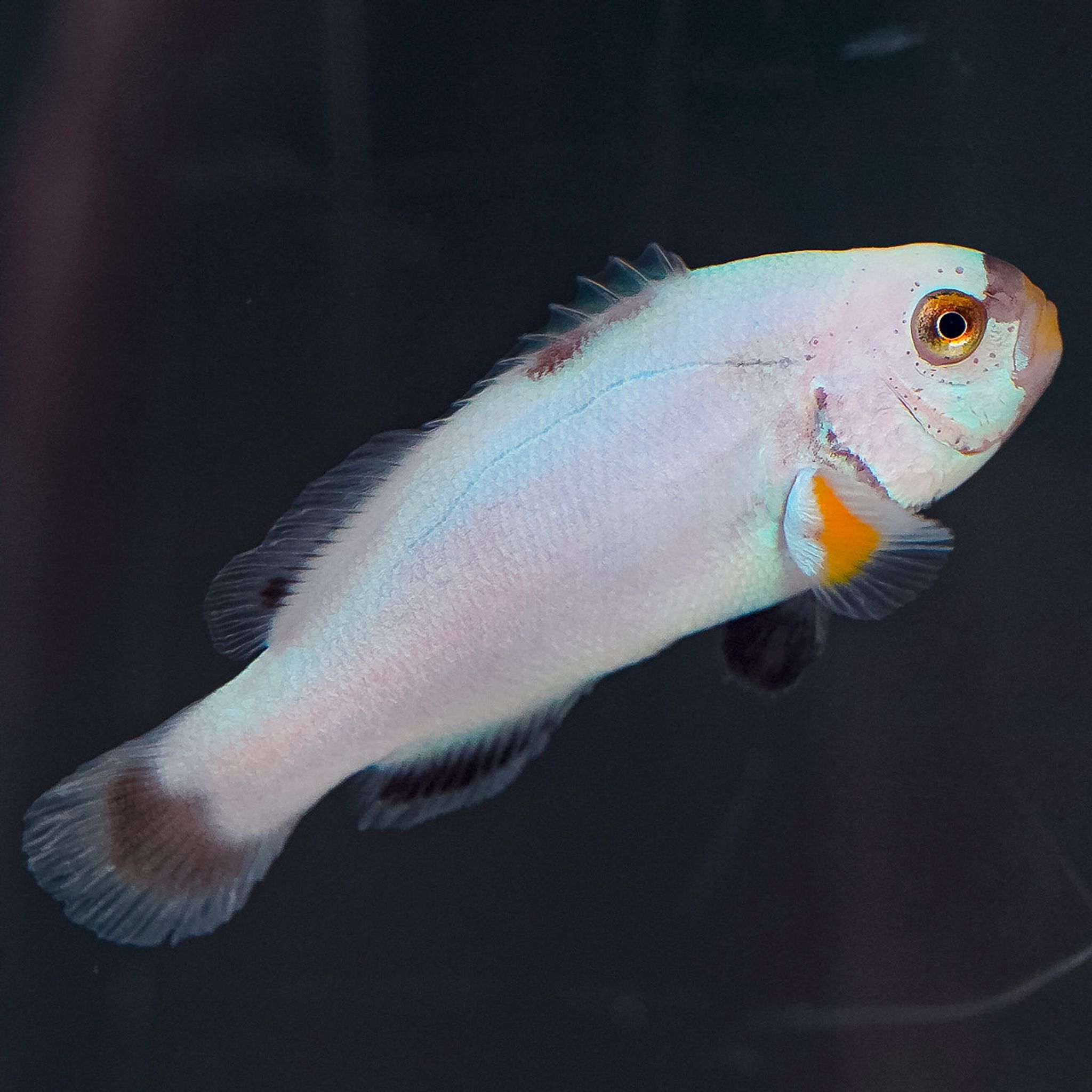
Percula Clownfish Care Guide: Tank Size, Diet, Compatibility and Reef Safety
The true percula clownfish (Amphiprion percula) is one of the hardiest, most beginner-friendly saltwater fish available, but most "clownfish" sold in US stores are actually a different species. This guide covers exact tank size, water parameters, feeding, tankmates and reef compatibility, and shows you how to tell a genuine percula from its common look-alike before you buy.
Percula vs. Ocellaris Clownfish: What's Actually Different
The fish most American hobbyists picture when they hear "clownfish" is Amphiprion ocellaris, often labeled the false percula or common clownfish. It is far more widely captive-bred and far more common in stores than the true percula. The two species have nearly identical care requirements, but they are genetically distinct, come from different regions, and have small but checkable physical differences.
| Trait | True Percula (A. percula) | Ocellaris (A. ocellaris) |
|---|---|---|
| Black bar edging | Thicker, more solid black outline | Thinner, often broken edging |
| Body color | Deeper, richer orange | Lighter orange |
| Dorsal spines | About 10 | About 11 |
| Native range | Papua New Guinea, Solomon Islands, northern Australia | Broader Indo-Pacific and Southeast Asia |
| Typical price | Higher (less commonly captive-bred) | Lower (widely farmed) |
Dorsal spine counts are nearly impossible to verify on a fish swimming in a store tank, so in practice the black bar thickness and color depth are the most useful visual cues. Because mislabeling is common, ask the supplier to confirm the species rather than assuming a "percula" tag is accurate — this matters most if you specifically want the true species for breeding or record-keeping, since day-to-day husbandry is the same either way.
Size, Lifespan and Basic Biology
Adult percula clownfish reach about 3 to 4 inches (7.5–10 cm). Females grow larger than males because clownfish are protandrous hermaphrodites: every fish starts life as a male, and the largest or most dominant individual in a pair transitions to female.
Lifespan estimates vary widely across sources — some cite as little as 3–5 years, others 10–15+. The realistic range for home aquariums is 6 to 10 years with solid care, with well-maintained specimens reaching 10 to 15 years or more. Wild individuals can live even longer. Water quality, diet variety and stress levels (especially avoiding tankmate aggression) are the biggest factors separating the low end of that range from the high end.
Tank Size and Setup
Recommendations for minimum tank size vary by source. A single juvenile can survive short-term in a 10-gallon (38 L) nano tank, but this isn't a good long-term plan.
- Realistic minimum: 20–30 gallons (75–115 L) for one adult or a mated pair
- Short-term only: 10 gallons (38 L) for a single small juvenile
- Larger: if you plan to add an anemone, corals, or additional fish
Bigger tanks hold stable water parameters more easily, which matters more for a saltwater system than a freshwater one. Before adding any clownfish, the tank must be fully cycled, meaning ammonia and nitrite both read 0 ppm consistently.
Essential Equipment
- Protein skimmer
- Reliable heater
- Powerhead or other circulation
- Live rock and/or live sand for biological filtration
- Marine-grade lighting (stronger if you plan to keep an anemone or corals)
Water Parameters
| Parameter | Target Range |
|---|---|
| Temperature | 74–80°F (23–27°C) |
| Specific gravity (salinity) | 1.020–1.025 |
| pH | 8.0–8.4 |
| Alkalinity | 8–12 dKH |
| Ammonia / Nitrite | 0 ppm |
| Nitrate | Under 20 ppm (lower if keeping an anemone or SPS corals) |
How to Cycle a Saltwater Tank Before Adding Fish
- Set up live rock and/or live sand as your biological filter media.
- Add an ammonia source — fish food, pure ammonia, or a bacteria-starter product.
- Test daily, watching the progression: ammonia rises, then nitrite rises as ammonia falls, then nitrate appears as nitrite falls.
- Continue until ammonia and nitrite both read zero consistently.
A tank cycled naturally typically takes 4–6 weeks; using a bacterial starter product can shorten this to as little as 1–2 weeks. Adding fish before the cycle finishes is one of the most common — and most avoidable — mistakes in the hobby, since it causes ammonia and nitrite stress that can be fatal.
Diet and Feeding
Percula clownfish are easy, omnivorous eaters. A varied diet improves color and immune health:
- Frozen or live mysis and brine shrimp
- High-quality marine pellets or flakes
- Marine algae or spirulina-based foods for plant matter
Feed small portions 2–3 times daily, offering only what the fish consume within 2–3 minutes. Overfeeding is a common mistake — uneaten food fouls water quality and drives up ammonia and nitrate.
Do Percula Clownfish Need an Anemone?
No. Hosting an anemone is optional, not required — captive-bred percula clownfish often never host one and do perfectly well without it. If a clownfish "hides" in a powerhead, a piece of rockwork, or a coral instead of an anemone, that's normal hosting substitute behavior, not a sign of illness.
If you do want to eventually add a host anemone, common choices are the bubble-tip (Entacmaea quadricolor), carpet, and magnificent sea anemones. Anemones need more mature, stable reef conditions than clownfish alone require, so beginners should skip this step at first. Before adding one, a tank should generally have:
- Several months of stable, mature water parameters (not just a completed cycle)
- Lighting strong enough for the specific anemone species
- Nitrate and phosphate kept low and consistent
- Strong, steady water flow with no dead spots
Anemones can move around the tank, sting other inhabitants, or crash water quality if they die and decay unnoticed — real risks for a tank that isn't ready.
Reef Safety and Coral Compatibility
Percula clownfish are fully reef safe. They won't nip at corals, clams, or the vast majority of invertebrates, making them a solid first fish for a reef tank. If you're stocking corals alongside your clownfish, you can browse LPS corals that pair well with a peaceful community setup.
One cosmetic quirk: a clownfish that decides to "host" a large-polyp coral such as a torch or hammer may nestle into it and lightly irritate the polyps. This looks concerning but is not damaging to the coral — it's simply substitute hosting behavior, not predation.
Tankmates and Social Structure
Percula clownfish are peaceful by saltwater fish standards and mix well with:
- Gobies
- Blennies
- Firefish
- Cardinalfish
- Tangs
- Most other reef community fish
They're best kept singly or as a bonded pair. To form a pair, introduce a smaller and a larger individual together — the larger fish becomes the female. Avoid:
- Multiple unrelated adults in the same tank — their hierarchy-based social structure leads to territorial fighting, sometimes fatal
- Aggressive or predatory tankmates such as large dottybacks, triggerfish, or bigger aggressive damsels
If you're building out a broader reef community, gobies are a commonly recommended peaceful companion.
Sourcing and Quarantine
Choose captive-bred (tank-raised) percula clownfish over wild-caught whenever possible. Captive-bred fish are hardier, more disease-resistant, adjust to prepared foods faster, and reduce pressure on wild reef populations. Wild-caught fish are more prone to stress and parasites such as marine ich or velvet, and are typically slower to accept aquarium foods — skipping quarantine on a wild-caught fish compounds that risk considerably.
Quarantine every new clownfish for 2–4 weeks before adding it to a display tank, even if it appears healthy at the store. You can browse available clownfish to compare captive-bred stock before making a choice.
Breeding Basics
Percula clownfish are relatively easy to breed in captivity compared to most marine fish. A bonded pair lays eggs on a flat surface — a rock, a clay pot, or the base of a host anemone — often correlating with the full or new moon cycle. The male tends and fans the eggs, which typically hatch after 6 to 10 days, usually at night. Raising the resulting larvae to juveniles requires specialized live-food cultures and separate rearing tanks, which is a more advanced project beyond basic pair-keeping.
Related Species You May Encounter
Percula and ocellaris are the two most popular of roughly 28–30 described clownfish (anemonefish) species, but a few others show up regularly in the US trade:
- Designer color morphs (onyx, Picasso, black ice): these are selectively bred color variants of ocellaris, not true percula, with extra or reduced black patterning. Care needs are identical to standard ocellaris; pricing runs higher due to rarity.
- Saddleback clownfish (e.g., Amphiprion polymnus): a separate species group with a dark "saddle" patch over the back instead of full white bars, often preferring sand-dwelling host anemones rather than the anemones favored by percula.
- Blue stripe anemonefish (e.g., Amphiprion chrysopterus): a distinct species with a blue-tinted white stripe and a noticeably larger adult size than percula.
- Other common species: tomato, clarkii, maroon, and skunk/pink skunk clownfish vary in adult size, aggression level, and anemone preference. Several of these (tomato, maroon, clarkii) are considerably more territorial as adults than percula, which is part of why percula and ocellaris remain the easiest, most peaceful entry point into clownfish keeping.
If you're weighing options, a simple framework: choose percula or ocellaris for a small-to-medium peaceful reef tank on a moderate budget; consider a saddleback or skunk species if you want a slightly different look with similar temperament; and only consider tomato, clarkii, or maroon clownfish if you have a larger tank and are prepared for more aggressive adult behavior.
Conservation Status
Percula and ocellaris clownfish were petitioned for listing under the US Endangered Species Act over concerns tied to reef habitat loss and ocean acidification. As of the most recent rulings, NOAA Fisheries has not listed either species as threatened or endangered, and the petition was largely declined. Regardless of the legal outcome, the underlying reef-health concerns are a good reason to favor captive-bred stock, which doesn't rely on wild collection.
Saltwater vs. Freshwater: What Beginners Should Know
If a percula clownfish would be your first saltwater fish, expect a different setup process than freshwater. Saltwater tanks require salt mix, a hydrometer or refractometer to measure salinity, and generally more stable parameters than freshwater. Upfront costs and equipment needs are typically higher too, with a protein skimmer and live rock/sand as near-essentials. None of this makes saltwater fundamentally harder once a tank is properly cycled — it just demands more consistent monitoring and a bit more starting investment.
Common Mistakes to Avoid
- Skipping the cycle: adding fish before ammonia and nitrite read zero causes serious stress or death.
- Assuming an anemone is required: it isn't, and adding one too early is a real risk to your tank.
- Housing multiple unrelated adults together: leads to hierarchy-driven fighting that can be fatal.
- Overfeeding: feed only what's eaten in 2–3 minutes.
- Buying wild-caught fish without quarantine: raises the odds of parasites like marine ich or velvet.
- Mistaking normal hosting behavior for illness: a clownfish hiding in a powerhead or coral instead of an anemone is behaving normally, not sickly.
- Trusting store labels blindly: many fish sold as "percula" are actually ocellaris — check bar thickness and color depth if the distinction matters to you.
Frequently Asked Questions
What's the real difference between percula and ocellaris clownfish?
The differences are mostly cosmetic — percula has thicker black bar edging and a deeper orange body — plus they're genetically distinct species from different native ranges. Day-to-day care is essentially identical between the two.
Do percula clownfish need an anemone to survive?
No. Hosting is entirely optional, and captive-bred percula clownfish frequently thrive without ever hosting an anemone, often substituting rockwork, powerheads, or corals instead.
How many percula clownfish can I keep together?
Best kept as a single fish or one bonded pair. Housing multiple unrelated adults together typically triggers territorial aggression due to their hierarchy-based social structure.
What is the minimum tank size for a percula clownfish?
A 20–30 gallon (75–115 L) tank is the realistic recommendation for one adult or a mated pair long-term. A 10-gallon (38 L) nano tank can work short-term for a single small juvenile.
Are percula clownfish reef safe?
Yes, fully reef safe. They won't nip at corals, clams, or most invertebrates, though a hosting clownfish may cosmetically irritate a coral like a torch or hammer without causing real damage.
What do percula clownfish eat?
A mix of frozen or live mysis and brine shrimp, high-quality marine pellets or flakes, and algae or spirulina-based foods, fed in small portions 2–3 times daily.
Can percula clownfish live with other fish?
Yes. They're generally peaceful with gobies, blennies, tangs, and wrasses, but should be kept away from aggressive or predatory species like large dottybacks or triggerfish.
How long do percula clownfish live?
Typically 6 to 10 years in a home aquarium, with excellent care extending that to 15 years or more.
Ready to start stocking? Browse available marine fish on FishyHub to compare captive-bred percula and ocellaris clownfish alongside compatible tankmates.

