Ocellaris Clownfish Care Guide: Tank Size, Diet, Compatibility and Reef Safety
The ocellaris clownfish, the real-life "Nemo," is one of the most forgiving saltwater fish for a first marine tank - but "easy" still means a properly cycled, stable aquarium, not a bowl. This guide covers tank size, water parameters, feeding, compatibility, reef safety, and the basic saltwater setup a true beginner needs to get there.
Species ID: Ocellaris vs. True Percula
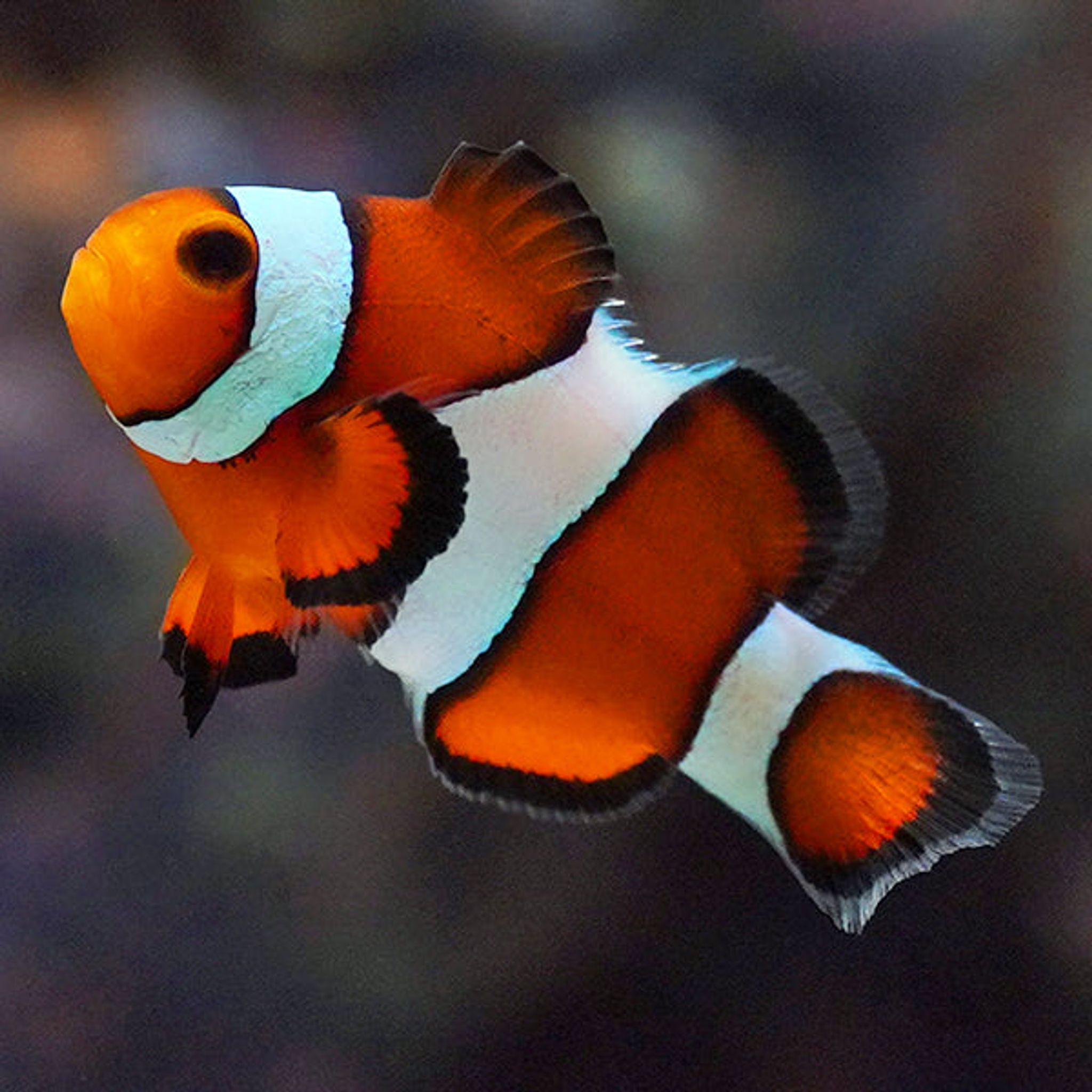
Amphiprion ocellaris is often called the "false percula" because it closely resembles the true percula clownfish (Amphiprion percula). The two are frequently confused in stores, but a few details separate them:
- Black outlines: ocellaris have thinner black edging on their orange bands; true percula have thicker, more pronounced black outlining.
- Dorsal spines: ocellaris typically have 10-11 dorsal spines; true percula usually have fewer.
- Body size: ocellaris tend to run slightly smaller and are marginally hardier in captivity for most beginners.
Captive-bred vs. wild-caught matters more than which species you pick. Captive-bred ocellaris are hardier, already accept prepared foods out of the bag, adjust to tank life faster, and put less pressure on wild reef populations. Wild-caught individuals can still do well, but expect a longer acclimation period and closer monitoring in the first few weeks. Paying a bit more for captive-bred stock is usually worth it for a first marine fish.
Adult Size and the Sex-Change Quirk
Ocellaris clownfish reach about 3-4 inches (7.5-10 cm) as adults, with females noticeably larger than males. That size difference exists because of protandrous hermaphroditism: every ocellaris is born male, and within a group the most dominant individual changes into the female. This is why buying two random juveniles and letting them grow up together often works better than buying two adults - the pair sorts out its own hierarchy naturally, with the larger, more dominant fish becoming the female. Introduce two unrelated adults instead, and there's a real chance of ongoing aggression as they compete for dominance.
Tank Size Requirements
Recommendations for minimum tank size vary across the hobby, generally landing somewhere between 20 and 30 gallons. A sensible middle ground:
| Setup | Minimum size | Notes |
|---|---|---|
| Single ocellaris | 20-gallon long (76 L) | Absolute floor; more swimming room is always better |
| Mated pair | 20-gallon long (76 L) | The standard starting point for two fish |
| Each additional clownfish | +10 gallons (38 L) | Only if adding to an established, compatible group |
| Pairing with a host anemone | 30+ gallons (114 L) | Anemones need more stable, mature water than fish alone |
A 30-gallon tank is the more forgiving starting point overall, especially if coral or an anemone is anywhere in your plans - larger water volumes buffer against the swings that are more common in smaller systems. You can browse tank options in Tanks & Stands when sizing up your setup.
Water Parameters
Ocellaris are tolerant compared to many marine fish, but they still need a stable, fully cycled tank before arrival - not just clean-looking water.
| Parameter | Target range |
|---|---|
| Temperature | 74-80°F (23-27°C) |
| pH | 7.8-8.4 |
| Specific gravity | 1.020-1.026 |
| Alkalinity (dKH) | 8-12 |
| Ammonia / nitrite | 0 ppm |
| Nitrate | Under ~20 ppm |
Ocellaris are strictly tropical marine fish - they need stable warm temperatures in that 74-80°F band. Unheated "sub-tropical" marine setups exist for a handful of cooler-water species, but they are not an option for ocellaris.
Check specific gravity with a refractometer rather than a hydrometer, since refractometers are more accurate and less prone to drift. Fish-only tanks can sit anywhere in the 1.020-1.026 range; reef tanks are better held tighter, around 1.025-1.026. Always adjust salinity gradually with new saltwater or plain RO/DI top-off water - never make a sudden correction.
Diet and Feeding
Ocellaris are omnivorous and easy feeders once past acclimation. A varied rotation works best:
- Mysis shrimp (fresh-frozen or frozen)
- Brine shrimp, ideally enriched
- Marine flake or pellet food with spirulina content for plant matter
- Occasional nori (dried seaweed) clipped to the glass
Feed adults twice a day, offering only what they can finish in 2-3 minutes to avoid excess waste. Juveniles benefit from smaller, more frequent feedings while they're growing, though twice-daily with slightly larger portions works fine for most home setups - reserve 3-4x/day schedules for very young fry rather than typical juvenile purchases. You can find prepared marine diets in Food & Supplements.
Reef Safety - With a Caveat
Ocellaris clownfish are widely marketed as unconditionally reef safe, and for the most part that's accurate: they don't eat coral polyps or graze on typical reef invertebrates the way some fish do. The more honest framing is reef safe with occasional territorial nipping. A clownfish that has claimed a coral head, rock crevice, or anemone as its home base may nip at other fish - or even peck at the coral itself - purely out of territorial defense, not because it's feeding on it.
It's also worth noting that "reef safe" isn't the same as "invert safe for everything." Clownfish generally ignore snails and larger shrimp, but they can get boisterous around small ornamental shrimp during breeding or nest-guarding periods, chasing them away from a claimed area. It's a behavioral quirk, not predation, but worth planning around if you keep delicate shrimp species.
Do Ocellaris Need an Anemone?
No. Hosting is a natural behavior, not a requirement for health or happiness. In the wild, ocellaris pair with bubble-tip anemones, carpet anemones, and various Heteractis species. In captivity, many captive-bred fish never host at all and thrive regardless - they'll happily settle into a coral colony, a rock crevice, or even a powerhead outflow as a substitute "home."
Anemones are a much bigger commitment than the fish themselves: they need strong lighting, very stable and mature water conditions, and can be sensitive to the kind of parameter swings that a young tank still has. Buying an anemone specifically "for" a new clownfish, before the tank has matured, is one of the more common ways beginners lose an anemone. Wait until your tank has a real track record of stability before considering one - the fish won't mind either way.
Compatibility and Tankmates
Ocellaris are peaceful to semi-territorial. As a general rule, keep one species or one bonded pair of clownfish per tank. Adding an unrelated single clownfish later - even of the same species - usually triggers fighting rather than a peaceful group.
Good tankmates:
- Gobies
- Blennies
- Cardinalfish
- Firefish
- Dwarf angelfish
- Peaceful wrasses
Avoid:
- Large aggressive fish (lionfish, triggerfish, groupers)
- A second unrelated clownfish species, or unpaired adult clownfish
You can explore compatible options in Marine Fish, including the dedicated Clownfish category if you're comparing ocellaris against other clownfish species.
Acclimation and Quarantine
Drip acclimate new ocellaris over 30-60+ minutes, extending the process for wild-caught fish, which handle sudden changes less well than captive-bred stock. The goal is to match both temperature and salinity gradually, avoiding osmotic shock from a fast transition between bag water and tank water.
Every new fish - captive-bred or wild - should spend 2-4 weeks in a bare-bottom quarantine tank before joining a display or reef system. This is the single most effective way to catch parasites like ich or marine velvet before they reach an established tank. Captive-bred fish generally need a simpler, shorter acclimation than wild-caught individuals since they're already adjusted to tank life and prepared foods, but skipping quarantine entirely is still one of the most common routes to a disease outbreak in a display tank.
New coral should also be dipped before it goes into the main tank, to remove hitchhiking pests before they get a foothold.
Breeding Basics
Given stable, warm conditions (around 80°F / 27°C), an established pair will often spawn on a flat surface - a piece of rock, a flowerpot, or near a host anemone - roughly every 2-4 weeks. A clutch can range from 100 to 1,000 adhesive eggs, which hatch after 7-10 days, usually at night. The male takes on egg-guarding and fanning duty until they hatch.
Raising the larvae isn't realistic for most home aquarists: they need live phytoplankton and rotifer cultures from the moment they hatch, which is a specialized undertaking closer to a dedicated breeding setup than a normal community tank. Still, it's a fun possibility to know about if your pair settles in and starts spawning.
Lifespan
In home aquariums, ocellaris commonly live 3-6 years, though well-kept individuals - especially captive-bred fish in stable, properly maintained tanks - can reach 10 years or more. Captive-bred stock tends to be both hardier and longer-lived than wild-caught fish, which is another point in its favor for a first purchase.
Saltwater Basics a True Beginner Needs
A clownfish is only as healthy as the tank around it. If this is your first marine setup, a few fundamentals make the difference between a stable system and constant firefighting.
Types of Saltwater Aquariums
Ocellaris suit any of the three common setups:
- Fish-only: simplest option - fish plus basic filtration, no live rock or coral required.
- FOWLR (fish-only with live rock): adds live rock for biological filtration and a more natural look, still no coral.
- Full reef: adds coral, which raises the bar on lighting and parameter stability.
Live Rock: Cured vs. Uncured
Cured live rock has already gone through its die-off period and is free of decaying organic matter - it's safe to add directly to an established or stocked tank. Uncured live rock still has dying organisms on it from transport and needs to be cured separately, in a container with flow and skimming, for days to weeks until ammonia and odor clear. Adding uncured rock straight into a stocked tank risks crashing water quality for everything already living there. As a rough guide, plan on 1-1.5 lbs of live rock per gallon of tank volume.
Protein Skimmers
A protein skimmer injects a stream of fine air bubbles into a column of water. Dissolved organic waste binds to the bubbles and rises as foam into a collection cup, pulling waste out of the water before it ever breaks down into nitrate. Skimmers are recommended for anything beyond a small nano tank and are helpful even there. Basic upkeep:
- Empty and rinse the collection cup weekly.
- Rinse the skimmer neck and body monthly.
- Replace air stones or limewood diffusers periodically as they clog.
If you're shopping a starter kit, check that any included skimmer is actually rated for your tank's real volume - a compact skimmer labeled "nano" isn't automatically sized for your specific tank.
Water Changes
General saltwater guidance ranges from 10-20% weekly or biweekly depending on tank size and bioload. 10-15% weekly is a reliable default for most home setups. Always:
- Mix a proper marine salt mix with RO/DI water - never tap water.
- Match the new water's temperature and salinity to the display tank before adding it.
- Mix new saltwater in a separate clean container using a powerhead and heater, letting it fully dissolve and reach target parameters before use.
- Top off evaporated water with plain RO/DI water, not saltwater - salt doesn't evaporate, so topping off with saltwater will push salinity too high over time.
If you ever switch salt mix brands, do it gradually across a few water changes rather than all at once, since even reputable mixes vary slightly in trace elements and a sudden full swap can shock a stable tank.
Step-by-Step Reef Setup Order
- Run a fishless cycle first and confirm ammonia and nitrite both spike and then clear.
- Add cured live rock and sand.
- Dial in flow (powerheads) and lighting for your intended livestock.
- Test parameters regularly until they hold steady for at least a week or two.
- Add hardy fish like ocellaris first.
- Add more sensitive coral and invertebrates only after the tank has a proven track record.
Common Saltwater Mistakes
- Adding fish before the cycle finishes - the fastest way to cause ammonia or nitrite poisoning.
- Overstocking too quickly - outpaces the tank's biological filtration.
- Skipping quarantine - the most common route for ich and velvet outbreaks in a display.
- Overfeeding - the leading cause of nitrate spikes and nuisance algae.
- Not testing parameters regularly early on, when a young tank is least stable.
- Buying an anemone before the tank is mature - premature anemone purchases are a common way beginners lose the animal.
- Rapid salinity or temperature swings during water changes or acclimation, which stress or shock fish.
One behavior that's often mistaken for illness: normal "hosting" twitching or swimming near a powerhead, filter outflow, or piece of decor. That's instinctive host-seeking behavior, not a symptom - unless it's paired with actual warning signs like spots, clamped fins, or refusing food.
Watch For: Marine Velvet
Marine velvet (Amyloodinium) is a fast-moving, often fatal parasite that shows up as a fine gold or dusty coating on the skin, along with clamped fins, rapid breathing, and lethargy. It spreads quickly through a shared tank, which is exactly why quarantine matters so much. Prevention is quarantining every new fish for 2-4 weeks before it reaches the display. Treatment typically requires copper or chloroquine phosphate in a separate hospital tank, plus leaving the main display fallow (fish-free) long enough to break the parasite's life cycle. Products for treating outbreaks are available under Treatment.
Your First 30 Days: A Simple Checklist
- Days 1-14+ (before any fish): Run a fishless cycle until ammonia and nitrite both spike and drop to zero, with nitrate present as confirmation the cycle completed.
- Day of purchase: Drip acclimate new ocellaris over 30-60+ minutes, matching temperature and salinity gradually.
- Weeks 1-4: House new fish in a bare quarantine tank, watching for spots, clamped fins, or appetite loss.
- Ongoing from day one: Feed twice daily, only what's eaten in 2-3 minutes; test parameters weekly; change 10-15% of the water weekly with properly mixed and matched saltwater.
- After quarantine clears: Move fish to the display or reef tank, ideally before adding more sensitive coral or invertebrates.
Frequently Asked Questions
Can ocellaris clownfish live without an anemone?
Yes. They'll happily host in coral, rock crevices, or even near a powerhead. An anemone is entirely optional and, given how demanding anemones are to keep, not something beginners need to buy.
How many clownfish can I keep together?
A single fish or a bonded pair is the standard setup. Adding unrelated adult clownfish later - even of the same species - usually causes aggression rather than a peaceful group.
Are clownfish hard to keep for a beginner marine tank?
No. Ocellaris are considered one of the easiest and hardiest saltwater fish for a first marine tank, provided the tank is fully cycled and stable before they arrive.
Do clownfish need a reef tank?
No. They do perfectly well in fish-only or FOWLR setups. "Reef safe" simply means that if you do add coral later, the clownfish won't damage it as a food source.
Why is my clownfish hosting or twitching near the filter or glass?
That's normal, instinctive host-seeking behavior, not a sign of illness. It only becomes a concern if it's paired with other symptoms, such as visible spots, clamped fins, or a loss of appetite.
Can I keep clownfish with other clownfish species?
It's not recommended. Territorial conflict between different clownfish species, or between unrelated individuals of the same species, is common and can lead to persistent bullying.
How can I tell captive-bred from wild-caught?
Captive-bred ocellaris are typically hardier, already accept prepared foods without coaxing, and adjust faster to aquarium life. They're the more sustainable and generally recommended choice for a first marine fish.
What's the minimum equipment needed to keep clownfish?
A fully cycled tank with a heater, adequate flow and filtration (live rock or a filter, with a protein skimmer as a strong option beyond a small nano), and stable salinity. No anemone or coral is required to keep ocellaris healthy.
Once your tank is cycled and stable, you can browse captive-bred ocellaris and compatible tankmates in Marine Fish on FishyHub.

