Nerite Snail Care Guide: Setup, Feeding, Water Parameters and Breeding
Nerite snails are among the few freshwater algae eaters that clean glass and decor without ever damaging live plants or turning into a runaway breeding problem. This guide covers tank setup, water parameters, feeding, tankmates, and the biology behind those harmless white egg dots so you can stop worrying about an infestation.
Why Nerite Snails Are a Top Algae-Control Pick
Nerite snails are ranked among the best freshwater invertebrates for tackling green spot algae and diatoms, two of the toughest algae types for fish and shrimp to remove. Unlike algae-eating fish that sometimes graze on soft plant leaves when algae runs short, nerites leave healthy plant tissue alone. That combination — aggressive algae grazing plus zero plant damage — makes them a favorite for planted tanks where fish-based algae control is risky.
They graze diatoms, green spot algae, and soft green or brown film algae off glass, rocks, driftwood, and plant surfaces. Because algae growth needs light and surface area, more decor and a mature tank generally mean more grazing territory.
Setup Basics
Size and Lifespan
Adult nerite snails typically reach 0.5 to 1 inch (1–2.5 cm) in shell diameter, depending on species. Expect a lifespan of about 1 to 2 years in captivity, occasionally longer when water hardness and mineral supply are consistently good.
Tank Size
A single nerite can survive in a tank as small as 2–5 gallons (7.5–19 L), since the snail itself needs little swimming room. But tank size should really be planned around overall stocking, filtration, and available algae-growing surface area — not just the snail's minimum footprint. A practical planning rule is one nerite snail per 5 gallons (19 L) of water, with a 10-gallon (38 L) tank often suggested as a comfortable minimum if you're keeping a small group.
Substrate and Décor
Fine sand or soft, rounded substrate is the best practice choice because it protects the snail's foot and underside from abrasion. Standard aquarium gravel is used successfully in the hobby without major issues, but sharp or coarse gravel can gradually injure the foot over time, so it's worth avoiding when you have a choice.
Rocks, driftwood, and plant leaves all double as algae-growing surfaces, so more varied décor generally means more natural grazing area between feedings.
The Lid Is Not Optional
Nerite snails are notorious escape artists. They climb glass, filter intakes, and cords, and are especially prone to wandering during acclimation or whenever water quality dips. A tight-fitting lid, with any gaps around cords or filter equipment sealed off, is essential — an open tank is the single most common reason keepers find a dried-out snail on the floor.
Water Parameters
| Parameter | Ideal Range | Notes |
|---|---|---|
| Temperature | 72–78°F (22–26°C) target; 65–85°F (18–29°C) tolerated | Wider range is survivable, not ideal long-term |
| pH | 7.0–8.5 | Neutral to fairly alkaline; avoid soft, acidic water |
| General Hardness (GH) | 6–15 dGH | Moderate to hard water protects shell integrity |
| Ammonia | 0 ppm | Same standard as any invertebrate |
| Nitrite | 0 ppm | Same standard as any invertebrate |
| Nitrate | Low to moderate | Keep stable with regular water changes |
Nerites are more sensitive to sudden parameter swings than most fish, so stability matters as much as hitting the exact numbers. Soft, acidic water is the most common water-chemistry mistake — it leads directly to shell pitting and flaking over time.
Feeding and Mineral Supplementation
What They Eat
Nerites are primarily algae grazers, feeding on diatoms, green spot algae, soft film algae, and general biofilm. This makes them excellent at cleanup, but it also means a spotless, algae-free tank can leave them without enough food.
When natural algae supply runs low, supplement with:
- Algae wafers
- Blanched zucchini, spinach, or kale
- Canned green beans
- Calcium-rich snail-specific foods
A tank that looks "too clean" is actually a warning sign for nerite keepers — starvation and shell thinning are common outcomes of an algae-free display with no supplemental feeding.
Calcium and Shell Health
Shell integrity depends heavily on dissolved minerals, particularly calcium. In soft water, shells can pit, flake, or develop visible holes even when feeding is adequate. Common fixes include adding crushed coral or a cuttlebone to the filter or substrate, or using a mineral block designed for hard-water-loving invertebrates. These slowly raise GH and give the snail a steady calcium source for shell repair. Check GH periodically with a liquid test kit, and add or refresh a mineral source whenever readings trend toward the soft end of the 6–15 dGH range rather than waiting for visible shell damage.
Copper Warning
Copper-based medications are toxic to nerite snails and all other snails in the tank. If a fish needs copper-based treatment, remove every snail to a separate container first — dosing a display tank with snails still inside can wipe them out.
Tankmates
Nerite snails are peaceful and do well with most community fish and other invertebrates, including tetras, rasboras, corydoras, livebearers, and bettas kept in moderation with adequate space. Shrimp make good tankmates as well, since neither species competes for the same food or territory.
Avoid housing nerites with:
- Pufferfish
- Loaches bred specifically to hunt snails
- Crayfish
- Large or aggressive cichlids
Breeding Biology: Why Eggs Never Hatch in Freshwater
This is the detail that resolves most of the anxiety around nerite snails: they are dioecious, meaning individuals are either male or female, unlike most aquarium snails, which are hermaphroditic. Mating and egg-laying happen readily in ordinary freshwater tanks whenever both sexes are present.
What the Eggs Look Like
Fertilized eggs appear as small, white or tan, gritty, dome-shaped capsules stuck individually to hard surfaces — glass, decor, plant leaves, filter intakes, even the shells of other snails. Each capsule actually contains many eggs, but from a distance they look like scattered tiny white or gray grains.
Why a Population Explosion Doesn't Happen
Nerite eggs will not hatch into viable snails in freshwater. Hatching and larval development require brackish to marine salinity, roughly 5–15+ ppt, along with planktonic algae for the free-swimming larvae to feed on. A standard freshwater display tank cannot accidentally replicate that salinity or that specific larval food source, so the eggs simply never develop. Over time, unhatched capsules typically turn brown, go hollow, and eventually flake away on their own.
The practical result: freshwater keepers will see cosmetic egg capsules appear regularly, but they will never end up with a snail population explosion from nerites — a sharp contrast to pest snails like ramshorn, pond, or bladder snails, which reproduce freely in ordinary freshwater and can quickly overrun a tank.
Removing Egg Capsules
Egg removal is purely cosmetic. Scrape them off glass with a fingernail or a razor blade, or leave them in place — they pose no risk and will not hatch regardless.
Can You Breed Them at Home?
Breeding nerite snails through to juveniles requires a dedicated brackish or marine larval-rearing setup with the right salinity and a supply of marine planktonic algae. This is a specialized project, not something that happens in — or is intended for — a standard freshwater display tank.
Freshwater Snail Comparison
Confusing egg types or breeding behavior across snail species is one of the more common sources of unnecessary alarm. Here's how the three most commonly encountered groups compare:
| Snail Type | Breeds in Freshwater? | Egg Appearance | Role in the Tank |
|---|---|---|---|
| Nerite snail | No (needs brackish/marine larvae stage) | Tiny, hard, individual white dots on submerged surfaces | Dedicated algae specialist, population-stable |
| Mystery snail | Yes | Large gelatinous cluster laid above the waterline | Larger "pet" snail, breeds readily, less of a cleanup crew |
| Ramshorn / pond / bladder snail | Yes, prolifically | Clear, jelly-like clusters on glass and plants | Common unwanted hitchhiker, can overpopulate quickly |
Nerite eggs are also easy to tell apart from mystery snail eggs at a glance: mystery snail clusters are large, soft, and sit above the water line, while nerite capsules are small, gritty, individual dots found entirely underwater.
Species and Color Varieties
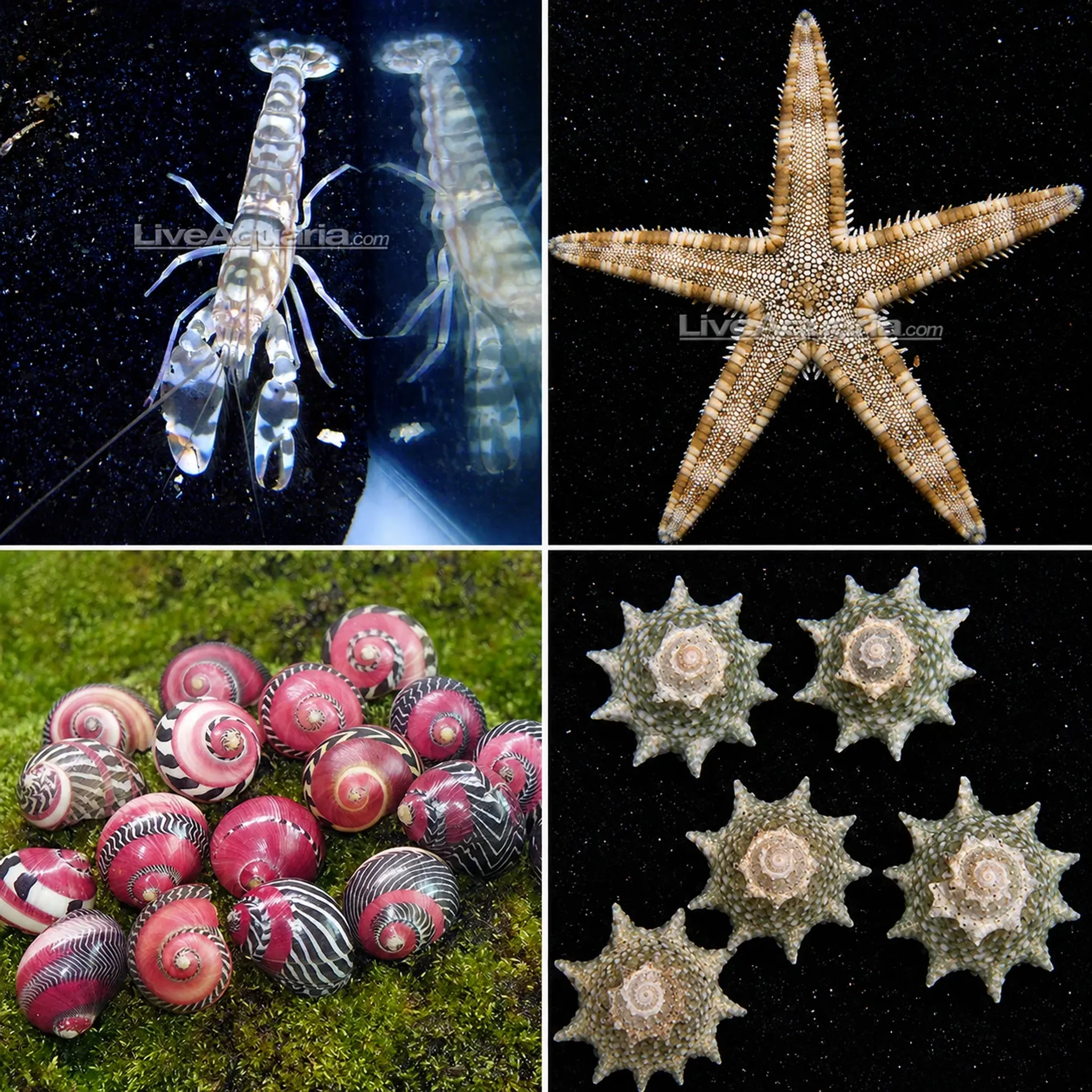
Zebra, tiger, horned, racer (red or black), olive, and marbled "batik" nerites are all common varieties in the hobby. The differences are cosmetic — shell pattern, color, and minor shape features like small horns — rather than anything affecting care. Every variety shares the same water parameter and feeding needs described above.
Acclimation
Nerite snails are more sensitive to abrupt temperature and pH swings than many fish, largely because they can't easily flee unfavorable conditions the way a fish can. Use a slow drip acclimation method over roughly 30 to 60 minutes rather than simply floating and dumping the bag. Avoid extremes in the other direction too — extended time out of water or high temperature swings during a long acclimation can be just as stressful.
It's also worth a brief quarantine period for new nerites before adding them to an established display, since their shells commonly carry hitchhiker pest snail eggs picked up from a shared holding tank.
Signs of a Healthy vs. Stressed Nerite
Because snails can die undetected and quickly foul water, it helps to know the visual cues:
- Healthy: shell tightly sealed by the operculum when disturbed, regular movement and grazing activity, shell surface smooth or only lightly worn.
- Stressed or dying: no movement for 24–48 hours, an open or hanging operculum, a foul odor, or an empty shell that has clearly detached from the body.
If you suspect a snail has died, remove it promptly — a decomposing snail can spike ammonia in a small tank faster than most keepers expect.
Common Mistakes to Avoid
- Letting a tank go algae-free without supplementing food, leading to starvation and shell thinning.
- Keeping nerites in soft, acidic water, causing shell pitting or holes.
- Skipping a tight lid, resulting in snails found dried out outside the tank.
- Dosing copper-based medication without removing snails first.
- Panicking over "eggs everywhere" and mistaking harmless capsules for an infestation.
- Adding new snails via a drastic temperature or pH swing instead of slow acclimation.
- Assuming snails have "no bioload" and overstocking a small tank without adequate filtration.
- Mistaking mineral-deficiency shell erosion for disease.
Well-fed nerites with the right water chemistry make an excellent addition to a planted or community setup. You can browse live nerite and other algae-eating snails, along with hardness-boosting supplements and fine substrates suited to their needs, in FishyHub's Freshwater Livestock and Food & Supplements categories.
Frequently Asked Questions
Will nerite snails multiply and take over my tank?
No. Their eggs require brackish or marine salinity to hatch and develop into larvae, so a standard freshwater tank keeps the population stable — you'll see cosmetic egg capsules, not a growing snail population.
Do nerite snails eat plants?
No. They graze algae and biofilm off leaf surfaces without damaging healthy plant tissue, which is why they're considered safe for planted tanks.
How do I get rid of nerite snail eggs?
Scrape them off glass or decor with a fingernail or razor blade if you don't like the look of them. Otherwise, leave them alone — they're harmless, won't hatch, and will eventually turn brown and flake off on their own.
What is the best tank size for nerite snails?
A tank as small as a few gallons is survivable for one snail, but plan around roughly one nerite per 5 gallons (19 L) so there's enough filtration and algae-growing surface area to support them long-term.
Can nerite snails live with shrimp, betta, or other fish?
Yes, they generally do well with peaceful community fish and shrimp. Avoid known snail predators such as pufferfish, snail-hunting loaches, crayfish, and aggressive cichlids.
Why is my nerite snail's shell getting white spots or holes?
This is usually a mineral deficiency from low GH or low pH water. Add a calcium source like crushed coral or a cuttlebone and work toward the 6–15 dGH range to help the shell recover.
How long do nerite snails live?
Typically 1 to 2 years in a home aquarium, with good water hardness and consistent feeding supporting the longer end of that range.
Can I breed nerite snails at home?
Only with a dedicated brackish or marine setup built specifically for rearing the larval stage. It isn't practical, and isn't necessary, for a standard freshwater display tank.

