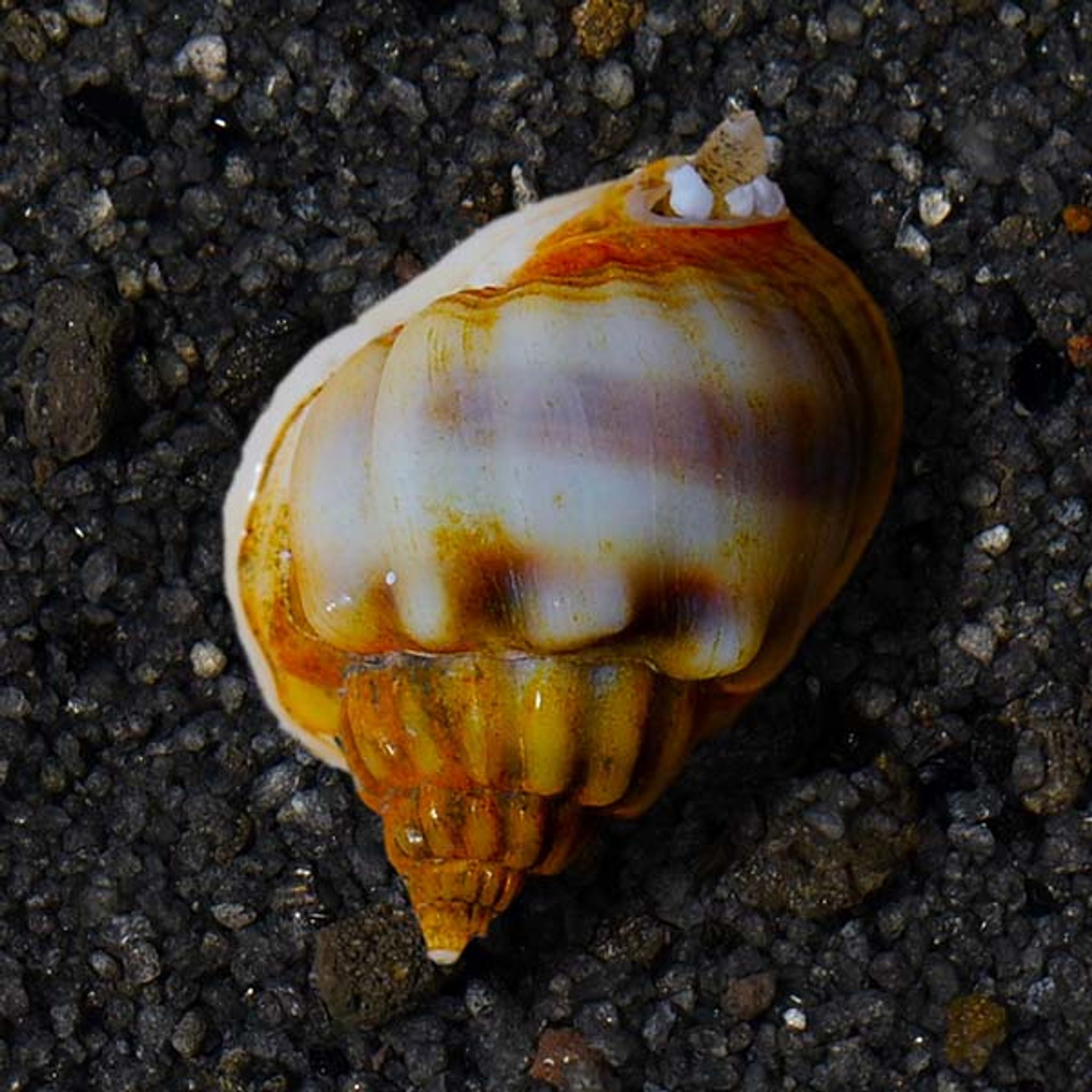
Nassarius Snail Care Guide: Tank Requirements, Feeding and Compatibility
Nassarius snails are one of the most useful sand-bed workers in a saltwater tank, but they get misunderstood as algae cleaners when they're really scavengers. This guide covers the tank setup, water parameters, feeding routine and tankmate choices that keep them alive for their full 2–3 year lifespan.
What Is a Nassarius Snail?
Nassarius is a genus of small scavenging marine snails in the family Nassariidae, with roughly 35 species worldwide. Their shell is oval and tightly spiraled, often compared to the shape of an olive pit. The animals most commonly sold in the aquarium trade are Nassarius vibex and Nassarius distortus, usually labeled simply "Nassarius snail" or marketed by size, such as "Super Tongan."
Key facts at a glance:
- Size: 0.4–0.8 in (1–2 cm), rarely larger
- Lifespan: roughly 2–3 years with good care
- Diet: scavenger — dead/decaying animal matter and leftover meaty foods
- Role: sand-bed aeration and detritus cleanup, not algae control
Nassarius vs. "Tiger Nassarius" (Babylonia spirata)
A snail frequently sold under a Nassarius-adjacent trade name is Babylonia spirata, sometimes called the tiger, leopard, or lion nassarius. Despite the name, it belongs to a different genus entirely. It's noticeably larger at 1.7–2.2 in (4.5–5.5 cm), has a striking orange-and-brown patterned shell, and is a warm-water carnivorous scavenger that is harder to breed than true Nassarius. Because the two are often confused at the point of sale, it's worth checking the scientific name before buying if you specifically want the smaller, classic sand-burrowing Nassarius.
Tank Requirements
Tank Size
There's no strict minimum tank size tied to bioload — Nassarius snails don't produce much waste and aren't territorial. They generally do fine starting around 5 gallons and up, including nano reef tanks, as long as the sand bed requirement below is met. They're best added to an established, fully cycled tank with live rock already present, since a brand-new setup won't yet have the detritus and biofilm they rely on for food.
Substrate
This is the requirement that actually matters. Nassarius snails need a soft sand bed at least 2–3 inches deep to burrow into and exhibit their natural behavior. A bare-bottom tank, gravel, or crushed coral substrate is a common mistake — it stresses the snails, prevents burrowing, and often shortens their lifespan significantly. If you're setting up a new tank or adding a deeper bed to an existing one, browse fine aragonite or live sand options in FishyHub's sand and gravel substrate selection.
Water Parameters
Nassarius snails are more forgiving than corals but still sensitive to sudden swings, especially in salinity and pH. Keep parameters stable within the following ranges.
| Parameter | Recommended Range |
|---|---|
| Temperature | 72–80°F (22–27°C) |
| Specific gravity | 1.023–1.025 |
| pH | 8.1–8.4 (workable down to ~7.9) |
| Alkalinity (dKH) | 8–12 dKH |
| Nitrate | Under 20 ppm acceptable; under 10 ppm ideal |
On nitrate specifically, sources vary — some call for under 5 ppm, others tolerate up to 20 ppm. In practice, Nassarius are noticeably more nitrate-tolerant than corals, so treating "under 20 ppm" as acceptable and "under 10 ppm" as the ideal target gives a realistic, practical band rather than an overly strict one.
Medication Sensitivity
Nassarius snails, like most marine invertebrates, cannot tolerate copper-based medications or most treatments that aren't labeled invertebrate-safe. Never dose copper in any tank housing them — even trace residual copper from a shared quarantine setup can be lethal. If treatment is needed for fish in a mixed tank, it should happen in a separate quarantine tank instead.
Acclimation
Because they're fully aquatic and sensitive to rapid parameter shifts, Nassarius snails should go through a standard slow drip acclimation rather than a quick float-and-dump. Drip acclimating over roughly 45–60 minutes gives the snail time to adjust to differences in salinity, pH, and temperature between the shipping water and your tank, reducing shock-related losses in the first few days.
Feeding Nassarius Snails
This is the single biggest misconception about the species: Nassarius snails do not eat algae. They're scavengers, not grazers. Their diet in the wild and in captivity consists of dead or decaying animal matter, leftover meaty foods, and general detritus.
What and How Often to Feed
- Supplement 2–3 times per week with sinking meaty foods
- Good options: frozen/thawed brine or mysis shrimp, marine pellets, sinking wafers, small pieces of table shrimp or fish
- Feed only what the group can clear within a few minutes to avoid fouling the water
- In a very clean, lightly stocked tank, snails can actually starve without supplemental feeding — don't assume fish waste alone is enough
Feeding Behavior
Nassarius spend most of their time buried in the sand with just their siphon poking above the surface, detecting food by smell rather than sight. When food hits the water, a buried group will "boil" up out of the sand almost in unison and move toward the scent as a pack — a good visual check that a colony is healthy and active.
Ecological Role in the Tank
Beyond cleanup, Nassarius snails provide a genuine service: their constant burrowing aerates the upper sand layer, prevents compaction, and reduces anaerobic dead spots near the surface. As they move through the substrate they also turn over detritus and uneaten food before it has time to decay and spike nitrate or phosphate.
It's worth being precise about the limits of this role. Nassarius activity is shallow — it aerates and works over the top inch or two of substrate, but it does not replace the nitrate-reducing function of a true deep sand bed, which relies on anaerobic bacterial zones several inches down. Think of Nassarius as maintenance for the visible, high-traffic layer of sand, not a substitute for deep-bed denitrification.
Compatibility
Safe Tankmates
Nassarius snails coexist well with most peaceful community fish and invertebrates, including damsels, angelfish, butterflyfish, basslets, blennies, and hawkfish, as well as other peaceful snails, shrimp, starfish, urchins, and corals. They pose no threat to coral tissue and are considered fully reef-safe.
Risky Tankmates
Avoid pairing them with predatory snail-eaters and invertebrate hunters, including many wrasses, triggerfish, puffers, and moray eels such as the snowflake or zebra moray. Some larger hermit crabs and predatory crabs will also attack Nassarius or evict them from their shells.
Snails, Hermit Crabs, and "Conflicting Reports"
You'll find mixed accounts online about whether Nassarius attack or get attacked by other snails and hermit crabs. In practice, incidents are occasional rather than typical, and they're usually tied to food scarcity or shell competition rather than inherent aggression. Feeding adequately and not overcrowding shell-seeking hermit crabs — or providing a supply of empty spare shells — largely prevents the problem.
Breeding
Nassarius have separate sexes, and in captivity they will sometimes lay egg capsules on glass or hard surfaces. Capsules typically hatch in roughly 1–2 weeks, but the larvae are planktonic, drifting in open water rather than settling immediately. Raising them to maturity in a home aquarium is essentially not feasible, since their exact larval diet requirements aren't well established outside of specialized facilities. If you see egg capsules, it's a sign of a healthy, well-fed colony — not the start of a breeding project.
Beach Sand and Sand Bed Maintenance
Is Wild-Collected Beach Sand Safe?
It's generally not recommended. Beach sand can carry pesticide residue, pollutants, or parasites, and its grain size is inconsistent and unscreened. Very fine beach sand also clouds the water and settles slowly, making ordinary tank maintenance harder. Commercial aragonite or live sand is pre-screened and far more predictable, and it's the safer choice for both livestock health and cleaning convenience.
Adding Sand to an Established Tank
If you're deepening an existing sand bed, add it gradually in small amounts rather than all at once. A large single addition can trigger a nutrient or cloudiness spike and even a cyanobacteria bloom. Rinse dry-packaged sand thoroughly before adding it, do the addition during a scheduled water change, and expect some temporary cloudiness that clears within a day or so.
Keeping the Sand Bed Clean Over Time
- Increase water flow near the substrate to stop detritus from settling into stagnant dead zones
- Periodically stir or gently vacuum the sand surface during water changes
- Combine sand-sifting livestock — Nassarius snails, sand-sifting gobies, sea cucumbers, and certain sea stars — with regular mechanical filtration rather than relying on any single method
Setting Up a Full Clean-Up Crew
A saltwater clean-up crew (CUC) typically combines snails, hermit crabs, and sometimes small crabs or shrimp to handle algae, leftover food, and general waste. Since Nassarius only cover the scavenging side of that job, most reef keepers pair them with dedicated grazers. You can browse a range of options in FishyHub's marine invertebrates and snails categories.
A few stocking guidelines apply across the whole crew:
- Stock gradually, and only once the tank has enough algae or detritus to actually sustain the animals
- Adding a full CUC to a freshly cycled, spotless tank will starve the very members meant to clean it
- Watch for predatory fish in the display that may pick off CUC members over time
Bumblebee Snail as a Companion, Not a Substitute
The bumblebee snail (Engina mendicaria) is another easy, peaceful Indo-Pacific species often added alongside Nassarius. It eats leftover food and, according to many keepers, some algae and pest species including flatworms and bristleworms. It's a solid companion for a clean-up crew, but it isn't a direct substitute for Nassarius — their diets and roles overlap only partially.
Algae Control: Why Nassarius Won't Help
Because Nassarius don't graze algae, tanks dealing with green spot algae or general glass film need a separate strategy. Green spot algae in particular has tough cell walls that resist most chemical treatments and liquid algaecides, so control is mainly manual: scraping and scrubbing glass and rock, pruning affected plant leaves, and siphoning the substrate during routine maintenance, combined with reducing excess light and phosphate. For ongoing grazing pressure on glass and rock, pair Nassarius with actual algae eaters such as nerite snails, astrea or turbo snails, or certain algae-eating gobies.
Common Mistakes and Troubleshooting
| Mistake | Consequence | Fix |
|---|---|---|
| Bare-bottom or gravel substrate | Snails can't burrow, become stressed, may die early | Use 2–3 in of fine sand |
| Copper or non-invert-safe medication | Toxic to snails | Treat fish in a separate quarantine tank |
| Expecting algae control | Algae keeps growing | Add dedicated algae grazers |
| Full CUC in a spotless new tank | Starvation | Stock gradually as food source builds |
| No supplemental feeding in a very clean tank | Snails starve | Feed sinking meaty foods 2–3x/week |
| Overfeeding | Uneaten food fouls water | Feed only what's cleared in minutes |
| Housing with predatory fish | Snails get eaten | Avoid wrasses, puffers, triggers, morays |
| Assuming a buried snail is dead | False alarm or missed real death | Check for smell and empty, opaque shells |
Is My Snail Dead or Just Buried?
Snails "disappearing" usually means one of two things: the animal died and a hermit crab took over the shell, or it's simply buried and inactive, which is normal Nassarius behavior. Before assuming an escape or loss, check for a foul odor near the substrate and look for an empty, opaque shell — a live snail's shell stays occupied and the siphon will typically respond to food in the water within a minute or two.
Frequently Asked Questions
Do Nassarius snails eat algae?
No. They're scavengers of dead and decaying matter and leftover food, not algae grazers. Pair them with dedicated algae-eating snails or gobies if glass or rock algae is a problem.
How many Nassarius snails per gallon?
There's no strict formula. General clean-up crew guidance suggests roughly 1 snail per 2–3 gallons across all species combined, added gradually based on available detritus and food rather than tank volume alone.
Can Nassarius snails live with hermit crabs?
Usually yes, but some hermit crabs will attack or evict snails from their shells, especially if underfed or short on empty shells. Providing spare shells and feeding adequately reduces the risk significantly.
Why did my Nassarius snail die suddenly?
Common causes include copper exposure, rapid salinity or temperature swings, an insufficient sand bed causing chronic stress, or simply reaching the end of their natural 2–3 year lifespan.
Will Nassarius snails breed in my tank?
They may lay egg capsules on glass or hard surfaces, and these can hatch in 1–2 weeks. However, the larvae are planktonic and essentially impossible to raise to maturity in a typical home aquarium.
Is beach sand safe to use instead of purchased aquarium sand?
It's not recommended without extensive rinsing and testing, due to the risk of contaminants and inconsistent grain size. Commercial aragonite or live sand is pre-screened and a safer choice.
How deep should the sand bed be for Nassarius snails?
At least 2–3 inches of fine, soft sand is needed to allow full, natural burrowing behavior.
If you're building or refreshing a clean-up crew, FishyHub's marine invertebrates category is a good place to compare Nassarius snails alongside other sand-sifting and algae-grazing tankmates.

