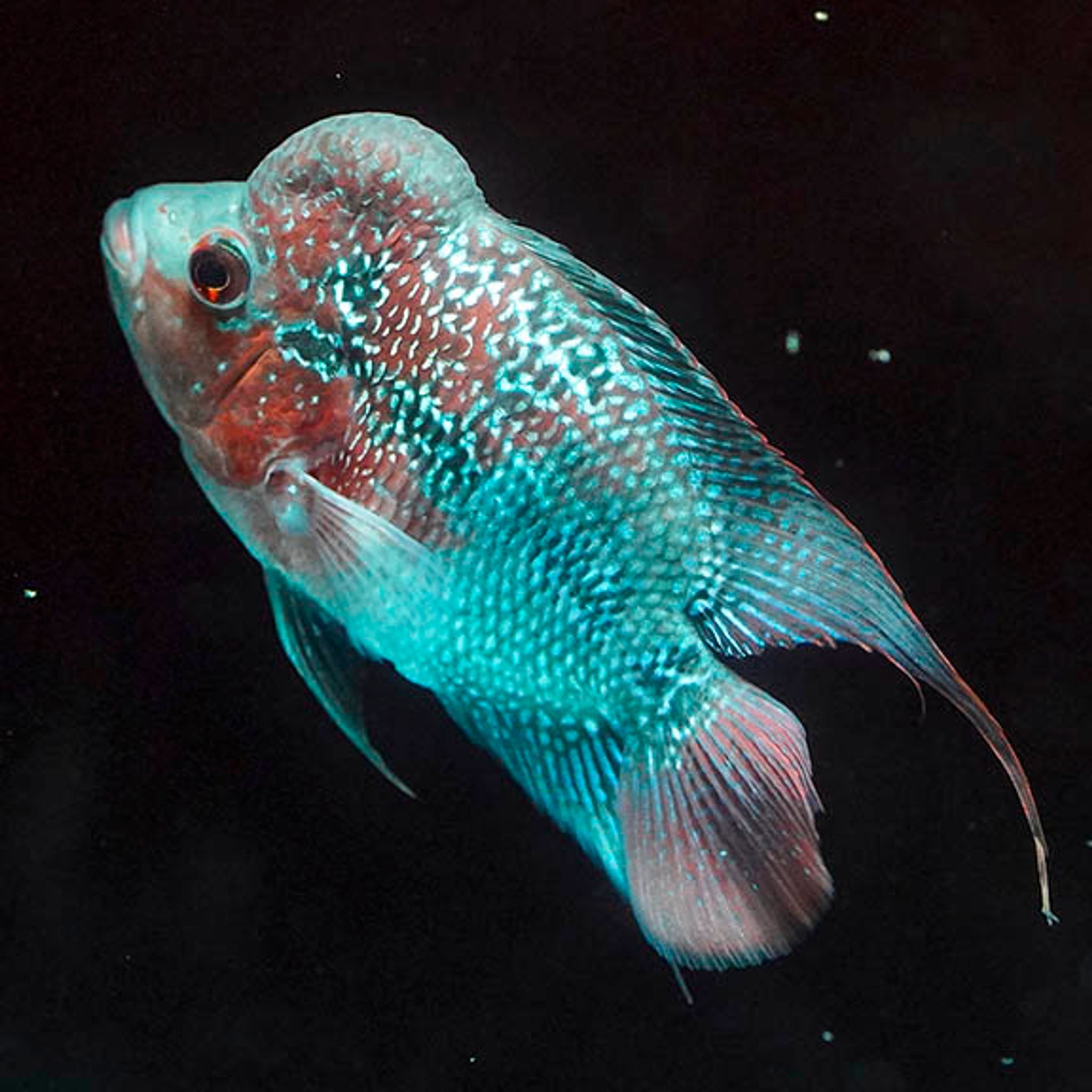
Mbuna Cichlid Care Guide: Tank Size, Diet, Water Parameters and Temperament
Mbuna are the small, brightly colored rock-dwelling cichlids from Lake Malawi that fill store tanks labeled "African cichlids," and they need a completely different setup than a typical community tank. Success comes down to four things working together: a big, long tank stacked with rock, hard alkaline water, a mostly plant-based diet, and deliberate stocking that spreads out aggression instead of concentrating it on one fish. This guide gives you the actual numbers for tank size, water parameters, feeding, and stocking so your group thrives instead of fighting itself to death.
What Mbuna Are
Mbuna ("rockfish" in the local Chichewa language) are rock-dwelling cichlids endemic to Lake Malawi in East Africa. The group spans several genera, including Maylandia (formerly Metriaclima), Pseudotropheus, Labidochromis, Melanochromis, and Chindongo. Most adults reach 3–6 inches (7.5–15 cm), and a well-kept fish typically lives 6–10 years.
They're maternal mouthbrooders, intensely territorial, and evolved to graze algae and biofilm off rock in a lake with rock-hard, alkaline water — all of which shapes every part of their care.
Tank Size
Mbuna aren't stocked using "gallons per fish" or "30 gallons plus 5 per additional fish" formulas. Those rules were built for calmer community fish and badly undersell how much floor space and rock a mbuna colony needs to spread out territories.
- 55 gallons (48 inches / 122 cm long) is the practical floor for a small group of the milder dwarf species.
- 75–125 gallons is a much better target for a mixed community of several species.
- Footprint and length matter far more than height — a long, low tank gives fish more linear territory to claim than a tall, narrow one.
| Tank size | Footprint | Best for | Rough stocking |
|---|---|---|---|
| 55 gal (209 L) | 48 × 13 in | One species-only group of peaceful mbuna | 12–15 fish |
| 75 gal (284 L) | 48 × 18 in | Mixed community, 3–4 species | 15–25 fish |
| 125 gal (473 L) | 72 × 18 in | Larger or more aggressive mixed groups | 25+ fish |
Water Parameters
Lake Malawi water is warm, hard, and strongly alkaline — the opposite of the soft, slightly acidic water many US municipal supplies deliver, so testing and buffering your tap water matters before you buy fish.
- Temperature: 76–82°F (24–28°C) is the sweet spot, though you'll see sources cite anywhere from 72–85°F. Staying at either extreme for long periods stresses fish and weakens their immune response, so keep it steady with a reliable heater.
- pH: 7.8–8.6.
- Hardness: roughly 10–20 dGH, with carbonate hardness (KH) around 8–12 dKH.
- Ammonia and nitrite: 0 ppm, always.
- Nitrate: under 20 ppm, 40 ppm at the absolute most.
If your tap water tests soft or acidic, buffer it with aragonite sand, crushed coral, limestone rock, or a commercial Malawi buffer/salt mix rather than hoping the fish adjust — they won't, and a soft-water crash can be lethal.
Filtration and Water Changes
Mbuna tanks run heavily stocked on purpose (more on that below), which means they're messier than a typical setup. Plan for:
- 25–50% weekly water changes, non-negotiable.
- Strong biological filtration — a canister filter or sump rated at 2x or more the tank's volume in turnover.
- Weekly water testing for ammonia, nitrite, nitrate, and pH, especially while a tank is still cycling or newly stocked.
Crowding only works when it's paired with oversized filtration and a real water-change schedule. Skip either one and you're looking at ammonia spikes, not calmer fish.
Substrate and Decor
- Substrate: sand, aragonite or a mix; darker grades cut glare and show off color better.
- Rockwork: stack rock high and deep to create caves, overhangs, and broken sightlines that break up direct territorial confrontations. Good materials include limestone, holey or tufa-type rock, lava rock, and slate.
- Stability first: place rock directly on the bottom glass or on a layer of eggcrate before adding sand, so digging fish can't undermine a rock pile and crack the glass. Build caves along the full length of the tank, not just in one corner.
- Skip driftwood — it releases tannins that lower pH, working against the hard, alkaline water mbuna need.
- Lighting: keep it moderate; bright, bare tanks with nowhere to retreat add stress.
Diet
This is where a lot of general "African cichlid" advice goes wrong: mbuna are primarily herbivores that spend their days grazing algae and biofilm off rock in the wild, not predators. Some generic care guides describe African cichlids as carnivores and suggest feeder fish — that's inaccurate for mbuna specifically, and it's a direct path to disease.
- Staple: a spirulina or vegetable-based flake or pellet.
- Good extras: blanched zucchini, peas, spinach, and romaine lettuce.
- Protein: treat brine shrimp and small amounts of bloodworm as occasional add-ons only, not a staple.
- Never feed: beef heart, other mammal meat, or feeder fish.
- Frequency: small amounts 2–3 times a day for juveniles, only what they'll finish in about a minute; adults can drop to once a day. The total daily amount matters more than how many meals it's split into.
You can browse plant-based flakes and other cichlid foods in FishyHub's Food & Supplements category when you're setting up a feeding routine.
Malawi Bloat
Malawi bloat is a digestive disease strongly linked to too much protein, overfeeding, and stress or poor water quality — all things a plant-based diet and clean water directly prevent.
- Signs: a swollen belly, white stringy feces, refusing food, and heavy or labored breathing.
- Speed: it can kill within days, so prevention beats treatment every time.
- If you see signs: isolate the fish immediately and ask a vet or aquatics specialist about a metronidazole-type treatment.
Temperament and Aggression Management
Mbuna are territorial and aggressive by nature, with males generally the worst offenders. Critically, their aggression is driven by territory and dominance hierarchy, not bioload — a lightly stocked tank doesn't calm them down, it just gives one dominant fish an entire tank to defend.
Manage it with a system, not luck:
- Stock a species-appropriate group at a ratio of 1 male to 3+ females.
- Moderately overstock so aggression is spread across many fish instead of concentrated on a single target.
- Add all fish at once, as juveniles of similar size, rather than introducing them one at a time.
- Rearrange the rockwork whenever you add newcomers — it resets everyone's sense of territory.
- Pick species with different colors and patterns from each other.
- Leave out any fish that resembles another species already in your tank, even if it's technically a different species.
When Aggression Gets Out of Hand
- A tank divider or a temporary "timeout" in a breeder box gives a harassed fish a break to recover.
- Rearranging rock is often enough to interrupt an established pecking order.
- If one fish is consistently hiding at the surface or in a corner, has torn fins, or refuses food for days, pull it out quickly rather than waiting to see if things settle.
- The underlying fix for a group with a runaway bully is almost always more females, fewer excess males, and more rock — not removing the aggressive fish, which just promotes the next one.
Malawi vs. Victoria and Other Cichlid Groups
Lake Malawi cichlids split into three main groups, and mixing them causes problems:
- Mbuna — rock-dwelling, small, and aggressive (covered in this guide).
- Peacocks — open-water swimmers, generally calmer and less aggressive.
- Haps — larger open-water predators, also calmer than mbuna.
Don't mix mbuna with peacocks. Peacocks get bullied and outcompeted for food in a mbuna tank, and the two groups can hybridize.
Lake Victoria's haplochromine cichlids need similar water chemistry and are also aggressive, but they're a distinct group from Malawi cichlids. Lake Tanganyika cichlids and New World cichlids (like Central American species) are entirely separate groups with different care requirements and shouldn't be treated interchangeably with mbuna. FishyHub's African Cichlids category is a good place to see what's currently available if you want to compare species side by side.
Beginner-Friendly Mbuna Species
| Species | Adult size | Temperament | Minimum tank | Notes |
|---|---|---|---|---|
| Yellow lab | ~4 in (10 cm) | Most peaceful mbuna | 55 gal | Best true starter; groups get calmer with more numbers |
| Red zebra | 4–5 in (10–13 cm) | Moderately aggressive | 55 gal | Females can be orange; avoid similar-colored zebras together |
| Blue/cobalt zebra | 4–5 in (10–13 cm) | Moderately aggressive | 55 gal | Males are rough — give them plenty of rock |
| Demasoni | ~3 in (7.5 cm) | Extremely aggressive for its size | 75 gal (12+ group) | Keep in a large single-species group; avoid blue-and-black look-alikes |
| Auratus | 4–5 in (10–13 cm) | One of the most aggressive mbuna | 75+ gal | Males especially risky to mix; species-only tank is safest |
| Bumblebee | ~6 in (15 cm) | Aggressive, grows large | 75+ gal | Needs deep caves and a bigger footprint |
Demasoni deserve a special note: keep them in a large group of 12 or more of their own species to spread aggression internally, and only mix them with calmer, differently colored mbuna if you go that route at all.
Sexing Mbuna
- Males are usually brighter and larger, and typically carry more egg spots on the anal fin.
- Some species are dichromatic, meaning males and females differ noticeably in color rather than just size.
- Because juveniles of many species look nearly identical, a young group's true male-to-female ratio often only becomes clear as they mature.
Breeding
Mbuna are maternal mouthbrooders. After spawning, the female picks up the fertilized eggs and holds them in her mouth for roughly 2.5–4 weeks, barely eating the entire time. Brood size typically runs 10–60 fry, depending on the species and the size of the female.
Adults, including the parents, eat fry. To improve survival:
- Move a holding female to her own tank as she nears release, or strip her eggs into a separate rearing setup.
- Give fry dense rock cover or a breeder net if you leave them in the main tank.
Tank Mates
Beyond other mbuna, a short list of fish can share the same hard, warm water and hold their own:
- Synodontis catfish (note that the cuckoo synodontis is actually a Lake Tanganyika species, not Malawi).
- Bristlenose plecos.
- Some fast-moving barbs or large danios.
Avoid small, slow, or long-finned fish — mbuna will chase, nip, or simply outcompete them for food.
Plants in a Mbuna Tank
Most mbuna eat or dig up standard aquarium plants, so stick to tough species tied to rock rather than planted in substrate:
- Anubias
- Java fern
- Large vallisneria
- Some hardy crypts
- Floating plants, which stay out of digging range entirely
Cichlid Evolution and Why It Matters for Buying
Lake Malawi holds hundreds of endemic species that evolved rapidly from a small number of ancestors — a process called adaptive radiation. Isolated rock outcrops around the lake produced distinct local color forms of what can be the same or closely related species, which is part of why keeping lines pure matters to serious keepers. When buying, ask about the collection point or line a fish comes from and avoid unlabeled "mixed African cichlid" tanks — those fish are often hybrids, a mix of mbuna and peacocks, or mismatched sizes that will cause problems down the road.
Common Mistakes and Troubleshooting
- Buying an unlabeled "mixed African" tank — these often contain hybrids or mismatched species and sizes.
- Stocking too lightly or with too many males — concentrates aggression on one fish, sometimes fatally. Fix by adding females, rehoming extra males, and adding more rock.
- Feeding high-protein or meaty foods — a leading cause of Malawi bloat.
- Using soft, unbuffered tap water — lets pH crash over time.
- Undersized filtration — can't keep up with a heavily stocked, messy tank.
- Adding one new fish to an established group — rearrange the rock first, or better, add several fish together.
- Keeping similar-looking species together — causes constant fighting and hybrid fry.
- Skipping quarantine — new arrivals can bring in disease that spreads through an established colony.
Watch for a fish hiding at the surface or in a corner, torn fins, or an extended hunger strike — these are early warning signs, and pulling that fish into a rest or breeder box quickly can prevent it from being killed outright.
Frequently Asked Questions
Can mbuna live in a 29 or 40 gallon tank?
Generally no. There are rare exceptions with very small, species-only setups of the calmest species, but even those are risky given how territorial mbuna are. A 55-gallon tank is the realistic starting point.
How many mbuna can I keep in a 55 or 75 gallon tank?
Roughly 12–15 in a 55-gallon tank and 15–25 in a 75-gallon tank, stocked in species-specific ratios (one male to several females) and backed by serious filtration and regular water changes.
Can mbuna and peacocks live together?
It's not recommended. Peacocks are calmer open-water fish that get bullied and underfed in a mbuna tank, and the two groups can hybridize.
Why is one cichlid killing the others?
Usually a dominant male asserting territory over too few fish or too few females, combined with too little rock to break up sightlines. Adding females, rehoming excess males, and adding more rock structure addresses the root cause.
Do mbuna need aquarium salt?
No. They need mineral hardness — GH and KH — from buffers like aragonite sand, crushed coral, or a Malawi buffer mix, not aquarium salt.
How can I tell if a female is holding eggs?
A holding female typically has a visibly swollen throat, moves her mouth as though chewing, and refuses food for the duration of the hold, which can last 2.5–4 weeks.
Are mbuna good for beginners?
Yes, as long as the beginner accepts the rules around tank size, water hardness, and stocking. Yellow labs are the easiest species to start with thanks to their calmer temperament.
Why did my fish lose its color?
Usually stress, losing repeated dominance fights, a poor diet, or a bright and bare tank with nowhere to retreat. Improving cover, diet, and the male-to-female ratio often brings color back.
If you're ready to start building a Lake Malawi setup, browse current stock in FishyHub's African Cichlids category for species-specific options to plan your group around.

