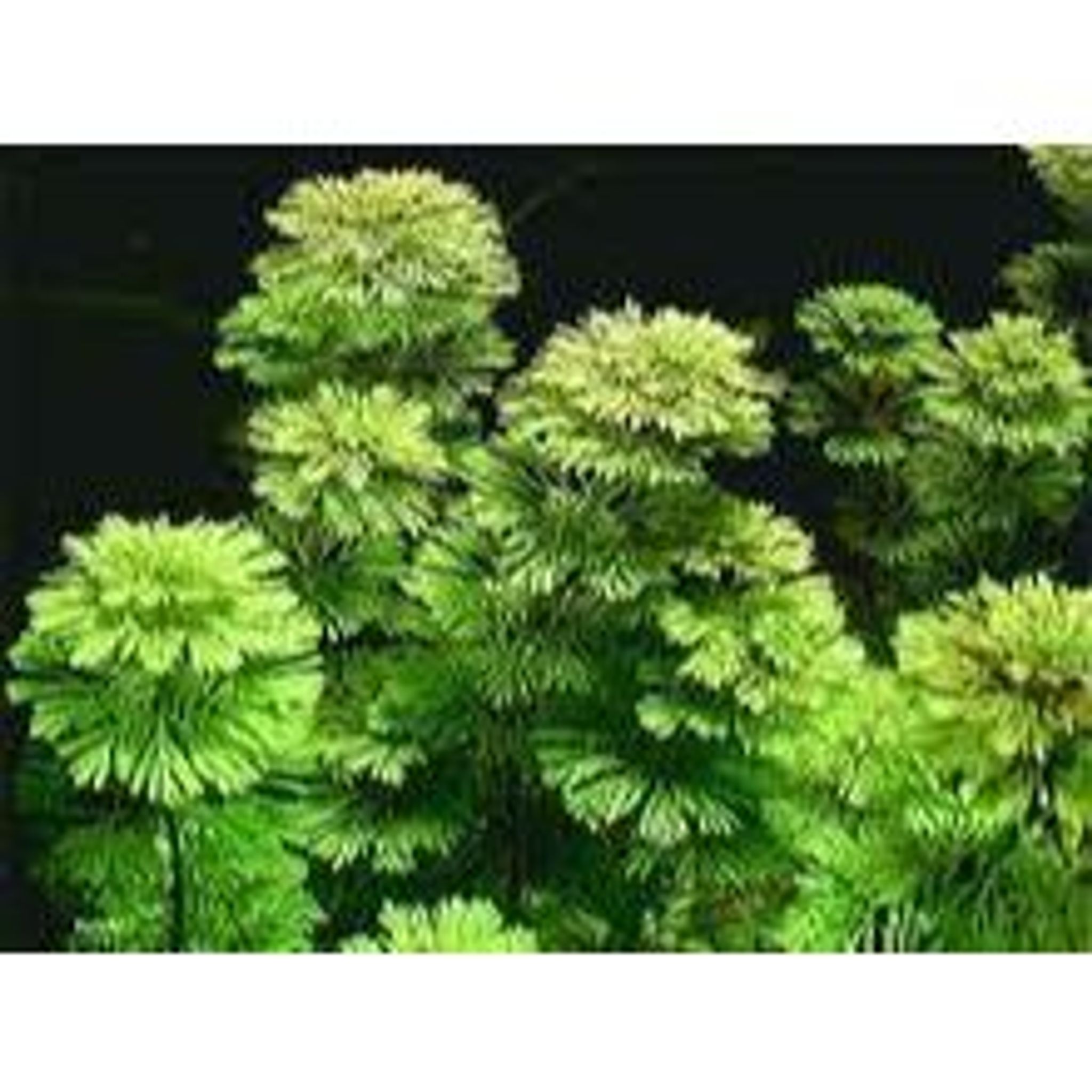
Limnophila Sessiliflora Care Guide: Light, CO2, Substrate and Growth Tips
Limnophila sessiliflora is a fast, forgiving stem plant that thrives with or without CO2 injection, making it a solid pick for both low-tech and high-tech planted tanks. This guide walks through exactly how much light and CO2 it needs, what substrate actually matters, and how to keep it bushy instead of tall and bare.
What Is Limnophila Sessiliflora?
Sold under common names like Ambulia, Asian marshweed, and giant ambulia, this stem plant has finely divided, whorled leaves that give it a soft, feathery look. It's frequently mistaken for Cabomba and Myriophyllum on store shelves, since all three share that lacy, whorled foliage. A quick way to tell them apart at a glance:
- Limnophila sessiliflora: leaves in whorls of 6-8, stiffer and slightly coarser than Cabomba.
- Cabomba: leaves in whorls of 2 (opposite pairs), very fine and fan-shaped, noticeably softer and more delicate.
- Myriophyllum: leaves in whorls of 4-6, thinner and more thread-like than Limnophila.
Getting the ID right matters because these three plants have different fragility levels and slightly different care expectations, covered in the comparison section below.
Light Requirements
Limnophila tolerates low-to-moderate light and will survive, but growth density and leaf compactness scale directly with how much light it gets.
- Low-moderate light: 6-8 hours per day keeps the plant alive with a looser, more open growth habit.
- Moderate-high light: 10-12 hour photoperiod produces the bushiest, most colorful, most compact growth.
Visual diagnostic: if the top growth is drooping, thin, and stretching toward the surface, the plant isn't getting enough light. If new leaves are tight, upright, and stacked closely on the stem, light is adequate to strong.
As a rough starting point for low-tech setups, aim for roughly 1.5+ watts per gallon equivalent in LED output, or a PAR reading in the low-to-mid range for a planted tank; a LED lighting fixture sized for your tank's depth is the simplest way to hit that target without guesswork.
Does It Need CO2?
No, not to survive. But CO2 changes how it looks and how fast it grows:
- No CO2: slower but healthy growth under low-moderate light. A completely viable low-tech option.
- With CO2 (pressurized or liquid carbon): noticeably thicker stems, denser leaf whorls, and richer color, especially once light is pushed to moderate-high.
The catch is that CO2 becomes more important, not less, as you raise light intensity. Strong light without enough carbon or nutrients creates an imbalance that algae exploits faster than the plant can use the available light. If you're running moderate-high light, plan on supplementing CO2 rather than treating it as optional.
For a numeric target, high-tech tanks generally aim for roughly 15-30 ppm dissolved CO2. A drop checker (a small glass fixture using a pH-sensitive reagent that changes color with dissolved CO2) is the standard, inexpensive way for US hobbyists new to injection to monitor this without a chemical test kit.
Substrate: Does It Actually Matter?
Limnophila is primarily a water-column feeder — it pulls most of its nutrients through its leaves and stems rather than its roots. That means it isn't substrate-dependent and can be grown successfully in plain gravel or sand as long as you add root tabs periodically.
That said, a nutrient-rich planted substrate gives visibly stronger roots and sturdier stem anchorage, which matters in taller setups where top-heavy stems can get knocked loose. If you're building around this plant, browse substrate options and consider a nutrient-rich soil substrate if you want the sturdiest base, or plain gravel and sand paired with root tabs if you'd rather keep things simple.
Water Parameters
Limnophila is unusually adaptable for a stem plant, which is part of why it works well for beginners.
| Parameter | Practical range | Wider tolerance |
|---|---|---|
| Temperature | 68-82°F (20-28°C) | Down to ~60°F (15.5°C), with slowed growth |
| pH | 6.0-7.5 (safe target for most home tanks) | 5.0-8.0 |
| GH (hardness) | 1-10 dGH (soft to moderately hard) | — |
A note on pH: care sources vary somewhat here, with some citing an "optimal" 5.0-7.0 and others a wider 5.5-7.5. In practice, a target of 6.0-7.5 works well for the vast majority of home tanks, and the plant handles excursions outside that band fine as long as the change happens gradually rather than as a sudden swing.
Growth Rate and Trimming
This is a genuinely fast grower — several inches of new growth per week under good light, CO2, and fertilization, with mature stems reaching 16-20+ inches. Trimming cadence should track your setup tier rather than a single blanket rule:
- High-tech (moderate-high light + CO2): trim weekly to keep density and shape.
- Low-tech (low-moderate light, no CO2): trim every 2-3 weeks.
To trim, cut healthy tops at 2-3 inches and replant the cuttings directly into the substrate — they root in about a week. This is also your main propagation method: side shoots form naturally along the stem, and if grown emersed (above the waterline, as in a paludarium), the plant develops a coarser leaf form and can even flower and seed, though that's not typical for a fully submersed home aquarium.
Fertilization
Because roots are a secondary feeding pathway, Limnophila benefits most from a water-column fertilization routine covering:
- Macronutrients: nitrate, phosphate, and potassium.
- Micronutrients: iron and trace elements.
Pale or yellowish new growth is the classic sign of an iron or micronutrient deficiency, not a lighting problem — the fix is a chelated iron/micro fertilizer, not more light.
Planting Method
Plant in small bunches of 3-5 stems, burying just the bottom node rather than the whole lower section. Space bunches roughly 2 inches apart so they fill in as a background or midground hedge over time.
Stems are soft and brittle and snap easily if pinched. Push each stem into the substrate at a shallow angle using tweezers rather than gripping and forcing it straight down — this dramatically reduces snapped or crushed stems during planting.
Comparing Limnophila to Similar Feathery Stems
Limnophila vs. Cabomba
Cabomba needs similarly moderate-high light and also benefits from CO2, but it's noticeably more fragile. It prefers a nutrient-rich substrate (its delicate roots dislike coarse gravel), grows best around pH 6.8-7.5 and 72-82°F (22-28°C), and tends to shed leaves quickly if light or CO2 levels drop. Limnophila is the sturdier, more forgiving choice between the two.
Limnophila vs. Myriophyllum
Myriophyllum sits in a similar niche: medium-high light, CO2 recommended for best results, fast growth, and use as a midground or background plant at a beginner-to-intermediate difficulty level. Its feathery, whorled foliage is easy to confuse with both Limnophila and Cabomba at a glance — checking the whorl count (Myriophyllum: 4-6 leaves per whorl vs. Limnophila's 6-8) is the quickest way to confirm which one you're holding.
A Note on Related "Weed"-Type Stem Plants
Several similarly named feathery stem plants in this broader family tolerate an even wider temperature and pH range, and their slower growth is actually a benefit in low-maintenance tanks rather than a drawback. Across this whole group, a fine sandy substrate reduces root damage for stems with delicate root systems — a useful general rule even outside Limnophila specifically.
General Planted-Tank Fundamentals
A few fundamentals tie all of the above together and apply well beyond this one species:
- Light: full or broad-spectrum output, roughly 1.5+ watts per gallon equivalent or a comparable PAR target, run on a 10-12 hour photoperiod.
- CO2: often called the single most limiting nutrient in a planted tank; high-tech setups target roughly 15-30 ppm dissolved CO2.
- Nutrient balance: excess macronutrients without enough light or CO2 uptake to match them is a common driver of algae, not the nutrients themselves.
- Substrate: inert substrates (plain gravel/sand) versus nutrient-rich substrates with high cation exchange capacity, which hold and release nutrients more effectively. Avoid substrates built on decaying organic matter like raw peat, which can foul water quality.
Common Mistakes and Troubleshooting
| Problem | Likely cause | Fix |
|---|---|---|
| Tall, bare-based ("leggy") stems | Insufficient light or infrequent trimming | Top the stems and replant cuttings to rebuild density from the substrate up |
| Pale or yellow new growth | Iron/micronutrient deficiency | Dose a chelated iron/micro fertilizer, not more light |
| Melting or leaf drop after planting | Transplant shock (common with emersed-grown store stock) | Expect some old-leaf loss in the first 1-2 weeks; judge health by new growth |
| Snapped stems during planting | Pinching stems too hard | Insert at an angle with tweezers instead |
| Algae growing on the plant | Light too high relative to CO2/nutrients | Reduce photoperiod or intensity, and/or add CO2 |
| Bought the wrong plant | Confused with Cabomba or Myriophyllum | Check whorl count and leaf stiffness before buying |
Tank Placement, Tankmates, and Scaping Use
Limnophila works best as a background or midground hedge, where its dense growth provides cover for fry and shy fish and helps with nutrient export and algae competition in a community tank. A thick stand also doubles as a spawning-mop substitute for egg-scattering species, giving eggs somewhere to lodge away from adult fish. It pairs well with small schooling fish and bottom dwellers that appreciate cover — species like tetras, corydoras, and loaches from FishyHub's small community fish and plecos, corys and bottom dwellers selections all do well around a dense Limnophila background.
Low-Tech vs. High-Tech: A Quick Buying Reference
| Setup tier | Light | Carbon | Fertilizer | Trim cadence |
|---|---|---|---|---|
| Low-tech | Low-moderate LED, 6-8 hr photoperiod | None, or occasional liquid carbon | All-in-one liquid fert weekly, root tabs occasionally | Every 2-3 weeks |
| High-tech | Moderate-high LED, 10-12 hr photoperiod | Pressurized CO2, drop checker to monitor | Separate macro/micro dosing plus root tabs | Weekly |
A Responsible-Disposal Note
Limnophila sessiliflora is listed as an invasive or noxious aquatic weed in parts of the United States, and it's restricted or prohibited in some states. Never release trimmings, whole plants, or aquarium water containing plant fragments into local ponds, streams, or storm drains. Dispose of unwanted trimmings in the trash (sealed, if your area requires it) or offer them to another hobbyist instead.
Frequently Asked Questions
Does Limnophila sessiliflora need CO2 to survive?
No. It grows fine without CO2, but injected or liquid CO2 significantly speeds growth and improves leaf density, especially under stronger light.
What substrate is best?
Any substrate works since it feeds mainly from the water column, but a nutrient-rich planted substrate gives sturdier roots and better anchorage for taller stems.
How much light does it need?
Low-moderate light keeps it alive; moderate-high light with a 10-12 hour photoperiod produces the bushiest, most colorful growth.
How fast does it grow and how often should I trim it?
Very fast — expect to trim weekly under high light with CO2, and roughly every 2-3 weeks in a low-tech tank. Trim tops and replant the cuttings to keep the base full.
What water parameters does it tolerate?
Roughly 68-82°F, pH 6.0-7.5 (tolerating a wider 5.0-8.0 range), and soft to moderately hard water (GH ~1-10 dGH) — one of the more adaptable stem plants available.
How do I propagate it?
Cut a healthy top 2-3 inches long and replant it directly in the substrate. It typically roots within about a week.
Why are my plant's leaves turning brown or falling off near the bottom?
This is usually caused by low light reaching the lower stem or a nutrient deficiency. Trim off the bare or browning section and replant a healthy top rather than waiting for the old growth to recover.
Is it good for beginners, and does it help with algae control?
Yes. It's a fast, adaptable, easy stem plant that competes well with algae for available nutrients when it's kept healthy and adequately lit.
Ready to stock up? Browse FishyHub's substrate and LED lighting selections to build a setup suited to whichever growth tier you're aiming for.

