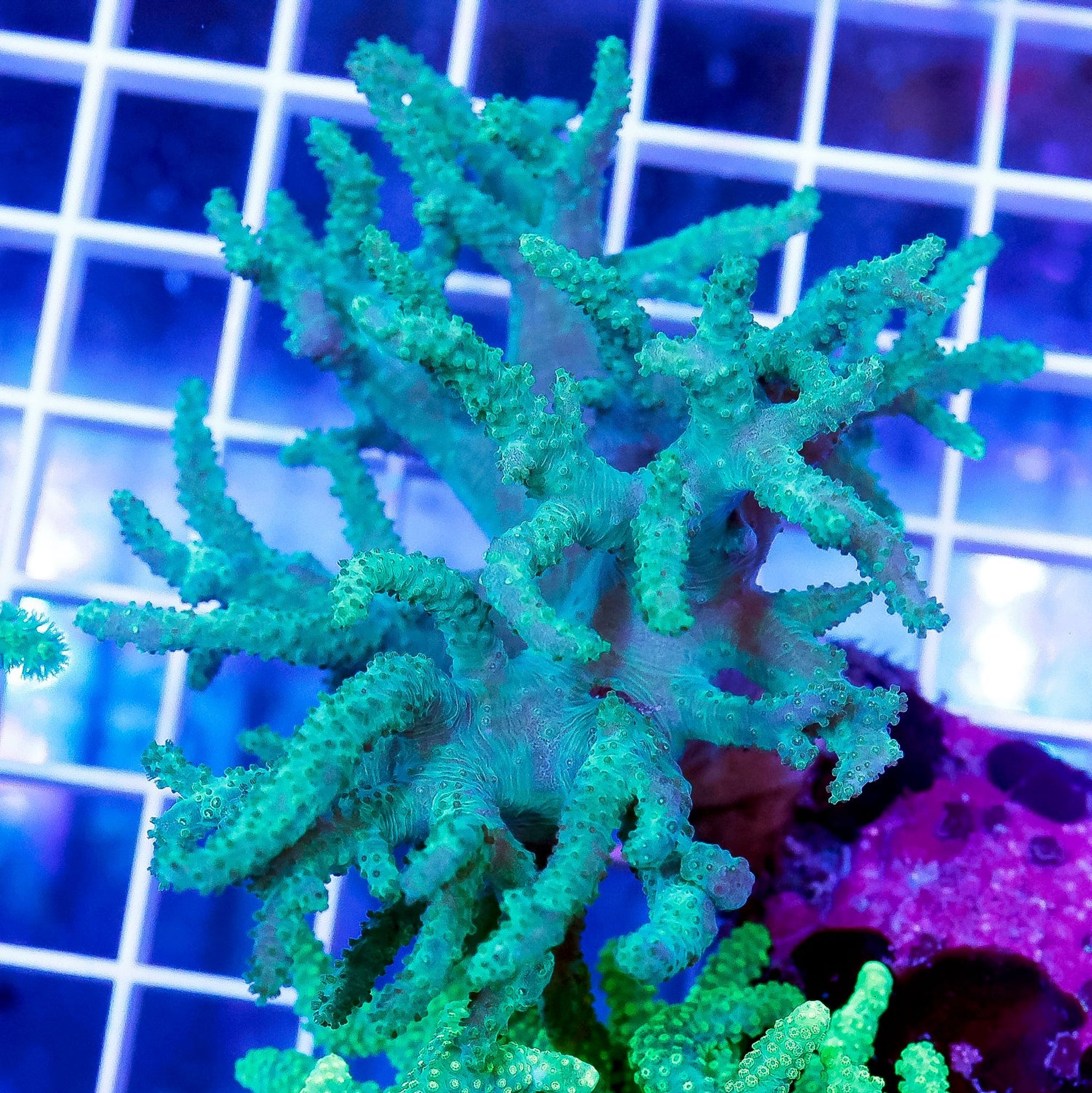
Leather Corals Care Guide: Lighting, Flow, Feeding and Placement
Leather corals are among the most forgiving corals a reef keeper can add to a tank, but "easy" still means getting lighting, flow, feeding, and placement roughly right. This guide walks through exactly what Sarcophyton (toadstool), Sinularia (finger), and Lobophytum leathers need to thrive, plus why they behave the way they do.
What Makes a Leather Coral a Leather Coral
Leather corals belong to the family Alcyoniidae. Unlike stony corals, they build no rigid calcium-carbonate skeleton — their bodies are soft, fleshy, and flexible, which is exactly why beginners find them so approachable. Because they carry symbiotic algae called zooxanthellae, leathers make most of their own food from light, and they tolerate parameter swings that would stress a small-polyp stony (SPS) coral. That combination of low feeding demands and forgiving chemistry is why leathers are routinely recommended as a first coral.
Lighting: Moderate Beats Maximum
Leather corals do well under a wide light range, roughly 50–150 PAR, which corresponds to low-to-moderate output from a reef LED fixture or a T5 setup — nowhere near the intensity SPS corals demand. Some Sinularia species tolerate much brighter, near metal-halide-level light, so treat the PAR range as a flexible working zone rather than a hard ceiling.
In practice, the best coloration and steadiest growth usually come from moderate light placement, not the single brightest spot in the tank. A few lighting guidelines:
- Use a PAR meter if you have one; if not, mid-to-lower rockwork under a properly cycled reef light is a safe starting point.
- New frags or freshly imported pieces should be acclimated to light gradually over 1–2 weeks, since they often ship from lower-light holding systems.
- Watch polyp extension and color as your feedback loop — a leather that stays closed or pales under strong light needs to move down or be shaded temporarily.
Reef lighting options for ramping up gradually are available in FishyHub's LED lighting selection.
Water Flow: Turbulent, Not a Laser Blast
Flow is where leather corals are pickier than their light tolerance suggests. They need moderate-to-strong, ideally random or turbulent water movement — alternating pumps or wavemakers work better than one powerhead aimed directly at the coral. A simple practical test: flow is right when it keeps the polyps swaying continuously; if they're flattened and pinned in one direction, it's too strong, and if they barely move, it's too weak.
Good flow does more than deliver oxygen and export waste — it's essential for shedding (see below), since leathers rely on water movement to help slough off their waxy mucus coating.
Feeding: Optional, Not Required
True photosynthetic leather corals get the overwhelming majority of their energy from zooxanthellae. Direct feeding is not required, but occasional dosing of phytoplankton or zooplankton, or running a healthy refugium, can give a modest boost to growth and color. There's no need for large particulate target-feeding the way you would with a non-photosynthetic coral.
This is a point worth being precise about, because it trips people up: general soft-coral advice sometimes suggests feeding boosts growth across the board, while leather-specific guidance says it's unnecessary. Both are true in their own context — feeding a true leather is a bonus, not a requirement. It's a different story for photosynthetic leathers' non-photosynthetic soft-coral relatives, covered in detail further down.
Water Parameters
Leathers tolerate more swing in reef parameters than LPS or SPS corals, which is a big part of their beginner appeal. Still, keeping numbers inside standard reef ranges gives the most consistent growth and color.
| Parameter | Target Range |
|---|---|
| Temperature | 74–82°F (23–28°C) |
| Salinity | 1.023–1.026 SG (32–35 ppt) |
| pH | 8.1–8.4 |
| Alkalinity | 8–12 dKH (2.5–3.0 meq/L) |
| Calcium | 380–450 ppm |
| Nitrate | Under ~15–20 ppm |
| Phosphate | Under ~0.03–0.05 ppm |
Placement: Plan for a Coral That Grows Fast
Leathers are fast growers, and a healthy specimen can expand well beyond its starting footprint — plan for several inches to over a foot of mature spread depending on the species and lighting. When placing one:
- Leave generous space between a leather and its neighbors so it doesn't shade or physically sting adjacent corals as it fills out.
- Avoid low spots where sand or detritus can settle on the coral's surface — clearing debris costs the animal energy it would otherwise spend growing.
- Don't site a leather directly beneath a powerhead's direct blast; aim for indirect, ambient turbulence instead.
- Mid-to-lower rockwork with open space around it is usually a safe long-term spot.
Because leathers are also chemically active neighbors (more on that next), spacing decisions do double duty: they solve both a physical crowding problem and a water-chemistry one.
Allelopathy: Leathers Fight With Chemistry
Many leather corals, including Sinularia flexibilis, release terpenoid compounds — chemical defenses that can inhibit or irritate nearby stony corals. This is called allelopathy, and it's one of the main reasons crowding leathers next to LPS or SPS causes problems that look like a flow or lighting issue but aren't.
Mitigate allelopathy with:
- Generous physical spacing between leathers and stony corals.
- Regular water changes to dilute chemical compounds.
- Running activated carbon in your filtration to actively remove them.
Shedding: Normal Self-Cleaning, Not Disease
Leather corals periodically shed a thin waxy film to remove algae, detritus, and parasites from their surface. During a shed, a coral can look alarming — polyps retract, the surface looks pale or slimy, and it may appear to be dying. This is normal and usually resolves in 1–3 days.
When to worry vs. when to wait:
| Timeframe | What it usually means |
|---|---|
| Day 1–2, polyps closed, film visible | Normal shedding — no action needed |
| Day 3, still closed but tissue looks intact | Still likely normal; improve flow to help it slough off |
| Beyond 4–5 days closed, tissue receding or dissolving | Investigate flow, water quality, or pests rather than assuming a shed |
Don't dose medications or move the coral during a normal shed — that disturbs an already-stressed animal. Improving flow is the one intervention that actually helps, since turbulence assists the coral in physically removing the film.
Growth and Fragging
Leather corals are relatively fast growers compared with many other corals, which makes them an easy species to propagate. To frag a leather:
- Cut a piece from the base or a branch outside the tank with a clean blade.
- Let the cut piece callus over before reattaching it to rock or a frag plug.
- Quarantine any new frags or imported pieces before adding them to the display, both to protect your main tank and to give the frag time to recover.
Acclimating New Leather Corals
New arrivals need two separate acclimation steps:
- Water acclimation: standard drip or floating-bag acclimation, typically 15–30 minutes, to match temperature and salinity before release.
- Light acclimation: a gradual ramp-up over 1–2 weeks, since shipped pieces often come from lower-light holding systems and can bleach or retract if dropped straight into a bright display.
It's also worth curing or dipping new frags before they go into the display tank — a coral dip helps flush out hitchhiking pests like flatworms or aiptasia that can otherwise establish themselves in the main system.
Where Leather Corals Fit in the Coral World
Soft Coral Care Overview
Leathers are one branch of the broader soft-coral family, which also includes zoanthids, mushroom corals, star polyps, and xenia. What they share: no stony skeleton, flexible movement in the current, general hardiness, and tolerance of nutrient and parameter swings. That shared toughness is exactly why soft corals as a group are the usual "starter coral" category.
Types of Coral: The Beginner Progression
Reef corals broadly split into three groups:
- Soft corals (leathers, zoanthids, mushrooms) — most forgiving, flexible bodies, no stony skeleton.
- LPS (large polyp stony) — hammer, torch, and frogspawn corals; moderate difficulty.
- SPS (small polyp stony) — Acropora and Montipora; demand stable, precise parameters and strong, consistent lighting.
A typical progression is soft → LPS → SPS as a keeper's system stability and experience grow. FishyHub's soft corals category and LPS hard corals category are good places to compare options at each stage.
Sinularia: The Especially Tough Leather
Sinularia leathers are broadly similar to other leathers but stand out for flow tolerance and adaptability to a wide light range. Branching Sinularia forms benefit from open placement to avoid self-shading as they fill out. Among leather genera, Sinularia is often the fastest-growing and hardiest, and many keepers use it to "test" a new tank's stability before adding pickier species.
Green Cabbage Coral and Other Leather Look-Alikes
The "cabbage" form of Sinularia dura grows broad, flat lobes and tolerates varied flow and light conditions well. Like other fast-growing leathers, it becomes a shading risk to tankmates once mature — the same spacing caution that applies to toadstool and finger leathers applies here too.
Chili Coral and Other Non-Photosynthetic Soft Corals
This is the most important distinction to get right: chili coral, some gorgonians, and carnation corals look similar to true leathers but carry no zooxanthellae. Applying leather-coral rules to these species starves them. They need the opposite regimen:
| Trait | True Leather Coral | Chili Coral / NPS Soft Corals |
|---|---|---|
| Energy source | Mostly photosynthesis (zooxanthellae) | No zooxanthellae — feeding only |
| Light needs | Moderate, ~50–150 PAR | None — keep shaded or in low light |
| Feeding | Optional boost | Frequent, often daily, phyto/zooplankton or fine particulate food |
| Placement | Open rockwork, moderate light | Caves, overhangs, shaded lower areas |
| Flow | Moderate-to-strong, turbulent | Moderate-to-strong, turbulent (for feeding, not photosynthesis) |
Gorgonians
Photosynthetic gorgonian species behave much like leathers — moderate light and moderate-to-strong flow suit them well. Non-photosynthetic gorgonians follow the NPS regimen above: shade, plus frequent feeding. Sea fans of either type generally do best oriented across the current, so their branches intercept passing food and flow evenly across the whole colony rather than just the leading edge.
Common Beginner Pitfalls
Most beginner coral losses trace back to a handful of avoidable mistakes:
- Placing a new leather directly in high flow and high light without acclimating — causes bleaching or prolonged polyp retraction; ramp up gradually instead.
- Mistaking normal shedding for disease — dosing medication or relocating the coral during a shed adds stress; wait it out and improve flow.
- Crowding leathers next to LPS or SPS — triggers both chemical warfare and physical stinging or shading; leave a buffer zone and run carbon.
- Letting detritus or sand settle on the coral's surface — increases stress and shedding frequency; boost flow or reposition.
- Overfeeding a photosynthetic leather like it's an NPS coral — unnecessary and can spike nutrients; save heavy target-feeding for true non-photosynthetic species.
- Skipping the callusing step or quarantine when fragging — raw cuts and unquarantined pieces risk infection or introducing pests into the main display.
- Beyond leather-specific issues, general beginner-reef pitfalls include overstocking or adding fish too quickly, poor flow from rockwork crammed too close to the glass, reactionary rather than scheduled maintenance, and general impatience with acclimation and stability.
Frequently Asked Questions
Do leather corals need direct feeding?
No. Leather corals get most of their energy from photosynthesis through zooxanthellae. Occasional phytoplankton or zooplankton feeding is a bonus for growth and color, not a requirement.
Why is my leather coral not opening or looks deflated?
This is usually normal shedding, new-tank or light acclimation stress, or insufficient flow. Give it a few days before assuming there's a real problem, and avoid dosing medication in response.
How much light do leather corals need?
A moderate range works for most leathers, roughly 50–150 PAR. They're flexible and don't require SPS-level intensity, though some species tolerate brighter light without issue.
Can leather corals hurt other corals?
Yes. Many leathers release mild toxins through allelopathy that can irritate or stunt nearby stony corals. Space them out generously and run activated carbon to help manage it.
How fast do leather corals grow, and how do I frag them?
They grow relatively fast compared with many corals. To propagate, cut a piece from the base or a branch outside the tank, let the cut callus over, then reattach it to rock or a plug.
What's the difference between a leather coral and a gorgonian or chili coral?
True leathers are photosynthetic soft corals that need moderate light and minimal feeding. Chili coral and many gorgonians or carnation corals are non-photosynthetic and need shade instead of light, plus frequent target feeding.
What water parameters do leather corals need?
Standard reef ranges apply: 74–82°F, salinity 1.023–1.026 SG, pH 8.1–8.4, and alkalinity 8–12 dKH. Leathers are notably more tolerant of minor swings in these numbers than SPS corals.
Where should I place a leather coral in the tank?
Anywhere with moderate light and flow and enough open space to grow into. Mid-to-lower rockwork works well; avoid spots that collect sand or detritus and keep distance from stony coral neighbors.
Ready to start or expand a soft-coral collection? Browse leathers and other options in FishyHub's corals category.

